How to Hire a Dedicated Software Development Team: Major Steps and Comprehensive Guide
Feb 5, 2025
-32 mins read

Hiring a dedicated software development team offers a powerful solution for organizations looking to overcome challenges and achieve their business goals with maximum efficiency and cost-effectiveness.
But what exactly is a dedicated team model, how does it operate, and how to hire dedicated software development team? Let’s dive into this article to discover the answers!
What Is a Dedicated Software Development Team?
A software development dedicated team is a group of skilled professionals, including software developers, project managers, quality assurance specialists, and other relevant roles, hired to work exclusively on a specific project or a series of projects for a client.
Unlike in-house teams or freelance developers, dedicated teams are sourced externally but work closely with the client’s organization, often becoming an extension of the client’s internal team.

Key characteristics of a dedicated development team:
- Exclusive focus on the client’s project: The team is solely dedicated to the client’s project, ensuring complete focus, alignment, and commitment to meeting the client’s specific goals and objectives. This exclusive attention helps in developing more cohesive, efficient, and customized software solutions.
- Outstaffing model: Also known as IT outstaffing, this collaboration model involves the client hiring dedicated development team from a software development company. This company handles all aspects of recruitment, administrative support (such as salaries, PTO, and sick leaves), equipment, and other necessities. This setup allows the client to access specialized talent without dealing with HR complexities.
- Cost-effective solutions: By hiring a dedicated team, clients can often find cost advantages by leveraging lower development rates available in regions like Eastern Europe, Asia, and Latin America. This approach provides access to highly skilled professionals at a fraction of the cost compared to hiring locally.
- Comprehensive skill set: A dedicated team typically includes a diverse mix of professionals, such as software developers, project managers, QA testers, and UX/UI designers. This range of expertise ensures that all aspects of software development are covered, leading to more robust and well-rounded solutions.
- Long-term collaboration: Dedicated teams are usually engaged in long-term projects. This ongoing collaboration fosters a deeper understanding of the client’s business needs, leading to more innovative and tailored solutions. As the team becomes more familiar with the client’s objectives, they can align more closely with the client’s strategic goals.
- Flexibility and scalability: One of the significant advantages of a dedicated software development team is its flexibility. The team can be scaled up or down based on the project’s requirements, offering a level of adaptability that is hard to achieve with fixed-size in-house teams or individual freelancers.
In summary, a dedicated software development team offers a focused, specialized, and scalable approach to software development, making it a preferred choice for businesses seeking long-term, collaborative, and customized solutions.
This model contrasts with the broader scope of in-house teams and the fragmented approach of freelancers, providing a tailored, cohesive, and efficient way to achieve specific business objectives.
Advantages of a Dedicated Development Team
What advantages does the dedicated team offer? A dedicated software development team offers a range of benefits that are pivotal for the success of any software project. Understanding these advantages can help businesses make informed decisions when considering their development strategies.

Access to specialized skill sets
Hiring a dedicated development team provides access to specialized skill sets that might be difficult or expensive to find in-house. These teams often have deep expertise in specific technologies, frameworks, and languages, allowing you to build the right product for specific needs.
This is especially valuable for complex projects requiring specialized knowledge.
Cost efficiency
IT outsourcing to a dedicated team can be a more cost-effective solution than building an in-house team, particularly for short-term or specialized projects.
You avoid the overhead costs associated with hiring, training, and managing an in-house team, such as salaries, benefits, office space, and equipment. Instead, you adopt a pay-per-use model, only paying for the resources you need.
This allows for greater budget control and eliminates the risk of carrying fixed costs for an in-house team.
Enhanced focus on core business
Another compelling advantage is that hiring a dedicated software team allows you to focus on your core business while a specialized team handles the complexities of software development. This frees up your internal resources to focus on your core business operations, such as marketing, sales, and customer service.
By concentrating on your strengths, you can achieve greater efficiency and faster growth, leading to higher revenue and market share.
Faster time to market
Hiring dedicated software development teams can significantly accelerate your time to market, allowing you to gain a competitive edge. Experienced development teams have established processes and workflows that allow them to deliver projects quickly and efficiently.
Teams can work concurrently on different aspects of the project, enabling faster development and deployment.
Agile development methodologies, often employed by dedicated teams, further accelerate the process through continuous feedback and rapid iterations, leading to faster product releases.
Hiring a dedicated development team offers a range of advantages that can significantly benefit your business. By carefully selecting the right team and establishing effective management strategies, you can harness the power of dedicated development teams and unlock your project’s full potential.

When to Hire and When Not to Hire Dedicated Development Teams?
The decision to build an in-house team or hire dedicated team is a strategic one, and there’s no one-size-fits-all answer. This guide outlines when a dedicated development team is the ideal choice and when alternative approaches might be more suitable.

When dedicated software teams are the optimal choice:
- Long-term, complex projects: Projects with ambitious scopes and extended timelines often require a committed team that can adapt and evolve alongside the project’s needs. The inherent complexity and ongoing nature of such endeavors benefit from the dedicated focus and expertise of a specialized team. A dedicated team becomes a trusted partner, guiding through every step of the journey.
- Specialized expertise is essential: Projects demanding specialized technical capabilities, such as blockchain, artificial intelligence, or complex data analysis, can significantly benefit from teams possessing in-depth knowledge and experience in these domains. Engaging a dedicated team with specialized skills ensures a deeper understanding of the technical challenges and a higher probability of achieving project objectives.
- Scaling up quickly: Companies experiencing rapid growth or requiring swift operational scaling often find dedicated teams highly advantageous due to their inherent scalability and flexibility. Dedicated teams can easily adjust their size and expertise to meet evolving demands, providing the agility required to adapt to changing market conditions and respond quickly to new opportunities, ensuring that the organization remains competitive.
- Global talent is needed: Projects requiring diverse perspectives, multilingual support, or access to specialized skills not readily available locally benefit from dedicated teams with global talent. A team with members from various cultural backgrounds and expertise can bring fresh ideas and perspectives, resulting in more comprehensive and innovative solutions.
- Requirements are constantly changing: Projects with frequently changing needs, such as those driven by user feedback or market trends, benefit from a dedicated team’s ability to adapt and incorporate new requirements seamlessly. A dedicated team fosters a culture of continuous improvement, actively seeking feedback and incorporating changes to enhance the project’s effectiveness.
- Prioritizing core business functions: Outsourced development teams free up internal resources, allowing organizations to focus on core areas like marketing, sales, and customer service, enhancing efficiency, leading to faster growth, increased profitability, and a more competitive edge.
When dedicated teams might not be the best approach
- Short-term Projects with clear scope: Projects with a clear scope and a short timeline might not require the long-term commitment and extensive communication involved in managing a dedicated team. Fixed-price arrangements or freelance contracts can be more cost-effective for short-term projects, as they eliminate the ongoing costs associated with dedicated teams.
- Budget and time are constrained: Projects with limited budgets may find fixed-price arrangements or contract-based hourly rates more suitable for managing expenses. Projects with demanding deadlines might benefit from more flexible engagement models that allow for quick adjustments to meet tight timelines.
Choosing the right team is crucial for success. Leaders should carefully assess project needs, consider available resources, and weigh the benefits of a dedicated development team. Make an informed decision that will propel the software project towards success.
A Dedicated Development Team vs an In-House Team: Key Differences
Let’s compare the concept of a dedicated development team vs. in-house development across various criteria.
| Criteria | Dedicated development team | In-house development team |
| Location | Can be located anywhere globally, offering access to various talent pools | Typically located in the company’s physical location, limiting access to local talent |
| Cost | Lower initial investment, predictable costs based on contract | Higher initial investment, ongoing salaries, and benefits |
| Team control | Outsourced management, requires effective communication | Direct management control, easier oversight |
| Expertise & skill availability | Access to diverse skills and expertise globally | Relies on the local talent pool, potentially limited expertise |
| Communication | Needs effective communication tools and time zone management | Direct, real-time communication is possible without barriers |
| Speed of deployment | Quick setup, can start projects sooner | Dependent on local hiring and onboarding timelines |
| Risk & compliance | Contractual agreements define responsibilities and liabilities | Direct control over compliance and risk management |
How to Manage a Dedicated Software Development Team Effectively?
Effective management is paramount whether you’re building an in-house team or outsourcing to a dedicated development company. Let’s go through the crucial steps to unlock a dedicated software team’s full potential, ensuring your project is delivered on time, within budget, and exceeds expectations.

Setting the stage: Define clear project scope and objectives
Imagine embarking on a journey without a map or destination. That’s what a software project without a clear scope and objectives feels like. A well-defined roadmap ensures everyone understands the purpose, target audience, and desired outcomes. This eliminates ambiguity and fosters a shared understanding of what “success” looks like. This first and foremost step includes:
- Dive deep into market research: Understand the target audience, their needs, and the competitive landscape. This knowledge forms the foundation for building a truly valuable software product for the whole team.
- Craft detailed user stories and product requirements: These are the blueprints of every software product. The critical outline includes the app’ functionality, features, and technical specifications with meticulous detail.
- Define success metrics: Don’t just aim for “good” – define measurable goals like user engagement, revenue generation, or technical performance. These metrics become your benchmarks for a truly successful project.
Actions to take to make this step right:
- Collaborate with stakeholders: Involve all relevant departments and individuals in defining the project scope and objectives. This creates buy-in and ensures everyone is aligned.
- Leverage project management tools: Tools like Jira, Asana, or Trello are your allies in documenting requirements, tracking progress, and managing tasks efficiently.
- Regularly review and refine the scope: The world changes, and so do needs. Ensure the project scope remains relevant and aligns with evolving business demands.
Expert tips:
- Be realistic: Don’t set unrealistic timelines or promise features that are beyond the project’s scope. This sets the stage for disappointment and frustration.
- Prioritize features: Focus on delivering the most valuable features first, ensuring a minimum viable product (MVP). This allows for early user feedback and iteration.
- Document everything: Keep a comprehensive record of all project requirements, specifications, and decisions. This ensures everyone is on the same page and provides a valuable reference point throughout the project lifecycle.
Building a cohesive team: Fostering a strong team dynamic
A software development team is not just a collection of individuals; it’s a symphony of talents, each contributing their expertise to create a harmonious whole. A strong team dynamic is essential for effective communication, collaboration, and problem-solving. Here are the tasks needed to complete this step:
- Invest in team bonding activities: Organize team outings, workshops, or social gatherings to foster camaraderie and build lasting relationships.
- Promote open communication: Encourage regular team meetings, brainstorming sessions, and feedback channels. This fosters a culture of open dialogue and active listening.
- Establish clear roles and responsibilities: Define each member’s role within the team, ensuring clear accountability and responsibilities. This promotes efficiency and eliminates confusion.
- Regularly evaluate team performance: Conduct periodic team feedback sessions to identify areas for improvement and foster growth.
- Encourage cross-functional collaboration: Allow team members to work across different disciplines to gain diverse perspectives and build stronger connections.
- Celebrate successes: Recognize and acknowledge individual and team achievements to boost morale, motivation, and a sense of accomplishment.
Expert tips:
- Embrace diversity: Build a team of dedicated software developers with diverse skills, backgrounds, and perspectives to encourage innovation and problem-solving.
- Facilitate conflict resolution: Provide a safe space for healthy debate and create a process for resolving conflicts effectively.
- Empower team members: Delegate tasks, provide autonomy, and encourage individual initiative. This fosters a sense of ownership and responsibility.
Embracing Agile: Prioritizing Agile development methodologies
In the ever-changing world of software development, rigidity is a recipe for disaster. Agile development methodologies, with their focus on iterative development and continuous feedback, are the antidote to rigid planning and outdated approaches. To bring the Agile mindset to the dedicated software development team, here’s what to do:
- Implement Scrum or Kanban: Select an agile framework that aligns with your team’s needs and project complexity. Both have their strengths, so choose wisely.
- Conduct daily stand-up meetings: Briefly discuss progress, identify blockers, and align priorities. This ensures everyone is on the same page and keeps the project moving forward.
- Run sprint planning and review sessions: Plan sprints, review work completed, and adjust plans based on feedback. This allows for flexibility and adaptation throughout the development life cycle.
- Utilize project management tools for agile: Leverage tools like Jira or Asana to track sprints, manage tasks, and visualize progress.
- Encourage continuous integration and deployment: Automate builds and deployments to accelerate the development process and minimize delays.
- Prioritize user feedback: Incorporate user input throughout the software development process to ensure the software meets their needs and solves real problems.
Expert tips:
- Train the Agile team: Provide training to ensure everyone understands the agile methodology and its benefits.
- Keep sprints short and focused: Ideally, sprints should last 2-4 weeks to facilitate faster iteration and feedback.
- Maintain a collaborative working environment: Encourage open communication, active listening, and teamwork throughout the development process.
The power of communication: Ensuring effective communication and collaboration
Imagine a team trying to build a skyscraper without any communication. Chaos, right? Communication is the glue that holds a dedicated software development team together. How to communicate and collaborate well? Follow these tricks:
- Establish communication channels: Define clear methods of communication, such as daily stand-up meetings, team chats, and email. This ensures everyone knows how to reach each other.
- Hold regular project meetings: Schedule meetings to discuss progress, address challenges, and make decisions collectively. This keeps everyone informed and aligned.
- Encourage feedback and open dialogue: Foster a culture where team members feel comfortable sharing their ideas and concerns. This promotes transparency and fosters a collaborative spirit.
- Utilize communication tools: Leverage tools like Slack, Microsoft Teams, or Zoom to facilitate communication and collaboration.
- Document decisions and progress: Maintain a record of project decisions, tasks, and progress updates for transparency and reference.
Expert tips:
- Active listening: Encourage active listening during meetings and conversations to ensure clear understanding.
- Clear documentation: Utilize documentation tools like Confluence or Google Docs to capture project requirements, decisions, and knowledge.
- Regularly review communication practices: Periodically assess communication effectiveness and identify areas for improvement.
Building a solid foundation: Maintaining code quality and best practices
Just as a well-built house stands the test of time, robust software relies on high-quality code. This ensures the application is reliable, maintainable, and scalable. In order to achieve this, make sure that the in-house team and the dedicated development team are on the same page when it comes to the following aspects:
- Coding standards and guidelines: Define clear code formatting, naming conventions, and style guides for the team to follow. This promotes consistency and simplifies collaboration.
- Code reviews: Conduct regular code reviews to identify potential issues, improve code quality, and ensure adherence to standards.
- Frequent testing process: Implement functional tests and non-functional tests frequently to ensure code functionality and stability.
- Promote knowledge sharing: Encourage team members to share their coding knowledge and best practices.
Expert Tips:
- Focus on simplicity: Prioritize writing clear and concise code that is easy to understand and maintain.
- Adopt Test-Driven Development (TDD): Write tests before writing code to ensure functionality and prevent regressions.
- Encourage code ownership: Empower team members to take ownership of their code and actively contribute to its improvement.
Finding the right fit: Selecting the suitable dedicated software development team
Choosing the right dedicated development team is crucial for project success. Here are the essential aspects to consider while evaluating a vendor:
- Assess technical expertise: Evaluate the team’s experience and skills in the relevant technologies and platforms for your project.
- Consider communication and collaboration: Choose a team that demonstrates strong communication skills and a collaborative approach.
- Evaluate project management capabilities: Look for a team with a proven track record in managing projects effectively and delivering on time.
- Check references and portfolio: Review previous work and client testimonials to assess the team’s quality and reliability.
- Discuss engagement models: Choose an engagement model that aligns with your budget, timeline, and project requirements.
Expert tips:
- Don’t solely focus on cost: While budget is important, prioritize expertise and experience over the lowest price.
- Build a personal connection: Schedule calls or meetings to get to know the team members and assess their personalities and communication styles.
- Trust your gut: If you don’t feel comfortable or confident with the team, it’s best to look elsewhere.
Safeguarding your assets: Managing security aspects
In the digital age, data privacy and security are vital. Protecting your data and ensuring a secure development process is essential:
- Define security requirements: Clearly outline data security requirements, including data encryption, access control, and vulnerability management.
- Establish security protocols: Implement strong security protocols for data storage, transmission, and access.
- Conduct security audits: Regularly audit the development environment and codebase to identify and address vulnerabilities.
- Sign security agreements: Draft and sign comprehensive security agreements with your development team, outlining responsibilities and liabilities.
Expert tips:
- Stay informed about security best practices: Continuously update your knowledge of industry best practices and emerging security threats.
- Use robust security tools: Invest in reliable security tools for vulnerability scanning, penetration testing, and intrusion detection.
- Train your team: Ensure your development team is trained on data privacy, security protocols, and best practices.
Conclusion:
Managing a dedicated software development team requires a blend of technical expertise, strategic thinking, and a human touch. By following these steps, you can create a dynamic, collaborative, and highly productive team capable of delivering exceptional software solutions that drive your business forward.
What Is the Structure of a Dedicated Software Team?
The structure of outsource dedicated software development teams is shaped by your specific technical requirements. There isn’t a one-size-fits-all approach, as the team’s composition will vary depending on the project’s particular goals and needs.
However, here are some common roles and responsibilities typically found within dedicated software development teams:

Project Manager (PM)
A PM is a professional who guides the software development process and supports the dedicated development team throughout the project lifecycle. The PM is responsible for overseeing the project’s timeline and budget and ensuring that the team achieves its milestones and objectives. They help keep the project on track and provide regular progress reports to you.
Expertise required: Project planning, team coordination, risk management, and communication skills.
Business analyst (BA)
The BA’s role is to align the software development process with your business objectives. Acting as a bridge between stakeholders and the dedicated development team, the BA’s main task is to translate your business needs into technical specifications.
Expertise required: Analytical skills, requirement gathering, and stakeholder management.
Software Architect
The software architect plays a key role in ensuring that the project is scalable, maintainable, and aligned with business goals. They design the overall architecture and guide the development team in building and integrating various components of the software product.
Expertise required: In-depth knowledge of software architecture, scalability, and system integration.
UX/UI designers
UX (User Experience) and UI (User Interface) designers are responsible for crafting the design and usability of the software product. Their goal is to create an intuitive, user-friendly, and visually appealing interface that enhances user engagement and satisfaction.
Expertise required: Skills in UX/UI design, an understanding of user behavior, and strong design principles.
Software engineers
Software engineers, including front-end and back-end developers, form the core of the development team. These roles are critical and typically represent the highest costs within a dedicated development team.
Expertise required: Proficiency in relevant programming languages and frameworks, with a solid understanding of both front-end and back-end development.
Quality Assurance (QA)
QA specialists are responsible for ensuring the software meets high standards of usability, security, and performance before it is launched. They rigorously test the product to identify and resolve any issues.
Expertise required: Attention to detail and expertise in various testing types, and test case designs, including both manual and automated testing.
DevOps
DevOps engineers focus on automating and optimizing processes to improve speed, efficiency, infrastructure management, and quality throughout every stage of the software development lifecycle.
Expertise required: Knowledge of cloud services, CI/CD (Continuous Integration/Continuous Deployment) pipelines, and automation tools.
These roles collectively ensure that a dedicated software development team can deliver high-quality, tailored solutions that meet the unique needs of the client’s project.
Cost of Hiring a Dedicated Development Team
Calculating the investment needed to hire dedicated remote development team can be challenging. The cost typically depends on various factors, including:
- Team size
- Developers’ location
- Level of expertise and role of team members
- Scope and duration of the project
By analyzing salary information from Clutch, Salary.com, Indeed, and Talent.com, we have made some approximate calculations to give you a general idea of what to expect.
We discovered that the average hourly rates for dedicated specialists vary widely depending on the country. The table below compares the average hourly rates for hiring various roles across different regions.
As you can see, opting for a skilled development team in Southeast Asia over one based in the US or Europe offers several advantages:
- This choice ensures an ideal balance between cost and quality
- The difference in time zones can be leveraged to provide 24/7 operations, enhancing project productivity. Despite the time zone difference, both the in-house team and the dedicated team can still coordinate by finding common times for regular meetings and daily project updates.
- Many Southeast Asia countries, including Vietnam, have emerged as prominent IT outsourcing destinations thanks to their highly educated and skilled workforce with strong technical expertise.
Frequently Asked Questions About Dedicated Software Development Team
What is a dedicated software development team?
A dedicated software development team consists of experienced professionals such as developers, project managers, and quality assurance specialists, who are brought on board to work exclusively on a specific client’s project. Unlike in-house or freelance teams, these specialists are entirely focused on the client’s objectives, functioning as an integrated part of the client’s team to ensure seamless collaboration and alignment with business goals.
What are the benefits of hiring a dedicated team?
Hiring a dedicated team offers numerous benefits, including full-time commitment to the client’s project, access to a wide range of expertise, and the ability to scale resources up or down as needed. This approach enhances project quality, speeds up development time, and reduces overhead costs associated with recruitment and employee management.
Why do you need a dedicated development team?
A dedicated development team is essential for projects that require specialized skills, long-term engagement, and a focused approach. This model is ideal for companies looking to accelerate development, maintain high-quality standards, and stay agile while avoiding the complexities and expenses of building and managing an in-house team.
How much does it cost to hire dedicated software developers?
The cost of hiring a dedicated software development team varies based on factors such as team size, the location of developers, expertise level, and project duration. Generally, rates are higher in the US and Western Europe, while offshore teams in regions like Asia offer high-quality work at more competitive rates.
How to hire a dedicated software development team?
To hire a dedicated software development team, start by clearly defining your project requirements, including the skills and expertise needed. Next, research and shortlist potential outsourcing partners or agencies with proven experience in your industry or technology stack. Evaluate these companies based on their portfolios, client reviews, and communication practices. Once you’ve identified a suitable vendor, discuss your project scope, timelines, and budget to ensure alignment. Finally, establish a contract outlining the terms of engagement, including confidentiality agreements, and begin onboarding the dedicated team to kick off your project.
Final Thoughts About Dedicated Software Development Team
In conclusion, opting for a dedicated software development team can be a game-changer for businesses, especially when handling large-scale projects that require a dependable and skilled partner. Whether you are a growing startup or an established company, having a dedicated team that works closely with you throughout the project lifecycle significantly enhances your chances of success. This collaboration model offers a strategic and cost-effective way to leverage specialized expertise and maintain a high level of quality and efficiency.
When searching for the right partner, exploring the global talent pool is a great strategy, as there are numerous reputable outsourcing firms worldwide. At LTS Group, we offer top-tier dedicated development services ready to accelerate your product development and support your business growth. Don’t hesitate to reach out to us to discuss how our team augmentation services can help you achieve your goals.
—-
Website: https://ltsgroup.tech/
Tel: (+84) 96-238-7474
Linkedin: <https://www.linkedin.com/company/lts-group-vietnam/>
Share


Ashley Nguyen
Meet Ashley Nguyen, our dedicated Content Marketing specialist with a passion for digital transformation, AI, and software development. Ashley's words bridge the gap between complex tech concepts and everyday understanding. Her insightful pieces not only educate but also inspire readers to embrace the ever-evolving landscape of innovation. Join her in exploring the evolving landscape of technology and innovation. Contact her at ashley@ltsgroup.tech

More must-reads to keep leaders updated

LTS Group Attends Vietnam – Korea Digital Forum 2026: Introduces Beacon for AI Agent Governance
Oct 2, 2026
-5 mins read
On the morning of October 1, 2026, LTS Group attended the Vietnam – Korea Digital Forum 2026 at the Embassy of Vietnam in Seoul. We introduced Beacon, a platform that helps enterprises build, run, and govern AI agents in a single system. A National-level Forum Connecting Vietnam’s and Korea’s Digital Sectors The forum brought together government agencies, industry associations, and digital technology companies from both countries. Vietnam: The Minister of Science and Technology; Mr. Nguyen Khac Lich, Director of the Department of Digital Technology and AI; the Chairman of the Vietnam Software and IT Services Association (VINASA); and digital technology companies including FPT Korea, SotaTek, and LTS Group South Korea: Leaders from the Ministry of Science and ICT (MSIT), the National IT Industry Promotion Agency (NIPA), KT, and other Korean technology companies From “Outsourcing” to “Co-creation” The forum’s message was a shift in Vietnam – Korea cooperation from outsourcing to co-creation, with AI and semiconductors as the two pillars. The keynote session covered five topics: Department of Digital Technology and AI: Co-creating a Vietnam – Korea digital ecosystem, from AI and semiconductors to the global market NIPA: Mechanisms to promote co-development and commercialization of AI and semiconductors, from R&D to market FPT Korea: Creating global value with Vietnamese tech companies, moving from “Outsourcing” to “Co-creation” KT: Next-generation AI infrastructure, with computing and cloud foundations for co-creation SotaTek: Physical AI and AI Factory for smart manufacturing A B2B matching session ran in parallel, focused on AI, semiconductors, cloud, data, software, 5G/6G, information security, and smart factory. Participants discussed finding partners, advancing R&D and PoC projects, and co-developing products. The panel discussion, “Vietnam – Korea Digital Technology Alliance,” centered on three issues: Joint R&D and technology transfer models between research institutes, universities, and businesses in both countries Training high-quality AI engineers and semiconductor design engineers PoC testing mechanisms and bringing co-developed products to the global market The forum closed with a “Make in Viet Nam” solutions showcase, where Vietnamese companies presented their technology capabilities to Korean partners. LTS Group Introduces Beacon – An Enterprise AI Platform As enterprises adopt AI faster, the question is no longer just how to use AI, but how to keep it safe and compliant. Beacon was designed to answer that question. Beacon helps enterprises build, run, and govern AI agents in one system, with compliance built in from the start. Its main capabilities: Full AI stack connectivity: Connects AWS Bedrock, Azure OpenAI, Anthropic, Google Vertex, and more with business tools such as Salesforce, Slack, GitHub, and SharePoint Real-time logging: Records every AI activity across the enterprise as it happens Shadow AI detection: Automatically detects unauthorized AI use On-demand compliance reports: Generates compliance reports whenever needed With Beacon, enterprises can roll out AI quickly while keeping strict access control and infrastructure-level risk management. At our booth, the LTS Group team demonstrated Beacon in person and talked with visitors about enterprise needs in AI governance. Key Takeaways At the forum, we connected with government agencies, associations, and tech companies from both countries and shared insights. Presenting Beacon in person also gave us a firsthand look at what Korean enterprises need in AI governance. It was a valuable opportunity to explore new collaborations and strengthen the Vietnam – Korea digital partnership. With 10 years of experience delivering IT services to global customers, LTS Group will keep developing services and solutions for the Korean market through LTS Korea. In line with the forum’s Co-creation direction, we are committed to being a trusted partner to Korean enterprises, helping them adopt AI effectively, safely, and sustainably.

Meet LTS Group at Autonomous Driving Mobility Expo (AME) 2026
Sep 28, 2026
-2 mins read
LTS Group will participate in Autonomous Driving Mobility Expo 2026 (AME 2026), Korea’s largest exhibition dedicated to autonomous driving and future mobility. The event will take place from August 25 to 27, 2026, at Hall B, COEX, Seoul. About AME 2026 AME 2026 will bring together more than 60 exhibitors across 150 booths to showcase the latest technologies and business trends in autonomous driving and future mobility. Held alongside EV Trend Korea 2026, the event will focus on the transition to software-centric vehicle architectures built around software-defined vehicles (SDVs), along with advances in ADAS and autonomous driving technologies. What LTS Group Will Showcase The automotive industry is rapidly evolving as sustainability, intelligent technologies, and service-based models reshape the market. As vehicles become increasingly software-driven, automotive software development, validation, and data labeling for ADAS and autonomous driving are becoming essential to future competitiveness. At AME 2026, LTS Group will showcase: Automotive software development and validation for SDVs; Data labeling solutions for ADAS and autonomous driving; LTS AutoTCGen, an AI-powered tool that generates ASPICE-compliant automotive software test cases (live demo). LTS Group’s CEO, Head of Automotive, Sales Director, and Delivery Manager will be on-site to introduce our solutions and discuss your automotive technology needs. Event Details Date: August 25–27, 2026 Venue: Hall B, COEX, Seoul Visit the LTS Group booth to explore our automotive software development and validation services, ADAS data labeling solutions, and LTS AutoTCGen. To arrange a meeting in advance, don’t hesitate to get in touch with us using the details below!
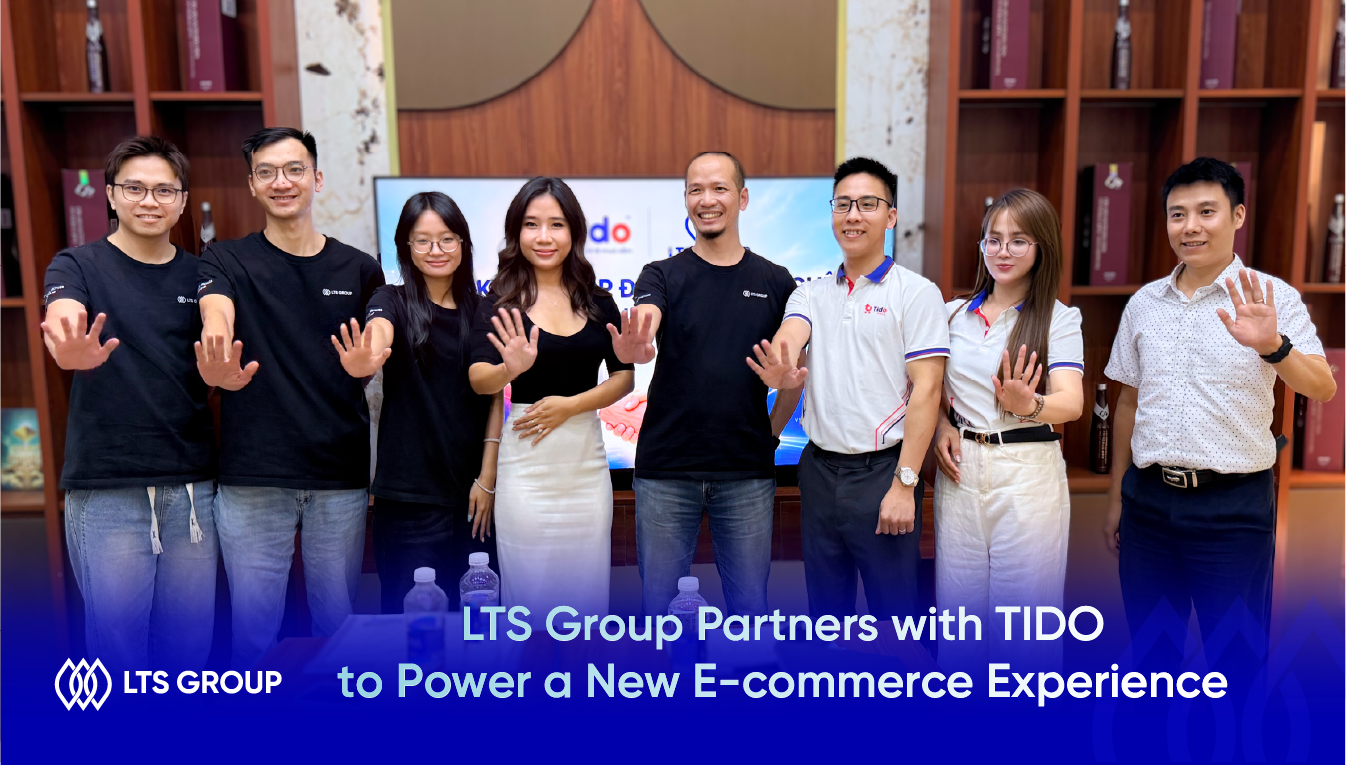
LTS Group & TIDO Sign Contract to Develop A Next-generation Interactive eCommerce Platform
Sep 28, 2026
-3 mins read
On September 11, 2026, Vietnam-based IT solutions provider LTS Group and digital platform TIDO officially signed a software development contract. The partnership marks the beginning of a strategic collaboration to build a unique, gamified eCommerce platform. Unlike conventional eCommerce platforms, TIDO merges online retail with interactive entertainment. By introducing gamification mechanics, such as lucky wheel rewards, the platform turns standard purchases into engaging, reward-winning experiences. To turn this vision into a scalable, long-term business, TIDO selected LTS Group to build a robust, flexible technological foundation. LTS Group is guiding the project with a “solid core platform first, features second” engineering philosophy. As the solution architect, LTS Group designed a modular, secure architecture focused on protecting cash flow and user data privacy. This foundation ensures the platform scales smoothly alongside TIDO’s growth without requiring structural rebuilds. A key highlight of this partnership is LTS Group’s AI-driven software development model. Replacing traditional, multi-month development cycles, LTS Group deploys specialized agentic AI across the entire software development lifecycle, from business analysis and system design to coding and testing. Operating under the strict supervision of LTS Group’s tech and QA experts at defined quality gates, this model dramatically accelerates time-to-market while ensuring uncompromised software quality. Together, LTS Group and TIDO are turning an innovative concept into a market-ready product, setting a new standard for interactive online shopping. About TIDO TIDO is an innovative digital platform redefining online retail. Moving beyond standard eCommerce models, TIDO creates a differentiated experience that seamlessly combines online shopping with interactive entertainment and gamification. About LTS Group Established in 2016, LTS Group is a fast-growing Vietnamese IT service provider. Formerly a leading Quality Assurance company in Vietnam (LQA), LTS Group has now grown into a diverse ecosystem of 10 entities, delivering end-to-end technology services including AX and DX Consulting, Bespoke AI System Development, System Testing, Digital BPO, and Global HR Services. With 4 dedicated subsidiaries in the USA, Japan, South Korea, and Australia, we serve 60+ clients across more than 11 countries with a 97% satisfaction rate. These milestones affirm our service quality and drive us toward our 2027 goal of becoming a world-class AI-first IT service company.



Email:contact@ltsgroup.tech
Phone:(+84) 96-238-7474
Headquarters:17th Fl, MD Complex Office Building, 68 Nguyen Co Thach Street, Hanoi, Vietnam
Japan:5F, Iwamoto Building, 3-20-10 Shibaura, Minato-ku, Tokyo 108-0023, Japan
US:25787 Rawley Springs Dr, Chantilly, VA 20152
South Korea:Room 1214, 12th Floor, Daerung Seocho Tower, 327 Gangnam-daero, Seocho-gu, Seoul, South Korea
Australia:1/63 Cobden Street, Kew VIC 3101, Australia