The Agile Software Development Life Cycle: Essential Stages & Comprehensive Guide
Mar 21, 2024
-21 mins read

In the current ever-evolving technology landscape, the ability to swiftly adjust to the changing market demands, customer requirements, and emerging technologies is crucial. This is where agile methodology plays a vital role.
Within this guide, we’ll thoroughly explore the Agile software development life cycle, breaking down each phase of the process and offering actionable advice and strategies for teams aiming to embrace an agile mindset.
Whether you’re a newcomer to agile or an experienced practitioner, this guide caters to all levels of expertise. Let’s get cracking!
What Is Agile Software Development Life Cycle?
What is agile?
Agile represents the capacity to adapt to change effectively. It is the most advantageous approach for navigating uncertainty, whether it’s uncertainty about something or what might affect it.
When a business embraces an agile lifecycle, it gains the ability to quickly address alterations without getting overwhelmed in a fast-changing environment.
In today’s landscape, where consumer expectations evolve faster than businesses can anticipate, employing an agile methodology and progressively resolving uncertainties can mitigate substantial risks.

What is agile model in software development life cycle?
The agile methodology software development life cycle is a method of iterative adaptive software development that highlights flexibility, collaboration, iterative progress, and quick adaptation to change.
An agile delivery model involves breaking down projects into small releases and executing them through iterative cycles. Throughout each cycle, IT experts complete a defined amount of work and seek stakeholder feedback.
These iterations progressively build on each other, with subsequent versions improving upon their predecessors until the product achieves optimal alignment with market needs.
The software development life cycle agile model is particularly suited for developing complex systems with dynamic requirements, making it a preferred alternative to the traditional waterfall approach in recent years.
Agile software development methodologies
Here are the 4 most common agile software development methodologies:
| Aspect | Scrum | Kanban | Extreme Programming (XP) | Feature-driven Development (FDD) |
| Primary focus | Iterative development, with fixed-length iterations (sprints). | Continuous delivery, with no fixed iterations. | Continuous improvement and rapid feedback loops. | Feature-centric, iterative development process. |
| Advantages | – Clear roles and responsibilities.
– Predictable delivery with fixed iterations. – Strong emphasis on teamwork and collaboration. | – High adaptability to changing priorities.
– Reduced waste through continuous flow. – Increased visibility into the workflow. | – Emphasis on technical excellence and quality.
– Rapid feedback loops enhance responsiveness. – Continuous integration ensures a stable codebase. | – Focuses on delivering tangible features.
– Flexible approach allows for changing requirements. – Emphasis on domain expertise in feature teams. |
| Disadvantages | – Rigidity can lead to resistance to change.
– Requires strict adherence to roles and ceremonies. – Can be challenging for large teams. | – Lack of defined roles may lead to ambiguity.
– Disciplined workflow management required. – May need a structured improvement process. | – May require significant cultural and procedural changes.
– High dependency on test automation and continuous integration. – Can be challenging to implement in non-co-located teams. | – Requires upfront planning and design.
– Dependency on domain experts for feature definition. – May need help with rapidly changing requirements. |
| When to use | Suitable for teams requiring structure and regular milestones. | Suitable for teams with varying workloads and continuous delivery goals. | Suitable for teams valuing technical excellence and rapid feedback. | Suitable for teams focusing on feature delivery and iterative development. |
Traditional SDLC vs agile

Let’s see the fundamental differences between the traditional software development life cycle vs agile.
| Aspect | Traditional (Waterfall) SDLC | Agile Software Development Life Cycle |
| Development process | Sequential, linear phases | Iterative |
| Flexibility | Less flexible | Highly flexible |
| Requirements | Defined upfront | Adaptive to change |
| Delivery schedule | Fixed deadlines | Flexible timelines |
| Feedback | At the end of the project | Continuous feedback |
| Risk management | Addressed late in the process | Integrated throughout |
| Documentation | Extensive upfront | Lightweight |
| Team collaboration | Limited interaction | High collaboration required |
| Deliverables | Single release | Multiple releases |
| Adaptability | Low | High |
| When to use | Well-suited for stable requirements and projects with predictable outcomes | Ideal for projects with evolving requirements and dynamic environments |

The 5 Stages of the Agile Software Development Lifecycle
Within the agile software development lifecycle, a product progresses through a well-defined sequence of stages, commonly comprising six agile software development life cycle phases or agile methodology steps. Each phase determined in the software development plan spans one to three weeks and encompasses:

Phase 1: Concept
This initial stage in the agile software development life cycle involves the initial idea generation and conceptualization of the project. It often includes defining the following aspects:
- Problem: Clearly articulate the specific issue or need the software aims to solve or address.
- Goals: Define the overarching aims and specific outcomes that the project intends to achieve.
- Timeline: Establish an initial timeline outlining key milestones and deadlines for different stages of the project, providing a framework for project planning and execution.
- Cost estimation: Estimate the financial resources required for the project, including expenses related to development, testing, deployment, and ongoing maintenance, to ensure effective budgeting and resource allocation.
- Project’s scope: Establish the boundaries and extent of the project, determining what features and functionalities will be included in the initial release.
- Target audience: Identify the primary users or customer base for the software and understand their needs, preferences, and pain points.
- Success criteria: Define measurable criteria that will indicate the project’s success or achievement of its objectives.
This comprehensive analysis aids in determining the feasibility of a project before initiating work. Bear in mind that if you intend to hire a web development team to do the heavy lifting, an intricate project specification is a must.
Phase 2: Inception
Once the concept is outlined, the next step in the agile software development life cycle is to identify team members, allocate roles, and provide development with the necessary tools.
Before initiating the development phase, it’s crucial to lay out a plan and establish the fundamental set of approaches and templates for upcoming development tasks. This preparatory stage, referred to as the inception phase, comprises two components:
- UI/UX design: involves designers crafting a prototype of the user interface and experience, conducting a thorough analysis of competitors’ strengths and weaknesses.
- Product architecture: entails the dedicated team deliberating on the most appropriate tools to fulfill business needs, encompassing frameworks, containers, programming languages, etc.
Upon completion of this phase, the team and software framework are established, enabling progression to the subsequent stage.
Phase 3: Iteration
Iteration is the longest phase of the agile software development life cycle, and is also referred to as the construction stage. This is where the actual development work takes place. It consists of multiple iterations or sprints where features are developed, tested, and integrated into the product incrementally.
Each agile iteration typically lasts several weeks and includes four stages: Planning, Execution, Review, and Backlog Refinement.
- Planning: Select and estimate requirements, defining necessary tasks.
- Execution: Develop, test, and integrate software incrementally.
- Review: Stakeholders evaluate the increment and provide feedback.
- Backlog Refinement: Update the product backlog to maintain alignment with project goals regularly.
This phase serves as a fundamental aspect of agile software development, facilitating the rapid creation of functional software and iterative enhancements to exceed client expectation.
Phase 4: Release
This stage of the agile software development life cycle involves deploying the product to the end-users or customers. It may include beta testing, functional testing, user training, and finalizing documentation.
The quality assurance team must conduct tests to verify the software’s functionality. The agile team members will examine the system to confirm clean code, promptly address any bugs or defects uncovered by the testing process.
Additionally, user training will occur during this phase, necessitating additional documentation. Once these tasks are accomplished, the product’s final iteration can be released into production.
Phase 5: Maintenance
After the product is released, it enters the maintenance phase. During this phase, the software development team will continue to offer support to maintain the system’s smooth operation and address any newly identified bugs.
Additionally, they will be available to provide further training to users, ensuring their proficiency with the product.
As time progresses, new iterations will be introduced to enhance the existing product with upgrades and additional features.
Benefits of Agile Software Development Life Cycle
Through the integration of Agile software development life cycle into software development practices, 64% of companies reported enhanced ability to effectively manage shifting priorities.
Meanwhile, 47% of organizations noted improved communication and collaboration between IT and business teams following the implementation of agile methodologies.

Here are several key reasons why your business should consider adopting Agile software development life cycle in 2024:
- Flexibility: Agile allows teams to adapt quickly to changing requirements and priorities.
- Customer satisfaction: Continuous feedback loops ensure that products better align with customer needs and expectations.
- Faster time to market: Short development cycles enable quicker software delivery of usable software increments.
- Improved quality: Constant testing and integration result in higher software quality.
- Enhanced collaboration: Close teamwork and frequent communication foster better collaboration.
- Increased transparency: Visible progress and challenges enable stakeholders to make informed decisions.
- Better risk management: Early issue identification reduces project risks.
- Cost-efficiency: Agile minimizes budget overruns and optimizes resource utilization.
- Adaptability to change: Agile methodologies prioritize flexibility to respond effectively to evolving requirements and market dynamics.
Overall, agile software development life cycle offers numerous benefits that enable teams to deliver high-quality software efficiently, while remaining responsive to changing business needs and customer expectations.
Challenges of Agile Software Development Life Cycle
In spite of numerous benefits, the agile software development life cycle presents several challenges:

- Managing changing requirements: Agile’s emphasis on adaptability can make it challenging to effectively manage frequent changes in project requirements while maintaining delivery timelines.
- Dependency management: Agile teams must navigate challenges in managing external dependencies such as third-party APIs and services, especially when changes or failures occur.
- Limited documentation: Agile’s preference for working software over comprehensive documentation can lead to challenges in maintaining sufficient documentation for future reference or knowledge transfer.
- Difficult measurement: Agile’s focus on delivering value incrementally may bring about limitations in measuring progress and project success using traditional metrics, leading to difficulties in assessing project performance.
- Poor communication and collaboration: Inadequate communication and collaboration among team members can hinder progress in agile projects, leading to misunderstandings, delays, and lower-quality outcomes.
While Agile offers numerous benefits, addressing these challenges effectively is crucial for successful implementation and realizing its full potential in software development projects.
Streamline the Agile Software Development Lifecycle With LTS Group
As one of the prominent software development companies located in Hanoi – the primary tech hub in Vietnam, LTS Group has been providing end-to-end software development and testing solutions with a proven track record spanning over 7 years.
At LTS Group, the agile software development lifecycle is our go-to approach, refined over years of working in different industries.
Our battle-hardened agile team has successfully managed projects of all sizes and complexities, helping businesses overcome hurdles like slow product launches and gaining an edge over competitors.
Partnering with LTS Group yields an array of benefits for our clients:
- Flexible outsourcing models: Choose from our three flexible partnership models—dedicated team, fixed price, or time & materials—tailored to suit your specific needs.
- Access to qualified IT human resources: Fuel your software development project with our dedicated agile team of 350+ highly qualified and certified developers & QA engineers.
- Diverse domain expertise: Leverage our extensive experience across multiple industries, including BFSI, Healthcare, Automotive, Construction, Education, eCommerce, and Retail.
- Cost saving: Leverage the cost advantages of outsourcing to Vietnam, including lower production costs, reduced labor expenses, and tax incentives. On average, LTS Group helps clients save up to 30% on operating costs, contributing to overall financial optimization.
- Quick technology adaption: Stay ahead of the curve with LTS Group’s proactive approach to technology adoption, such as AI development, cloud solutions, blockchain technology and so on, ensuring your solutions are always equipped with the latest advancements.
Frequently Asked Questions About Agile Software Development Life Cycle
1. What is the agile manifesto?
Have you ever wondered “What is agile methodology?”. Here comes the concise and digestible answer. The agile manifesto, established in 2001, outlines a set of principles guiding agile software development. It prioritizes values such as individuals and interactions, collaboration, and responsiveness to change over rigid processes and documentation. It serves as a foundation for agile methodologies, emphasizing adaptability and customer-centric development approaches.
2. What is agile SDLC?
Agile software development life cycle (SDLC) is an iterative and flexible approach to software development. It focuses on delivering value to customers through incremental releases and continuous feedback loops. Agile software development life cycle encourages collaboration between cross-functional teams, rapid adaptation to changing requirements, and frequent software deliveries.
3. What are the five agile software development life cycle phases?
The Agile software development life cycle typically consists of six stages: Concept, Inception, Iteration/Construction, Release and Maintenance. In the Concept phase, the product vision and goals are identified. Inception involves high-level planning and team formation, while Iteration/Construction focuses on iterative development and testing.
4. What are agile vs waterfall key differences?
Software development life cycle waterfall vs Agile software development life cycle represents contrasting approaches to software development. Waterfall follows a sequential, linear process, whereas agile software development life cycle is iterative and incremental. Agile emphasizes flexibility, adaptability, and customer collaboration, while Waterfall requires detailed upfront planning and has less room for change. Additionally, Agile mitigates risk through continuous testing and feedback loops, whereas Waterfall poses higher risks due to its rigid structure and limited adaptability.
Final Thoughts About Agile Software Development
Agile software development life cycle (SDLC), by and large, offers enhanced flexibility, faster delivery times, and improved customer satisfaction by promoting iterative development and constant collaboration.
Its adaptability to changing requirements allows teams to respond promptly to market demands, resulting in more competitive and customer-centric software products.
Through our clear explanations and practical insights above, we hope that we help you embrace Agile software development life cycle methodologies confidently and effectively in your software development projects.
Should you have a project in mind and seek seasoned expertise in Agile software development life cycle, don’t hesitate to reach out to our agile experts.
Share


Ashley Nguyen
Meet Ashley Nguyen, our dedicated Content Marketing specialist with a passion for digital transformation, AI, and software development. Ashley's words bridge the gap between complex tech concepts and everyday understanding. Her insightful pieces not only educate but also inspire readers to embrace the ever-evolving landscape of innovation. Join her in exploring the evolving landscape of technology and innovation. Contact her at ashley@ltsgroup.tech

More must-reads to keep leaders updated

Meet LTS Group at Autonomous Driving Mobility Expo (AME) 2026
Sep 28, 2026
-2 mins read
LTS Group will participate in Autonomous Driving Mobility Expo 2026 (AME 2026), Korea’s largest exhibition dedicated to autonomous driving and future mobility. The event will take place from August 25 to 27, 2026, at Hall B, COEX, Seoul. About AME 2026 AME 2026 will bring together more than 60 exhibitors across 150 booths to showcase the latest technologies and business trends in autonomous driving and future mobility. Held alongside EV Trend Korea 2026, the event will focus on the transition to software-centric vehicle architectures built around software-defined vehicles (SDVs), along with advances in ADAS and autonomous driving technologies. What LTS Group Will Showcase The automotive industry is rapidly evolving as sustainability, intelligent technologies, and service-based models reshape the market. As vehicles become increasingly software-driven, automotive software development, validation, and data labeling for ADAS and autonomous driving are becoming essential to future competitiveness. At AME 2026, LTS Group will showcase: Automotive software development and validation for SDVs; Data labeling solutions for ADAS and autonomous driving; LTS AutoTCGen, an AI-powered tool that generates ASPICE-compliant automotive software test cases (live demo). LTS Group’s CEO, Head of Automotive, Sales Director, and Delivery Manager will be on-site to introduce our solutions and discuss your automotive technology needs. Event Details Date: August 25–27, 2026 Venue: Hall B, COEX, Seoul Visit the LTS Group booth to explore our automotive software development and validation services, ADAS data labeling solutions, and LTS AutoTCGen. To arrange a meeting in advance, don’t hesitate to get in touch with us using the details below!
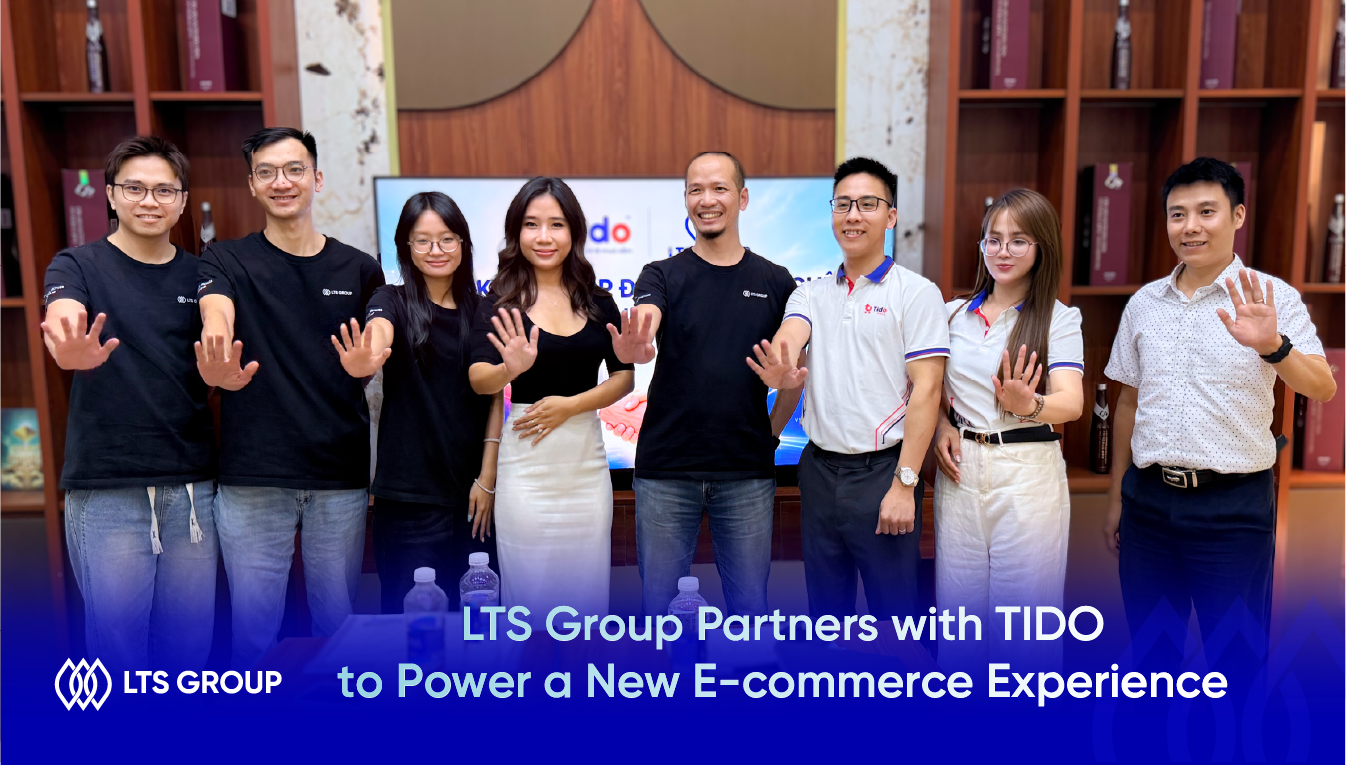
LTS Group & TIDO Sign Contract to Develop A Next-generation Interactive eCommerce Platform
Sep 28, 2026
-3 mins read
On September 11, 2026, Vietnam-based IT solutions provider LTS Group and digital platform TIDO officially signed a software development contract. The partnership marks the beginning of a strategic collaboration to build a unique, gamified eCommerce platform. Unlike conventional eCommerce platforms, TIDO merges online retail with interactive entertainment. By introducing gamification mechanics, such as lucky wheel rewards, the platform turns standard purchases into engaging, reward-winning experiences. To turn this vision into a scalable, long-term business, TIDO selected LTS Group to build a robust, flexible technological foundation. LTS Group is guiding the project with a “solid core platform first, features second” engineering philosophy. As the solution architect, LTS Group designed a modular, secure architecture focused on protecting cash flow and user data privacy. This foundation ensures the platform scales smoothly alongside TIDO’s growth without requiring structural rebuilds. A key highlight of this partnership is LTS Group’s AI-driven software development model. Replacing traditional, multi-month development cycles, LTS Group deploys specialized agentic AI across the entire software development lifecycle, from business analysis and system design to coding and testing. Operating under the strict supervision of LTS Group’s tech and QA experts at defined quality gates, this model dramatically accelerates time-to-market while ensuring uncompromised software quality. Together, LTS Group and TIDO are turning an innovative concept into a market-ready product, setting a new standard for interactive online shopping. About TIDO TIDO is an innovative digital platform redefining online retail. Moving beyond standard eCommerce models, TIDO creates a differentiated experience that seamlessly combines online shopping with interactive entertainment and gamification. About LTS Group Established in 2016, LTS Group is a fast-growing Vietnamese IT service provider. Formerly a leading Quality Assurance company in Vietnam (LQA), LTS Group has now grown into a diverse ecosystem of 10 entities, delivering end-to-end technology services including AX and DX Consulting, Bespoke AI System Development, System Testing, Digital BPO, and Global HR Services. With 4 dedicated subsidiaries in the USA, Japan, South Korea, and Australia, we serve 60+ clients across more than 11 countries with a 97% satisfaction rate. These milestones affirm our service quality and drive us toward our 2027 goal of becoming a world-class AI-first IT service company.

Meet LTS Group at Tech Week Singapore 2026
Sep 25, 2026
-3 mins read
LTS Group is pleased to announce our participation in Tech Week Singapore 2026, taking place September 29-30 at the Sands Expo Convention Centre in Singapore. Representing LTS Group at the event are Xuan Phung, CEO of LTS Group, and Giang Duong, Regional Director of Business Development. They look forward to engaging with cloud architects, data leaders, cybersecurity experts, infrastructure teams, and enterprise decision-makers from across Southeast Asia and the wider APAC region. About Tech Week Singapore 2026 As one of Asia’s premier enterprise technology gatherings, Tech Week Singapore brings together over 29,000 technology leaders and visionaries alongside more than 500 leading solution providers. The 12th edition features five co-located flagship events under one roof: Cloud & AI Infrastructure Asia, DevOps Live!, Cyber Security World Asia, Data Centre World Asia, and Big Data & AI World Asia. With dynamic sessions across its mainstage and conference tracks, Tech Week Singapore offers a vibrant platform for industry pioneers, policy influencers, and ecosystem builders to share strategic insights and shape the future of digital transformation. Connect with LTS Group at Tech Week Singapore 2026 At the event, our team will showcase LTS Group’s AI transformation and data solutions, offering practical insights into how businesses can build, modernise, and scale their digital platforms alongside a QA-backed engineering partner from Vietnam. Our expertise spans AI transformation strategy, custom AI development, data engineering, and legacy system modernization. By combining deep domain knowledge, engineering excellence, and rigorous quality assurance, we help enterprises accelerate AI adoption and build scalable, future-ready digital systems tailored to their exact business requirements. Xuan Phung and Giang Duong welcome the opportunity to meet with industry peers, exchange perspectives on emerging tech trends, and explore strategic partnerships during the event. Event details Date: September 29-30, 2026 Venue: Sands Expo & Convention Centre Address: 10 Bayfront Ave, Singapore 018956 If you are attending Tech Week Singapore 2026 and want to discuss your next technology initiative, connect with the LTS Group team to schedule a meeting in Singapore.



Email:contact@ltsgroup.tech
Phone:(+84) 96-238-7474
Headquarters:17th Fl, MD Complex Office Building, 68 Nguyen Co Thach Street, Hanoi, Vietnam
Japan:5F, Iwamoto Building, 3-20-10 Shibaura, Minato-ku, Tokyo 108-0023, Japan
US:25787 Rawley Springs Dr, Chantilly, VA 20152
South Korea:Room 1214, 12th Floor, Daerung Seocho Tower, 327 Gangnam-daero, Seocho-gu, Seoul, South Korea
Australia:1/63 Cobden Street, Kew VIC 3101, Australia