For the full guide to success where we cover the ins and outs of setting up an ODC in Vietnam, grab our latest ebook Vietnam offshore development center: How to set up for agile delivery and strategic scale now!
Vietnam Offshore Development Center: A Full Guide To Success
Feb 16, 2024
-29 mins read

In this fiercely competitive global market, businesses constantly seek ways to cut costs, boost efficiency, and deliver unmatched results. For many, offshore development centers (ODCs) have become the go-to solution, providing access to skilled talent, operational scalability, and significant cost savings.
And among the many offshore destinations, Vietnam stands out.
With a vibrant tech ecosystem, a dynamic and ambitious workforce, and a strategic location in Asia, Vietnam’s technology sector strikes the perfect balance between cost-efficiency and high-quality results. Coupled with its growing integration into global trade agreements, the country shines as a destination for companies looking to scale smarter and faster.
However, setting up a successful offshore development center in Vietnam demands a strategic approach, a deep understanding of the local market, etc.
In this article, we’ll walk you through everything you need to know about Vietnam offshore development center service, from detailed steps to build your own team to a real-world success story that brings these principles to life.
Let’s get cracking!
What is an Offshore Development Center?
An offshore development center, as it is so-called, is a software development center located in a different country from the company’s primary location. A typical ODC should have flexibility and scalability on human resources options and can be formed from scratch or by rescaling an existing team.
An ODC can be implemented by the company itself or delegated to trusted IT outsourcing vendors. Nevertheless, in most cases, businesses choose to outsource to local agencies to mitigate risks, reduce headaches, and take advantage of local insights.
For example, a company in the US hires offshore developers in Vietnam to develop an enterprise resource planning (ERP) system.
But wait! New to offshore development? Let’s first get a thorough understanding of offshore software development before moving on!
Vietnam Offshore Software Development Center: A Rising Star in Southeast Asia
Vietnam overview
| Location: Southeast Asia
Time zone: GMT+7 Population: 101,314,714 (Jan 2025) ICT revenue: $45.5 billion (2024) 2024 GDP growth rate: 7.09% (vs 5.05% in 2023) Operating cost* for business: $79,280/ month (the second-lowest in Asia) (*) Operating costs = Cost of goods sold (COGS) + Operating expenses (OPEX) |
So, why choose offshore development center Vietnam?
Favorable business environment
Running an ODC in Vietnam is considered low-risk, beneficial, and sustainable for worldwide businesses regardless of region and religion.
Strategic location
Vietnam is strategically positioned in the heart of Southeast Asia, boasting a coastline stretching over 3,000 kilometers. Its proximity to major international shipping and trading routes provides businesses with seamless access to key global markets. This prime location enhances connectivity and facilitates efficient offshore operations, making Vietnam a natural hub for companies establishing development centers.
Political stability
Vietnam’s political stability stems from its governance under the Communist Party and a well-established socialist legal framework. This stable political environment fosters predictability and consistency in policymaking, which is crucial for foreign investors and companies seeking long-term commitments in offshore development.
High social stability and cultural harmony
Vietnam enjoys a high degree of social stability, supported by the peaceful coexistence of diverse religious communities. The country experiences minimal religious conflict or discrimination, contributing to a harmonious social fabric. This stability reduces operational risks and creates a safe, inclusive atmosphere for multinational teams working within offshore development centers.
The country ranks 6th on the Global Services Location Index (Kearney report) and 21st globally on the Open For Business index (US News report), gaining increasing recognition as one of the top destinations for offshore development center setup.

International integration
Vietnam’s commitment to global economic integration significantly boosts its attractiveness as an offshore development hub. Over the past three decades, Vietnam has actively pursued comprehensive international trade agreements, signing 16 free trade agreements (FTAs) and engaging in large trade organizations like AFTA, WTO, APEC, ASEAN, and FAO.
Diplomatically, Vietnam maintains relationships with nearly 170 countries worldwide, including all major global powers, and has secured Most Favored Nation (MFN) status with 72 nations. As of May 2025, the country has established 13 comprehensive strategic partnerships with influential economies as follows: China, Russia, India, South Korea, USA, Japan, Australia, France, Malaysia, New Zealand, Indonesia, Singapore, and Thailand.
Vast IT talent pool
Vietnam provides abundant choices in tech talent across a wide range of domains and tech stacks.
As of 2025, the country hosts nearly 65,000 IT companies, including 5,097 hardware firms and 18,162 software and IT service companies. The tech and digital workforce includes around 560,000 IT professionals working across diverse domains such as web and mobile application development, blockchain, artificial intelligence, metaverse technologies, cloud computing, and data analytics.
What’s more, annually, 55,000 to 60,000 students graduate in computer science and related IT fields, continuously replenishing the talent pipeline.
Notably, Vietnamese developers are recognized for their high competency and strong problem-solving skills. The country ranks 2nd in the Asia-Pacific region according to the Global Skills Index, 8th out of 83 countries on Topcoder, and holds 2nd position globally in developer and freelancer rankings (SkillValue).

Competitive pricing
Reasonable costs are another deciding factor for businesses to have IT outsourcing in Vietnam.
Numbers speak volumes. According to the U.S. News, Vietnam scores 99.6/100 on cheap manufacturing costs in 2024.
Also, Singaporean business transformation consultancy TMX ranked Vietnam second for its low production costs among 55 Asian countries, citing an average monthly total cost of $79,280 for a manufacturing company.
Vietnam is also located in Southeast Asia, where the average software developer’s hourly rate is the most competitive. For example, at LTS Group, it only takes our client $15-45 to hire a software engineer, depending on skillsets and seniority.

Zoom in on offshore software development rates by country to have a broad picture of current software development expenses around the world.
Government support
Vietnam’s government actively supports the IT sector through favorable policies, tax incentives, and strategic initiatives aimed at driving digital transformation.
Tax incentives and financial support
Science and technology enterprises benefit from a four-year corporate income tax exemption followed by a 50% reduction for the next nine years.
Additionally, software development projects, including outsourced software services, are exempt from VAT.
These fiscal policies provide offshore development centers with significant cost advantages, allowing reinvestment in talent development and technological infrastructure.
Strategic digital transformation policies
To advance its goals in science, technology, and digital transformation, the Vietnamese government has implemented key policies and strategic directions, including:
- Decision No. 569/QD-TTg dated 11 May 2022 on Promulgating the strategy for the development of science, technology, and innovation by 2030
- Decision No. 411/QD-TTg dated 31 March 2022 on Approval for the national strategy for the development of the digital economy and digital society by 2025, orientation towards 2030.
- Decision 1290/QD-BKHCN: Principles for responsible AI development, emphasizing transparency, safety, and human rights protections in AI systems.
- Decision No. 29/2021/QD-TTg (Special investment incentives): Policies designed to attract high-tech investments.
- Semiconductor industry strategy: A vision for 2050 to position Vietnam as a global leader.
- National blockchain strategy 2025: Aiming for regional leadership in blockchain by 2030.
- Vietnam National Innovation Center (NIC) (in Hanoi & Hoa Lac hi-tech park): Promoting and supporting the innovation ecosystem of Vietnam, contributing to the reform of the development model based on science and technology.
Adoption of international standards and data protection
The Ministry of Finance detailed a plan in Decision 345/QĐ-BTC to implement the International Financial Reporting Standard (IFRS) in Vietnam, with mandatory adoption starting in 2025. The benefits of IFRS include increased transparency, global comparability, stakeholder confidence, and better access to funding.
Decree No. 13/2023/NĐ-CP on Personal Data Protection, effective from July 1, 2023, outlines detailed data protection and cybersecurity responsibilities for personal data processing activities.
Technology and digital innovation
Vietnam’s digital economy is expanding rapidly, with revenues projected to reach $57 billion by 2025 at an impressive compound annual growth rate of 14%.
According to the Ministry of Information and Communications, the total revenue of Vietnam’s ICT industry in 2024 was estimated at $165.9 billion, an increase of 13.2% from 2023.
In terms of global recognition, Vietnam ranked 46th out of 132 economies on the Global Innovation Index, demonstrating its growing capacity for research and development.
In addition, Vietnam’s readiness for AI has improved significantly. The 2023 AI Readiness Index by Oxford Insights ranked Vietnam 39th out of 193 countries. This ranking reflects Vietnam’s increasing ability to integrate AI technologies into both public and private sectors.
It’s no surprise that Vietnam has emerged as a top choice for tech giants:
- NVIDIA’s major investment: Two new AI centers in Vietnam and the acquisition of VinBrain strengthen Vietnam’s tech infrastructure.
- Marvell tech expansion: Opened its 3rd office in Danang, joining locations in Hanoi and HCMC.
- Big tech tax contributions: Google, Meta, Microsoft, and more collectively paid over $160 million in taxes by May 2024.
- Foxconn’s new projects: A $551 million investment in Quang Ninh for smart-system equipment and entertainment products.
- Apple supplier 3M: Established a science and tech center in Hanoi.
- Semiconductor FDI boom: $12 billion investment, 174 projects, and a robust ecosystem of 50+ IC design firms and 7 chip factories.
How to Set Up Offshore Development Center in Vietnam?
To help organizations get the most out of Vietnam offshore development center services, here is a detailed guide to successfully building a dedicated offshore development center in Vietnam.

Define project scope and budget
First things first, organizations need to clearly define the project’s goals, scope, vision, and budget to shape the ODC’s structure and operations. With clear project goals and scope, stakeholders can visualize the operational flow of IT projects and identify the most suitable ODC model, facilitating successful implementation later on.
Regarding budgeting, the budget should comprehensively cover development, infrastructure, and future maintenance expenses. This financial plan enables the company to not only determine the most appropriate business model but also set achievable expectations.
Additionally, project managers and leaders must estimate the necessary team size and project duration.
Important considerations for businesses:
- Specific operations and outcomes expected from the ODC
- Available budget and resources
- Key milestones and timelines for the setup process
- Required technologies and expertise
- Risk mitigation strategies
Pick a location
While Vietnam is a great environment for building an ODC, the country consists of 5 centrally controlled municipalities and 58 provinces, each bringing unique advantages for different types of businesses.
Still, three cities emerge as prime locations for ODCs, i.e., Ho Chi Minh City, Hanoi, and Da Nang.
Ho Chi Minh City (HCMC)
As the economic powerhouse of Southern Vietnam, Ho Chi Minh City is a top choice for ODCs. The city leads in terms of economics, finance, science, and technology, combined with the largest concentration of tech talent. With a thriving tech ecosystem and government policies favoring digital transformation, HCMC continues to be the go-to location for companies looking to set up an ODC in Vietnam.
- Land area: 2,061 km2
- Population: 9.6 million (2024)
- GRDP: 70 billion USD (2024, nominal)
- FDI: 6 million USD (2023)
Hanoi
As the capital of Vietnam, Hanoi is a significant player in the northern region, known for its strong economy and large IT labor pool. While it ranks second to HCMC regarding economic output, it’s still a leading destination for businesses looking to harness Vietnam’s tech potential.
- Land area: 3,360 km2
- Population: 5.4 million (2024)
- GRDP: 59 billion USD (2024, nominal)
- FDI: 3 million USD (2023)
Da Nang
Located in Central Vietnam, Da Nang is an emerging city with a growing tech sector. The city has fewer IT resources compared to HCMC and Hanoi, but its lower cost of living and affordable wages make it an attractive option for ODCs.
Besides, Da Nang’s rapid development in the technology sector, coupled with its quality of life, positions it as a cost-effective alternative to the bigger cities.
- Land area: 1,283 km2
- Population: 1.3 million (2024)
- GRDP: 5.42 billion USD (2022, nominal)
- FDI: 202.8 million USD (2023)
For a deeper dive into Vietnam’s IT landscape and to explore these cities in greater detail, download our ebook “Vietnam’s IT Services Industry: Landscape, Challenges, and Opportunities”.
Select the right ODC partner
After determining the ideal location, the next step is finding a reliable ODC vendor. Vietnam is home to many leading IT outsourcing companies that specialize in building ODCs for global businesses. With deep local expertise, these vendors can efficiently handle the setup process while providing long-term operational support.
With numerous service providers available, narrowing down the right fit can be challenging. To make an informed decision, businesses should evaluate potential partners based on key factors such as:
- Relevant expertise, industry experience, and technical capabilities
- Strong understanding of the local market and established networks
- Transparent pricing models
- Adherence to strict security standards and reliable time commitments
- Consistent communication and dedicated long-term support
Learn more:
Top 9 best offshore web development company list | 2025 updated
Top offshore software development company review in 2025
Ensure legal and regulatory compliance
A solid grasp of local laws lays the foundation for a legally sound and smoothly functioning ODC.
To start, intellectual property protection must be a priority. Businesses need to establish non-disclosure agreements (NDAs), IP agreements, and data security policies upfront to safeguard confidential information. Given that legal frameworks differ across regions, regularly reviewing data protection and privacy laws is of great importance to maintaining compliance and mitigating risks.
Employment laws and tax regulations also require careful attention. We suggest companies consult with the ODC vendor on these matters to stay compliant and prevent potential legal complications down the line.
Build a secure and scalable infrastructure
For an ODC to function well, it’s critical to establish a robust, scalable infrastructure that fosters productivity, collaboration, and strong security measures.
Here are 3 important elements organizations should focus on preparing:

- Cloud-based development environments: Use cloud services such as AWS, Azure, and Google Cloud to create a flexible and scalable infrastructure that adapts to the evolving needs of the project.
- Robust security and collaboration tools: Integrate VPNs and multi-factor authentication (MFA) to protect user access and sensitive data. Besides, use encryption for all communication channels to maintain the confidentiality and integrity of information throughout the development process.
- Access control and IT governance: Implement role-based access control (RBAC) to restrict access to confidential data.
Besides, regular security audits play a crucial role in detecting vulnerabilities and resolving potential issues. Adopting ISO 27001-certified policies further reinforces data protection and compliance with international security standards.
Assemble the ODC team
Collaborate closely with the ODC partner to build a skilled and cohesive project team.
Clear communication and alignment on roles, expectations, and responsibilities are key for successful teamwork. It’s also important to share the company’s culture, values, and vision so that the ODC team can be fully integrated and motivated to contribute to the project’s success.
Typically, a well-rounded ODC team encompasses the following roles:
- Management team: Project managers, Account managers, Business analysts
- Technical team: Developers/programmers, UI/UX designers, Technical writers, Quality assurance analysts/testers.
- Support team: Human resources (HR) specialists, Administrative and support staff.
Learn more: How to outsource development team with ease and manage it effectively?
Launch, integrate, and manage the ODC team
Now it’s time to officially launch the ODC team and put it to work.
Integrate the ODC team with the internal team
To achieve seamless collaboration, companies should closely integrate the ODC team into their company culture and business workflows.
Facilitating the integration involves setting up effective communication channels, such as daily updates, weekly check-ins, and regular progress reviews, as well as appointing specific contacts within both teams to drive smooth interactions. More on this later!
Adopt an effective ODC management framework

Common problems
While running an ODC, businesses run into several problems:
- Knowledge retention: Long-term projects risk knowledge erosion when team members cannot recall details about untouched systems, causing inaccurate work estimations and project delays.
- Quality control: It’s not an easy feat to maintain consistent quality standards across geographically dispersed teams, which can easily falter without robust quality measures.
- Coordination: Managing resources and tasks across different locations can present significant logistical challenges, potentially leading to inefficiencies and miscommunication.
- Scope creep: Uncontrolled changes in project requirements often result in disrupted timelines and inflated budgets, complicating project management.
- Cultural differences: Misunderstandings stemming from different work cultures can hinder effective collaboration and team synergy.
- Time zone differences: Coordinating across time zones can negatively impact productivity and require well-planned schedules.
Solutions
With the problems mentioned above, we’d like to propose the following best practices:
- Centralized knowledge management
Use platforms like Confluence to create a shared, regularly updated knowledge base. This helps all team members stay aligned on system architecture, requirements, and project context.
- Task management tool
To facilitate task tracking and maintain clear communication, businesses can benefit from using common task management tools such as Jira, Trello, and Confluence.
Start tasks only after client confirmation, break down large tasks into smaller units, and tag clients as task originators for full transparency.
- Shared quality standards
Set clear expectations for tech stacks and metrics. Standardize processes using CI/CD pipelines and tools like Jira or Asana to keep both onshore and offshore teams aligned.
- Effective communication practices
Use Slack or MS Teams for quick updates, schedule regular video calls, and manage code with Git or SVN. Address cultural gaps through training or appointing a local HR manager to facilitate smoother collaboration.
- Regular performance evaluation
Frequent code reviews and metrics like velocity charts or burndown reports help assess and improve team performance.
- Agile project management implementation
Apply Scrum, Kanban, or Lean to break work into manageable sprints, enable fast feedback, and maintain productivity, especially helpful across time zones.
Continuously track performance and improve
The final, yet critical, step in building an offshore development center is continuous performance tracking and improvement.
This step begins at the outset of development and should remain ongoing throughout the project lifecycle. Based on previously defined KPIs, organizations can closely track the ODC team’s progress and ensure alignment with business goals.
Embracing a robust project tracking and management suite will further streamline the process, providing better insights into performance. Trello, Jira, and Toggl are highly recommended here. These tools enable frequent status updates, helping track milestones and quickly address any arising issues.
From all this tracking data, stakeholders can make necessary adjustments to processes, resources, and strategies, optimizing their ODC’s performance for continued success.
What Will Your Own Vietnam Offshore Software Development Center Look Like with LTS Group?
When you establish an offshore software development center with LTS Group, you gain a fully dedicated team that acts as an extension of your company, filling skill gaps that may not exist on-site.
We offer end-to-end ODC services, guiding clients through the entire journey from establishing an ODC to delivering its long-term success. Our ODC services help organizations build efficient, scalable, and high-performance offshore teams that integrate seamlessly into their software development processes.
Our ODC working process centers around flexibility and transparency, making use of the best tools and methodologies to track progress, maintain quality and clear communication. The detailed ODC working process can be summarized in the graph below:

Our ODC services are built on a foundation of solid recruitment practices. With the support of LTS Edu, a subsidiary of LTS Group, we provide top-tier IT professionals at all levels of expertise. This recruitment approach, aligned with HR best practices, helps us assemble highly skilled teams that work efficiently across different time zones and project complexities.


Prominent Vietnam Offshore Software Development Center Case Study: A Robust ERP System
One of the most typical case studies about Vietnam offshore development center is the enterprise resource planning system offshore development center (ERP ODC) implemented by LTS Group.
Client’s story
Our client is a 500-employee American company working in the government field in the United States (the company name is confidential due to our NDA), and also a loyal client of LTS Group. They wanted to develop a one-stop SaaS ERP for small and medium companies in the US market.
Project information
- Timeline: Dec 2021 – Dec 2023
- Development model: Agile
- Team size: 25 members
- Team structure: 1 Project Manager, 2 UI/UX Designers, 1 Solution Architect, 12 Developers, 3 Business Analysts, 6 Testers
- Technology stack: SQL Server, Web API, Vue JS, Azure Kubernetes, Azure
- Tools: Skype for exchanging information; Trello for progress management; Google Drive for data management.
Product description
The ERP is planned to support 9 business functions as shown in the table.
| Function | Details |
| Recruitment | Job post management; Candidate management; Charts/Reports export |
| Human Resources | Human resources management; User input; Charts/Reports export |
| Admin | System administration; User management; Access authorization; Data; etc. |
| Accounting | Payroll; Cost estimation; Daily accounting; Property accounting |
| Timekeeping | Timesheets; Business fee; Staff leaves; Charts/Reports export |
| Contract | Contract management; Partner management; Charts/Reports export |
| Business Development | Partner management; Business opportunity management; Business funnel management; Charts/Reports export |
| Asset | Asset management; Asset allocation management; Charts/Reports export |
| Program | Project management; Charts/Reports export |
Project phases
The project harnesses the managed ODC model, which means LTS takes full responsibility for implementing the ERP system.
Our client approached us with their ERP business idea, without prior technical considerations. Therefore, the project was divided into 5 main phases:
- Requirement studying: Our CTO and 3 BAs worked closely with the client to collect, organize, analyze requirements and technically conceptualize the product. Simultaneously, our representatives in the US conducted local user surveys to collect user insights. Next, we focused on function design to define all functions of the ERP system, determining which ones are for humans and which ones are for computers. When it comes to computer-based functions, we created a business flow and a corresponding wireframe for our client to check if we exactly understood their business.
- Planning: After determining the system functions, we implemented system design, UI/UX design, schedule planning, risk planning, quality planning, team formation, infrastructure setup, etc., to get ready for the project.
- Alpha version development: Our dedicated team of 25 members constructed and tested the Alpha version in 10 months. For client acceptance, a team of 5 people visited and worked with us for 2 weeks in September 2022.
- Beta version development: Getting great feedback and up-to-date solutions after acceptance, we continued the project and successfully launched the Beta version in December 2022.
- Launching the final version: The final version is still in progress and is planned to be deployed in July 2023.
Communication and reporting
- Weekly meeting and reports between the project manager (LTS Group side) and the product owner (client side) every Friday evening.
- Daily and on-demand conversations and meetings between our business analysts / UI/UX designer and client’s representatives.
- Tools: Skype for exchanging information; Trello for progress management; Google Drive for data management.
Challenges & solutions
| Challenges | LTS Group’s solutions |
| 12 hours in time zone gap between two teams. | Define a fixed schedule for reports and meetings together that work for both sides. |
| Sporadic and unclear initial product requirements from our non-tech client. | Our CTO, an ERP expert and 3 experienced business analysts (BA) worked with our client to collect, organize and analyze requirements and technically conceptualize the product. |
| A need for a deep understanding of how 9 business functions work and how they are intertwined. | Our CTO and BAs conducted deep research on up-to-date business operation models in the US. |
| Umpteen American end-user insights to collect and analyze to optimize 9 product functions for US users. |
|
| The possible limits in business English used in the ERP. | Have Americans work with us to constantly verify and optimize the UI text of the ERP system. |
Interested to learn more? Request a full PDF version of this case study here.
Outcome
The project’s phased approach and LTS Group’s effective management resulted in the successful development of a sophisticated ERP system that supports nine critical business functions for SMEs. Key outcomes included:
- On-time delivery of the alpha, beta, and final versions.
- Smooth collaboration despite the time zone gap.
- Successful user feedback integration from both US and Vietnamese stakeholders.
- Optimized UI text and business English in the ERP to meet American user standards.
Our Clients Often Ask Us
What are typical ODC roles?
The ODC team structure varies for specific projects. But the typical attributes of an offshore software development team include:
- Project manager: Managing the progress, reporting to the clients, and is the contact point between the client and the team.
- Technical leader: Takes charge of the technical terms of the project and ensures the outcome meets the Software Requirements Specification (SRS).
- Business analyst: Works directly with the client to analyze requirements and ensures the product meets the set bar in terms of functional and market requirements.
- Developers: Construct, deploy, and maintain software applications.
- QA engineers and testers: Ensure the software is bug-free and meets quality standards.
- UI/UX designer: Visualize the software and ensure user-friendly interfaces and experience
What are the disadvantages when doing IT outsourcing in Vietnam?
There are always challenges when having part of your business abroad. Here are common challenges of IT outsourcing in Vietnam:
- English is not a native language: Although English has been the official language when working with global partners, is not a native language in Vietnam. Hence, you shouldn’t expect perfect English communication when working with Vietnamese IT providers.
- Time zone difference: Vietnam with the GMT+7 timezone can bring about a timezone barrier for some countries in the western hemisphere. So, it can be a challenge if you work on an agile development model that often requires real-time interactions and responses.
Ready to Launch Your Vietnam Offshore Development Center with LTS Group?
Vietnam’s growing tech scene, skilled workforce, and competitive costs make it a top choice for offshore development centers. Beyond cost savings, it offers access to innovation and a rich talent pool.
Setting up an ODC involves more than just location or model choice; it requires managing remote teams, navigating legalities, and bridging cultural gaps. Success comes from strategic planning, clear communication, and local insight.
With over 8 years of experience, LTS Group helps global companies build and grow ODCs in Vietnam, handling everything from recruitment to operations.
Contact LTS Group at:
- Website: https://ltsgroup.tech/
- Tel: (+84) 24-6660-7474
- Mail: contact@ltsgroup.tech
- Fanpage: https://www.linkedin.com/company/lts-group-vietnam/
Share


Linh Tran
Meet Linh - an intellectually curious researcher who seeks answers to deep questions. Linh is eager to learn about business and digital transformation, and enthusiastic about deriving data-driven actionable insights to enhance business outcomes. Contact her at celine@ltsgroup.tech.

More must-reads to keep leaders updated
LTS Group Becomes Official Member of the French Chamber of Commerce and Industry in Vietnam (CCIFV)
Oct 5, 2026
-4 mins read
LTS Group has officially joined the French Chamber of Commerce and Industry in Vietnam (CCIFV), marking a new step in its efforts to strengthen connections with the Vietnam – Europe business community and contribute to technology cooperation between the two markets. Through its CCIFV membership, LTS Group will have opportunities to engage with French and European businesses in Vietnam, as well as industry peers, experts, and decision-makers across sectors. The company plans to take part in networking and knowledge-sharing activities while bringing practical perspectives from its work in AI, software, data, and automotive engineering. As its first engagement, LTS Group will co-host a CCIFV Breakfast Talk in Hanoi on 13 October 2026, focusing on how AI is changing the way we work. A Bridge for Vietnam – Europe Business Cooperation CCIFV supports French and European businesses in Vietnam and promotes economic cooperation between the two markets. As part of the CCI France International network, it connects businesses and chambers of commerce across markets worldwide. Its activities include business networking, Breakfast Talks, sector committees, business support services, and an online member directory that helps members build new connections. Members can also access the wider Vietnam – Europe business network, including connections with EuroCham members, and share company news and expertise through CCIFV’s media channels. From Membership to Practical Contribution Through its CCIFV membership, LTS Group aims to contribute to the community by: Sharing expertise: Bringing practical experience in AI, software, data, and automotive engineering to the CCIFV network; Hosting and speaking at events: Participating in CCIFV activities, starting with the Breakfast Talk “How AI Will Change the Way We Work” on 13th October; Connecting business needs with technology capabilities: Helping European businesses explore technology delivery opportunities in Vietnam. First Engagement: Breakfast Talk on How AI Will Change the Way We Work LTS Group’s first joint activity with CCIFV will be a Breakfast Talk exploring how AI is transforming the workplace. The discussion will cover the foundations organizations need for successful AI adoption, from data and organizational mindset to management strategies. The session will focus on three key areas: Building a strong data foundation: Establishing the groundwork needed for reliable AI initiatives; Developing an AI-native mindset: Helping teams and leaders adapt to working in an increasingly AI-driven environment; Making AI adoption work in practice: Exploring management strategies, including AI sovereignty in Europe and its implications for businesses operating in the global AI landscape. Event Details Date and time: 13 October 2026, 9:00 AM – 11:00 AM Venue: LTS Group Office, 17th Floor, MD Complex Office Building, 68 Nguyen Co Thach Street, Hanoi With hands-on experience in building and validating real-world systems, LTS Group’s specialists will also bring a practical perspective to discussions around AI-driven products, particularly the growing importance of testing, trust, and governance. Our Commitment as a Member of CCIFV For LTS Group, becoming a CCIFV member represents both an opportunity and a commitment: an opportunity to connect with a broader network of European and international organizations, and a commitment to contribute practical experience to the business community. Looking ahead, LTS Group plans to participate actively in CCIFV activities, contribute to sector committee discussions, and explore partnership opportunities with fellow members. By strengthening connections between technology companies and businesses across Vietnam and Europe, LTS Group aims to contribute to a stronger presence for Vietnamese technology companies within the European business ecosystem.
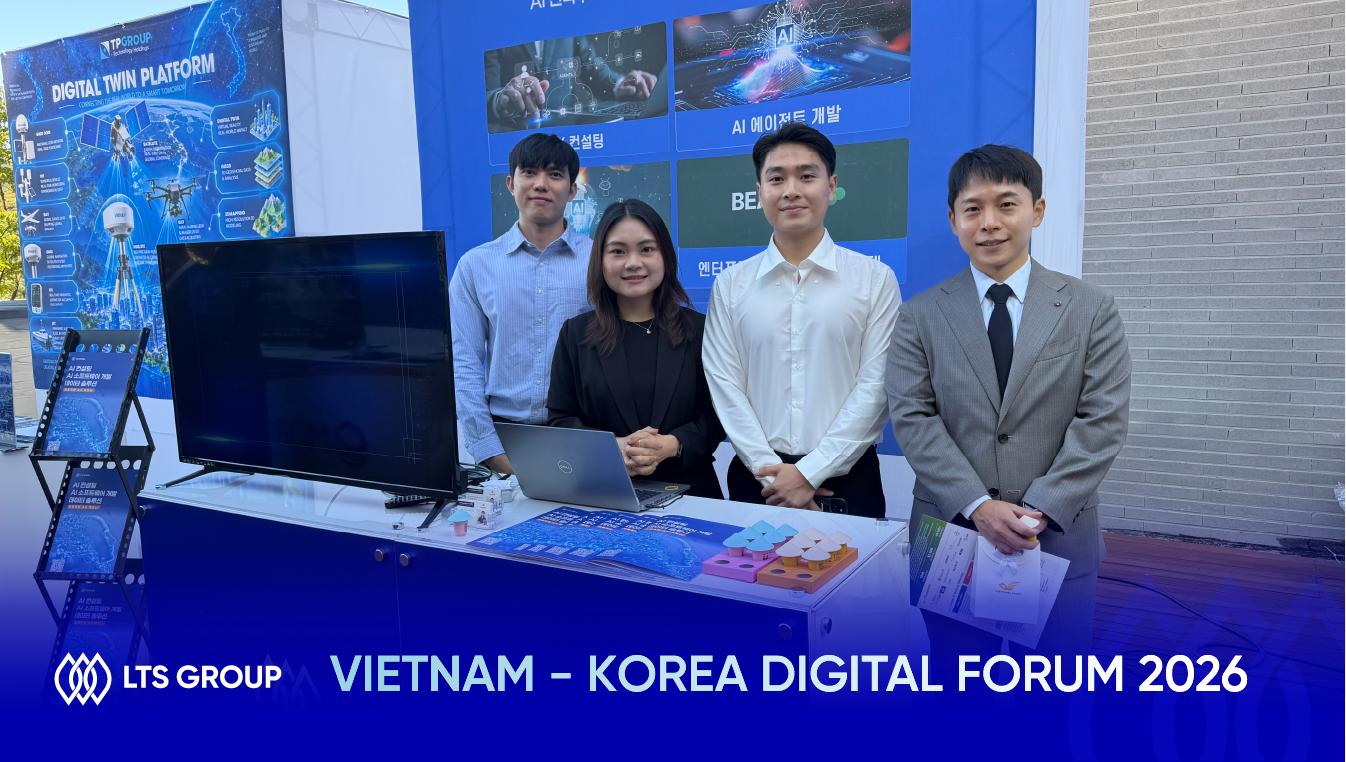
LTS Group Attends Vietnam – Korea Digital Forum 2026: Introduces Beacon for AI Agent Governance
Oct 2, 2026
-5 mins read
On the morning of October 1, 2026, LTS Group attended the Vietnam – Korea Digital Forum 2026 at the Embassy of Vietnam in Seoul. We introduced Beacon, a platform that helps enterprises build, run, and govern AI agents in a single system. A National-level Forum Connecting Vietnam’s and Korea’s Digital Sectors The forum brought together government agencies, industry associations, and digital technology companies from both countries. Vietnam: The Minister of Science and Technology; Mr. Nguyen Khac Lich, Director of the Department of Digital Technology and AI; the Chairman of the Vietnam Software and IT Services Association (VINASA); and digital technology companies including FPT Korea, SotaTek, and LTS Group South Korea: Leaders from the Ministry of Science and ICT (MSIT), the National IT Industry Promotion Agency (NIPA), KT, and other Korean technology companies From “Outsourcing” to “Co-creation” The forum’s message was a shift in Vietnam – Korea cooperation from outsourcing to co-creation, with AI and semiconductors as the two pillars. The keynote session covered five topics: Department of Digital Technology and AI: Co-creating a Vietnam – Korea digital ecosystem, from AI and semiconductors to the global market NIPA: Mechanisms to promote co-development and commercialization of AI and semiconductors, from R&D to market FPT Korea: Creating global value with Vietnamese tech companies, moving from “Outsourcing” to “Co-creation” KT: Next-generation AI infrastructure, with computing and cloud foundations for co-creation SotaTek: Physical AI and AI Factory for smart manufacturing A B2B matching session ran in parallel, focused on AI, semiconductors, cloud, data, software, 5G/6G, information security, and smart factory. Participants discussed finding partners, advancing R&D and PoC projects, and co-developing products. The panel discussion, “Vietnam – Korea Digital Technology Alliance,” centered on three issues: Joint R&D and technology transfer models between research institutes, universities, and businesses in both countries Training high-quality AI engineers and semiconductor design engineers PoC testing mechanisms and bringing co-developed products to the global market The forum closed with a “Make in Viet Nam” solutions showcase, where Vietnamese companies presented their technology capabilities to Korean partners. LTS Group Introduces Beacon – An Enterprise AI Platform As enterprises adopt AI faster, the question is no longer just how to use AI, but how to keep it safe and compliant. Beacon was designed to answer that question. Beacon helps enterprises build, run, and govern AI agents in one system, with compliance built in from the start. Its main capabilities: Full AI stack connectivity: Connects AWS Bedrock, Azure OpenAI, Anthropic, Google Vertex, and more with business tools such as Salesforce, Slack, GitHub, and SharePoint Real-time logging: Records every AI activity across the enterprise as it happens Shadow AI detection: Automatically detects unauthorized AI use On-demand compliance reports: Generates compliance reports whenever needed With Beacon, enterprises can roll out AI quickly while keeping strict access control and infrastructure-level risk management. At our booth, the LTS Group team demonstrated Beacon in person and talked with visitors about enterprise needs in AI governance. Key Takeaways At the forum, we connected with government agencies, associations, and tech companies from both countries and shared insights. Presenting Beacon in person also gave us a firsthand look at what Korean enterprises need in AI governance. It was a valuable opportunity to explore new collaborations and strengthen the Vietnam – Korea digital partnership. With 10 years of experience delivering IT services to global customers, LTS Group will keep developing services and solutions for the Korean market through LTS Korea. In line with the forum’s Co-creation direction, we are committed to being a trusted partner to Korean enterprises, helping them adopt AI effectively, safely, and sustainably.

Meet LTS Group at Autonomous Driving Mobility Expo (AME) 2026
Sep 28, 2026
-2 mins read
LTS Group will participate in Autonomous Driving Mobility Expo 2026 (AME 2026), Korea’s largest exhibition dedicated to autonomous driving and future mobility. The event will take place from August 25 to 27, 2026, at Hall B, COEX, Seoul. About AME 2026 AME 2026 will bring together more than 60 exhibitors across 150 booths to showcase the latest technologies and business trends in autonomous driving and future mobility. Held alongside EV Trend Korea 2026, the event will focus on the transition to software-centric vehicle architectures built around software-defined vehicles (SDVs), along with advances in ADAS and autonomous driving technologies. What LTS Group Will Showcase The automotive industry is rapidly evolving as sustainability, intelligent technologies, and service-based models reshape the market. As vehicles become increasingly software-driven, automotive software development, validation, and data labeling for ADAS and autonomous driving are becoming essential to future competitiveness. At AME 2026, LTS Group will showcase: Automotive software development and validation for SDVs; Data labeling solutions for ADAS and autonomous driving; LTS AutoTCGen, an AI-powered tool that generates ASPICE-compliant automotive software test cases (live demo). LTS Group’s CEO, Head of Automotive, Sales Director, and Delivery Manager will be on-site to introduce our solutions and discuss your automotive technology needs. Event Details Date: August 25–27, 2026 Venue: Hall B, COEX, Seoul Visit the LTS Group booth to explore our automotive software development and validation services, ADAS data labeling solutions, and LTS AutoTCGen. To arrange a meeting in advance, don’t hesitate to get in touch with us using the details below!



Email:contact@ltsgroup.tech
Phone:(+84) 96-238-7474
Headquarters:17th Fl, MD Complex Office Building, 68 Nguyen Co Thach Street, Hanoi, Vietnam
Japan:5F, Iwamoto Building, 3-20-10 Shibaura, Minato-ku, Tokyo 108-0023, Japan
US:25787 Rawley Springs Dr, Chantilly, VA 20152
South Korea:Room 1214, 12th Floor, Daerung Seocho Tower, 327 Gangnam-daero, Seocho-gu, Seoul, South Korea
Australia:1/63 Cobden Street, Kew VIC 3101, Australia