How to Outsource Development Team with Ease and Manage It Effectively?
Oct 18, 2024
-22 mins read

Over the past decade, IT outsourcing has proven to be a strategic choice for businesses seeking to accelerate software development, shorten time-to-market, cut costs, and fill skill gaps. In fact, Clutch reveals that 90% of small businesses turn to outsourcing business tasks to foster growth and reduce wage expenses by 70% to 90% in top outsourcing hubs like Vietnam and the Philippines.
However, to fully realize these advantages, it’s important to have clear guidelines to effectively outsource development team. Failing to do so can result in project delays, increased costs, and underperforming products.
So, how can companies choose and manage an outsourced development team for maximized success?
Keep reading to find out!
What is an Outsourced Development Team?
An outsourced development team refers to a group of skilled professionals from an external company brought on board to handle specific software projects. These teams typically include software developers, product owners, project managers, business analysts, and other specialists.

The team members may operate from various locations globally, providing access to a diverse set of skills and knowledge that may not be readily available within the organization. By leveraging this approach, companies can tap into a broader talent pool that accommodates a wide range of IT outsourcing trends and speed up project timelines without the financial burden of hiring full-time staff.
How to Find the Best Outsourced Development Team?
With countless IT outsourcing companies available, it can be challenging to identify the right partner and narrow down their options.
Follow this step-by-step guide below to outsource a full-stack development team successfully.

Step 1. Clearly define the projects for outsourcing
The first step to take is to articulate the scope and objectives of the projects intended for outsourcing.
This includes specifying the technologies involved, the required level of expertise, anticipated outcomes, and timelines.
A well-defined project scope allows for effective communication of the company’s needs to potential software development outsourcing partners, thereby fostering alignment from the outset and minimizing the risk of misunderstandings or scope creep during development.
Check out project specification template curated for stakeholders.
Step 2. Decide on the relationship-based type of outsourcing model
Secondly, organizations need to choose their preferred relationship-based outsourcing model from the three primary options: staff augmentation, dedicated team model, or project-based model.
- Staff augmentation model augments the current team with additional skilled professionals for specific tasks or phases of a development project – suitable for both short- and long-term engagements.
- Dedicated team model features specialized teams that work exclusively on the software development project, integrating seamlessly with the internal team – ideal for complex, long-term projects.
- Project-based model involves an external team managing all stages of software development, from conception to deployment and maintenance – working best for those with a clear product vision but limited workforce resources.
For more insights into selecting the right model, refer to our blog on IT outsourcing models: Types and tips to choose the best one.
Step 3. Determine the budget
Budget plays an important role in determining the quality, expertise, and outcomes of IT projects outsourcing.
As a result, here, organizations need to first consider the scope and complexity of their software development project. Then, they need to research market rates for similar software outsourcing services to gain a realistic understanding of costs. Following that, stakeholders should account for hidden expenses such as software licenses and training for the dedicated team.
The costs associated with each outsourcing model should also be taken into account. For example, when opting for staff augmentation, companies need to factor in the expenses of integrating external personnel into existing workflows and any potential management overhead.
Step 4. Choose the geographical outsourcing strategy
The choice of where to outsource significantly impacts the success and cost of software development. Organizations can take into account three geographical outsourcing strategies:
- Offshore software development refers to partnering with a company situated in a different country, even on the opposite side of the globe, such as Vietnam. Depending on the chosen location, offshore outsourcing can be highly cost-effective while providing access to a global talent pool.
- Onshore entails outsourcing software development projects to providers within the same country. While this ensures maximum cultural and legal alignment, it typically comes at a higher cost.
- Nearshore software outsourcing means outsourcing to nearby countries, offering a balance between cost savings and enhanced collaboration due to geographical proximity and similar time zones.
Here are a few useful resources to help businesses make a well-informed decision:
- Nearshore vs Offshore Software Outsourcing: Which is Better?
- Top Offshore Software Development Company Review in 2023
- Offshore Software Development Rates By Country
- Essential Guide For Offshore Development Center Setup
- Vietnam Offshore Development Center – A Full Guide To Success
Step 5. Start searching for potential outsourced development teams
Now is the time to actively search for outsourced development teams that deliver the specific software development services desired.
Below are 3 common methods for finding an outsourced development team:

- Personal referrals: Consulting the professional network about partners they have successfully collaborated with can be an excellent starting point. This approach often gives the most unbiased and reliable insights.
- Online directories: Directory listing of software outsourcing solutions can be a great help in finding top agencies in their respective fields. Clutch, DesignRush, G2, The Manifest, and GoodFirms are notable platforms for compiling an initial list of potential partners.
- Google Search: Both paid and organic search results on Google can bring businesses useful insights as long as relevant keywords are entered.
Step 6. Review their portfolios and domain expertise
The next phase is assessing potential outsourced development teams.
Evaluating past work and portfolios plays a significant role in this process since it gives a tangible demonstration of their capabilities and a clearer understanding of what they can deliver.
4 key aspects to focus on are as follows:

- Range of projects: A diverse portfolio reflects versatility and adaptability. It suggests that the team has navigated various challenges and can likely manage the complexities of the project. However, if the portfolio lacks focus and is overly broad, it may indicate a lack of specialization.
- Industry experience: Consider whether the team has worked in the desired sector before. Prior experience in the same industry means they already understand the specific challenges and needs of the business niche. This can translate to more customized and effective solutions.
- Quality of work: Pay close attention to the quality of their output. Is their code well-structured and efficient? Is the software free of bugs? High-quality work is a strong indication of technical expertise and a commitment to delivering excellence.
- Similar projects: Most importantly, look for completed projects similar to what organizations need. A proven track record of handling similar work suggests they are well-equipped to meet requirements.
It’s worth noting that software outsourcing companies may sometimes be restricted from sharing details of previous projects due to non-disclosure agreements. Nevertheless, they should be able to provide a general overview of their past work, the development processes employed, and the benefits realized by clients.
Step 7. Check their testimonials and references
Client testimonials and references serve as invaluable resources when evaluating prospective partners. They offer firsthand accounts of what it’s like to collaborate with the team, revealing insights that a portfolio may not convey.
When evaluating testimonials, take into account key aspects such as the team’s strengths and weaknesses, their ability to meet deadlines and commitments, adherence to budgets, and the overall satisfaction level of their clients.
If necessary, don’t hesitate to contact previous clients for detailed references regarding specific projects, the team’s management approach, and any setbacks they faced.
Step 8. Assess their communication skills
Effective communication is fundamental to the success of any outsourcing partnership.
3 essential factors to consider when assessing an external team’s communication abilities are:
- Language proficiency: The outsourcing software development company must possess strong relevant language skills.
- Feedback reception: The team should be open to listening and making necessary adjustments based on your input.
- Communication tools and channels: Consider the team’s preferred communication methods and platforms. It’s perfect if their tools are compatible with those of your organization.
Step 9. Evaluate project management capabilities
Checking the project management capabilities of an outsourced development team can give companies insight into how well they can plan, execute, and deliver projects.
Here’s what to review:
- Methodologies: Does the team follow a structured project management methodology such as Agile, Scrum, and Waterfall?
- Progress tracking: How do they monitor the project’s progress? Do they use tools like Jira, Trello, or Asana?
- Project documentation: Do they document the projects well, from project requirements and plans to meeting notes and issues?
- Change management: Do they have a structured change management process? Are they able to adapt to changes without any disruptions?
- Delivery: Do they deliver projects in a timely and consistent manner as promised?
Step 10. Consider their cultural fit
Cultural fit is often an overlooked yet vital component of a successful outsourcing relationship, which encompasses shared values, work ethics, and attitudes.
To have a good understanding of the outsourced development team’s cultural fit, look into their work ethics, values, and approach to work.
In other words, determine if they demonstrate a strong commitment to quality, punctuality, and professionalism. It’s also necessary to check whether their core values, such as integrity and innovation, align with those of organizations. Additionally, review their working style—whether they favor a structured or flexible approach—since a compatible work dynamic can lead to smoother interactions and increased efficiency.
Pro Tip: To gather all the necessary information for selecting the best outsource dedicated software development teams, check out our 12 questions to ask before hiring a software development company.
With the right team in place, businesses are already halfway to success! The remaining task is to effectively manage this outsourced development team. So, here’s a handy checklist to help them navigate this phase smoothly.

8 Tips to Manage an Outsourced Development Team Effectively

- Align the outsourced team with product visions and timelines
Clearly communicate product vision, goals, and timeline to the dedicated outsource web development team.
Regular meetings and detailed briefs help align everyone with the project’s objectives, leading to a more cohesive development process and a successful end product.
- Guarantee intellectual property and quality control with NDAs and SLAs
Protect intellectual property (IP) and guarantee quality control by implementing non-disclosure agreements (NDAs) and service level agreements (SLAs).
NDAs safeguard confidential information, while SLAs establish clear standards for quality and timelines, holding the team accountable.
- Establish clear communication channels
Set up dedicated communication channels, such as email, project management tools, and video conferencing platforms.
Recommended tools for remote work are Trello, Slack, and Zoom.
- Set up a leadership hierarchy and point of contact
Designate a leadership hierarchy within the outsourced team, including a primary point of contact.
This structure clarifies decision-making responsibilities and streamlines communication, making it easier to address issues or changes efficiently.
- Treat outsourced software developers as part of the team
Integrating the outsourced team into the company’s culture and internal processes through regular meetings, company updates, and other team activities helps cultivate a stronger sense of unity and commitment to the project’s success.
- Define and track KPIs
Set specific KPIs to assess the outsourced team’s performance, such as code quality, bug count, deadline adherence, and budget compliance.
- Conduct visits and face-to-face meetings
In addition to regular video calls, organize periodic on-site visits or face-to-face meetings to confirm that the outsourcing team meets project standards.
Direct interactions build trust and allow you to observe their working methods firsthand, guaranteeing compliance to established processes and quality benchmarks.
- Address any cultural differences
Acknowledge and respect cultural differences, especially in offshore outsourcing setups.
Training or awareness sessions can help bridge cultural gaps, improve communication, and enhance overall team cohesion.
Why Build an Outsourced Development Team with LTS Group?
Working with the right outsourcing development company can significantly bolster organizations’ tech capabilities. LTS Group stands out as a top-tier software outsourcing provider, offering a wealth of skilled talent across various domains, including software development, software testing, and many other digital BPO services.
Here’s why selecting LTS Group for outsourced development needs is the smartest choice:

Flexible outsourcing models
We offer a variety of flexible outsourcing software development models, from dedicated teams and staff augmentation to project-based and time-and-material options. This adaptability allows businesses to find the perfect fit for their project requirements and budget.
Comprehensive service offerings
We provide an extensive array of software development outsourcing services. Whether it’s web & mobile app development, software maintenance, or web & mobile app testing, LTS experts have it all.
Broad technology expertise
We leverage the best technologies to deliver exceptional results:
- Web development: HIBERNATE, Java, PHP, AngularJS, .NET, and more
- Mobile development: Flutter, React Native, Xamarin, etc.
- Database management: MySQL, Oracle DB, SQL Server, etc.
- Cloud infrastructure: Microsoft Azure, AWS, Amazon EC2, etc.
- Automation testing: Perfecto Mobile, Soap UI, TestComplete, etc.
- Management tools: Jira, Backlog, HP Quality Center, etc.
Client-centric approach
With over 8 years of experience collaborating with 60+ global businesses, LTS Group understands the nuances of development outsourcing. We’re committed to continuous improvement, actively seeking client feedback through detailed surveys post-project. Such dedication helps us consistently meet and exceed clients’ expectations.
Proven track record
Our competitive pricing, effective communication, and extensive experience in a wide range of development projects empower businesses of all sizes to thrive. Check out our portfolio for more details.
Don’t miss out on the opportunity to partner with a team that values reliability, expertise, and innovation. Contact us today to explore how we can elevate your development projects!
When is the Right Time to Hire Outsource Software Development Team?
A software development outsourcing company can greatly benefit an organization in many different scenarios:

- Filling skill gaps: When there’s a need to fill internal skills or expertise deficiencies without the delays of traditional hiring processes, outsourced teams come in handy to offer the necessary capabilities swiftly.
- Reducing costs: Companies seeking to lower expenses tied to salaries, benefits, and training that come with growing in-house teams often find outsourcing to be a budget-friendly alternative.
- Meeting urgent deadlines: When software projects face urgent timelines, extra manpower may be needed. An outsourced team can provide the required resources to ensure timely delivery.
- Focusing on core functions: When technical tasks begin to overwhelm the internal team, outsourcing allows them to concentrate on core business functions, boosting overall productivity.
- Upgrading MVP development: For businesses with a minimum viable product that requires new features or software testing, an augmented team can bring specialized technical skills and fresh perspectives, which are integral to successful implementation.
- Entering new markets with local expertise: Embarking on a new market often necessitates localized knowledge to adapt products to meet regional demands. An outsourced development team steps in to provide valuable insights into local market trends.
FAQs about Outsourcing Development Team
What is an outsourced development team?
An outsourced development team comprises skilled professionals from a software development company who are hired to execute and oversee software projects, often beyond the primary geographic and operational boundaries of the hiring firm.
Should I outsource software development or handle it in-house?
The decision to outsource software development team or rely on an in-house team depends on numerous factors, such as budget limitations, project complexity, and resource availability.
If a company’s existing development team lacks the expertise for additional projects, outsourcing can offer access to a global talent pool and specialized skills that expedite development.
On the other hand, smaller projects requiring intensive oversight might benefit from the closer integration that an in-house team provides.
How much does outsourcing developers cost?
The costs of outsourcing software developers can fluctuate based on the geographical location of outsourced team members, project complexity, required expertise level, etc.
Generally, outsourcing to regions with lower living costs—such as Asia, Eastern Europe, and Latin America—can yield substantial savings compared to hiring in-house teams in Western countries.
For example, while hiring a software developer in the U.S. can range from $62 to $209 per hour, a software developer in Southeast Asia typically costs between $18 and $71 per hour. In fact, companies in developed countries may save between 30% and 70% by outsourcing to developing nations like Vietnam.
What to look for in outsourced development teams?
When evaluating potential partners providing outsource custom software development services, businesses should prioritize technical expertise, a strong portfolio, positive client testimonials, effective communication, solid project management practices, and cultural compatibility. Additionally, it’s essential to consider their security measures and capacity to scale as project demands evolve.
Final Thoughts about Outsourcing Development Team
Outsourcing software development services has become the new norm. By collaborating with the right outsourced development team, organizations can tap into a global talent pool, reduce costs, speed up time-to-market, etc.
To select the right partner, clearly define the outsourcing project, choose the appropriate software outsourcing model, establish a budget, decide on the geographical strategy, and evaluate potential teams by reviewing their portfolios, expertise, testimonials, communication skills, and cultural fit.
As for tips to effectively manage outsourced teams, make sure they grasp product visions and timelines, secure intellectual property and quality control with NDAs and SLAs, establish clear communication channels, set up a leadership hierarchy, treat them as internal staff, define KPIs, organize visits, and address cultural differences.
Ready to outsource development team with ease? LTS Group is here to help. Contact us for a free consultation.
Website: https://ltsgroup.tech/
Tel: (+84) 96-238-7474
Linkedin: https://www.linkedin.com/company/lts-group-vietnam/
Share


Daisy Nguyen
Meet Daisy, a content writer at LTS Group, a renowned IT outsourcing company based in Vietnam. With a passion for crafting compelling narratives, she specializes in producing long-form, thought-provoking articles that delve deep into the realms of technology and innovation. Fueled by an insatiable curiosity, she eagerly explores emerging technologies, seeking to understand their potential impact and share insights with her audience. Contact her at hangnt1@ltsgroup.tech.

More must-reads to keep leaders updated
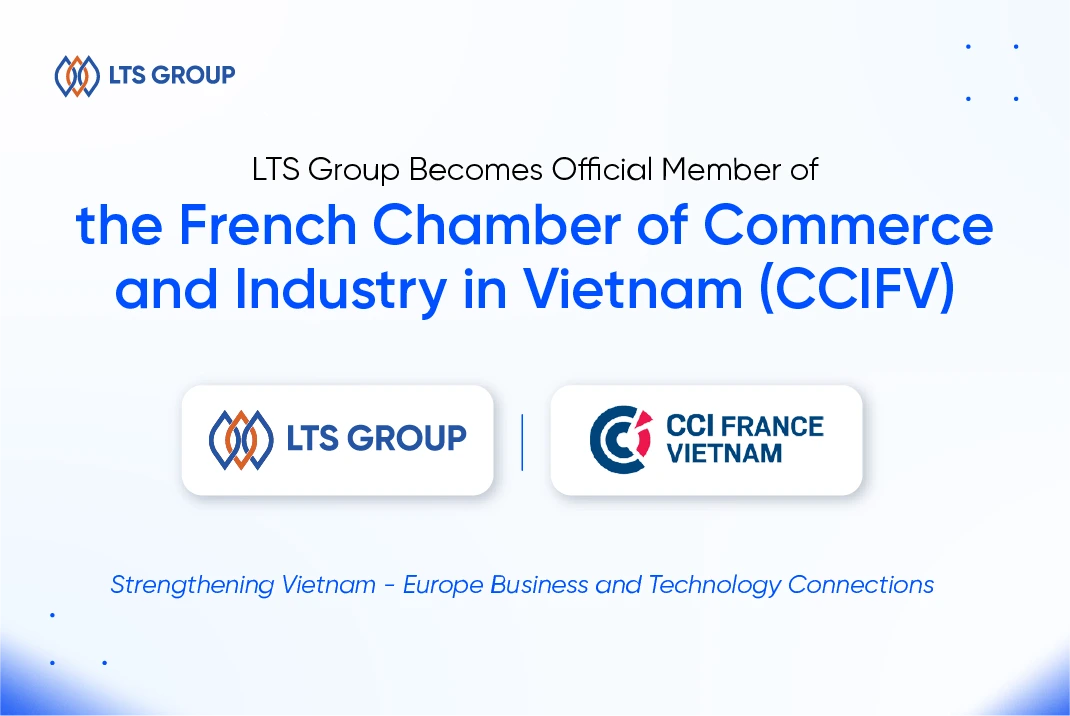
LTS Group Becomes Official Member of the French Chamber of Commerce and Industry in Vietnam (CCIFV)
Oct 5, 2026
-4 mins read
LTS Group has officially joined the French Chamber of Commerce and Industry in Vietnam (CCIFV), marking a new step in its efforts to strengthen connections with the Vietnam – Europe business community and contribute to technology cooperation between the two markets. Through its CCIFV membership, LTS Group will have opportunities to engage with French and European businesses in Vietnam, as well as industry peers, experts, and decision-makers across sectors. The company plans to take part in networking and knowledge-sharing activities while bringing practical perspectives from its work in AI, software, data, and automotive engineering. As its first engagement, LTS Group will co-host a CCIFV Breakfast Talk in Hanoi on 13 October 2026, focusing on how AI is changing the way we work. A Bridge for Vietnam – Europe Business Cooperation CCIFV supports French and European businesses in Vietnam and promotes economic cooperation between the two markets. As part of the CCI France International network, it connects businesses and chambers of commerce across markets worldwide. Its activities include business networking, Breakfast Talks, sector committees, business support services, and an online member directory that helps members build new connections. Members can also access the wider Vietnam – Europe business network, including connections with EuroCham members, and share company news and expertise through CCIFV’s media channels. From Membership to Practical Contribution Through its CCIFV membership, LTS Group aims to contribute to the community by: Sharing expertise: Bringing practical experience in AI, software, data, and automotive engineering to the CCIFV network; Hosting and speaking at events: Participating in CCIFV activities, starting with the Breakfast Talk “How AI Will Change the Way We Work” on 13th October; Connecting business needs with technology capabilities: Helping European businesses explore technology delivery opportunities in Vietnam. First Engagement: Breakfast Talk on How AI Will Change the Way We Work LTS Group’s first joint activity with CCIFV will be a Breakfast Talk exploring how AI is transforming the workplace. The discussion will cover the foundations organizations need for successful AI adoption, from data and organizational mindset to management strategies. The session will focus on three key areas: Building a strong data foundation: Establishing the groundwork needed for reliable AI initiatives; Developing an AI-native mindset: Helping teams and leaders adapt to working in an increasingly AI-driven environment; Making AI adoption work in practice: Exploring management strategies, including AI sovereignty in Europe and its implications for businesses operating in the global AI landscape. Event Details Date and time: 13 October 2026, 9:00 AM – 11:00 AM Venue: LTS Group Office, 17th Floor, MD Complex Office Building, 68 Nguyen Co Thach Street, Hanoi With hands-on experience in building and validating real-world systems, LTS Group’s specialists will also bring a practical perspective to discussions around AI-driven products, particularly the growing importance of testing, trust, and governance. Our Commitment as a Member of CCIFV For LTS Group, becoming a CCIFV member represents both an opportunity and a commitment: an opportunity to connect with a broader network of European and international organizations, and a commitment to contribute practical experience to the business community. Looking ahead, LTS Group plans to participate actively in CCIFV activities, contribute to sector committee discussions, and explore partnership opportunities with fellow members. By strengthening connections between technology companies and businesses across Vietnam and Europe, LTS Group aims to contribute to a stronger presence for Vietnamese technology companies within the European business ecosystem.
LTS Group Attends Vietnam – Korea Digital Forum 2026: Introduces Beacon for AI Agent Governance
Oct 2, 2026
-5 mins read
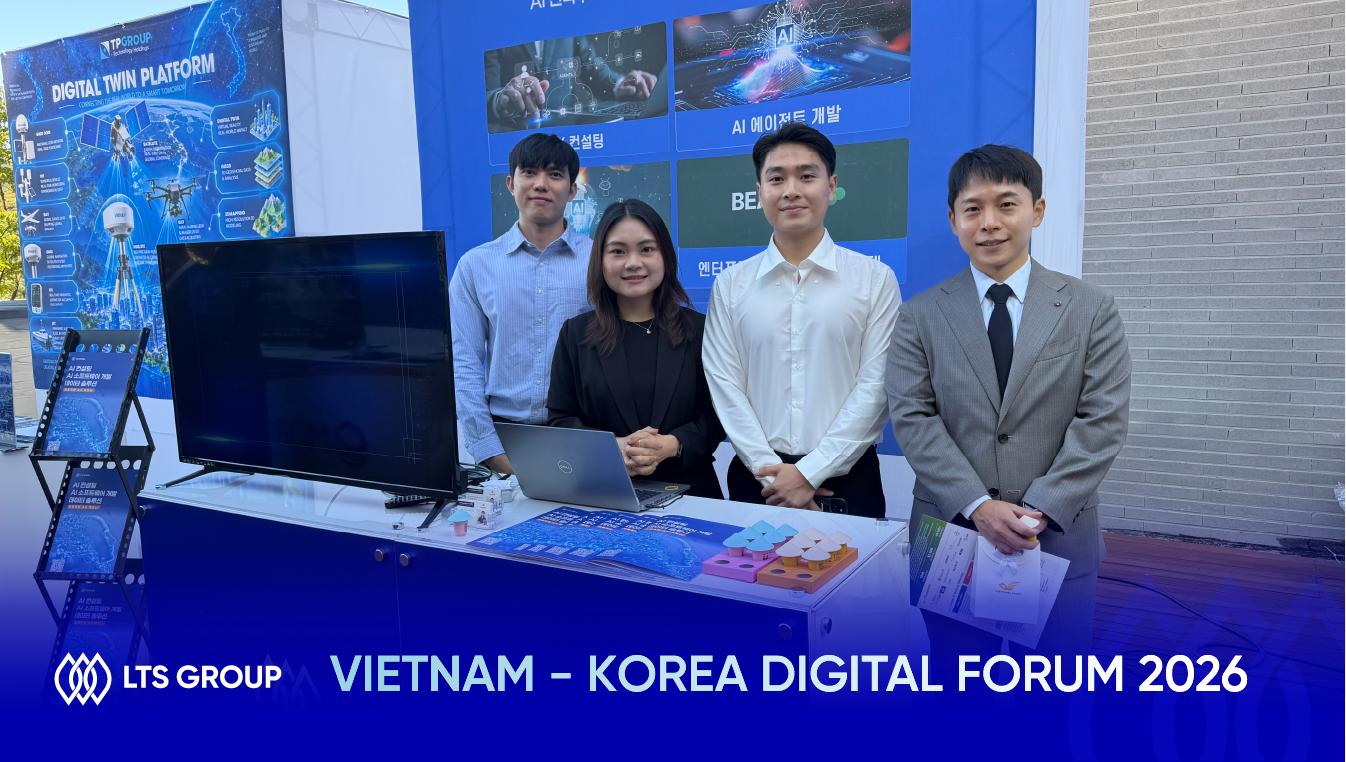
On the morning of October 1, 2026, LTS Group attended the Vietnam – Korea Digital Forum 2026 at the Embassy of Vietnam in Seoul. We introduced Beacon, a platform that helps enterprises build, run, and govern AI agents in a single system. A National-level Forum Connecting Vietnam’s and Korea’s Digital Sectors The forum brought together government agencies, industry associations, and digital technology companies from both countries. Vietnam: The Minister of Science and Technology; Mr. Nguyen Khac Lich, Director of the Department of Digital Technology and AI; the Chairman of the Vietnam Software and IT Services Association (VINASA); and digital technology companies including FPT Korea, SotaTek, and LTS Group South Korea: Leaders from the Ministry of Science and ICT (MSIT), the National IT Industry Promotion Agency (NIPA), KT, and other Korean technology companies From “Outsourcing” to “Co-creation” The forum’s message was a shift in Vietnam – Korea cooperation from outsourcing to co-creation, with AI and semiconductors as the two pillars. The keynote session covered five topics: Department of Digital Technology and AI: Co-creating a Vietnam – Korea digital ecosystem, from AI and semiconductors to the global market NIPA: Mechanisms to promote co-development and commercialization of AI and semiconductors, from R&D to market FPT Korea: Creating global value with Vietnamese tech companies, moving from “Outsourcing” to “Co-creation” KT: Next-generation AI infrastructure, with computing and cloud foundations for co-creation SotaTek: Physical AI and AI Factory for smart manufacturing A B2B matching session ran in parallel, focused on AI, semiconductors, cloud, data, software, 5G/6G, information security, and smart factory. Participants discussed finding partners, advancing R&D and PoC projects, and co-developing products. The panel discussion, “Vietnam – Korea Digital Technology Alliance,” centered on three issues: Joint R&D and technology transfer models between research institutes, universities, and businesses in both countries Training high-quality AI engineers and semiconductor design engineers PoC testing mechanisms and bringing co-developed products to the global market The forum closed with a “Make in Viet Nam” solutions showcase, where Vietnamese companies presented their technology capabilities to Korean partners. LTS Group Introduces Beacon – An Enterprise AI Platform As enterprises adopt AI faster, the question is no longer just how to use AI, but how to keep it safe and compliant. Beacon was designed to answer that question. Beacon helps enterprises build, run, and govern AI agents in one system, with compliance built in from the start. Its main capabilities: Full AI stack connectivity: Connects AWS Bedrock, Azure OpenAI, Anthropic, Google Vertex, and more with business tools such as Salesforce, Slack, GitHub, and SharePoint Real-time logging: Records every AI activity across the enterprise as it happens Shadow AI detection: Automatically detects unauthorized AI use On-demand compliance reports: Generates compliance reports whenever needed With Beacon, enterprises can roll out AI quickly while keeping strict access control and infrastructure-level risk management. At our booth, the LTS Group team demonstrated Beacon in person and talked with visitors about enterprise needs in AI governance. Key Takeaways At the forum, we connected with government agencies, associations, and tech companies from both countries and shared insights. Presenting Beacon in person also gave us a firsthand look at what Korean enterprises need in AI governance. It was a valuable opportunity to explore new collaborations and strengthen the Vietnam – Korea digital partnership. With 10 years of experience delivering IT services to global customers, LTS Group will keep developing services and solutions for the Korean market through LTS Korea. In line with the forum’s Co-creation direction, we are committed to being a trusted partner to Korean enterprises, helping them adopt AI effectively, safely, and sustainably.

Meet LTS Group at Autonomous Driving Mobility Expo (AME) 2026
Sep 28, 2026
-2 mins read
LTS Group will participate in Autonomous Driving Mobility Expo 2026 (AME 2026), Korea’s largest exhibition dedicated to autonomous driving and future mobility. The event will take place from August 25 to 27, 2026, at Hall B, COEX, Seoul. About AME 2026 AME 2026 will bring together more than 60 exhibitors across 150 booths to showcase the latest technologies and business trends in autonomous driving and future mobility. Held alongside EV Trend Korea 2026, the event will focus on the transition to software-centric vehicle architectures built around software-defined vehicles (SDVs), along with advances in ADAS and autonomous driving technologies. What LTS Group Will Showcase The automotive industry is rapidly evolving as sustainability, intelligent technologies, and service-based models reshape the market. As vehicles become increasingly software-driven, automotive software development, validation, and data labeling for ADAS and autonomous driving are becoming essential to future competitiveness. At AME 2026, LTS Group will showcase: Automotive software development and validation for SDVs; Data labeling solutions for ADAS and autonomous driving; LTS AutoTCGen, an AI-powered tool that generates ASPICE-compliant automotive software test cases (live demo). LTS Group’s CEO, Head of Automotive, Sales Director, and Delivery Manager will be on-site to introduce our solutions and discuss your automotive technology needs. Event Details Date: August 25–27, 2026 Venue: Hall B, COEX, Seoul Visit the LTS Group booth to explore our automotive software development and validation services, ADAS data labeling solutions, and LTS AutoTCGen. To arrange a meeting in advance, don’t hesitate to get in touch with us using the details below!



Email:contact@ltsgroup.tech
Phone:(+84) 96-238-7474
Headquarters:17th Fl, MD Complex Office Building, 68 Nguyen Co Thach Street, Hanoi, Vietnam
Japan:5F, Iwamoto Building, 3-20-10 Shibaura, Minato-ku, Tokyo 108-0023, Japan
US:25787 Rawley Springs Dr, Chantilly, VA 20152
South Korea:Room 1214, 12th Floor, Daerung Seocho Tower, 327 Gangnam-daero, Seocho-gu, Seoul, South Korea
Australia:1/63 Cobden Street, Kew VIC 3101, Australia