How to Set up Offshore Development Center: A Complete Guide
Apr 28, 2023
-23 mins read

Unlocking global talent. Streamlining operational costs. Gaining a competitive edge.
These aren’t just lofty ambitions, they’re real outcomes for companies that successfully establish an offshore development center (ODC).
With salaries for software engineers skyrocketing across the US, UK, Germany, Canada, etc., many companies are reaching a tipping point. The talent pool is shrinking, competition is fierce, and sustaining in-house expansion becomes less viable with each passing year.
This is where IT outsourcing, especially through offshore development centers, enters the picture. An offshore development center is not simply a cost-cutting tactic, it’s a strategic growth engine. It functions as a fully integrated, remote extension of the core development team, handling high-stakes projects such as mobile app development outsourcing, quality assurance, cybersecurity, AI, or DevOps.
But let’s be clear. Launching an ODC isn’t a plug-and-play solution. It calls for sharp navigation through unfamiliar legal terrain, cultural nuances, and operational complexity, from securing compliant infrastructure and IT assets to curating a team of skilled professionals who share the same vision and values.
While some businesses choose to do it alone, others accelerate the journey by collaborating with seasoned partners providing offshore development center services.
In this detailed guide, let us walk you through the full roadmap of how to set up offshore development center, from vision to execution.
9 Steps to Setting up an Offshore Development Center

Step 1: Define Objectives and Business Needs
Building an offshore development center should begin with a well-defined business intent. Whether it’s to optimize development costs, scale up technology capabilities, accelerate product timelines, or expand into new markets, clearly articulating the purpose behind the ODC initiative lays a strong foundation for success.
At this stage, it’s important to translate strategic intent into specific operational needs. This means outlining the scope of work, resource allocation, success metrics, etc.
- Deliverables: Identify core outputs and break the project into measurable milestones. This creates a structured workflow and facilitates progress tracking.
- Timeframes: Assign realistic deadlines to each milestone to maintain momentum and ensure alignment with go-to-market strategies.
- Team composition and skills: Specify the required expertise based on project objectives. Determine the optimal team size and which roles to offshore, such as front-end, back-end, DevOps, QA, or AI engineers, to guarantee coverage across all technical needs.
- Budget planning: Develop a comprehensive financial plan that encompasses development, infrastructure, and future maintenance expenses. This enables the company to not only determine the most appropriate business model but also set achievable expectations.
Step 2: Selecting the Right Offshore Location
Choosing the right location for an offshore software development center requires a thorough assessment of regional strengths in talent, infrastructure, and pricing.
Notably, consider the following factors to find the most suitable region:
- Development costs: Compare average hourly rates across leading offshore destinations to balance quality with affordability. Learn more: Offshore software development rates by country.
- Time zone overlap: Increased working hour overlap improves coordination and responsiveness between onshore and offshore teams.
- Cultural compatibility: Shared values in communication, work habits, and language contribute to smoother collaboration and project delivery.
Below is an overview of favorable regions for establishing an ODC, based on the latest data:
|
Region |
Rates (per hour) |
Time zone |
Key benefits |
Ideal for |
Estimated savings |
|
Central & Eastern Europe (Poland, Romania, Hungary, Bulgaria, Belarus, Czech Republic, Austria, Slovakia) |
$26-$95 |
GMT+1 to GMT+3 |
Strong STEM background, cultural alignment, high English proficiency, innovation hubs |
European and UK firms seeking long-term strategic centers |
Up to 60% (vs. EU) |
|
Latin America (Mexico, Brazil, Colombia, Peru, Chile, Argentina) |
$30-$96 |
GMT-3 to GMT-7 |
Real-time US collaboration, tech talent growth, cultural compatibility |
North American companies needing real-time interaction |
Up to 45% (vs. US) |
|
Southeast Asia (Vietnam, Malaysia, Philippines) |
$18-$71 |
GMT+5 to GMT+8 |
Large talent pool, budget-friendly, scalable teams, innovation hubs |
Organizations prioritizing cost-efficiency and high-volume delivery |
Up to 70% (vs. US) |
Regarding development costs, for a more detailed breakdown by role, tech stack, and seniority level, refer to the hourly rate chart below:

Other factors to take into account when choosing the offshore location are security and compliance requirements, Internet connectivity, geopolitical stability, and English proficiency.
Read more: Market insights: Why IT outsourcing to Vietnam?
Step 3: Research ODC Partners in the Chosen Location
Once a target region has been identified, the next move is to select a qualified offshore software development company. The reliability of this vendor will directly influence team stability, integration success, and overall project outcomes.
Here are 5 major evaluation criteria:
- Technical capability: Review the vendor’s portfolio to assess experience across relevant technologies and domains. Prior collaboration with companies in similar industries can indicate a strong fit.
- Communication excellence: Prioritize partners with transparent processes, English proficiency, and regular progress reporting frameworks.
- Business understanding: Effective vendors not only deliver code, they understand business goals and tailor solutions accordingly.
- Cost transparency: Review pricing models and services offered to stay within the predefined budget.
- Data security & compliance: Confirm adherence to international data protection laws and intellectual property (IP) regulations. Vendors should follow rigorous data governance and security protocols.
Pro tip: Evaluate reviews on independent platforms such as Clutch and GoodFirms. Case studies, testimonials, and client references provide insights into real-world performance and reliability.
Editor’s pick:
- Top 9 best offshore web development company list | 2025 updated
- Top offshore software development company review in 2025
Step 4: Choose the Suitable Engagement Model
Opting for the right engagement model is of great importance since it shapes the structure, ownership, and long-term value of an offshore software development center.
The right option should be based on the organization’s growth strategy, level of control desired, and financial outlook.
Below are two widely adopted offshore development center models:
Offshore development center
This model allows companies to quickly expand engineering capacity through a vendor-managed offshore team. It is well-suited for businesses focused on flexibility, cost-efficiency, and rapid team deployment.
- Ownership: Fully managed by the offshore vendor.
- Setup: Quick to launch, lower initial investment.
- Use case: Ideal for short- to mid-term projects or businesses that prefer to delegate operations while retaining strategic oversight.
Build-operate-transfer (BOT)
BOT is a phased approach that begins with vendor-managed setup and operations, followed by a structured transfer of ownership to the client. It’s commonly chosen by those seeking a long-term, fully-owned offshore presence.
- Ownership: Transferred to the client after meeting agreed milestones.
- Setup: Requires higher upfront investment but leads to full control.
- Use case: Designed for organizations looking to establish a permanent offshore base and internalize operations over time.
Refer to the table below for a quick glance at ODC vs. BOT:

Step 5: Guarantee Legal and Regulatory Compliance
A legally secure foundation sets the stage for the successful operation of any dedicated offshore development center. It prevents complications, safeguards business interests, and fosters smooth, long-term offshore operations.
Intellectual property and data protection
Protecting proprietary data starts with comprehensive agreements such as non-disclosure agreements (NDAs) and IP ownership contracts. These documents should clearly define confidentiality obligations and make sure the company retains full rights to its products and know-how.
Additionally, data security policies must be in sync with relevant regulatory standards based on industry and location. For instance:
- GDPR for companies handling EU citizens’ data
- HIPAA for healthcare-related projects
- SOC 2 compliance for SaaS and cloud services
Employment laws and tax regulations
Navigating local labor laws and tax requirements is critical to avoid compliance pitfalls. Local labor laws, wage requirements, and corporate tax codes must thus be reviewed carefully. Engaging with a reputable ODC partner who understands the local legal landscape can ease this burden significantly, offering strategic guidance and preparing thorough compliant documentation.
Step 6: Build a Secure and Scalable Infrastructure
For an ODC to operate and scale effectively, a well-structured IT foundation is indispensable. The infrastructure must support secure development practices, seamless collaboration, and high availability to accommodate project evolution over time.
Three important pillars defining a resilient ODC setup are as follows:

- Cloud-driven development environments
Leveraging platforms like AWS, Azure, and Google Cloud enables seamless scalability and flexibility. These services allow development teams to adjust resources as needed while providing consistent access to computing power, storage, and deployment tools.
Besides, cloud adoption supports remote collaboration and improves infrastructure resilience.
- Enterprise-grade security and collaboration tools
Security is non-negotiable when managing distributed teams. To safeguard data and systems, the infrastructure should integrate secure VPNs, multi-factor authentication (MFA), firewalls, and encrypted communication channels.
Collaboration should also be streamlined through Slack, Jira, Confluence, GitHub, or Azure DevOps, facilitating real-time coordination and effective project tracking across all time zones.
- Access management and IT governance
Role-based access control (RBAC) helps limit exposure of sensitive information to authorized personnel only. Complementing this with regular security audits allows companies to identify and resolve vulnerabilities before they escalate.
Adopting ISO 27001-certified policies further strengthens the organization’s commitment to international security standards and builds stakeholder trust.
Step 7: Assemble the ODC team
Partnering with a reliable ODC vendor means more than just finding talent, it’s about building a cohesive, high-performing team that reflects the company’s goals, culture, and workflow.
Start by defining the project’s scope, timeline, and required skill sets. Then, work closely with the offshore development center services provider to identify professionals who not only meet the technical requirements but also fit well within the existing team dynamics.
Establish clear roles, responsibilities, and communication channels right from the start. Introducing the company’s values, work culture, and vision early helps foster ownership and unity among distributed teams.
Regarding the typical structure of an ODC team, here’s a quick look:
- Management team: Project managers, Account managers, Business analysts.
- Technical team: Developers, UI/UX designers, Technical writers, Testers.
- Support team: HR specialists, Admin and support staff.
Step 8: Launch, Integrate, and Manage the ODC Team
With the team assembled, it’s time to go live.
Begin by syncing workflows and weaving the ODC into the company’s current operations. This means embedding the ODC into the company’s culture, building reliable communication channels, and designating points of contact for both onsite and offshore teams to streamline collaboration.
At this stage, management practices make or break success. Common challenges like knowledge retention, inconsistent quality, coordination hiccups, scope creep, cultural differences, and time zone differences can be mitigated through a centralized knowledge base (e.g., Confluence), task management tools (e.g., Jira, Trello), and shared quality standards. Additionally, the use of version control systems, bug trackers, and instant messaging platforms fosters transparency and agility. Regular performance reviews and agile frameworks such as Scrum and Kanban help maintain momentum and drive continuous improvement.
You might also enjoy this read: How to outsource development team with ease and manage it effectively?
Step 9: Continuously Track Performance and Improve
Establishing a dedicated offshore development center isn’t a one-and-done effort, it requires ongoing evaluation to stay on course.
From day one, businesses should monitor performance against clear KPIs so that the ODC stays focused on strategic objectives. Using tools like Jira, Trello, or Toggl enables real-time tracking of progress, task completion, and team productivity.
By conducting regular performance reviews based on this data, stakeholders can make informed decisions, whether it’s optimizing workflows, reallocating resources, or adjusting priorities. This ongoing cycle of monitoring, analysis, and refinement helps sustain high performance and unlock the full potential of the ODC over time.
Each region demands a tailored ODC setup strategy. Curious about the Vietnam approach? Grab our latest ebook Vietnam offshore development center: How to set up for agile delivery and strategic scale now!
Challenges When Setting up an Offshore Development Center and How to Overcome
Offshore development center benefits are huge. Businesses can unlock up to 60% in cost savings, access a global talent pool, free up internal resources to focus on core business priorities, and so much more. However, the journey to offshore software development is not without challenges.
Below are the 8 most common roadblocks companies face and practical solutions to overcome them.

Hiring the Right Talent
Challenge
Offshoring opens the door to a global talent pool, but it also introduces hiring complexities. Companies may struggle with unfamiliar local labor markets, regulatory differences, and high competition for tech expertise. These factors can prolong the recruitment process and delay ODC rollouts.
Solution
- Partner with local recruitment specialists who understand the regional tech landscape and talent dynamics.
- Define clear candidate profiles and use performance-based screening processes.
- Leverage employer branding strategies tailored to the local culture to improve visibility and attract high-quality candidates.
Legal, Tax & Compliance Complexities
Challenge
Each offshoring destination comes with its own legal landscape. Labor laws, tax regulations, IP protection, and compliance frameworks vary widely and can pose significant risks if mismanaged.
Solution
- Work with legal partners who specialize in international business and employment law.
- Draft transparent contracts with clauses covering intellectual property, non-compete terms, and confidentiality.
- Align internal policies with global compliance standards like GDPR or SOC 2.
Operational Setup Difficulties
Challenge
Setting up an ODC involves more than hiring. Office leasing, IT infrastructure, hardware procurement, and administrative workflows all require local expertise and resources.
Solution
Collaborate with a local ODC facilitator who handles everything from office leasing and procurement to full operational support.
Cultural & Communication Barriers
Challenge
Time zone gaps, language differences, and varying workplace norms can disrupt collaboration and reduce productivity.
Solution:
- Establish clear communication protocols using Slack, Microsoft Teams, Zoom, etc.
- Hire bilingual or culturally aware project managers who can bridge cultural and organizational expectations.
- Promote cultural intelligence by offering training and encouraging team-building activities across regions.
Quality & Performance Management
Challenge
Maintaining quality and productivity in a remote environment is often challenging, particularly when visibility into day-to-day work is limited.
Solution
- Set transparent KPIs and regularly assess performance through code reviews, one-on-ones, and formal evaluations.
- Utilize Jira, GitLab, and SonarQube to monitor development output and team efficiency.
- Document processes to ensure consistency and accountability.
Data Security & Intellectual Property Protection
Challenge
ODCs can pose security risks, especially when sensitive data or proprietary IP is shared across borders.
Solution
- Implement secure development environments with encrypted communication, VPN access, and access control policies.
- Regularly conduct security audits and enforce strict data governance frameworks.
- Restrict sensitive data access to authorized personnel only.
Geopolitical & Infrastructure Risks
Challenge
Offshore locations can be vulnerable to local instability, internet outages, or political changes that may disrupt operations.
Solution
Diversify the ODC strategy by maintaining teams in multiple regions. Develop business continuity plans that include remote failovers, knowledge transfer procedures, and resource reallocation strategies.
Conflicting Advice from Local Consultants
Challenge
Businesses often consult multiple law firms and advisors when opening offices abroad. Unfortunately, inconsistent or contradictory guidance can lead to confusion and delays.
Solution
- Select an offshore software development company with proven regional experience in the IT sector.
- Validate critical decisions with reputable legal and financial partners familiar with international operations.
- Centralize advisory processes to minimize conflict and streamline execution.
For effective solutions to additional challenges and proven best practices in building a successful ODC, explore our blog Vietnam offshore development center: A full guide to success.
FAQs about Offshore Development Center Setup
What is an offshore development center?
An offshore development center refers to a dedicated software development facility established in a foreign country where operating costs are significantly lower than in the home market. Instead of managing the development in-house, many companies collaborate with offshore outsourcing vendors to execute software projects cost-effectively.
For instance, a US-based enterprise may establish an offshore development center in Vietnam to develop an enterprise resource planning (ERP) system, benefiting from the country’s strong engineering talent and competitive pricing.
How to set up an offshore development center?
There are 9 primary steps to establishing an ODC:
Step 1: Define objectives and business needs
Step 2: Selecting the right offshore location
Step 3: Research ODC partners in the chosen location
Step 4: Choose the suitable offshore development center model
Step 5: Guarantee legal and regulatory compliance
Step 6: Build a secure and scalable infrastructure
Step 7: Assemble the ODC team
Step 8: Launch, integrate, and manage the ODC team
Step 9: Continuously track performance and improve
What is the cost of offshore development center setup?
Costs depend on several variables, including the chosen region, specific country, seniority of engineers, and required skill sets. But on average, businesses can reduce development costs by 40% to 60% compared to maintaining an in-house team.
What are the key factors to consider when choosing an offshore software development center vendor?
When evaluating potential vendors for an ODC partnership, consider the following criteria:
- Technical expertise: Assess proficiency in relevant technologies and frameworks
- Communication capabilities: Look for strong English skills and cultural compatibility
- Business acumen: Prioritize vendors who understand strategic objectives, not just technical requirements
- Infrastructure readiness: Verify access to modern tools, hardware, and software
- Data security: Confirm robust protocols for protecting intellectual property and sensitive data
- Scalability: Check if the vendor can expand capacity as the business evolves
- Proven track record: Review case studies, client feedback, and past performance
- Time zone alignment: Determine potential for effective real-time collaboration
- Regulatory compliance: Confirm adherence to global standards (e.g., GDPR, IP laws)
- Pricing transparency: Opt for vendors with clear, predictable cost structures and no hidden charges
Experience Seamless ODC Setup from LTS Group
An offshore development center is a great solution for technology enterprises aiming to scale internationally, reduce development expenses, accelerate time-to-market, and access a broader talent pool. While concerns around legal complexities or data security often arise, setting up an ODC becomes much more manageable with the support of a trusted partner.
With over 8 years of industry expertise and a portfolio of 275+ successfully delivered projects, LTS Group has empowered global businesses to build high-performing offshore teams tailored to their most demanding development needs.
Our comprehensive ODC services cover every stage, from initial setup to long-term operational success. By seamlessly embedding offshore teams into existing workflows, we enable organizations to boost efficiency, scale with confidence, save costs, and stay ahead in the technology world.
Why choose LTS Group for ODC services?
- Deep expertise in offshore operations: Our proven methodologies deliver smooth onboarding and integration between offshore teams and client-side operations, resulting in measurable business outcomes.
- Strong technology capabilities: From AI/ML and big data to IoT and blockchain, our engineers bring in-depth knowledge of modern tech stacks to fuel innovation and business growth.
- Business-driven delivery: Each solution is customized to address specific challenges and strategic goals, improving productivity, lowering costs, and maximizing return on investment.
- Robust security & compliance: LTS Group prioritizes data protection by implementing stringent controls such as GDPR, HIPAA, OFAC, and PCI DSS compliance, role-based access, and two-factor authentication.
- Long-term partnership mindset: We invest in open communication, continuous support, and adaptability to meet evolving demands, building lasting relationships with every client.
For enterprises considering Vietnam as the next offshore destination, LTS Group stands ready to deliver a seamless, secure, and scalable ODC journey. Contact us now!

Share


Linh Tran
Meet Linh - an intellectually curious researcher who seeks answers to deep questions. Linh is eager to learn about business and digital transformation, and enthusiastic about deriving data-driven actionable insights to enhance business outcomes. Contact her at celine@ltsgroup.tech.

More must-reads to keep leaders updated
LTS Group Becomes Official Member of the French Chamber of Commerce and Industry in Vietnam (CCIFV)
Oct 5, 2026
-4 mins read
LTS Group has officially joined the French Chamber of Commerce and Industry in Vietnam (CCIFV), marking a new step in its efforts to strengthen connections with the Vietnam – Europe business community and contribute to technology cooperation between the two markets. Through its CCIFV membership, LTS Group will have opportunities to engage with French and European businesses in Vietnam, as well as industry peers, experts, and decision-makers across sectors. The company plans to take part in networking and knowledge-sharing activities while bringing practical perspectives from its work in AI, software, data, and automotive engineering. As its first engagement, LTS Group will co-host a CCIFV Breakfast Talk in Hanoi on 13 October 2026, focusing on how AI is changing the way we work. A Bridge for Vietnam – Europe Business Cooperation CCIFV supports French and European businesses in Vietnam and promotes economic cooperation between the two markets. As part of the CCI France International network, it connects businesses and chambers of commerce across markets worldwide. Its activities include business networking, Breakfast Talks, sector committees, business support services, and an online member directory that helps members build new connections. Members can also access the wider Vietnam – Europe business network, including connections with EuroCham members, and share company news and expertise through CCIFV’s media channels. From Membership to Practical Contribution Through its CCIFV membership, LTS Group aims to contribute to the community by: Sharing expertise: Bringing practical experience in AI, software, data, and automotive engineering to the CCIFV network; Hosting and speaking at events: Participating in CCIFV activities, starting with the Breakfast Talk “How AI Will Change the Way We Work” on 13th October; Connecting business needs with technology capabilities: Helping European businesses explore technology delivery opportunities in Vietnam. First Engagement: Breakfast Talk on How AI Will Change the Way We Work LTS Group’s first joint activity with CCIFV will be a Breakfast Talk exploring how AI is transforming the workplace. The discussion will cover the foundations organizations need for successful AI adoption, from data and organizational mindset to management strategies. The session will focus on three key areas: Building a strong data foundation: Establishing the groundwork needed for reliable AI initiatives; Developing an AI-native mindset: Helping teams and leaders adapt to working in an increasingly AI-driven environment; Making AI adoption work in practice: Exploring management strategies, including AI sovereignty in Europe and its implications for businesses operating in the global AI landscape. Event Details Date and time: 13 October 2026, 9:00 AM – 11:00 AM Venue: LTS Group Office, 17th Floor, MD Complex Office Building, 68 Nguyen Co Thach Street, Hanoi With hands-on experience in building and validating real-world systems, LTS Group’s specialists will also bring a practical perspective to discussions around AI-driven products, particularly the growing importance of testing, trust, and governance. Our Commitment as a Member of CCIFV For LTS Group, becoming a CCIFV member represents both an opportunity and a commitment: an opportunity to connect with a broader network of European and international organizations, and a commitment to contribute practical experience to the business community. Looking ahead, LTS Group plans to participate actively in CCIFV activities, contribute to sector committee discussions, and explore partnership opportunities with fellow members. By strengthening connections between technology companies and businesses across Vietnam and Europe, LTS Group aims to contribute to a stronger presence for Vietnamese technology companies within the European business ecosystem.
LTS Group Attends Vietnam – Korea Digital Forum 2026: Introduces Beacon for AI Agent Governance
Oct 2, 2026
-5 mins read
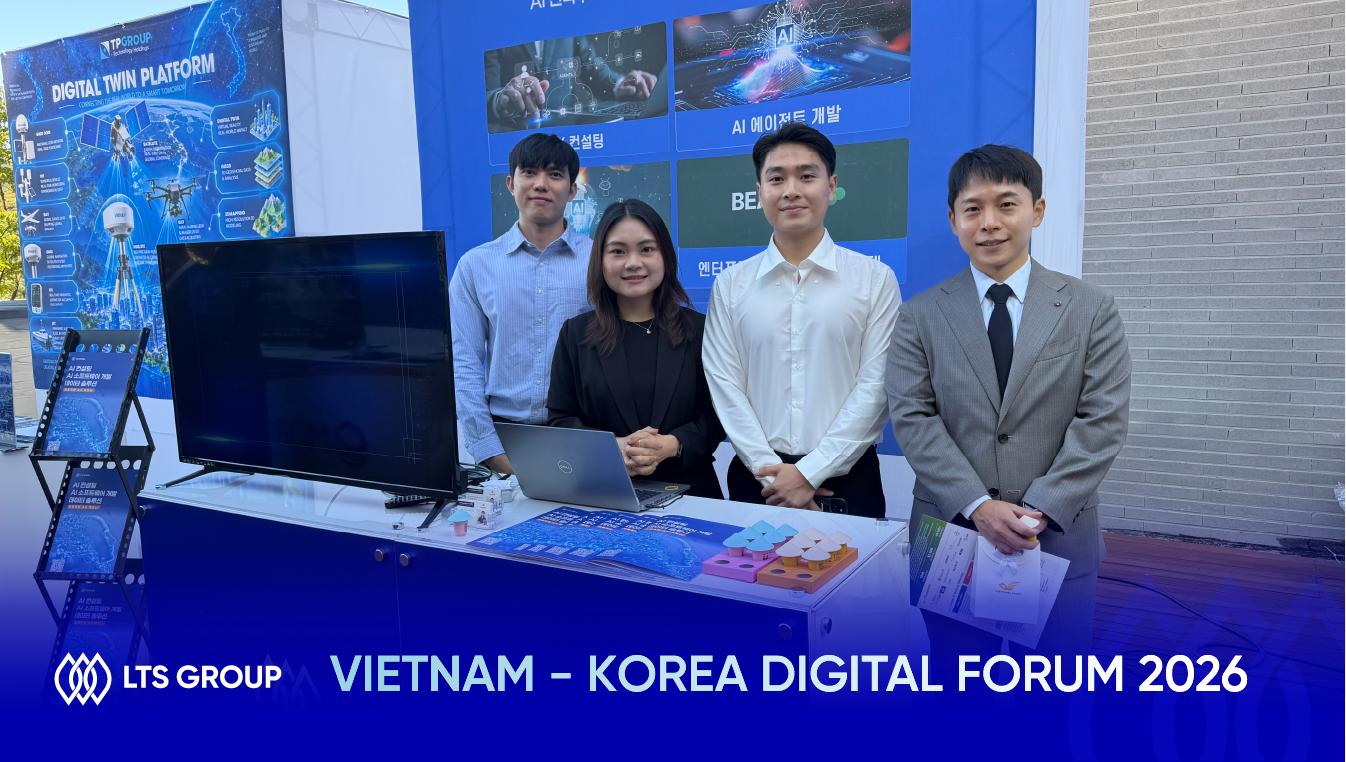
On the morning of October 1, 2026, LTS Group attended the Vietnam – Korea Digital Forum 2026 at the Embassy of Vietnam in Seoul. We introduced Beacon, a platform that helps enterprises build, run, and govern AI agents in a single system. A National-level Forum Connecting Vietnam’s and Korea’s Digital Sectors The forum brought together government agencies, industry associations, and digital technology companies from both countries. Vietnam: The Minister of Science and Technology; Mr. Nguyen Khac Lich, Director of the Department of Digital Technology and AI; the Chairman of the Vietnam Software and IT Services Association (VINASA); and digital technology companies including FPT Korea, SotaTek, and LTS Group South Korea: Leaders from the Ministry of Science and ICT (MSIT), the National IT Industry Promotion Agency (NIPA), KT, and other Korean technology companies From “Outsourcing” to “Co-creation” The forum’s message was a shift in Vietnam – Korea cooperation from outsourcing to co-creation, with AI and semiconductors as the two pillars. The keynote session covered five topics: Department of Digital Technology and AI: Co-creating a Vietnam – Korea digital ecosystem, from AI and semiconductors to the global market NIPA: Mechanisms to promote co-development and commercialization of AI and semiconductors, from R&D to market FPT Korea: Creating global value with Vietnamese tech companies, moving from “Outsourcing” to “Co-creation” KT: Next-generation AI infrastructure, with computing and cloud foundations for co-creation SotaTek: Physical AI and AI Factory for smart manufacturing A B2B matching session ran in parallel, focused on AI, semiconductors, cloud, data, software, 5G/6G, information security, and smart factory. Participants discussed finding partners, advancing R&D and PoC projects, and co-developing products. The panel discussion, “Vietnam – Korea Digital Technology Alliance,” centered on three issues: Joint R&D and technology transfer models between research institutes, universities, and businesses in both countries Training high-quality AI engineers and semiconductor design engineers PoC testing mechanisms and bringing co-developed products to the global market The forum closed with a “Make in Viet Nam” solutions showcase, where Vietnamese companies presented their technology capabilities to Korean partners. LTS Group Introduces Beacon – An Enterprise AI Platform As enterprises adopt AI faster, the question is no longer just how to use AI, but how to keep it safe and compliant. Beacon was designed to answer that question. Beacon helps enterprises build, run, and govern AI agents in one system, with compliance built in from the start. Its main capabilities: Full AI stack connectivity: Connects AWS Bedrock, Azure OpenAI, Anthropic, Google Vertex, and more with business tools such as Salesforce, Slack, GitHub, and SharePoint Real-time logging: Records every AI activity across the enterprise as it happens Shadow AI detection: Automatically detects unauthorized AI use On-demand compliance reports: Generates compliance reports whenever needed With Beacon, enterprises can roll out AI quickly while keeping strict access control and infrastructure-level risk management. At our booth, the LTS Group team demonstrated Beacon in person and talked with visitors about enterprise needs in AI governance. Key Takeaways At the forum, we connected with government agencies, associations, and tech companies from both countries and shared insights. Presenting Beacon in person also gave us a firsthand look at what Korean enterprises need in AI governance. It was a valuable opportunity to explore new collaborations and strengthen the Vietnam – Korea digital partnership. With 10 years of experience delivering IT services to global customers, LTS Group will keep developing services and solutions for the Korean market through LTS Korea. In line with the forum’s Co-creation direction, we are committed to being a trusted partner to Korean enterprises, helping them adopt AI effectively, safely, and sustainably.

Meet LTS Group at Autonomous Driving Mobility Expo (AME) 2026
Sep 28, 2026
-2 mins read
LTS Group will participate in Autonomous Driving Mobility Expo 2026 (AME 2026), Korea’s largest exhibition dedicated to autonomous driving and future mobility. The event will take place from August 25 to 27, 2026, at Hall B, COEX, Seoul. About AME 2026 AME 2026 will bring together more than 60 exhibitors across 150 booths to showcase the latest technologies and business trends in autonomous driving and future mobility. Held alongside EV Trend Korea 2026, the event will focus on the transition to software-centric vehicle architectures built around software-defined vehicles (SDVs), along with advances in ADAS and autonomous driving technologies. What LTS Group Will Showcase The automotive industry is rapidly evolving as sustainability, intelligent technologies, and service-based models reshape the market. As vehicles become increasingly software-driven, automotive software development, validation, and data labeling for ADAS and autonomous driving are becoming essential to future competitiveness. At AME 2026, LTS Group will showcase: Automotive software development and validation for SDVs; Data labeling solutions for ADAS and autonomous driving; LTS AutoTCGen, an AI-powered tool that generates ASPICE-compliant automotive software test cases (live demo). LTS Group’s CEO, Head of Automotive, Sales Director, and Delivery Manager will be on-site to introduce our solutions and discuss your automotive technology needs. Event Details Date: August 25–27, 2026 Venue: Hall B, COEX, Seoul Visit the LTS Group booth to explore our automotive software development and validation services, ADAS data labeling solutions, and LTS AutoTCGen. To arrange a meeting in advance, don’t hesitate to get in touch with us using the details below!



Email:contact@ltsgroup.tech
Phone:(+84) 96-238-7474
Headquarters:17th Fl, MD Complex Office Building, 68 Nguyen Co Thach Street, Hanoi, Vietnam
Japan:5F, Iwamoto Building, 3-20-10 Shibaura, Minato-ku, Tokyo 108-0023, Japan
US:25787 Rawley Springs Dr, Chantilly, VA 20152
South Korea:Room 1214, 12th Floor, Daerung Seocho Tower, 327 Gangnam-daero, Seocho-gu, Seoul, South Korea
Australia:1/63 Cobden Street, Kew VIC 3101, Australia