Top 13 Technology Trends in 2025 That Are Shaping The Future
Nov 30, 2023
-27 mins read

In 2023, the tech landscape is evolving at warp speed, bringing forth game-changing technology trends across every corner of our lives. From transforming the way we shop online to revolutionizing the classroom experience, to redefining how we get from point A to point B – and that’s just the beginning.In this article, we’re diving into the world of different domains to uncover the freshest trends that are shaping our future and dishing out golden tips on how you can stay ahead of the tech curve. Whether you’re an early adopter or a tech newbie, we’ve got you covered with friendly insights that will keep you in the know.
Top Technology Trends Businesses Shouldn’t Miss
Doubtlessly, technological advancements help individuals have a simpler and more convenient life, simultaneously, they assist companies in optimizing costs, bolstering customer experience and increasing revenue. Let’s zoom in on the latest technology to level up your game.
| Novel Technology Trends | Key Advantages |
| Edge computing | Bandwidth efficiency Low latency Cost efficiency Support for IoT |
| Quantum computing | Exponential processing power Parallel processing capability |
| Extended reality | Immersive experiences Enhanced learning Improved collaboration Training and simulations |
| Metaverse | Endless possibilities Global connectivity |
| Generative AI | Creative content creation Data augmentation Personalization |
| Robotic process automation | Efficiency and accuracy Cost savings 24/7 operations Scalability |
| Autonomous vehicles | Enhanced safety Reduced traffic congestion Increased accessibility for the disabled |
| Web3 | Decentralization Smart Contracts Digital Ownership and NFTs |
| Sustainable and green technologies | Environmental preservation Cost savings |
| Digital immune system | Automated security Adaptive defense Comprehensive protection |
| 5G | Faster speeds Low latency Streamlined connectivity and operation for IoT and smart city applications. |
| Smart cities | Efficient resource management Improved infrastructure Higher quality of life |
| Internet of Things | Real-time data Automation and efficiency Remote monitoring and control |
Let’s take a closer look at the emerging IT trends.
Edge computing
Edge computing is a decentralized computing paradigm that brings computation and data storage closer to the location where it is needed, rather than relying solely on centralized cloud infrastructure.
In traditional cloud computing, data processing and storage occur in remote data centers, often far away from the devices generating the data. In contrast, edge computing moves some of these processes closer to the “edge” of the network, which could be within or near the devices themselves.

Edge computing statistics
-
- By 2025, Gartner predicts there will be over 50 billion connected devices worldwide, generating huge amounts of data and requiring real-time insights. This is driving the need for edge computing.
-
- 75% of enterprise data is expected to be created and processed outside the traditional data center or cloud by 2025 according to IDC. Edge computing allows this by processing data locally.
-
- A MarketsandMarkets report estimates the global edge computing market will grow at a CAGR of 32.8% from 2020 to 2025, reaching $15.7 billion in value.
-
- An IHS Markit survey found 71% of companies are in the process of implementing edge computing capabilities, suggesting high levels of adoption.
Quantum computing
Quantum computing is a type of computing that leverages the principles of quantum mechanics to perform calculations. Unlike classical computers that use bits (binary units of 0s and 1s) as the fundamental unit of information, quantum computers use quantum bits or qubits. Qubits have unique properties that allow them to exist in multiple states simultaneously, thanks to a phenomenon known as superposition. This property enables quantum computers to process information in ways that classical computers cannot.

Quantum computing statistics
-
- Global investment in quantum computing is estimated to reach $16.4 billion by 2027, up from just $472 million in 2021, according to ResearchAndMarkets.com. This shows rapidly increasing industry spending.
-
- The number of quantum computing patents granted annually increased 356% between 2015 and 2020, per IPO. This illustrates rising research and development activity.
-
- In a 2021 survey by BCG, 92% of tech executives said they believe quantum computing will provide value to their industry, showing optimism about real-world benefits.
-
- The global market for quantum computing applications is projected to reach $31 billion by 2030, per PitchBook, as commercial use cases gain traction.
Extended reality
Extended reality Extended Reality (XR) is a term used to encompass various immersive technologies that merge the physical and digital worlds to create a blended, interactive environment. XR includes Virtual Reality (VR), Augmented Reality (AR), and Mixed Reality (MR), each offering a different level of immersion and interaction.

XR statistics
-
- There are projected to be over 1 billion AR/VR headset devices worldwide by 2030 according to IDC.
-
- 61% of US organizations are currently using some form of XR or plan to within a year according to PwC research.
-
- 80% of Forbes Global 2000 companies will use VR training applications by 2027 predicts IDC.
Metaverse
Metaverse refers to a collective virtual shared space, created by the convergence of virtually enhanced physical reality and persistent virtual reality. In simpler terms, it’s a digital universe that exists parallel to our physical world, where users can interact with each other and digital objects in real-time, often through the use of immersive technologies like VR and AR.
Metaverse statistics
-
- 59% of consumers are interested in exploring the metaverse according to Nielsen.
-
- 22% of US adults already claim to be metaverse users according to Axios.
-
- Microsoft, Meta, Epic Games, Nvidia and other tech giants are making major investments in metaverse development.
Generative AI
Generative AI, short for “Generative Artificial Intelligence,” refers to a category of artificial intelligence techniques and models that are designed to generate new content, data, or outputs that resemble and often expand upon existing patterns in the data they were trained on. These models can generate a wide range of content, including text, images, music, videos, and more.
The soaring popularity of generative AI is fueling the demand for AI data annotation services, as accurately labeled datasets become essential for training and refining these advanced AI models. If you are planning to harness AI or build a novel AI technology, discover AI data annotation services to win a competitive edge in your industry.

Generative AI statistics
-
- The generative AI market is projected to grow from $3.9 billion in 2022 to $42.5 billion by 2030 according to Emergen Research, pointing to rapid adoption.
-
- In just 2 years after its release in 2020, over 300,000 developers were using GPT-3 to generate text.
-
- Stable Diffusion has been used to create over 5 million images since launching in August 2022.
Robotic process automation (RPA)
Robotic Process Automation (RPA) is a technology that uses software robots (also known as bots) to automate repetitive and rule-based tasks within business processes. With software development kit, developers create RPA bots that can mimic human interactions with digital systems and applications to perform tasks such as data entry, data extraction, form filling, calculations, and more.
Check out a complete guide to software development for stakeholders.
Understanding that RPA is taking center stage in boosting organization growth, LTS Group offers RPA consulting, automation roadmap design, RPA development and RPA support for businesses to thrive. Learn more about robotic process automation workflow to see how we systematically and efficiently carry out your project.

RPA statistics
-
- Gartner predicts that by 2024, 10% of new RPA clients will adopt generative AI-powered bots, up from less than 1% in 2022.
-
- Absolute Markets Insights forecasts the AI-based RPA market will grow at a CAGR of 23% between 2022-2030, rising from $1.1 billion to over $10 billion.
-
- UiPath, a leading RPA vendor, reports that AI-enabled assistants and bots are now being used across over 1,500 of their customer accounts.
Autonomous vehicles
Autonomous vehicles, also known as self-driving cars or driverless cars, are vehicles that can operate and navigate without human intervention. These vehicles use a combination of advanced sensors, cameras, radar, lidar (Light Detection and Ranging), GPS, and sophisticated software algorithms to perceive their surroundings, make real-time decisions, and navigate safely through different environments.
Since vehicles directly affect the life of human-beings, every module and functionality must go through a stringent automotive testing process to ensure utmost safety.

Autonomous vehicles statistics
-
- Consumer interest is high, with 46% of US adults indicating they would consider riding in a self-driving vehicle according to Gallup polling.
-
- There has been nearly a 40x increase in global VC investment into autonomous driving tech companies since 2010, reaching over $8 billion in 2021 based on PitchBook data.
-
- Major OEMs like GM, Ford and Volvo have all made commitments to produce autonomous passenger vehicles over the next few years.
-
- Autonomous vehicle pilot programs and technology testing have expanded to over 55 major global cities.
Web3
Web3 refers to the next evolution of the internet that aims to decentralize control, enhance user privacy, and enable new forms of interaction through the use of blockchain technology and decentralized protocols. It represents a shift from the traditional centralized model of the current internet (often referred to as Web2) to a more decentralized and user-centric paradigm.
Web3 statistics
-
- There currently exist over 350 million crypto wallet users globally according to Statista. Wallets are a key component of Web3 and blockchain technologies.
-
- Key tech players like Square, Microsoft and Reddit are taking steps to support blockchain-based login and identity management, core components of Web3.
-
- Google search interest for terms like “web3” and “blockchain” has exploded in the last 1-2 years, showing surging public curiosity.
Sustainable and green technologies
Sustainable and green technologies or green tech or clean tech, are technologies and practices that aim to minimize their impact on the environment, conserve natural resources, and promote sustainable development. These new innovations in technology cover a wide range of industries and sectors, including energy, transportation, agriculture, construction, and more.

Sustainable and green technologies statistics
-
- Electric vehicle sales increased 70% in 2021 to 6.6 million units sold globally based on EV-Volumes data. IHS Markit predicts EV sales rising to over 70 million per year by 2030.
-
- The global green construction market size was valued at $187.4 billion in 2020 and is projected to grow at a CAGR of 14.5% according to Precedence Research.
-
- 51% of companies have set public goals to reduce their carbon emissions according to the World Economic Forum, driving adoption of sustainability technologies.
-
- ESG assets are on track to exceed $50 trillion by 2025, equal to over a third of projected total assets under management globally according to Bloomberg Intelligence.
Digital immune system
The term “Digital Immune System” infers a concept inspired by the human immune system and applied to the realm of digital technology and cybersecurity. Just as the human immune system detects and responds to threats to the body, a digital immune system aims to detect, respond to, and mitigate cyber threats and attacks in the digital realm.
Digital immune system statistics
-
- Gartner predicts that by 2025, 70% of organizations will deploy AI-augmented cybersecurity tools, up from only 10% in 2020.
-
- The global cybersecurity market is expected to grow to over $400 billion by 2027 according to Grand View Research, driven in part by advanced AI-based solutions.
-
- 53% of organizations increased their cybersecurity budgets in 2021 to fund AI-based defenses according to a Ponemon Institute survey.
-
- Venture capital investment in cybersecurity startups using AI/ML increased over 200% since 2017 to $2.85 billion in 2021 (Pitchbook).
5G
5G, short for “fifth generation,” is the latest generation of wireless network technology that offers significantly improved speed, capacity, and latency compared to its predecessors. It’s designed to provide faster and more reliable communication for a wide range of devices, including smartphones, Internet of Things (IoT) devices, autonomous vehicles, industrial equipment, and more.

5G statistics
-
- GSA reports that 5G networks have now launched in over 170 countries, with over 600 operators investing in 5G.
-
- According to Lifewire, analysts forecast there will be 2.6 billion 5G connections by 2025, accounting for 30% of global mobile connections.
-
- Gartner anticipates 5G phone shipments will grow by 35% in 2022 to over 1 billion units shipped.
Smart cities
Smart cities are urban areas that leverage technology, data, and innovation to enhance the quality of life for residents, improve efficiency, and promote sustainable development. These cities use various digital technologies to collect and analyze data from infrastructure, services, and residents, with the goal of optimizing resources, reducing costs, and enhancing overall urban living.

Smart cities statistics
-
- The global smart city market size is projected to grow from $410 billion in 2020 to over $820 billion by 2025 according to Fortune Business Insights.
-
- There are over 1,000 smart city pilot projects currently underway globally according to the International Data Corporation (IDC).
-
- 90% of large cities are expected to deploy smart city tech like IoT sensors, connected lighting, and intelligent transit by 2025 according to Juniper Research.
Internet of Things (IoT)
The Internet of things (IoT) describes the network of physical devices, vehicles, appliances, and other items embedded with sensors, software, and connectivity, enabling them to collect and exchange data. IoT devices can communicate with each other and with central systems to perform various tasks and provide insights.
To stay competitive in the technology-dominated world, businesses should consider partnering up with an offshore software development company to create smart devices.
Internet of things statistics
-
- Gartner forecasts that there will be over 25 billion IoT connected devices worldwide by 2021, up from 14.2 billion in 2019.
-
- Global IoT spending is projected to surpass $1 trillion by 2023 according to IDC research.
-
- By 2030, McKinsey estimates the economic impact of IoT will be up to $15.7 trillion globally.

Other Dominant Tech Trends in Various Industries
Other than the aforementioned core new technology, you can figure out startling tech trends in diverse industries which you may counter on a daily basis without noticing. Having over 6 years of experience in IT outsourcing and working on hundreds of projects, LTS Group always keeps updated and will be sharing with you the state of the art in:
-
- eCommerce
-
- Education
-
- Automotive
-
- Construction
-
- Healthcare
-
- Banking, Financial Services and Insurance (BFSI)

eCommerce and retail technology trends
-
- Mobile commerce (m-commerce): With the increasing use of smartphones and tablets, mobile commerce has become a significant trend. eCommerce businesses are optimizing their websites and apps for mobile devices, offering responsive design, mobile payment options, and app-based shopping experiences.
-
- Personalization: AI-powered algorithms analyze customer data to provide personalized product recommendations, tailor marketing strategies, and enhance customer experiences.
-
- Voice commerce: Voice-activated devices like smart speakers and virtual assistants enable customers to make purchases using voice commands. eCommerce platforms are integrating with voice-enabled devices to cater to this growing trend.
-
- AI-powered visual search: Visual search technology allows customers to search for products using images. AI analyzes the image to find similar products, enhancing the shopping experience.
- Digital signage: Revolutionizing eCommerce and retail by enhancing customer engagement through interactive displays, with digital signage driving more personalized shopping experiences and higher sales conversion rates.
Trends in educational technology
-
- Online and blended learning: Online courses and blended learning models combine in-person instruction with digital resources. This flexible approach accommodates diverse learning styles and allows students to learn at their own pace.
-
- EdTech tools: Educational technology tools such as learning management systems (LMS), interactive whiteboards, video conferencing platforms, and collaboration tools enhance classroom engagement and streamline administrative tasks.
-
- Gamification: Gamification integrates game elements, such as rewards, challenges, and competition, into educational activities to increase student engagement and motivation.

Advanced automotive technology
-
- Electric and electrified vehicles (EVs): The transition to electric vehicles is accelerating, with advancements in battery technology leading to longer ranges, faster charging, and more affordable EVs. This trend is driving the development of charging infrastructure and promoting sustainable transportation.
-
- Advanced driver assistance systems (ADAS): ADAS features such as adaptive cruise control, lane-keeping assistance, and automated parking are becoming more prevalent.
-
- Connectivity and V2X communication: Vehicles are becoming more connected, enabling real-time data exchange between vehicles (V2V), vehicles and infrastructure (V2I), and vehicles and pedestrians (V2P). This connectivity improves traffic flow, safety, and navigation.
-
- Augmented reality (AR) and heads-up displays (HUDs): AR and HUD technologies project information onto the driver’s field of view, displaying navigation instructions, warnings, and other relevant data without requiring the driver to take their eyes off the road.
-
- Vehicle-to-grid (V2G) technology: Electric vehicles equipped with V2G technology can not only receive energy from the grid but also send excess energy back to the grid, contributing to energy storage and grid stability.
Construction technology trends
-
- Building information modeling (BIM) 2.0: BIM is evolving to include not just 3D models but also real-time data, simulations, and intelligent objects. BIM 2.0 offers enhanced collaboration and decision-making throughout the project lifecycle.
-
- Digital twins: Digital twin technology creates virtual replicas of physical assets, allowing construction professionals to simulate, monitor, and optimize construction processes, as well as predict maintenance needs.
-
- Drones and unmanned aerial vehicle (UAV): Drones are used for site surveys, progress monitoring, and inspections. This technology provides real-time data and imagery, improving site safety and project management.
Top tech trends in healthcare
-
- Telehealth and virtual care: Telehealth platforms enable remote consultations between patients and healthcare providers through video calls and messaging. Virtual care options improve accessibility, convenience, and reach of healthcare services.
-
- Digital health records (EHRs) and interoperability: Electronic health records facilitate seamless data sharing among healthcare providers, improving care coordination and patient outcomes.
-
- 3D printing: 3D printing technology produces customized medical devices, implants, and even human tissues for transplantation, revolutionizing patient care.
-
- Digital therapeutics: Software applications and platforms are used to treat medical conditions and complement traditional therapies. They range from mental health apps to prescription-based digital treatments.
BFSI technology trends
-
- Digital banking and mobile apps: Banks are focusing on providing seamless digital experiences through mobile banking apps that offer features such as account management, fund transfers, bill payments, and personalized financial insights. Learn more about mobile banking app development.
-
- Open banking and APIs: Open banking initiatives facilitate the sharing of customer data among authorized financial institutions, leading to enhanced customer experiences, innovative products, and increased competition.
How to Keep Up with New Technologies?
Failing to recognize and adapt to technological innovations can lead to missed chances, falling behind competitors, and becoming outdated in a rapidly evolving world. That’s why anyone should seek ways to constantly update newest technology.
If the question “What are some emerging trends in information technology?” is floating on your mind, check out a handful of tips to stay informed about future trends.
-
- Regularly read industry-specific publications, reports, and newsletters. Subscribing to technology-focused magazines and online platforms will keep you updated on the latest developments. You can drop by TechCrunch, Wired, Ars Technica, The Verge, Mashable, TechRadar, MIT Technology Review, CIO, Hacker News, etc.,
-
- Build a network of tech experts, thought leaders, and professionals who can provide insights. Individuals can engage in discussions, attend conferences, and connect on social media platforms.
-
- Attend technology expos, conferences, and trade shows relevant to your industry. These events showcase the latest advancements and offer opportunities for networking.
-
- Keep an eye on your competitors and industry leaders to understand their tech strategies. This can provide insights into emerging trends and best practices.
-
- Experiment with beta versions. Many tech companies release beta versions of their products. Participating in beta testing allows you to explore features and functionalities before they’re officially launched.
-
- Engage in discussions with colleagues, mentors, and peers about new technologies. Sharing perspectives can lead to deeper insights and a broader understanding.
-
- Join online forums, social media groups, and communities dedicated to technology discussions. Platforms like Reddit and Stack Overflow allow you to ask questions, share insights, and learn from experts.
Frequently Asked Questions about Tech Trends
What are tech trends?
Tech trends are patterns of innovation and development in the field of technology. These trends indicate the direction in which technology is evolving, shaping industries, influencing consumer behavior, and impacting society as a whole.
Why are tech trends important?
Tech trends help us anticipate the future by identifying the technologies that are gaining traction and likely to have a significant impact. Staying informed about tech trends allows individuals and businesses to adapt, innovate, and remain competitive in a rapidly changing landscape.
How can businesses benefit from staying updated on tech trends?
Businesses that stay updated on tech trends can identify new opportunities for innovation, streamline operations, enhance customer experiences, and maintain a competitive edge in their industry. Understanding tech trends also helps businesses anticipate customer needs and adapt to changing market dynamics.
Ride the Wave of Innovation in Full Force to Stay Competitive
In today’s ever-evolving business landscape, staying ahead isn’t just a choice – it’s a necessity. As decision-makers, the power to anticipate shifts and seize opportunities lies in understanding and embracing technology trends. By harnessing the insights gained from these trends, you not only position your business for growth but also ensure its resilience in a dynamic market. Should you have any inquiries related to the latest technology trends, contact us for further assistance.

Share

Taylor Nguyen
Taylor is a content writer at LTS Group, fascinated by how changes are created through technology. When he doesn’t write, you can find him making coffee and chilling with his cat. Contact him at taylor@ltsgroup.tech

More must-reads to keep leaders updated

LTS Group Becomes Official Member of the French Chamber of Commerce and Industry in Vietnam (CCIFV)
Oct 5, 2026
-4 mins read
LTS Group has officially joined the French Chamber of Commerce and Industry in Vietnam (CCIFV), marking a new step in its efforts to strengthen connections with the Vietnam – Europe business community and contribute to technology cooperation between the two markets. Through its CCIFV membership, LTS Group will have opportunities to engage with French and European businesses in Vietnam, as well as industry peers, experts, and decision-makers across sectors. The company plans to take part in networking and knowledge-sharing activities while bringing practical perspectives from its work in AI, software, data, and automotive engineering. As its first engagement, LTS Group will co-host a CCIFV Breakfast Talk in Hanoi on 13 October 2026, focusing on how AI is changing the way we work. A Bridge for Vietnam – Europe Business Cooperation CCIFV supports French and European businesses in Vietnam and promotes economic cooperation between the two markets. As part of the CCI France International network, it connects businesses and chambers of commerce across markets worldwide. Its activities include business networking, Breakfast Talks, sector committees, business support services, and an online member directory that helps members build new connections. Members can also access the wider Vietnam – Europe business network, including connections with EuroCham members, and share company news and expertise through CCIFV’s media channels. From Membership to Practical Contribution Through its CCIFV membership, LTS Group aims to contribute to the community by: Sharing expertise: Bringing practical experience in AI, software, data, and automotive engineering to the CCIFV network; Hosting and speaking at events: Participating in CCIFV activities, starting with the Breakfast Talk “How AI Will Change the Way We Work” on 13th October; Connecting business needs with technology capabilities: Helping European businesses explore technology delivery opportunities in Vietnam. First Engagement: Breakfast Talk on How AI Will Change the Way We Work LTS Group’s first joint activity with CCIFV will be a Breakfast Talk exploring how AI is transforming the workplace. The discussion will cover the foundations organizations need for successful AI adoption, from data and organizational mindset to management strategies. The session will focus on three key areas: Building a strong data foundation: Establishing the groundwork needed for reliable AI initiatives; Developing an AI-native mindset: Helping teams and leaders adapt to working in an increasingly AI-driven environment; Making AI adoption work in practice: Exploring management strategies, including AI sovereignty in Europe and its implications for businesses operating in the global AI landscape. Event Details Date and time: 13 October 2026, 9:00 AM – 11:00 AM Venue: LTS Group Office, 17th Floor, MD Complex Office Building, 68 Nguyen Co Thach Street, Hanoi With hands-on experience in building and validating real-world systems, LTS Group’s specialists will also bring a practical perspective to discussions around AI-driven products, particularly the growing importance of testing, trust, and governance. Our Commitment as a Member of CCIFV For LTS Group, becoming a CCIFV member represents both an opportunity and a commitment: an opportunity to connect with a broader network of European and international organizations, and a commitment to contribute practical experience to the business community. Looking ahead, LTS Group plans to participate actively in CCIFV activities, contribute to sector committee discussions, and explore partnership opportunities with fellow members. By strengthening connections between technology companies and businesses across Vietnam and Europe, LTS Group aims to contribute to a stronger presence for Vietnamese technology companies within the European business ecosystem.
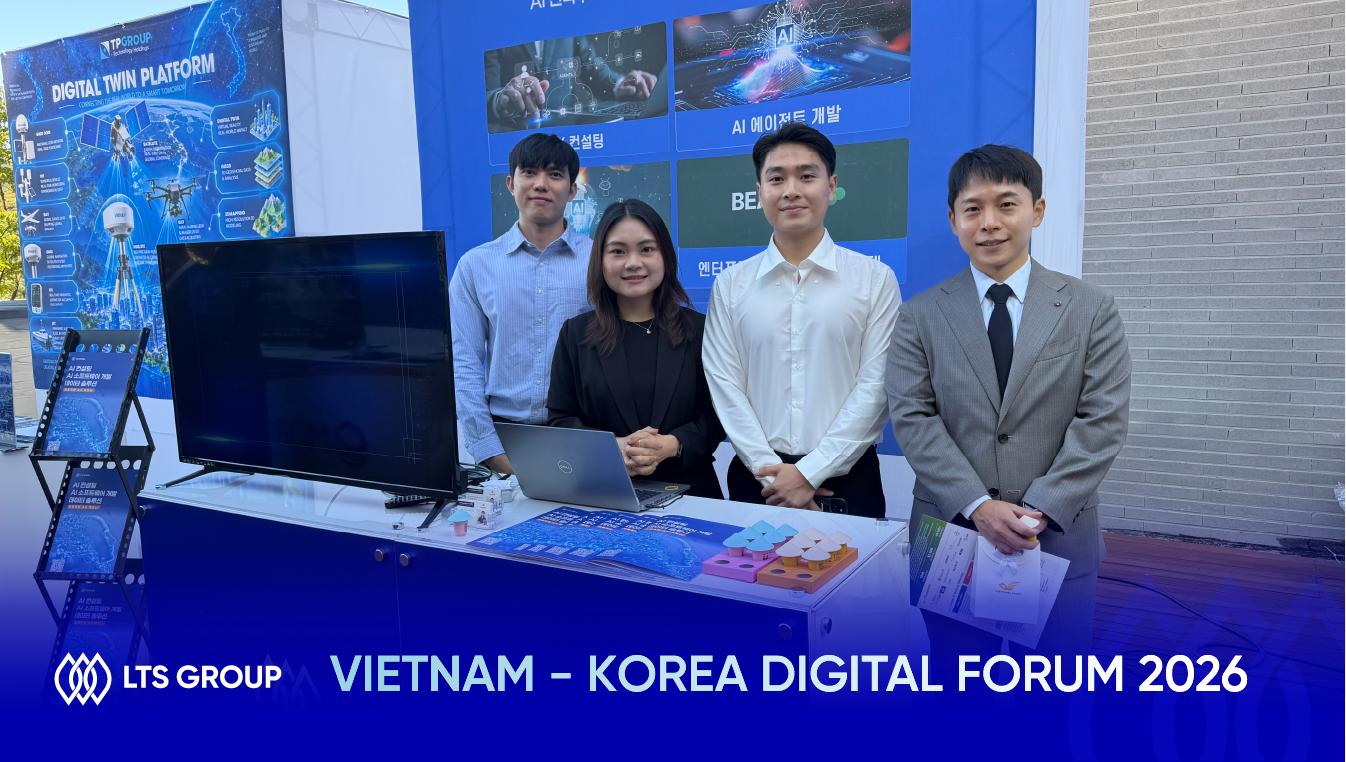
LTS Group Attends Vietnam – Korea Digital Forum 2026: Introduces Beacon for AI Agent Governance
Oct 2, 2026
-5 mins read
On the morning of October 1, 2026, LTS Group attended the Vietnam – Korea Digital Forum 2026 at the Embassy of Vietnam in Seoul. We introduced Beacon, a platform that helps enterprises build, run, and govern AI agents in a single system. A National-level Forum Connecting Vietnam’s and Korea’s Digital Sectors The forum brought together government agencies, industry associations, and digital technology companies from both countries. Vietnam: The Minister of Science and Technology; Mr. Nguyen Khac Lich, Director of the Department of Digital Technology and AI; the Chairman of the Vietnam Software and IT Services Association (VINASA); and digital technology companies including FPT Korea, SotaTek, and LTS Group South Korea: Leaders from the Ministry of Science and ICT (MSIT), the National IT Industry Promotion Agency (NIPA), KT, and other Korean technology companies From “Outsourcing” to “Co-creation” The forum’s message was a shift in Vietnam – Korea cooperation from outsourcing to co-creation, with AI and semiconductors as the two pillars. The keynote session covered five topics: Department of Digital Technology and AI: Co-creating a Vietnam – Korea digital ecosystem, from AI and semiconductors to the global market NIPA: Mechanisms to promote co-development and commercialization of AI and semiconductors, from R&D to market FPT Korea: Creating global value with Vietnamese tech companies, moving from “Outsourcing” to “Co-creation” KT: Next-generation AI infrastructure, with computing and cloud foundations for co-creation SotaTek: Physical AI and AI Factory for smart manufacturing A B2B matching session ran in parallel, focused on AI, semiconductors, cloud, data, software, 5G/6G, information security, and smart factory. Participants discussed finding partners, advancing R&D and PoC projects, and co-developing products. The panel discussion, “Vietnam – Korea Digital Technology Alliance,” centered on three issues: Joint R&D and technology transfer models between research institutes, universities, and businesses in both countries Training high-quality AI engineers and semiconductor design engineers PoC testing mechanisms and bringing co-developed products to the global market The forum closed with a “Make in Viet Nam” solutions showcase, where Vietnamese companies presented their technology capabilities to Korean partners. LTS Group Introduces Beacon – An Enterprise AI Platform As enterprises adopt AI faster, the question is no longer just how to use AI, but how to keep it safe and compliant. Beacon was designed to answer that question. Beacon helps enterprises build, run, and govern AI agents in one system, with compliance built in from the start. Its main capabilities: Full AI stack connectivity: Connects AWS Bedrock, Azure OpenAI, Anthropic, Google Vertex, and more with business tools such as Salesforce, Slack, GitHub, and SharePoint Real-time logging: Records every AI activity across the enterprise as it happens Shadow AI detection: Automatically detects unauthorized AI use On-demand compliance reports: Generates compliance reports whenever needed With Beacon, enterprises can roll out AI quickly while keeping strict access control and infrastructure-level risk management. At our booth, the LTS Group team demonstrated Beacon in person and talked with visitors about enterprise needs in AI governance. Key Takeaways At the forum, we connected with government agencies, associations, and tech companies from both countries and shared insights. Presenting Beacon in person also gave us a firsthand look at what Korean enterprises need in AI governance. It was a valuable opportunity to explore new collaborations and strengthen the Vietnam – Korea digital partnership. With 10 years of experience delivering IT services to global customers, LTS Group will keep developing services and solutions for the Korean market through LTS Korea. In line with the forum’s Co-creation direction, we are committed to being a trusted partner to Korean enterprises, helping them adopt AI effectively, safely, and sustainably.

Meet LTS Group at Autonomous Driving Mobility Expo (AME) 2026
Sep 28, 2026
-2 mins read
LTS Group will participate in Autonomous Driving Mobility Expo 2026 (AME 2026), Korea’s largest exhibition dedicated to autonomous driving and future mobility. The event will take place from August 25 to 27, 2026, at Hall B, COEX, Seoul. About AME 2026 AME 2026 will bring together more than 60 exhibitors across 150 booths to showcase the latest technologies and business trends in autonomous driving and future mobility. Held alongside EV Trend Korea 2026, the event will focus on the transition to software-centric vehicle architectures built around software-defined vehicles (SDVs), along with advances in ADAS and autonomous driving technologies. What LTS Group Will Showcase The automotive industry is rapidly evolving as sustainability, intelligent technologies, and service-based models reshape the market. As vehicles become increasingly software-driven, automotive software development, validation, and data labeling for ADAS and autonomous driving are becoming essential to future competitiveness. At AME 2026, LTS Group will showcase: Automotive software development and validation for SDVs; Data labeling solutions for ADAS and autonomous driving; LTS AutoTCGen, an AI-powered tool that generates ASPICE-compliant automotive software test cases (live demo). LTS Group’s CEO, Head of Automotive, Sales Director, and Delivery Manager will be on-site to introduce our solutions and discuss your automotive technology needs. Event Details Date: August 25–27, 2026 Venue: Hall B, COEX, Seoul Visit the LTS Group booth to explore our automotive software development and validation services, ADAS data labeling solutions, and LTS AutoTCGen. To arrange a meeting in advance, don’t hesitate to get in touch with us using the details below!



Email:contact@ltsgroup.tech
Phone:(+84) 96-238-7474
Headquarters:17th Fl, MD Complex Office Building, 68 Nguyen Co Thach Street, Hanoi, Vietnam
Japan:5F, Iwamoto Building, 3-20-10 Shibaura, Minato-ku, Tokyo 108-0023, Japan
US:25787 Rawley Springs Dr, Chantilly, VA 20152
South Korea:Room 1214, 12th Floor, Daerung Seocho Tower, 327 Gangnam-daero, Seocho-gu, Seoul, South Korea
Australia:1/63 Cobden Street, Kew VIC 3101, Australia