Mobile Banking App Development Comprehensive Guide 2025
Nov 30, 2023
-34 mins read

Demand for mobile banking app development is increasing because the fast pace of modern life makes them essential. Nowadays, any financial institution must understand how to create a mobile banking app.
According to Statista, approximately 2.37 million people worldwide currently use online banking services, and this number is expected to continue growing. By embracing digital changes in banking, financial institutions can meet the needs of today’s customers.
Offering a financial app to your customers can help your organization improve customer loyalty, generate more revenue, and reduce service costs.
So how to create a banking app? In this article, we’ll give you a comprehensive guide. By following these best practices, you’ll learn how to succeed in mobile banking app development. Let’s get started!
What Is Mobile Banking App Development?
A mobile banking app is a smartphone application designed to provide banking and financial services to customers. It allows users to access their bank accounts, conduct transactions, and manage their finances conveniently from their mobile devices.
Mobile banking app development refers to the process of creating and building these applications. Mobile banking app development for banking involves:
- Designing the user interface;
- Integrating banking functionality;
- Ensuring security;
- Optimizing the app for various mobile platforms like iOS and Android.

Mobile Banking Apps Benefits
Mobile banking application development offers enormous advantages for both users and businesses:

Benefits of mobile banking app development for users
Mobile banking apps make it easy for users to access their bank accounts securely and conveniently. They come with numerous useful features, including:
- 24/7 access to your bank account
- Quick money transfers
- Secure account access using features like Face ID and Touch ID
- Customizable notifications
- Enhanced functionality
- Cashback rewards
- Expense tracking
Benefits of mobile banking app development for businesses
Mobile banking app development can benefit businesses by reducing staff and operational expenses, as well as promoting sustainability by going paperless.
A well-designed mobile banking app offers several advantages for your business, such as:
- Reaching a larger user base
- Speeding up development processes
- Conducting easier A/B testing
- Expanding communication channels with users through push notifications
- Gaining a deeper understanding of user behavior
- Attracting more customers
- Competitive advantage

Different Types of Mobile Banking Applications
Let’s explore the most universal types of mobile banking applications available today!
Retail banking apps
When it comes to retail banking apps, you’ll find these are the familiar offerings from traditional banks. They enable you to carry out fundamental banking tasks such as
- Checking your account balance
- Transferring money
- Paying bills
- Reviewing your transaction history
Some well-known names in this category include Citi Mobile and HSBC Mobile Banking.

Investment and wealth management apps
For those interested in investing and building wealth, specialized investment and wealth management apps are available. These applications provide tools for tracking your investment portfolio, delivering real-time market data, and offering investment advice.
Robinhood, Acorns, and Wealthfront are notable examples in this arena.

Personal finance management apps
Simplify your personal finance management with apps designed to help you budget, track expenses, and set financial goals. These apps often connect to multiple bank accounts and credit cards to provide a comprehensive view of your finances.
Consider exploring Mint, YNAB (You Need A Budget), and Personal Capital for these functionalities.

Digital mobile wallet apps
While not traditional banking apps, mobile wallets like Apple Pay, Google Pay, and Samsung Pay revolutionize how you make payments. They allow you to securely store your payment cards digitally and make contactless payments at various point-of-sale terminals.

Business banking apps
If you’re a business owner, there are apps tailored to your specific needs. These apps facilitate tasks such as managing business accounts, generating invoices, processing payroll, and tracking expenses.
Widely used options in this category include QuickBooks, Xero, and Square.

Digital-only banks
Embrace the digital banking revolution with neobanks, which operate solely through mobile apps and websites, often without physical branches. These banks offer a broad range of services and flexibility.
Examples include Chime, N26, and Revolut.

Cryptocurrency wallets
With the surge in cryptocurrency popularity, mobile apps have emerged to help you store, trade, and manage digital assets like Bitcoin and Ethereum.
Some of the well-regarded names in this space are Coinbase, Binance, and Trust Wallet.

Specialized financial apps
For more specialized financial needs, there are apps dedicated to specific purposes such as international money transfers (TransferWise), robo-advisory services (Betterment), real estate (Zillow), student loan management (Student Loan Hero), and retirement planning (Retirement Planner by E*TRADE). Each of these apps caters to unique financial requirements.

Mobile Banking Application Features
Mobile banking app features for the MVP (Minimum Viable Product)
Features that can be added to the MVP mobile banking app development include:
- Account access: Users can securely log in to check their account balance, see their transaction history, and view their account details.
- Profile management: Let users update their contact info, preferences, and passwords easily.
- Transaction history: Users can keep track of their spending and record it with detailed transaction history.
- 24/7 customer support: Users can get help anytime, day or night, through chat, email, or phone.
- Enhanced security: Strong security measures, like two-step verification, fingerprint or face recognition, and secure transaction checks.
- Wallet integration: Users can also link their app with Wallet, allowing them to add money and make payments by scanning a unique code or registered number.
- Alerts and notifications: Users can receive alerts for account activity, low balances, and important updates.
- Fund transfers: Allow users to move money between your accounts (e.g., from savings to checking) and to other bank accounts (e.g., payees or external accounts).

Must-have core features of a full-fledged mobile banking app development
Along with the above MVP features, these features will be added to the product at the time of the main mobile banking app development:
- Money transfers: Users can send money globally and make person-to-person payments easily.
- Card management: Users can control their cards by locking/unlocking them, setting spending limits, and receiving transaction alerts.
- Personalized experience: Users can customize their dashboard, alerts, and notifications based on their preferences.
- Savings Goals: Users can set and track their savings targets.
- Loan and credit card management: Users can access and handle their loans, credit cards, and repayment schedules.
- QR code scanner: A mobile QR code scanner allows users to shop at physical stores and pay bills, offering convenience.
- Online payments: Users can make online payments using well-known systems like PayPal or Stripe.
- Automatic bill payments: Users can set up automatic payments for tasks like regular recharges and utility bills.
- Near-field interaction (NFC): Users can use their smartphones for contactless payments, a modern technology.
- ATM & bank branch locations: Users can locate nearby ATMs and bank branches on in-app maps for easy access during emergencies.

Advanced features of a mobile banking app (Appreciated by users)
What features are appreciated by users in their mobile banking app development? Here are some strong options:
- Budget management tool: This feature assists users in planning their budgets wisely and increasing their savings. It includes analysis tools to identify areas of high spending and opportunities for savings.
- Financial planning tools: Users can access retirement planning calculators, investment goal planners, and tax calculators.
- Wearable device integration: In the age of smartwatches, offering some app functions on wearable devices can be a competitive advantage.
- Robo-advisory services: Users can benefit from automated investment advice and portfolio management.
- Cashback rewards: Users can also enjoy exciting cashback rewards, such as coupons or monetary incentives, to encourage app usage. These are new features added to several apps.

Trends in mobile banking app development
Understanding the primary trends in the development of banking applications is valuable for users to see the direction in which the market is heading. Here are some important trends in modern banking apps development:
- Chatbot integration: Modern chatbots are capable of handling around 80% of routine tasks and addressing customer inquiries, often in real time. This significantly reduces the workload of customer service staff while ensuring that users can quickly find solutions to their issues.
- Voice banking: Incorporate voice command features for users to access their accounts and perform transactions.
- Transition to full-fledged assistants: Nowadays, instead of offering users just a few in-app features, mobile banking applications are evolving to functionally replace a visit to a physical bank branch. They provide direct assistance through chatbots and introduce AI-powered tools to enhance the banking experience.
Dig deeper into upward trends in BFSI industries and other domains.
How To Develop Mobile Banking App?
How to build a mobile banking app? Banking mobile app development involves several major stages to ensure its success, security, and functionality. Here are 8 major stages involved in developing a mobile banking app:

Step 1: Market research and analysis
Before starting the mobile banking application development process, it is crucial to conduct market research and analysis.
This initial step enables you to identify the market’s leaders, study the competitors, and understand the market’s needs. By that, you can define your winning spot in the market, and compile differentiating specifications for your application.
This stage usually takes a month or two. As the result of the research step, businesses will get:
- User persona profile;
- Market analysis;
- Market share;
- Market habits;
- Competitor’s strengths and weakness;
- Value proposition.
Step 2: Provide the security base
Privacy and security is the factor that your users care about the most when it comes to mobile banking applications. Ensuring proper compliance and security guarantors can also become your unique strength that differentiates your app from others.
Users will never put faith in using a mobile banking app with weak security. Therefore, you should be very careful about all the security bases before mobile app development starts, such as:
- Safe passwords: Passwords should be stored securely in the database, using a special method to protect them.
- Automatic logout: If a user doesn’t do anything for a while (let’s say 15 minutes), they should be logged out of the app automatically, both from the front and back ends.
- User data privacy: When creating a banking app, only a few people should be able to access important things like tokens and passwords. So, keep all the data in one safe place.
- Security certificates: Ensure you have an SSL certificate for a web app. For a mobile app, use SSL pinning. These things make sure that data is kept private when it moves between the app and the server.
- Secure authentication: Use fingerprint security for Android and Apple keychain for iOS to make sure only the right people can get into the app.
- Safe card information: Use VGS (Very Good Security) to show customer card details securely.
Besides that, mobile banking app development companies have to follow a bunch of rules depending on where they are. Some famous ones are PCI DSS, CCPA, GDPR, PSD2, and SEPA.
Depending on where you are, there might be more or fewer rules for your online banking app. So, ask your legal and software teams to check this out for particular markets or nations.
Step 3: Develop and test a prototype
Before building the complete mobile banking app, you need to create a prototype/ or an MVP version illustrating the app’s structure, visuals, and logic.
A prototype serves as a valuable tool for testing your concept, confirming its suitability for the market, and avoiding excessive spending on an idea that may not turn out well.
To ensure that the prototype accurately represents the future product’s functionality, you should undertake several essential tasks:
- Interview with the product owner: During this phase, the designer engages in a discussion with the individual responsible for the product, seeking clarity on their expectations and requirements.
- Utilize user stories: Typically, a multitude of user stories exists, following a standardized format such as: ‘As a <role or user type>, I want to <perform an action> in order to <achieve a specific outcome>.’
- Embrace job stories: This approach focuses on understanding user needs by employing the formula: ‘Given a certain situation, a user is motivated to achieve a specific result.’
- Explore jobs to be done: This comprehensive study defines the scope of upcoming work and assists in crafting a product that comprehensively fulfills user needs.
- Ask for feedback: To seek valuable feedback, you can use methods like surveys, interviews, or having people test your prototype. The goal is to gather insights and suggestions that will help you refine your prototype and make it the best it can be before turning it into a final product.
Step 4: Design the UI and UX
The UI/UX design phase will kick off using the information collected during the research phase, including insights from user interviews and feedback on the prototype.
In this stage, the project owner creates detailed wireframes and mockups that provide a visual representation of the app’s layout and user journey. This process aids in fine-tuning the app’s design and features before the mobile banking app development phase:
- Design a user-friendly and visually appealing UI: Invest in designing an intuitive and visually appealing user interface (UI) that aligns with your brand identity. Consider user accessibility and readability in your design choices.
- Focus on intuitive navigation: Prioritize user-centric design by ensuring that navigation within the app is straightforward and logical. Users should be able to accomplish their tasks with minimal effort and confusion.
Step 5: Develop the app
The mobile banking app development phase is where most of our time will be invested. This is when our banking app developers transform the prototype into a fully functional app.
At the beginning of the development stage, you choose a specific type of mobile app development approach: whether to go with a native development approach (developing separate apps for iOS and Android) or cross-platform development. This choice significantly influences the timeline and resource allocation for development.
So how to create banking application in android or iOS? When it comes to mobile banking app development, the choice of technologies primarily hinges on the platforms or operating systems we opt for. Let’s take a closer look at the technology requirements based on different platforms:
- For cross-platform development: Flutter; React Native; Xamarin
- For hybrid app development: Cordova/PhoneGap; Ionic
- For iOS development: Objective-C; Swift; Xcode IDE; Appcode; UIKit; SwiftUI
- For Android banking app development: Kotlin; Java; Android Studio and Android Developer Tools (ADT); Jetpack Compose, or you can use branded Android UI software
To ensure that the product aligns closely with your expectations, it’s crucial to maintain regular communication with the development team and provide ongoing feedback. This practice minimizes the number of edits and accelerates team workflows.
Depending on the complexity of the features, the mobile banking app development process typically spans from three to six months and comprises two main phases:
- Develop the backend infrastructure: Establish a robust backend infrastructure capable of handling data storage, security, and communication with external systems and services. Implement server-side logic for processing transactions and managing user data securely.
- Implement core features: Build core features like user authentication, account creation, account management, and basic transaction functionalities. Ensure these features work seamlessly.
Step 6: Integrate 3rd parties
In the process of mobile banking app development, incorporating third-party integrations can be highly advantageous. The integration of third-party APIs, such as those for payment processing, account linking, and real-time market data, can greatly enhance the user experience and captivate customer engagement to the maximum extent.
When selecting a third-party integration service, the most critical factor to consider is its stability, security, and dedicated support.
Step 7: Testing before release
To ensure your mobile banking app development achieves peak performance fulfills its original objectives, and maintains robust security, you’ll need the help of QA specialists to:
- Conduct rigorous testing: Perform thorough testing to identify and address both functional and non-functional issues. Test the app’s functionality, user flows, and responsiveness across various devices and screen sizes.
- Perform security testing: Conduct penetration testing to identify vulnerabilities and security weaknesses. Ensure that user data is protected at all stages of data transmission and storage.
Step 8: Release, maintain, and improve
Following successful testing, the product is officially launched and is backed by a team of specialists. This ensures that any technical problems that may arise are promptly eliminated.
As the client’s business expands and market demands evolve, the need to enhance and enrich the application with additional features is essential. New marketing research will help you determine potential areas of improvement or optimization (see Step 1). Thus, the entire software development process can be considered a continuous cycle.
Mobile Banking Development Challenges
Mobile banking app development can be a complex and challenging process due to the sensitive nature of financial data and the need for a seamless user experience.
According to the experience of many of our colleagues, here are the top 5 challenges faced by developers in this domain:
1. Security and compliance:
Banking applications must comply with a much larger number of security certifications than regular applications, including:
- Data security: Ensuring the utmost security of user data is paramount. Mobile banking apps must protect against various threats, including data breaches, hacking attempts, and malware.
- Regulatory compliance: Staying compliant with ever-evolving financial regulations and privacy laws, such as GDPR and PSD2, is crucial. Failure to do so can result in severe legal and financial consequences.

2. KYC verification:
Know Your Customer (KYC) verification is indeed a significant challenge in mobile banking app development. KYC verification is another challenging part that comes across banking app developers. It verifies the user identity in a particular bank branch.
They have to be very careful about the data verification of the users at the time of usage or when they start using your application. The challenge here is that there are few good risk analysts. So, you’ll probably need to spend a lot of time looking for one.

3. Fast-changing requirements
The mobile banking app development requires great patience and flexibility:
- Regulatory changes: Financial regulations and compliance requirements can change rapidly. Developers must adapt the mobile banking app to stay compliant with these evolving regulations, which can require significant code changes and updates.
- Market trends: User preferences and expectations in the banking sector can also change quickly. Keeping up with the latest market trends, such as new features or technologies (e.g., biometric authentication), and incorporating them into the app can be challenging.
- Competitive landscape: Competition in the mobile banking space is fierce, and banks often need to respond swiftly to new features and innovations introduced by competitors. This can lead to frequent updates and changes in the app’s functionality.
- User feedback: Gathering and responding to user feedback is essential for improving the app’s usability and functionality. However, accommodating user requests and feedback while maintaining stability can be a delicate balancing act.

Adapting to fast-changing requirements requires agile development practices, effective communication between development teams and stakeholders, and a robust software development lifecycle that can accommodate rapid changes without compromising the app’s security and stability.
Cost of Building a Mobile Application for Banking
There is no exact answer to the question. Mobile banking app development solutions vary in terms of scope, complexity, technology, and urgency, all influencing the final mobile banking app development cost. But on average, the price to make a banking app varies from $160,000-300,000+. It is influenced by different factors, such as:

- Team location
- The software development kit
- Project Complexity
- Project Timeline
- The complexity of the project is the top price tag
- Integration with third-party services
- Regulatory compliance, etc.
If you are working with a tight budget, consider outsourcing to mobile banking application development companies. This approach can help you optimize your expenses, especially when it comes to developing digital software products in regions like Asia, Central Europe, and Northern Europe.
Learn more about offshore software development rates by country.
In recent years, Vietnam has emerged as a highly favorable IT outsourcing destination for businesses across Asia Pacific, Europe, and North America. Significant advancements in technological capabilities and infrastructure, along with competitive production costs have positioned Vietnam as a potential major player in the global IT market.
Within Vietnam’s IT industry, Fintech (Financial Technology) stands out as one of the leading subsectors. In 2019, Vietnam’s FinTech sector ranked second in ASEAN in terms of funding, attracting a remarkable 36% of all fintech investments in the region. According to a representative from the Robocash Group, Vietnam’s FinTech market size is expected to reach a substantial 18 billion USD by 2024.
As one of the leading mobile app development companies located in Hanoi – the primary tech hub in Vietnam, LTS Group has been providing full-cycle software development and testing services for more than 7 years.
We have collaborated with 60+ clients from all around the globe across various industries, helping them build mobile apps from scratch or improving existing ones. Opting for an experienced company like LTS Group guarantees a ready-to-use, functional, and user-friendly app. Check out our case studies on fintech and banking software to see how we’ve helped.
When partnering with LTS Group, clients gain access to a powerhouse of over 300 skilled developers and testers proficient in a broad spectrum of technology frameworks and tools. Our unwavering commitment to problem-solving and perpetual innovation keeps us at the cutting edge of technology trends, ensuring to exceed our most demanding client’s expectations.
Our top global quality has been confirmed by 2 prestigious Sao Khue awards (the biggest award in the Vietnam Software Industry), a 94% client satisfaction rate, and becoming a silver partner of the International Software Testing Qualifications Board (ISTQB).
FAQs about Mobile Banking App Development
1. What is a mobile banking app?
A mobile banking app is a software application designed for smartphones and tablets that allows users to perform various financial transactions and banking activities remotely. These apps provide a convenient and secure way for customers to manage their bank accounts, including checking balances, transferring funds, paying bills, depositing checks, and accessing other banking services, all from the comfort of their mobile devices.
2. How much does it cost to develop a mobile banking app?
The cost of developing a mobile banking app can vary widely depending on various factors, including the complexity of the app, the features and functionality it offers, the platform(s) it is designed for (iOS, Android, or both), the region or country where development is done, and the development team’s hourly rates.
On average, a basic mobile banking app can cost anywhere from $50,000 to $150,000. In contrast, more complex apps with advanced features, security measures, and integrations can cost several hundred thousand dollars or even more. It’s crucial to conduct a detailed project assessment and work with a software development team to get an accurate estimate for your specific requirements.
3. What are the requirements of a mobile banking app?
The requirements of a mobile banking app can vary depending on the target audience and the specific goals of the financial institution. However, here are some common requirements for a mobile banking app: Money transfers, card management, personalization, QR code scanner, online payments, automatic bill payments, waller integration, safe passwords, user data privacy, security certificates, and secure authentication.
4. What tech stack to use to create a banking app?
When developing a banking application, the selection of technologies largely depends on the chosen platforms or operating systems. Let’s examine the technology needs for various platforms:
- For cross-platform development: Flutter; React Native; Xamarin
- For hybrid app development: Cordova/PhoneGap; Ionic
- For iOS development: Objective-C; Swift; Xcode IDE; Appcode; UIKit; SwiftUI
- For Android development: Kotlin; Java; Android Studio and Android Developer Tools (ADT); Jetpack Compose, or you can use branded Android UI software
Final Thoughts about Mobile Banking App Development
The success of a high-quality mobile banking app development hinges on three critical elements: robust security measures, an intuitive app design, and the seamless integration of bank services and products. Crafting mobile banking software requires meticulous planning and meticulous attention to detail to ensure users enjoy a secure and hassle-free experience.
As the demand for mobile banking continues to surge in the coming years, the significance of developing these apps will only grow. We hope our comprehensive guide can assist you not only in understanding the overview look of how to develop online banking applications but also in optimizing your mobile banking app development process.
If you have an innovative concept for a mobile banking app or have any questions regarding your mobile banking app development, feel free to contact us.
LTS Group has years of expertise in constructing and building mobile app solutions that not only provide flawless user experiences but also propel sustained business expansion. We are eager to collaborate with your organization!
Share


Ashley Nguyen
Meet Ashley Nguyen, our dedicated Content Marketing specialist with a passion for digital transformation, AI, and software development. Ashley's words bridge the gap between complex tech concepts and everyday understanding. Her insightful pieces not only educate but also inspire readers to embrace the ever-evolving landscape of innovation. Join her in exploring the evolving landscape of technology and innovation. Contact her at ashley@ltsgroup.tech

More must-reads to keep leaders updated
LTS Group Attends Vietnam – Korea Digital Forum 2026: Introduces Beacon for AI Agent Governance
Oct 2, 2026
-5 mins read
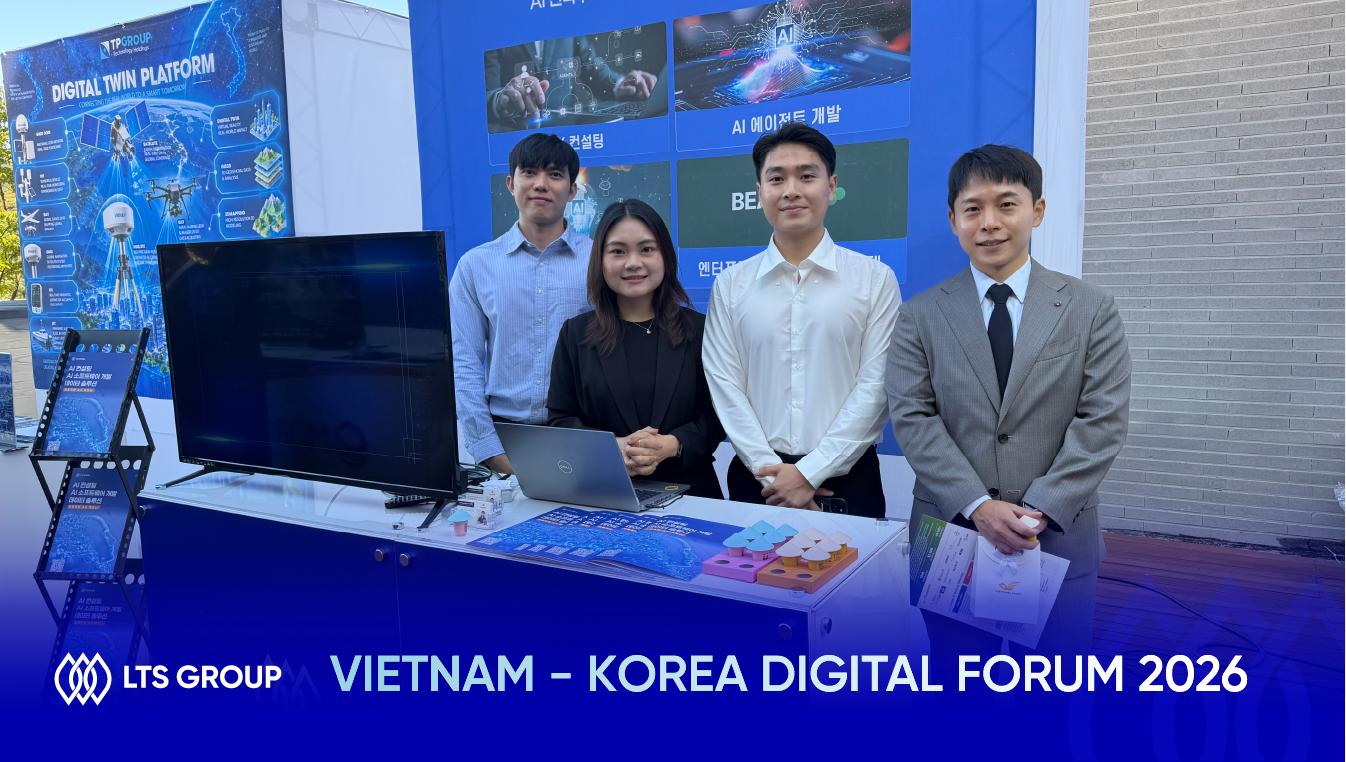
On the morning of October 1, 2026, LTS Group attended the Vietnam – Korea Digital Forum 2026 at the Embassy of Vietnam in Seoul. We introduced Beacon, a platform that helps enterprises build, run, and govern AI agents in a single system. A National-level Forum Connecting Vietnam’s and Korea’s Digital Sectors The forum brought together government agencies, industry associations, and digital technology companies from both countries. Vietnam: The Minister of Science and Technology; Mr. Nguyen Khac Lich, Director of the Department of Digital Technology and AI; the Chairman of the Vietnam Software and IT Services Association (VINASA); and digital technology companies including FPT Korea, SotaTek, and LTS Group South Korea: Leaders from the Ministry of Science and ICT (MSIT), the National IT Industry Promotion Agency (NIPA), KT, and other Korean technology companies From “Outsourcing” to “Co-creation” The forum’s message was a shift in Vietnam – Korea cooperation from outsourcing to co-creation, with AI and semiconductors as the two pillars. The keynote session covered five topics: Department of Digital Technology and AI: Co-creating a Vietnam – Korea digital ecosystem, from AI and semiconductors to the global market NIPA: Mechanisms to promote co-development and commercialization of AI and semiconductors, from R&D to market FPT Korea: Creating global value with Vietnamese tech companies, moving from “Outsourcing” to “Co-creation” KT: Next-generation AI infrastructure, with computing and cloud foundations for co-creation SotaTek: Physical AI and AI Factory for smart manufacturing A B2B matching session ran in parallel, focused on AI, semiconductors, cloud, data, software, 5G/6G, information security, and smart factory. Participants discussed finding partners, advancing R&D and PoC projects, and co-developing products. The panel discussion, “Vietnam – Korea Digital Technology Alliance,” centered on three issues: Joint R&D and technology transfer models between research institutes, universities, and businesses in both countries Training high-quality AI engineers and semiconductor design engineers PoC testing mechanisms and bringing co-developed products to the global market The forum closed with a “Make in Viet Nam” solutions showcase, where Vietnamese companies presented their technology capabilities to Korean partners. LTS Group Introduces Beacon – An Enterprise AI Platform As enterprises adopt AI faster, the question is no longer just how to use AI, but how to keep it safe and compliant. Beacon was designed to answer that question. Beacon helps enterprises build, run, and govern AI agents in one system, with compliance built in from the start. Its main capabilities: Full AI stack connectivity: Connects AWS Bedrock, Azure OpenAI, Anthropic, Google Vertex, and more with business tools such as Salesforce, Slack, GitHub, and SharePoint Real-time logging: Records every AI activity across the enterprise as it happens Shadow AI detection: Automatically detects unauthorized AI use On-demand compliance reports: Generates compliance reports whenever needed With Beacon, enterprises can roll out AI quickly while keeping strict access control and infrastructure-level risk management. At our booth, the LTS Group team demonstrated Beacon in person and talked with visitors about enterprise needs in AI governance. Key Takeaways At the forum, we connected with government agencies, associations, and tech companies from both countries and shared insights. Presenting Beacon in person also gave us a firsthand look at what Korean enterprises need in AI governance. It was a valuable opportunity to explore new collaborations and strengthen the Vietnam – Korea digital partnership. With 10 years of experience delivering IT services to global customers, LTS Group will keep developing services and solutions for the Korean market through LTS Korea. In line with the forum’s Co-creation direction, we are committed to being a trusted partner to Korean enterprises, helping them adopt AI effectively, safely, and sustainably.

Meet LTS Group at Autonomous Driving Mobility Expo (AME) 2026
Sep 28, 2026
-2 mins read
LTS Group will participate in Autonomous Driving Mobility Expo 2026 (AME 2026), Korea’s largest exhibition dedicated to autonomous driving and future mobility. The event will take place from August 25 to 27, 2026, at Hall B, COEX, Seoul. About AME 2026 AME 2026 will bring together more than 60 exhibitors across 150 booths to showcase the latest technologies and business trends in autonomous driving and future mobility. Held alongside EV Trend Korea 2026, the event will focus on the transition to software-centric vehicle architectures built around software-defined vehicles (SDVs), along with advances in ADAS and autonomous driving technologies. What LTS Group Will Showcase The automotive industry is rapidly evolving as sustainability, intelligent technologies, and service-based models reshape the market. As vehicles become increasingly software-driven, automotive software development, validation, and data labeling for ADAS and autonomous driving are becoming essential to future competitiveness. At AME 2026, LTS Group will showcase: Automotive software development and validation for SDVs; Data labeling solutions for ADAS and autonomous driving; LTS AutoTCGen, an AI-powered tool that generates ASPICE-compliant automotive software test cases (live demo). LTS Group’s CEO, Head of Automotive, Sales Director, and Delivery Manager will be on-site to introduce our solutions and discuss your automotive technology needs. Event Details Date: August 25–27, 2026 Venue: Hall B, COEX, Seoul Visit the LTS Group booth to explore our automotive software development and validation services, ADAS data labeling solutions, and LTS AutoTCGen. To arrange a meeting in advance, don’t hesitate to get in touch with us using the details below!

LTS Group & TIDO Sign Contract to Develop A Next-generation Interactive eCommerce Platform
Sep 28, 2026
-3 mins read
On September 11, 2026, Vietnam-based IT solutions provider LTS Group and digital platform TIDO officially signed a software development contract. The partnership marks the beginning of a strategic collaboration to build a unique, gamified eCommerce platform. Unlike conventional eCommerce platforms, TIDO merges online retail with interactive entertainment. By introducing gamification mechanics, such as lucky wheel rewards, the platform turns standard purchases into engaging, reward-winning experiences. To turn this vision into a scalable, long-term business, TIDO selected LTS Group to build a robust, flexible technological foundation. LTS Group is guiding the project with a “solid core platform first, features second” engineering philosophy. As the solution architect, LTS Group designed a modular, secure architecture focused on protecting cash flow and user data privacy. This foundation ensures the platform scales smoothly alongside TIDO’s growth without requiring structural rebuilds. A key highlight of this partnership is LTS Group’s AI-driven software development model. Replacing traditional, multi-month development cycles, LTS Group deploys specialized agentic AI across the entire software development lifecycle, from business analysis and system design to coding and testing. Operating under the strict supervision of LTS Group’s tech and QA experts at defined quality gates, this model dramatically accelerates time-to-market while ensuring uncompromised software quality. Together, LTS Group and TIDO are turning an innovative concept into a market-ready product, setting a new standard for interactive online shopping. About TIDO TIDO is an innovative digital platform redefining online retail. Moving beyond standard eCommerce models, TIDO creates a differentiated experience that seamlessly combines online shopping with interactive entertainment and gamification. About LTS Group Established in 2016, LTS Group is a fast-growing Vietnamese IT service provider. Formerly a leading Quality Assurance company in Vietnam (LQA), LTS Group has now grown into a diverse ecosystem of 10 entities, delivering end-to-end technology services including AX and DX Consulting, Bespoke AI System Development, System Testing, Digital BPO, and Global HR Services. With 4 dedicated subsidiaries in the USA, Japan, South Korea, and Australia, we serve 60+ clients across more than 11 countries with a 97% satisfaction rate. These milestones affirm our service quality and drive us toward our 2027 goal of becoming a world-class AI-first IT service company.



Email:contact@ltsgroup.tech
Phone:(+84) 96-238-7474
Headquarters:17th Fl, MD Complex Office Building, 68 Nguyen Co Thach Street, Hanoi, Vietnam
Japan:5F, Iwamoto Building, 3-20-10 Shibaura, Minato-ku, Tokyo 108-0023, Japan
US:25787 Rawley Springs Dr, Chantilly, VA 20152
South Korea:Room 1214, 12th Floor, Daerung Seocho Tower, 327 Gangnam-daero, Seocho-gu, Seoul, South Korea
Australia:1/63 Cobden Street, Kew VIC 3101, Australia