How to Manage an Offshore Development Team: Important Steps, Challenges, and Extra Tips
Jun 12, 2025
-22 mins read

Offshore software development has become more than a trend, it’s a strategic move that many forward-thinking companies are making. Recent research by Market.us projects the global offshore development market to reach approximately $389.7 billion by 2033, up from $120 billion in 2023.
It’s easy to see the appeal. Offshore development opens access to global expertise while significantly optimizing operational costs.
However, managing a development team located halfway across the globe raises questions around communication, time zone coordination, cultural differences, and alignment on deliverables.
How do you bridge time zones?
How do you guarantee communication doesn’t get lost in translation?
And how do you create a unified culture when your teams are oceans apart?
Despite these concerns, leading a high-performing offshore team is entirely achievable. With the right structure, tools, and processes, remote collaboration can run just as smoothly, if not more efficiently, than traditional models.
This article outlines the core principles of offshore team management, unpacking practical steps, real-world challenges, and proven solutions drawn from LTS Group’s experience in running successful offshore development centers.
Let’s get cracking!
What is an Offshore Development Team?
An offshore development team refers to a dedicated group of professionals based in another country, often operating from a different time zone, who handle software development projects on behalf of a client. This model, commonly known as an offshore development center (ODC), enables organizations to access a global pool of skilled IT talent while optimizing operational costs and accelerating time to market.
Learn more: How to set up offshore development center: A complete guide
More and more companies are choosing Vietnam as the location for their dedicated offshore development centers, drawn by the country’s strong tech talent, cost efficiency, and stable business climate. The setup process is also more straightforward than many expect. Explore how it all comes together in our comprehensive guide: Vietnam offshore development center: A full guide to success.
A well-functioning ODC typically includes three core teams: management, technical, and support.

Management team
Effective offshore team management begins with a leadership group that oversees the entire engagement. This team delivers clear communication, timely execution, and alignment between onshore expectations and offshore delivery.
- Project managers: Responsible for overseeing the development process, meeting project milestones, and coordinating between teams and stakeholders.
- Account managers: Serve as the liaison between the ODC service provider and the client, maintaining healthy business relationships and tracking client satisfaction.
- Business analysts (BAs): Act as the bridge between business requirements and technical specifications. BAs’s main job is to accurately translate client needs into actionable plans, helping stakeholders make informed decisions.
Technical team
At the core of any offshore software development center is the technical team responsible for delivering high-quality software solutions.
- Developers/programmers: The core of the ODC, responsible for building software products from the ground up. They write, test, and maintain code so that the system functions properly.
- UI/UX designers: Design engaging, user-friendly interfaces that enhance the end-user experience, collaborating closely with developers to implement design elements.
- Technical writers: Support the development team and end-users by translating complex technical concepts into clear, user-friendly documentation, manuals, and other resources.
- Quality assurance analysts/testers: Validate the quality of both the development process and the final product by creating and executing test plans, detecting bugs, and working with developers to resolve issues.
Support team
To keep the ODC offshore development center running smoothly, support roles handle recruitment, finance, and compliance.
- Human resources (HR) specialists: Manage the recruitment and onboarding of outsourced staff so that the right talent is brought on board for the ODC.
- Administrative and support staff: Handle behind-the-scenes tasks such as payroll management, accounting, and legal matters.
Discover how to build high-performing, cost-efficient offshore tech teams in Vietnam with our hands-on and strategic playbook, Vietnam offshore development center: How to set up for agile delivery and strategic scale.
How to Manage an Offshore Team Effectively?
To take full advantage of offshore development center services, organizations must approach their offshore partners as strategic collaborators. Below are 7 fundamental steps to have the offshore team operate efficiently:

Hire quality developers
The foundation of successful offshore team management lies in selecting the right professionals. Begin by evaluating candidates’ technical expertise, remote collaboration experience, and cultural compatibility.
Review the team’s previous work, including case studies or client testimonials. Consider engaging in a short 2-3 week trial project or a strategy session to evaluate real-time collaboration. Whether your business prefers agile workflows or a more traditional waterfall approach, aligning development philosophies early can prevent future miscommunication.
Once the hiring process is complete, invest in a structured onboarding process. Introduce the in-house and offshore members early to build rapport. Also, make sure offshore staff know who to contact for support and provide them with access to essential tools and systems.
Create detailed technical documentation before kickoff
A common misstep in managing an offshore software development center is delaying documentation until development is already underway. This often leads to misalignment, especially when onshore and offshore teams operate across time zones.
Instead, develop clear documentation before the coding phase begins. It should include:
- Annotated wireframes with exact API endpoints
- Database schema with field-level descriptions
- Specific error handling scenarios
- Regional compliance requirements
- Performance benchmark with actual numbers.
Pro tip: Encouraging both in-house and offshore teams to co-author these materials can reveal misunderstandings early and promote unified expectations.
Define roles, goals, and milestones clearly
A well-structured offshore development center model relies on each team member understanding their role, responsibility, and deadlines.
Break projects into smaller phases, assign specific deliverables, and outline what success looks like for each. Be transparent about overall objectives and how each contributor supports the bigger picture. This clarity helps foster accountability and keep the team focused.
Strengthen communication with a structured system
Effective communication is the backbone of any global development initiative. When managing an offshore development center, adopt a standardized communication process.
Designate a single project management platform like Jira, Asana, and Trello as the team’s source of truth. Use async tools like Slack or Microsoft Teams to streamline updates. For every task, ticket, or request, instruct both onshore and offshore teams to specify:
- What needs to be done (specific technical details)
- Why it matters (business impact)
- Who is involved (team members and stakeholders)
- When it is needed (with time zone specifications)
- What success looks like (measurable outcome)
Avoid ambiguous phrases. For example, instead of saying “fix the bug”, write “resolve timeout issue in login module affecting EU users. Assign to @Frontend-Team. Deadline: Friday 3 PM ICT.” Clear messaging reduces miscommunication and supports faster resolutions.
Also, simplify the language used and avoid idioms to accommodate any language or cultural differences among team members.
Assign cultural ambassadors
Cultural misalignment is a leading cause of failure in outsourced projects, up to 60%, according to Decode. Differences in work ethics, communication norms, and expectations can significantly hinder progress.
To manage this, appoint cultural ambassadors who understand both sides of the team dynamic and can bridge any gaps. These ambassadors don’t need to be the most senior; emotional intelligence and cross-cultural awareness are key.
For instance, the cultural ambassador could be a US-educated Vietnamese developer who understands Western workplace norms and Vietnamese communication styles.
Additionally, brief the leadership team on the ODC center’s cultural nuances to build mutual respect and understanding.
Rotate schedules for real-time collaboration
Time zone differences can be challenging. Rather than burdening one side with odd working hours, implement a rotating schedule. For example, alternate early-morning or late-evening meetings between headquarters and the offshore development center team.
Suppose the in-house team is based in New York and the ODC operates in Vietnam. The proposed schedule might be organized as follows:
- Week 1, Monday-Tuesday: Two NY developers start early (6 AM)
- Week 1, Thursday-Friday: Two Vietnam developers stay late
- Week 2, Monday-Tuesday: Different NY developers start early
- Week 2, Thursday-Friday: Different Vietnam developers stay late
By rotating responsibilities, both sides share the adjustment equally, improving morale and sustaining productivity. These overlapping windows could be reserved for major collaborative sessions, such as sprint planning or technical deep dives, rather than routine check-ins.
Employ agile methodologies
Agile practices are highly effective in managing remote and offshore software development centers. By structuring work into sprints and allowing regular iteration, agile enables teams to adapt to feedback quickly and remain aligned with evolving priorities.
This approach is particularly helpful when working across borders, as it facilitates regular checkpoints and focused development. It also helps teams prioritize tasks based on customer value, which is crucial when working with limited communication windows.
For extra tips on outsourcing and managing the development team effectively, check out our blog How to outsource development team with ease and manage it effectively?

Tools for Managing Offshore Development Teams
Selecting the right suite of tools for communication and project tracking plays a big role in running an offshore software development team smoothly and effectively.
Here’s a curated list of recommended tools supporting collaboration, transparency, and productivity across distributed teams.

Communication tools
For official communications that don’t require immediate responses, email remains a reliable option. For more dynamic conversations, including instant messaging and video conferencing, consider these platforms: Google Chat, Google Meet, Slack, Microsoft Teams, Zoom, Discord.
Screen capture tools
Visual communication can significantly reduce misunderstandings. Use these utilities to capture screens, annotate, and share feedback effectively:
- Snagit: Capture entire screens or specific areas for detailed visual explanations.
- Skitch: Allows screen capture with added notes, sketches, and comments, ideal for quick clarifications.
Collaboration document platforms
Seamless document collaboration is of great importance when managing offshore development centers. These tools enable multiple users to contribute and edit in real time:
- Google Docs: Supports collaborative editing of documents, spreadsheets, and presentations.
- EtherPad: A lightweight tool for plain-text documents with version tracking capabilities.
- Zoho: Offers a full suite, including documents, spreadsheets, and databases suitable for both individuals and teams.
Tracking tools
To maintain visibility into project progress, resource allocation, and deadlines, consider these tracking tools:
- nTask: An Agile-friendly platform for managing projects, tasks, meetings, timesheets, and risk.
- TrackingTime: A user-friendly, cross-platform app for monitoring work hours.
- Harvest: Integrates with most project management systems for time tracking and expense management.
- Scoro: Combines time tracking with billing and project budgeting features.
- Time Doctor: Provides detailed time tracking, activity monitoring, and budgeting controls.
Project management tools
Organizing workflows, assigning tasks, and tracking milestones is easier with dedicated project management tools:
- Asana
- Trello
- Monday.com
Challenges of Managing Offshore Development Teams and How LTS Group Tackles Them
Benefits of offshore development center are immense, but it also comes with a unique set of challenges. Based on our experience running offshore development centers for clients worldwide, we’ve identified six common pain points and how LTS Group solves them in real-world projects.

Data security
When working with an offshore software development company, it’s natural to worry about the safety of sensitive business information, especially without face-to-face oversight. Intellectual property, project documentation, and internal processes may feel more vulnerable.
LTS Group’s solutions
- Comprehensive NDAs: We sign detailed non-disclosure agreements with all our clients and internal stakeholders to clearly define data usage, transfer, and storage protocols.
- Client-owned database access: We recommend and help set up local databases under client control, ensuring clients retain full ownership of backups, permissions, and security protocols.
- Employee monitoring tools: Tools like Teramind and strict internal compliance policies allow us to monitor employee behavior, detect anomalies, and protect sensitive data.
- ISO certification & data compliance: LTS Group is ISO/IEC 27001-certified, ensuring global standards for data security management systems are followed rigorously across all ODC projects.
Time zone differences
Concerns about delayed communication or limited control due to time differences are common when outsourcing. But with the right structure, time zone differences can actually increase development speed.
LTS Group’s solutions
- Defined overlap hours: We set overlapping work hours with clients to ensure real-time collaboration, quick feedback loops, and better responsiveness.
- Flexible scheduling: Our teams are encouraged to adapt working hours for critical meetings, sprint reviews, or urgent discussions.
- Time zone management tools: Tools like World Time Buddy and Google Calendar help coordinate meeting slots that work for both sides.
Cultural nuances and communication gaps
Different working styles, communication preferences, and cultural expectations can lead to misunderstandings or friction within distributed teams.
LTS Group’s solutions
- Cultural awareness training: We educate both our teams and clients about potential cultural differences and how to navigate them respectfully.
- Cross-cultural mediators: Each ODC project includes bilingual project managers who understand the cultural and business etiquette of both the client and the local team.
- Defined communication protocols: We establish when to use chat vs. email vs. video calls, creating clarity and reducing back-and-forth.
- Psychological safety culture: Team members are encouraged to speak up, ask questions, and share honest opinions, especially during sprint planning, retrospectives, and reviews.
- Proactive engagement: Our delivery leads encourage offshore team members to be more forthcoming with feedback, updates, and challenges—even if the local culture is more reserved.
Language barriers
Language misunderstandings can impact collaboration, especially when it comes to onboarding, documentation, and day-to-day coordination.
LTS Group’s solutions
- English proficiency requirement: All our developers undergo English screening tests before joining international projects.
- Dedicated English-speaking project managers: We assign project managers and Scrum Masters with high English fluency to act as reliable bridges between the offshore team and the client.
- Ongoing language development: We offer internal English classes and encourage participation in external certifications like TOEIC and IELTS.
- Translation tools: When needed, we support communication with tools like DeepL and Grammarly to ensure clarity in written communication.
Productivity consistency
Different work environments, varying levels of autonomy, or a lack of visibility can cause inconsistent performance across offshore teams.
LTS Group’s solutions
- Clear KPIs and SLAs: We define measurable performance targets and deliverables at the start of every engagement.
- Weekly check-ins and reporting: Clients receive detailed weekly updates with task breakdowns, timelines, and blockers to maintain transparency.
- Agile tools for tracking: Platforms like Jira, ClickUp, and Trello are used to manage tasks, monitor sprint velocity, and align team efforts with business goals.
- Dedicated delivery manager: A delivery manager gatekeeps quality, performance tracking, and alignment with client expectations on a weekly and monthly basis.
Team cohesion
Distance can dilute the team spirit and hinder bonding between in-house and offshore members. But cohesive teams are indispensable for successful long-term collaboration.
LTS Group’s solutions
- Virtual team-building: We regularly organize online activities like quizzes, game sessions, and virtual coffee chats to humanize team interaction.
- Hybrid engagement models: If possible, we arrange for key team members to visit the client’s site or invite client stakeholders to our Vietnam office.
- Celebrating milestones: We celebrate project milestones and birthdays, and give shoutouts for outstanding performance, building morale across borders.
- Cultural exchange programs: Internal initiatives help team members learn about client cultures, strengthening mutual understanding and collaboration.
Offshore development team management checklist
Use this quick checklist to have your collaboration run on the right track:

- Define requirements, milestones, and KPIs clearly
- Hire the right mix of technical and soft skills
- Build a shared team identity and culture
- Establish communication protocols and cadence
- Provide the tools, documentation, and context needed
- Use agile or hybrid project management methods
- Maintain transparent SOPs and workflow documentation
- Monitor quality and performance consistently
- Overlap working hours when possible
- Foster trust through collaboration, not micromanagement
- Empower decision-making with data-driven insights
FAQs about Offshore Team Management
What are offshore teams, and how do they differ from traditional in-house teams?
Offshore teams consist of professionals working remotely for your company but located in a different country, typically provided by an outsourcing vendor. Unlike in-house teams that work onsite and are directly employed by your organization, offshore teams are contracted through a vendor who manages their employment conditions, including vacations and sick leave.
What are the main challenges of managing offshore teams?
Common obstacles include data security, time zone differences, cultural nuances and communication gaps, language barriers, productivity consistency, and team cohesion.
How can I manage an offshore team effectively?
Effective offshore management requires a clear strategy, the right technology, and structured communication practices. Regular updates and focused leadership significantly improve collaboration. Here are 7 important steps:
- Hire quality developers
- Create detailed technical documentation before kickoff
- Establish clear expectations
- Communicate clearly
- Deploy cultural ambassadors within teams
- Set up a rotating schedule for real-time overlap
- Employ agile approaches
Why should companies hire offshore teams?
Offshore teams bring cost efficiency, access to diverse global talent pools, and the ability to quickly scale development capacity, thereby accelerating project timelines and innovation.
What tools help with successful offshore team management?
A combination of time tracking, project management, and communication tools helps maintain transparency, accountability, and smooth coordination among dispersed teams. Popular solutions are Google Chat, Google Meet, Slack, Microsoft Teams, Zoom, Discord, nTask, TrackingTime, Harvest, Scoro, Time Doctor, Asana, Trello, Monday.com.
LTS Group: Your Offshore Development Team That Feels In-house
Managing an offshore development team may sound complex, but with the right partner, it doesn’t have to be. Success lies in building mutual trust, establishing clear workflows, and promoting seamless collaboration across borders.
At LTS Group, we provide dedicated offshore development teams that operate as a true extension of the internal workforce. From day one, we focus on integration, alignment, and long-term value, so that the offshore team doesn’t feel outsourced, but in-house.
This guide has outlined proven practices to help organizations overcome typical offshore challenges, from time zones and communication gaps to productivity and team cohesion. But beyond theory, LTS Group applies these best practices in real-world projects every day.
We believe in clarity. That means setting shared expectations, supporting ongoing knowledge transfer, and maintaining open lines of communication across every level. With dedicated planning and continuous improvement, your offshore team can become one of your most valuable strategic assets.
What makes LTS Group different?
- Dedicated, high-performing teams that align with your workflows and values
- Transparent communication and cultural awareness that foster strong team synergy
- Structured management and support, enabling fast onboarding and predictable outcomes
Our mission is to make offshore collaboration feel effortless, so your business can focus on innovation, delivery, and growth.
Share


Daisy Nguyen
Meet Daisy, a content writer at LTS Group, a renowned IT outsourcing company based in Vietnam. With a passion for crafting compelling narratives, she specializes in producing long-form, thought-provoking articles that delve deep into the realms of technology and innovation. Fueled by an insatiable curiosity, she eagerly explores emerging technologies, seeking to understand their potential impact and share insights with her audience. Contact her at hangnt1@ltsgroup.tech.

More must-reads to keep leaders updated
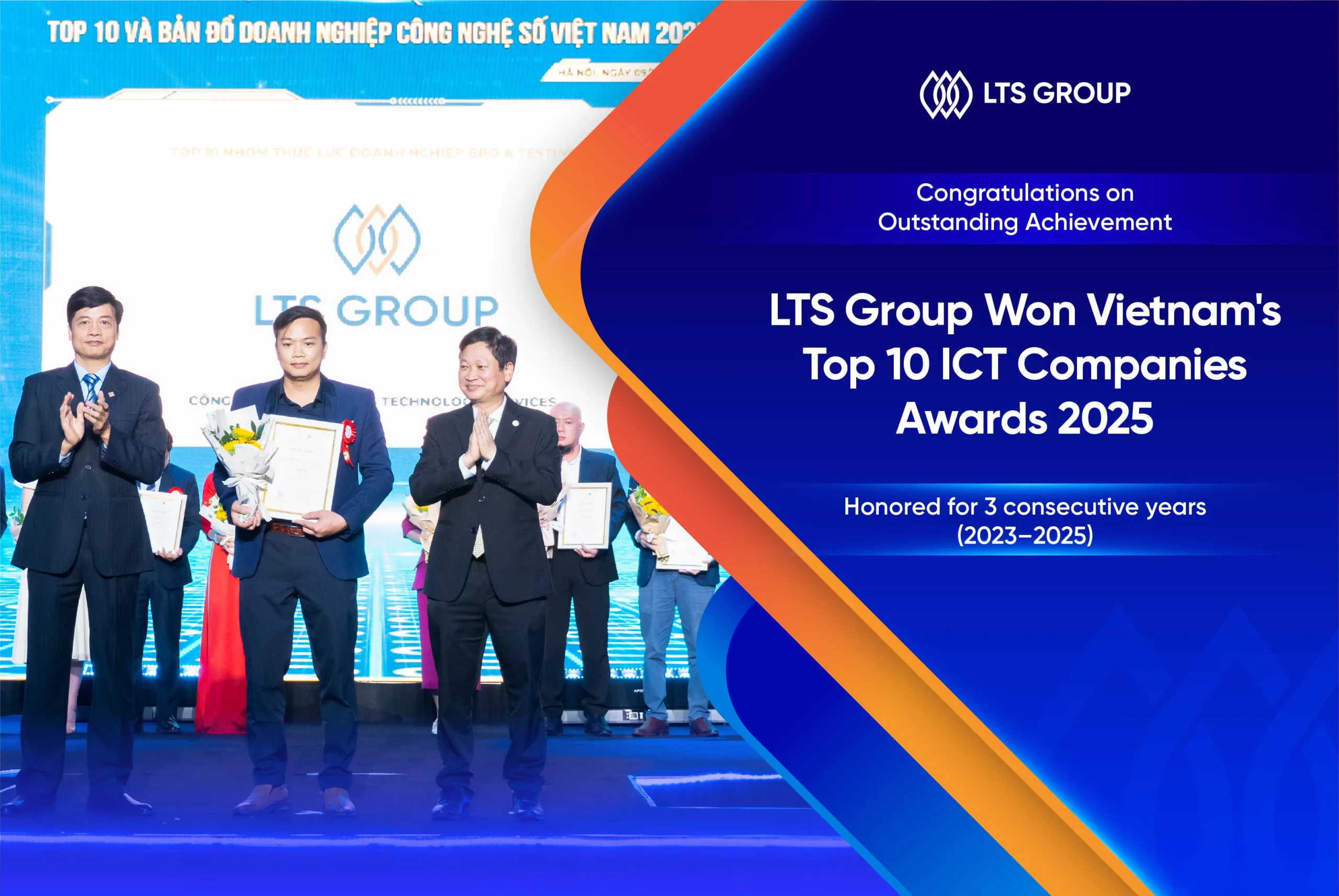
LTS Group Won Vietnam’s Top 10 ICT Companies Awards for 3 Consecutive Years 2023, 2024 & 2025
Apr 1, 2026
-4 mins read
It is with great pride and deep gratitude that we announce that LTS Group has once again been recognized as one of Vietnam’s Top 10 ICT Companies at the prestigious annual program run by the Vietnam Software & IT Services Association (VINASA). This honor marks our third year in a row, after wins in 2023 and 2024, reaffirming our steadfast commitment to quality, innovation, and global digital services. Table of Contents Toggle About the Award Celebrating Vietnam’s Leading Tech InnovatorsA Three-year Streak That Reflects Our Core ValuesEmbarking on the Next Chapter of Innovation About the Award Celebrating Vietnam’s Leading Tech Innovators The VINASA Top 10 ICT Companies program has long been one of the most prestigious awards in Vietnam’s technology industry, spotlighting enterprises that drive digital transformation and deliver impactful tech solutions. The ceremony held on October 9 in Hanoi honored a total of 169 enterprises that had been verified and reviewed across 23 technology sub-sectors and 5 main categories of digital service. Uniquely this year, the event also debuted the “Vietnam Digital Technology Enterprise Map 2025”, a comprehensive mapping of 257 enterprises occupying 389 positions across the digital-tech ecosystem in Vietnam. The program stands as one of the country’s most prestigious recognitions in the tech sector, spotlighting companies that deliver transformational digital solutions, command scale and revenue, and help shape Vietnam’s drive toward an innovation-led economy. A Three-year Streak That Reflects Our Core Values Starting as LQA, Vietnam’s first independent quality assurance firm, LTS Group has grown into a comprehensive provider of end-to-end technology solutions, offering software development, software testing, data annotation, LLM data training, and HR solutions. With a strong presence in Japan, the USA, and South Korea and a client network spanning more than 11 countries, we take pride in delivering tailored solutions that help businesses worldwide achieve sustainable growth. Our 97% client satisfaction rate stands as proof of the trust and long-term partnerships we’ve built with global enterprises. Being recognized for the third consecutive year in the Vietnam Top 10 ICT Companies Awards is more than an honor; it’s a reflection of our people’s dedication and commitment to setting new benchmarks for global IT services excellence. Embarking on the Next Chapter of Innovation This recognition reminds us how far we’ve come and how much potential still lies ahead. As we grow, LTS Group will continue to do what we do best: deliver reliable technology solutions, strengthen our presence across key markets, and expand partnerships with clients who trust us to bring their ideas to life. We would like to thank our clients, partners, and colleagues for being part of this journey. Your trust keeps us moving forward, one project and one breakthrough at a time.
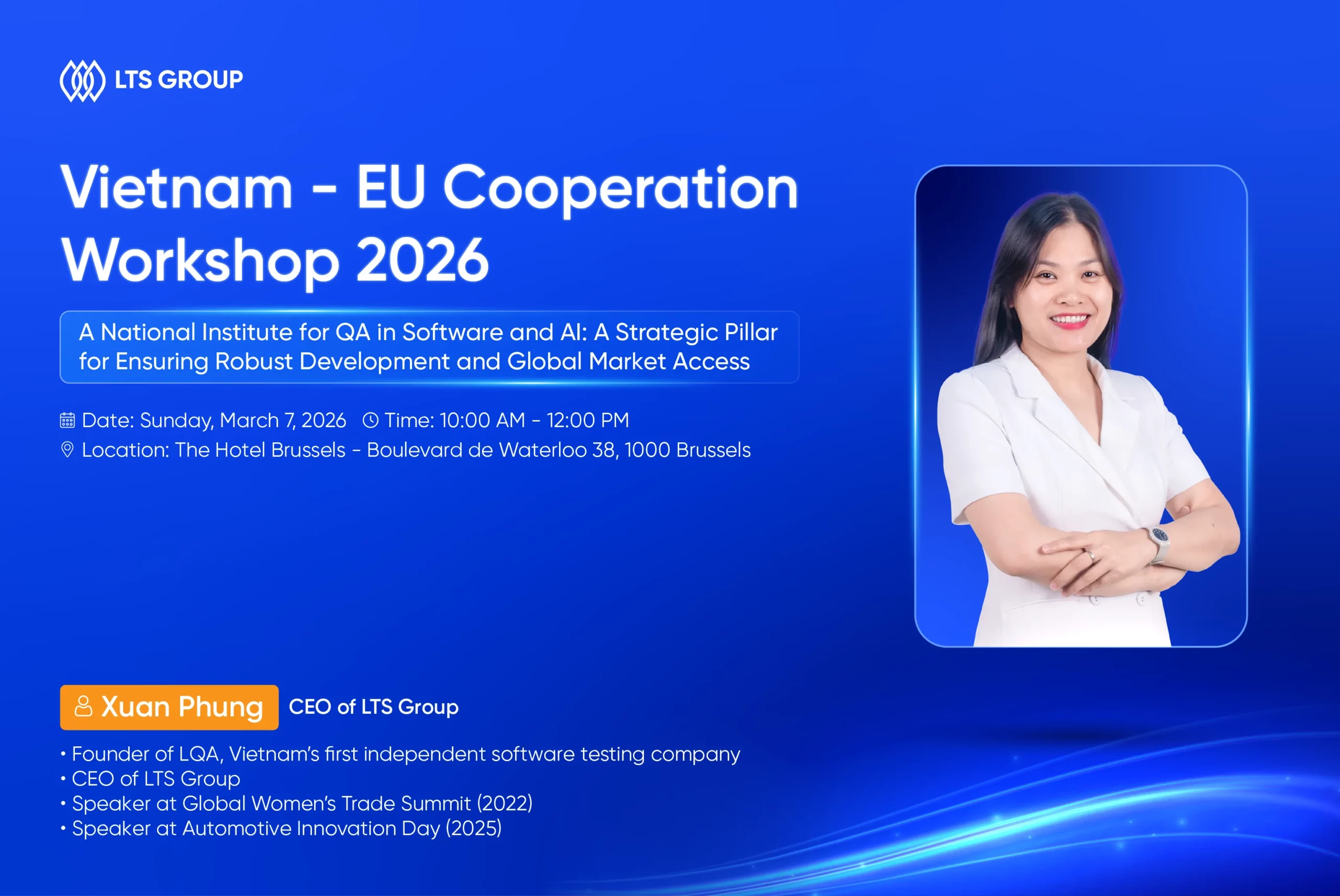
LTS Group CEO to Deliver Keynote at Vietnam – EU Cooperation Workshop 2026
Mar 4, 2026
-4 mins read
LTS Group is pleased to share that Mrs. Xuan Phung, CEO of LTS Group, will deliver a keynote address at the Vietnam – EU Science, Technology & Trade Workshop 2026, taking place on March 7, 2026 at The Hotel Brussels, Belgium. The workshop is organized by the Vietnamese Intellectual Association in Belgium and Luxembourg (ViLaB) and the Vietnamese Business Association in Belgium (VBAB), under the patronage of the Embassy of Vietnam in Belgium and Luxembourg. It brings together policymakers, researchers, and business leaders from Vietnam and across Europe to strengthen cooperation in science, technology, and trade. Table of Contents Toggle Event OverviewSpeaker IntroductionKeynote Session Event Overview Theme: Promoting Vietnam – EU Cooperation in Science, Technology and Trade Centered on strengthening Vietnam–EU cooperation, the workshop covers a range of strategic topics, including: Artificial Intelligence and Digital Transformation Biotechnology Nuclear Energy and Nuclear Medicine Trade and Business Collaboration More than a technical forum, the event aims to connect Vietnamese experts worldwide and foster practical partnerships between Vietnam and the European Union. With the shared vision of Connect – Innovate – Create, the workshop encourages cross-border collaboration to support sustainable growth and long-term innovation. Speaker Introduction Mrs. Xuan Phung is the Founder and Chairwoman of Lotus Quality Assurance (LQA), the first independent software testing firm established in Vietnam, which now has grown into an end-to-end IT services provider LTS Group. She founded the company in 2016 with a clear vision to build dedicated software quality engineering capabilities and elevate the role of quality in the global digital ecosystem. Starting from a small founding team, she has grown LTS Group into an organization of more than 500 professionals, with offices in Vietnam, Japan, South Korea, and the United States. Under her leadership, LTS Group has evolved from a specialized testing company into an international technology services provider, supporting clients across major global markets. Software quality engineering has remained at the core of the company’s identity, reflecting her long-standing commitment to building reliable, scalable, and trustworthy digital systems. As the Chairwoman, she continues to guide the company’s long-term vision, advocating for the strategic importance of quality. Keynote Session Mrs. Xuan Phung will co-present with Dr. Mai Xuan Phu, Quality Assurance Manager at Jemmic (Luxembourg) on the topic: “A National Institute for QA in Software and AI: A Strategic Pillar for Ensuring Robust Development and Global Market Access.” In this keynote, Mrs. Xuan will share perspectives drawn from industry practice on how Vietnam can strengthen its software quality ecosystem as it expands in global markets. The session will cover: Vietnam’s ICT growth and the shift toward quality-driven competitiveness Existing coordination gaps within the QA landscape The proposed role of a National QA Institute in aligning standards and capabilities How enterprises can contribute to a more unified and internationally recognized quality framework Through this contribution, LTS Group continues to advocate for elevating software quality engineering as a strategic driver of sustainable digital development. We look forward to engaging with partners, experts, and industry leaders at the workshop and contributing to meaningful dialogue on advancing Vietnam–EU collaboration in technology and innovation. Date: Sunday, March 7, 2026 Time: 10:00 AM – 12:00 PM Location: The Hotel Brussels, Boulevard de Waterloo 38, 1000 Brussels, Belgium
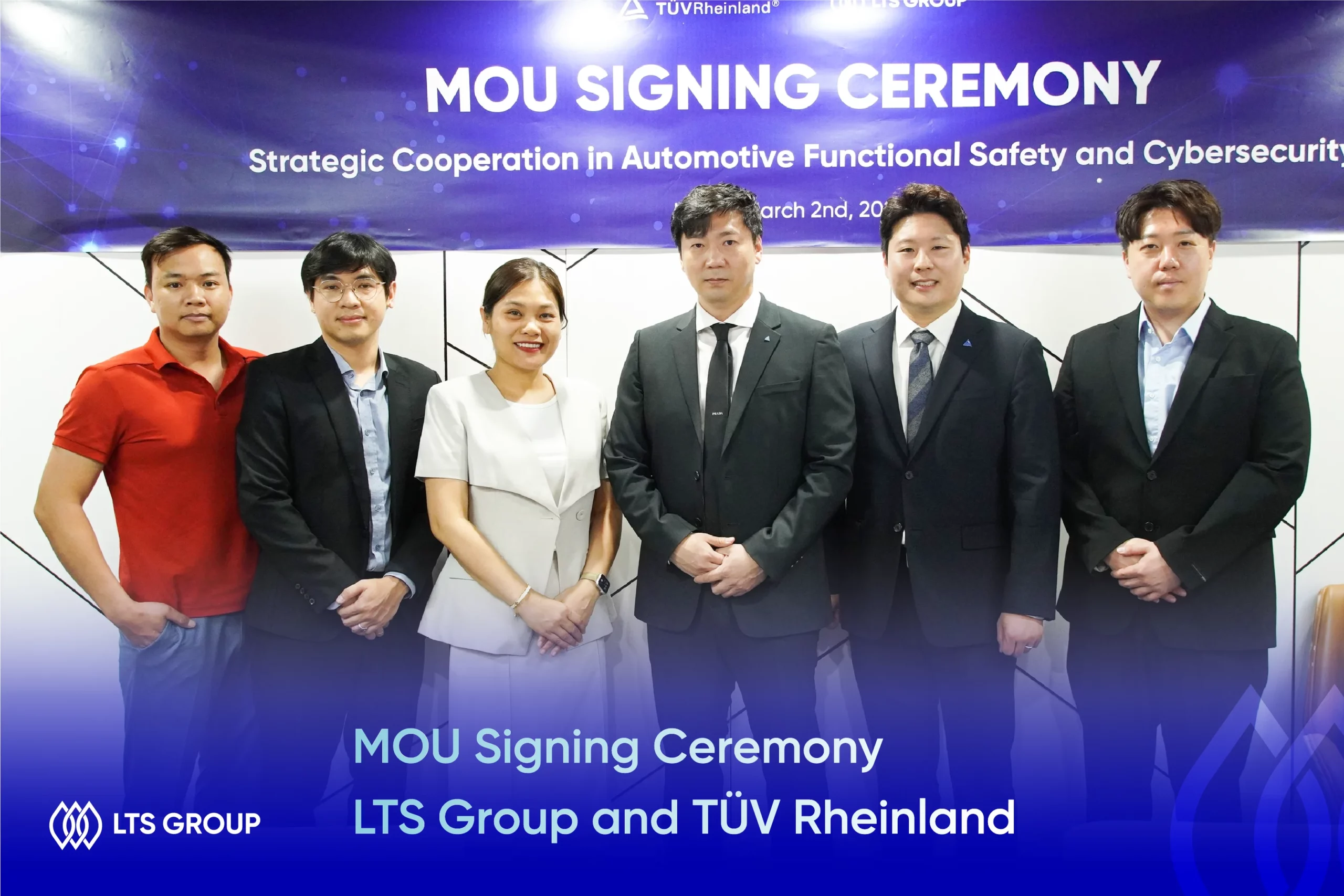
TÜV Rheinland and LTS Group Sign Strategic Partnership to Deliver Cybersecurity and Functional Safety Testing Services
Mar 3, 2026
-4 mins read
On March 2, TÜV Rheinland, a global leader in testing, inspection, and certification, officially signed a Memorandum of Understanding (MOU) with LTS Group to collaborate in delivering cybersecurity and functional safety testing services. During the signing ceremony, both parties discussed key areas of cooperation, including testing talent development and the operational collaboration model. Through this strategic partnership, LTS Group and TÜV Rheinland aim to combine global certification expertise with strong technical testing capabilities to provide high-quality software testing services that meet international standards. Founded in 1872, TÜV Rheinland is a leading global provider of testing, inspection, and certification services. The organization operates a worldwide network of accredited laboratories, training centers, and inspection bodies, supported by approximately 27,000 employees across offices in more than 50 countries. TÜV Rheinland tests and certifies technical equipment, products, and services while also supervising projects, processes, and information security for enterprises across industries. Its experienced experts provide professional training and workforce development programs for a wide range of sectors. Since 2006, TÜV Rheinland has been a member of the United Nations Global Compact, demonstrating its commitment to sustainability and ethical business practices. The company’s services are centered around four core areas: industrial services and cybersecurity, mobility, product quality and safety, and people and business assurance. Founded in 2016, LTS Group is a global full-cycle IT services and high-quality IT staffing provider. The company operates five member companies and maintains international branches in the United States, South Korea, and Japan. Its subsidiary, Lotus Quality Assurance (LQA), is recognized as Vietnam’s first independent software testing company, delivering reliable testing services backed by experienced professionals. Over nearly a decade, LTS Group has served more than 60 clients across 11 countries, successfully completed 275 projects, and achieved a 97% customer satisfaction rate. This MOU marks an important milestone in LTS Group’s continued commitment to enhancing service quality and expanding its global partnership ecosystem. Mr. Jin Pyo Noh, representative of TUV Rheinland, shared, “At TÜV Rheinland, we emphasize precision in both assessment and implementation. Through our collaboration with LTS Group, we combine that precision with strong local engineering capabilities to support customers in addressing safety and cybersecurity challenges in a structured and sustainable way. In today’s increasingly complex automotive systems, achieving Functional Safety and Cybersecurity requires integrating safety and security into system design from the outset. Beyond technical alignment, we believe successful partnerships are built on shared values and mutual trust. That is what makes this collaboration in Vietnam particularly meaningful for us as we strengthen safety capabilities across the Asia Pacific region.” Mrs. Xuan Phung, CEO of LTS Group, stated, “We are proud to partner with TÜV Rheinland APAC to further strengthen our commitment to quality in the automotive sector. By combining TÜV Rheinland’s training and certification expertise with LTS Group’s experience in automotive software development and validation, we aim to deliver a comprehensive solution covering process consulting, engineer training, technical assessment, and certification. It is also a wonderful opportunity for Vietnamese automotive talents to dive deep into world-class standards for Functional Safety and Cybersecurity.”

Email:contact@ltsgroup.tech
Phone:(+84) 96-238-7474
Headquarters:17th Fl, MD Complex Office Building, 68 Nguyen Co Thach Street, Hanoi, Vietnam
Japan office:5F, Iwamoto Building, 3-20-10 Shibaura, Minato-ku, Tokyo 108-0023, Japan
US office:25787 Rawley Springs Dr, Chantilly, VA 20152
Korea Office:Seoul, Seocho-gu, Gangnam-daero 327, 12Fl, Room 1214