Mobile App Development Outsourcing in 2025: How To Make It Work
Nov 28, 2023
-25 mins read

As the demand for mobile apps grows, mobile app development companies need to build apps efficiently and on time to stay ahead of the competition. With mobile app development outsourcing, businesses can leverage additional resources from external specialized suppliers to accelerate the time-to-market and enhance their mobile app’s quality in a cost-efficient way.
In this article, we will give you a comprehensive guide on how to create a roadmap to a successful mobile app development outsourcing project. Let’s get cracking!
6 Steps to Effectively Outsourcing Mobile App Development
Effectively outsourcing mobile app development involves a series of steps that assure you select the suitable partner, manage successful collaboration, and achieve flawless app quality. Here are six fundamental steps to follow when opting for mobile app development outsourcing solutions.

Step 1: Define your app project objectives and requirements
To deliver a clear understanding of your requirements and expectations for your mobile app outsourcing vendor, begin by outlining key aspects of your project, including:
- Objectives: Clearly define the main purpose of the app and the specific issues it intends to solve for your users.
- Target audiences: Precisely specify the demographic and preferences of your users to ensure the app aligns with their needs and expectations.
- Platform: Decide whether the app will be developed for Android, iOS, or both; and consider whether native or cross-platform development is more suitable for your goals. Check out our comprehensive article about types of mobile apps to easily come to a conclusion.
- Features: Create a prioritized list of essential and desirable features that you want to incorporate into your app.
- Budget: Define your project budget by considering your requirements, project scope, and the available resources at your disposal.
Step 2: Evaluate and select a suitable outsourcing development partner
Research and narrow down your search by evaluating the potential outsourcing development partners based on the following important criteria:
- Technical expertise: Make sure the mobile app development outsourcing company possesses the necessary technical knowledge and skills to meet your app requirements and expectations.
- Experience: Evaluate the company’s track record in developing similar mobile apps or strong expertise in the required tech stacks.
- Portfolio: Review their past projects to assess the quality of their past projects and the depth of their experience.
- Reviews: Verify the outsourcing company’s reputation and delivery capabilities by examining client testimonials, feedback, and case studies.
- Location: Consider the geographical location of the outsourcing company to prevent potential issues arising from time zone differences and cultural disparities that could impact communication and collaboration.
- Communication skills: Assess their communication skills to ensure effective and responsive interactions throughout the development process.
- Pricing and payment model: Confirm that the pricing and payment model offered by the outsourcing company aligns with your budget and preferences.
- After-launch support: Ensure the outsourced mobile app development company provides comprehensive post-launch support, including maintenance, quality assurance, updates, and the incorporation of additional features.
We understand that opting for the best trusted IT partner is an uphill battle. That’s why we have compiled juggernauts of the field and their reviews to help you make up your mind
- Top offshore software development company review in 2023
- Top 10 software development companies in Vietnam 2023
- Top 10 agile offshore software development company list IT companies must consider
- Top 10 IT staff augmentation companies
- Top 12 IT outsourcing companies in Vietnam updated 2023
Step 3: Choose the suitable outsourcing model
Selecting an appropriate outsourcing model is a pivotal decision because it fundamentally shapes the entire cycle of a mobile app development project. The chosen model sets the framework for how the project will be executed, how costs will be managed, and how flexibility in adapting to changes will be accommodated.
There are 3 popular outsourcing models, and to make an informed decision, it’s crucial to understand the nature of each option:
- Fixed price model: In this model, the project scope, timeline, and cost are agreed upon upfront. This model is particularly suitable for projects with well-defined requirements, offering predictability in terms of costs and timelines.
- Time and material model: This model involves paying for the time and resources spent on the project. This approach accommodates projects with evolving or unclear requirements, allowing for adjustments and refinements as needed.
- Dedicated development team: In this model, a dedicated and scalable team works exclusively on the client’s project. This model is optimal for long-term endeavors requiring ongoing development and maintenance.
Choosing the right model depends on a careful analysis of the project’s characteristics:
- A fixed price model is suitable for well-defined projects, ensuring cost predictability.
- The time and material model provides flexibility for projects with evolving requirements, allowing adjustments as needed.
- The dedicated development team model is ideal for long-term projects where a dedicated and scalable team is required to meet ongoing development needs.
Careful consideration of the project’s complexity and potential changes will guide the selection of the most appropriate outsourcing model.
Step 4: Establish a communication and collaboration framework
Establishing a robust communication and collaboration framework is essential to a smooth and effective collaboration. This includes:
- Communication tools: Define the tools for regular communication (e.g., Slack, Zoom, project management tools).
- Meeting schedule: Set up regular meetings for updates, feedback, and issue resolution.
- Reporting structure: Establish a clear reporting hierarchy and escalation process.
- Language and time-zone differences: Solve promptly any language and time-zone barrier with scheduled overlapping working hours, and open communication to maintain effective communication.
Step 5: Agile project progress monitoring
Stay actively engaged in the development process by participating in discussions, providing detailed feedback, and promptly addressing any emerging concerns. Consider the following aspects:
- Regular updates: Regularly check progress reports and demonstrations to gain a comprehensive understanding of the project’s evolution, and stay updated on its status.
- Milestones and deadlines: Ensure that crucial project milestones and deadlines are met, addressing any deviations promptly to maintain project alignment.
- Agile practices: Implement flexible methodologies to adeptly respond to changes and evolving requirements. Agile software development manifesto is proven to foster an environment of adaptability.
- Risk management: Proactively identify potential issues that may impact project timelines or outcomes, developing and implementing mitigation plans to preemptively address challenges.
- Feedback loop: Encourage feedback and continuous improvement throughout the development process to enhance overall project quality.
Step 6: Strategize for post-launch assistance and maintenance
As the anticipated launch date of the app approaches, it becomes crucial to create a comprehensive strategy for post-launch support, ensuring the app’s optimal performance, user satisfaction, and lasting success. Take the following aspects into account:
- Ongoing maintenance and updates: Ensure that your chosen Android or iOS development outsourcing partner is dedicated to providing enduring support for app maintenance, updates, and enhancements.
- Bug resolution: Swiftly communicate any issues or bugs to your outsourcing partner for immediate resolution post-app launch.
- Performance optimization: Stay attentive regarding user feedback and app performance metrics. Work collaboratively with your outsourcing partner to identify areas for improvement and initiate optimization efforts.
- New features improvements: Collaborate with your outsourcing partner to devise a future roadmap for your app. Incorporate new features and enhancements to align your app with current market trends and evolving user preferences.
A clear software maintenance plan is crucial for businesses to mitigate risks, and allocate resources and budget. Let’s sketch out the blueprint with our comprehensive guide to software maintenance.

Benefits of Outsourcing Mobile App Development
Mobile development outsourcing has become a widely favored approach for businesses aiming to address the substantial demand in the mobile app market. Opting for outsourcing mobile app development services offers various benefits to businesses, including resource optimization, cost and time savings, and an overall expansion of their user outreach. The following outlines several reasons contributing to the growing popularity of outsourcing in mobile development for businesses.

Cost efficiency
Reducing costs is the primary motivation for companies to engage in mobile app development outsourcing. According to U.S. bureau of labor statistics, the potential savings from mobile app development outsourcing can range widely from 20% to 70%.
The cost of developing a mobile app in-house involves hiring developers, designers, and project managers, as well as setting up the necessary infrastructure and tools. This financial burden is particularly significant, especially for small and medium-sized enterprises (SMEs).
Outsourcing mobile development offers businesses the opportunity to reduce overhead costs by taking advantage of competitive pricing provided by external agencies from regions with lower labor and operational expenses.
For instance, companies based in developed countries can realize savings in the range of 30% to 70% by outsourcing to developing nations such as Vietnam. Hiring a software developer in the U.S. can cost between $62 and $209 per hour, whereas engaging a software developer in Southeast Asia comes at a significantly lower cost, ranging from $18 to $71 per hour.
A detailed comparison of software development rates by region is provided in the table below for reference:
Access to specialized skills and expertise
Outsourcing the development of mobile applications provides businesses with access to an extensive talent pool, comprising skilled professionals capable of delivering bespoke, high-quality, scalable, and secure apps tailored to specific business requirements.
Collaborating with a seasoned mobile app outsourcing company offers advantages stemming from their proficiency in diverse technologies, programming languages, and platforms, along with their adeptness at adapting to emerging industry trends.
For example, LTS Group recently collaborated with a Korean client aspiring to establish a platform for displaying and creating advertisements in the Vietnamese market. This platform allows businesses to post ads, while users engage with ads and complete tasks to earn rewards.
That’s why they need to look for an outsourcing partner possessing profound insights into the behavioral patterns of Vietnamese users and a robust proficiency in developing social platforms and loyalty applications.
Drawing upon LTS Group’s track record of successful projects in developing social platforms and loyalty applications, coupled with our in-depth understanding of Vietnamese users’ behavioral traits, we helped our client ensure a faster development process, ultimately meeting the user’s satisfaction.
Faster time-to-market
Swiftly launching your mobile app into the market is crucial for maintaining a competitive edge. Utilizing outsourcing can markedly trim down development time by tapping into the technical expertise, experience, and established processes of an external company.
Outsourcing companies usually follow established development processes and best practices. They have a streamlined workflow, which can accelerate the development cycle. This can lead to quicker delivery of the final product to the market.
Not only faster development process, but businesses can also adapt to new technologies faster when partnering with mobile app development outsourcing companies. Mobile app development companies are often more adept at adopting new technologies and methodologies. They can quickly incorporate the latest tools and practices into their workflow, helping your app stay competitive in the market.
Focus on core competencies
Redirecting your organizational focus towards core competencies is a pivotal strategy in optimizing overall efficiency. One effective approach involves outsourcing non-core activities like app development, allowing your in-house team to channel its energies and expertise into fundamental business functions. This approach allows for more effective resource allocation, leading to a more streamlined and productive development process.
According to a report by Deloitte, 65% of outsourcing vendors and buyers claim the ability to allocate more time to core business functions as the main outsourcing advantage.
Agility, flexibility, and scalability
Outsourcing mobile app development not only provides the flexibility to scale resources up or down based on project requirements but also introduces a crucial element of agility.
This agility enables businesses to swiftly respond and adapt to changes in the project environment. An outsourcing partner can easily adjust the team size during peak times or quieter periods, ensuring optimal resource utilization and cost-effectiveness.
By leveraging the combined strengths of flexibility, scalability, and agility, outsourcing becomes a strategic approach that not only meets current project needs but also positions your mobile app for sustained success in a competitive and rapidly evolving digital landscape.

Outsourcing Mobile App Development Risks
Outsourcing mobile app development can offer several advantages, such as cost savings, access to specialized skills, and faster time-to-market. However, like any business decision, outsourcing comes with its own set of risks. Here are some common risks associated with outsourcing mobile app development:

- Privacy and security issues: Outsourcing often involves the exchange of sensitive and confidential information between the client and the outsourcing partner, leading to security breaches if proper measures are not in place.
- Communication barriers: Misunderstandings due to language barriers can lead to errors in requirements, design, or functionality.
- Cultural differences: Different cultural perspectives can affect team collaboration due to misunderstandings, and interpretations of project goals and expectations, and.
- Time zone differences: Working across different time zones can result in delays in communication and project progress.
How To Outsource App Development Without Risk
Mitigating potential risks in mobile app development outsourcing requires a thoughtful approach. The following strategies can significantly enhance your outsourcing experience and contribute to a successful collaboration.

Sign a non-disclosure agreement (NDA)
Delegating your mobile app development project to an outsourcing vendor involves private or confidential data. This is one of the biggest concerns when it comes to IT outsourcing.
However, businesses can address this challenge by formally signing an NDA, a comprehensive document outlining the terms and conditions for data utilization and transfer. This crucial step establishes a secure foundation before starting any IT project outsourcing.
Conduct a pilot project
The pilot project allows for an evaluation of the outsourcing vendor’s compatibility with your organization and assesses whether the existing outsourcing model aligns with your project’s requirements.
It is an effective strategy to identify and rectify potential issues on a smaller scale, preventing them from escalating. A successful pilot project fosters trust and provides insights into the collaborative dynamics between in-house and outsourced teams.
Develop a robust communication plan
Establishing and maintaining effective communication channels is more than just transmitting information—it’s about fostering transparency, understanding, and trust.
Beyond routine interactions, a well-thought-out communication plan integrates tools such as Slack, Microsoft Teams, and Zoom for real-time discussions. Project management tools like Asana and Trello provide a structured framework where communication seamlessly intertwines with task management. Regular video conferences are essential to overcome language barriers, promote cultural sensitivity, and facilitate non-verbal cues crucial for mutual understanding.
By implementing the above strategies, you can not only minimize IT outsourcing risks but also build a solid foundation for a successful outsourcing journey.

How Much Does It Cost To Outsource Mobile App Development?
The expenses of application development outsourcing vary based on factors like complexity, platform, location, team experience, design, testing, additional features, and maintenance. Simple apps may range from $10,000 to $50,000, while more complex ones can exceed $250,000.
Here are the key factors that impact the cost of outsourcing mobile app development:

- Complexity: Your mobile app’s complexity impacts significantly the development cost. Simpler apps with fewer features are more economical, while the cost rises for complex apps with advanced functionality or integrations.
- Platform: Developing for multiple platforms such as iOS and Android can escalate costs. Cross-platform development tools provide a more cost-effective alternative.
- Location: The geographical location of your outsourcing partner is pivotal. Developers in regions with lower labor costs usually offer more competitive rates.
- Additional features: Incorporating features like real-time chat, in-app purchases, or complex databases can hike up the overall cost.
- Business niche: Different business niches have unique requirements that can influence development costs. Developing an app for a highly regulated industry like mobile banking apps might involve additional compliance considerations, leading to higher costs. On the other hand, apps in less regulated niches may have relatively lower development expenses.
Outsourcing App Mobile App Development to LTS Group
As one of the leading mobile app development companies located in Hanoi – the primary tech hub in Vietnam, LTS Group has over 7 years of experience in delivering comprehensive software development and testing services.
Having successfully collaborated with more than 60 clients across diverse industries worldwide, we specialize in crafting mobile apps from inception or enhancing existing ones. Choosing LTS Group ensures access to a seasoned team, guaranteeing a functional and user-friendly app.
By partnering with LTS Group, clients can tap into a robust pool of over 300 skilled developers and testers proficient in a wide array of technology frameworks and tools. Our unwavering dedication to problem-solving and continuous innovation keeps us at the forefront of technology trends, consistently surpassing the expectations of our most discerning clients.

Our global excellence is underscored by the receipt of two prestigious Sao Khue awards, the highest accolades in the Vietnam Software Industry. Additionally, we boast a remarkable 94% client satisfaction rate and hold the esteemed status of a silver partner with the International Software Testing Qualifications Board (ISTQB).

Frequently Asked Questions About Mobile App Development Outsourcing
1. What is mobile app development outsourcing?
Mobile app development outsourcing is the practice of hiring external resources, typically a third-party company or freelance developers, to design, develop, test, and maintain mobile applications. This allows businesses to leverage the expertise of external professionals and focus on their core competencies.
2. Why should businesses outsource mobile app development?
Businesses opt to outsource mobile app development to access global talent efficiently, reduce costs, and benefit from specialized expertise. This approach provides flexibility in team scaling, allowing companies to focus on their core strengths while leveraging external proficiency for swift and cost-effective app development.
3. How much does it cost to outsource mobile app development?
Outsource app development cost varies based on factors such as the complexity of the app, its features, the technology stack, and the location of the outsourcing partner. Rates can range from a few thousand dollars for simple apps to several hundred thousand dollars or more for complex and feature-rich applications. It’s crucial to get detailed project quotes from potential outsourcing partners to understand the specific costs.
Final Thoughts About Mobile App Development Outsourcing
Mobile app development outsourcing is a cost-effective strategy that enhances team productivity and ensures project delivery on time. This collaborative approach is suitable for businesses of all sizes, including start-ups, mid-sized enterprises, and large corporations.
However, to fully capitalize on the advantages of outsourcing app development, it is essential to carefully select the collaborating team. This includes evaluating their portfolio, tech stack, and feedback from previous clients. The next step is to choose the most fitting engagement and payment model before entering the discovery phase.
Finding the right mobile app development outsourcing vendor might appear challenging, but we hope this article becomes a useful assistance for you to optimize and implement your mobile app development outsourcing project without costly risks.
At LTS Group, we have strong expertise and experience in helping businesses create mobile apps with flawless user experiences in a sustainable and cost-efficient approach. Feel free to contact us for a free consultation and a project estimate.
—
Website: https://ltsgroup.tech/
Tel: (+84) 24-6660-7474
Linkedin: https://www.linkedin.com/company/lts-group-vietnam/
Share


Ashley Nguyen
Meet Ashley Nguyen, our dedicated Content Marketing specialist with a passion for digital transformation, AI, and software development. Ashley's words bridge the gap between complex tech concepts and everyday understanding. Her insightful pieces not only educate but also inspire readers to embrace the ever-evolving landscape of innovation. Join her in exploring the evolving landscape of technology and innovation. Contact her at ashley@ltsgroup.tech

More must-reads to keep leaders updated
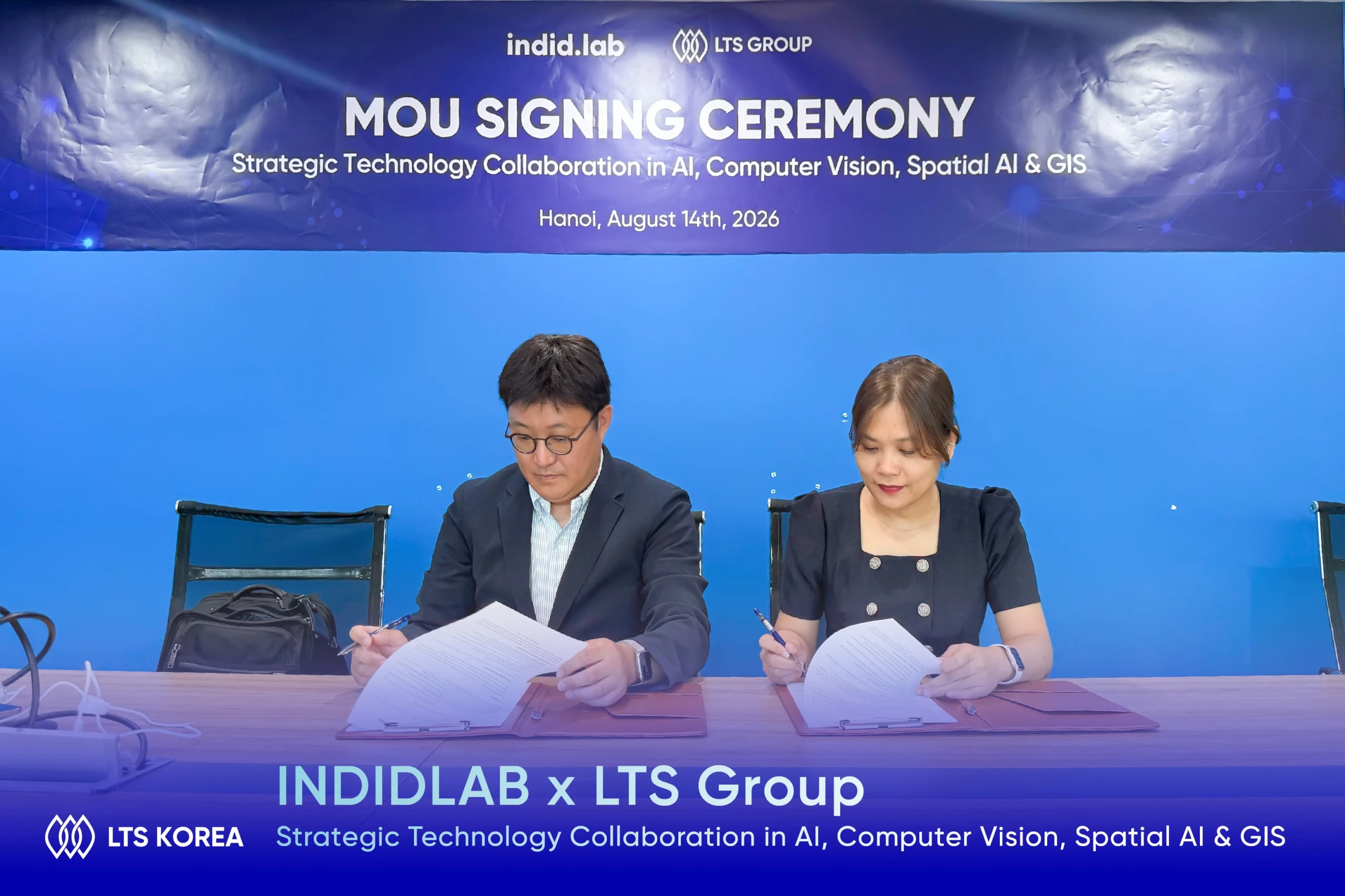
LTS Group & IndidLab Sign MOU for Strategic Collaboration in AI, Computer Vision, Spatial AI, and GIS
Sep 14, 2026
-3 mins read
Vietnam-based IT solutions company LTS Group, led by CEO Xuan Phung, and South Korean Spatial AI and PropTech company IndidLab, led by CEO Yohan Jung, signed a Memorandum of Understanding (MOU) on August 14 at LTS Group’s headquarters in Hanoi. The agreement marks the beginning of strategic technology collaboration in AI, computer vision, Spatial AI, and Geographic Information Systems (GIS). Before the signing, both companies introduced their businesses and shared key project experience. LTS Group presented its AI and software development and AI training data capabilities and relevant case studies, while IndidLab outlined its work in converting data from formats such as maps and CAD files into GIS and geospatial data. As much of this conversion process is still performed manually and requires significant time, IndidLab is exploring an AI-powered automation solution and seeking a technology partner to support its development. During the meeting, the two companies discussed potential technical approaches for IndidLab’s ongoing projects. The discussion covered LTS Group’s capabilities in AI, computer vision, OCR, Document AI, and data labeling, as well as opportunities for a Proof of Concept (PoC) and long-term collaboration. LTS Group’s Head of AI also joined the meeting, contributing technical expertise and supporting in-depth discussions on potential implementation approaches. Although IndidLab has made several visits to Vietnam, the company noted that this marks its first substantive collaboration with a Vietnamese business. Since 2024, IndidLab has been expanding into Vietnam and Hong Kong and sees strong alignment between its technology direction and LTS Group’s capabilities. About IndidLab IndidLab is a South Korean PropTech company developing proprietary Spatial AI technology based on architectural and geospatial data. Its technologies are applied across real estate, urban redevelopment, and spatial intelligence services. The company won the Grand Prize in the 2024 Google Play ChangGoo Program and provides proprietary multi-family housing analysis data to the Korea Real Estate Board (KREB). Since 2024, it has also expanded its business into Vietnam and Hong Kong. About LTS Group Established in 2016, LTS Group is a fast-growing Vietnamese IT service provider. Formerly a leading Quality Assurance company in Vietnam (LQA), LTS Group has now grown into a diverse ecosystem of 8 entities, delivering end-to-end technology services including Software Development, Software Testing, Digital BPO, Global IT HR Services and IT Training Solutions. With 3 subsidiaries in the USA, Japan, and South Korea, we serve 60+ clients across more than 11 countries with a satisfaction rate of 97%. These milestones strengthen our service quality and drive us toward our 2027 goal of becoming a world-class IT service company.

Meet LTS Group at AI Summit Seoul & Expo 2026
Aug 10, 2026
-2 mins read
LTS Group will participate in AI Summit Seoul & Expo 2026, Asia’s largest AI event, taking place at COEX in Seoul from August 19 to 21, 2026. About AI Summit Seoul & Expo 2026 Held annually in Seoul since 2018, AI Summit Seoul & Expo brings together experts from global enterprises, research institutions, and academia to explore the intersection of AI and industry. Now in its ninth year, the event will focus on AI agents, agentic AI, physical AI, and the latest strategies for AI adoption across industries. What LTS Group Will Showcase AI is evolving into a vertically integrated ecosystem connecting data, models, infrastructure, and applications. As agentic and enterprise AI gain momentum, businesses need strong software engineering and data capabilities to integrate AI into real-world operations and run it reliably at scale. At AI Summit Seoul & Expo 2026, LTS Group will introduce a comprehensive range of solutions supporting enterprise AI adoption and advancement: AX Consulting AI Software Development AI Data Solutions BEACON – Enterprise AI Solution, featuring a live on-site demo Our team will also be available to exchange market insights, introduce our technologies, and discuss how AI can support your business. Event Details Date: August 19–21, 2026 | 10:00 AM – 5:00 PM Venue: Hall B, COEX, Seoul | Booth I100 Visit the LTS Group booth to learn more about our Enterprise AI Solutions, AI Data Solutions, and BEACON platform. To arrange a meeting in advance, don’t hesitate to get in touch with us using the details below.
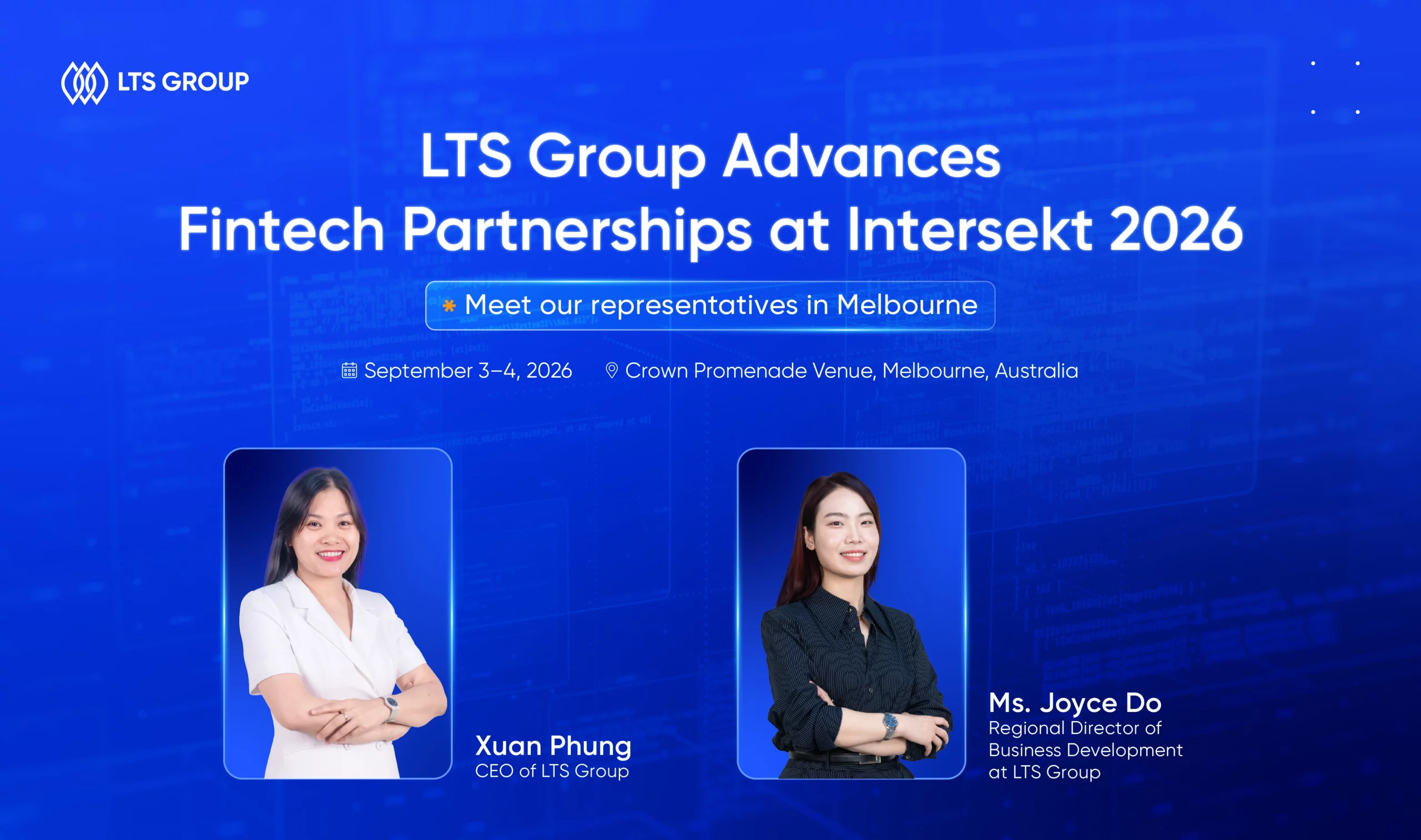
Meet LTS Group at Intersekt 2026 in Melbourne
Aug 10, 2026
-2 mins read
LTS Group is pleased to announce our participation in Intersekt 2026, taking place on September 3–4 at Crown Promenade Melbourne, Australia. Representing LTS Group at the event will be Mrs. Xuan Phung, CEO of LTS Group, and Ms. Joyce Nguyen, Regional Director of Business Development. They look forward to connecting with fintech leaders, financial institutions, technology providers, and innovators from across Australia and beyond. About Intersekt 2026 Hosted by FinTech Australia, Intersekt is one of Australia’s leading fintech gatherings. Now in its ninth edition, the event brings together more than 1,000 fintech founders, banks, investors, regulators, policymakers, and industry leaders to exchange insights and explore new opportunities across the financial services ecosystem. As the flagship event of Fintech Week Australia, Intersekt 2026 will feature industry sessions, roundtables, workshops, networking activities, and discussions focused on emerging technologies, market trends, policy developments, and the future of financial services. Connect with LTS Group at Intersekt 2026 At the event, our two representatives will introduce LTS Group’s AI-powered fintech software development capabilities and engage with businesses seeking to build, modernize, or scale their financial technology platforms. Our fintech experience covers digital banking, payments, lending, trading and investment, and financial analytics. We provide advanced data analytics, AX solutions, and legacy system modernization for lucrative AI adoption, combining domain knowledge with engineering and quality assurance capabilities to support each client’s business requirements and user needs. Mrs. Xuan Phung and Ms. Joyce Nguyen look forward to meeting industry professionals, exchanging perspectives on the evolving fintech landscape, and exploring potential technology partnerships at the event. Event details Date: September 3–4, 2026 Venue: Crown Promenade Melbourne Address: 8 Whiteman Street, Southbank, Victoria 3006, Australia If you are attending Intersekt 2026 and would like to discuss your next fintech initiative, connect with the LTS Group team to arrange a meeting in Melbourne.



Email:contact@ltsgroup.tech
Phone:(+84) 96-238-7474
Headquarters:17th Fl, MD Complex Office Building, 68 Nguyen Co Thach Street, Hanoi, Vietnam
Japan office:5F, Iwamoto Building, 3-20-10 Shibaura, Minato-ku, Tokyo 108-0023, Japan
US office:25787 Rawley Springs Dr, Chantilly, VA 20152
Korea Office:Seoul, Seocho-gu, Gangnam-daero 327, 12Fl, Room 1214