Hybrid App Development: Detailed Guide for Businesses in 2024
Jul 26, 2024
-18 min read

With the global number of mobile phone users projected to reach 7.49 billion in 2025 by Statista, it’s clear that businesses have long ceased debating whether to build a mobile app. Instead, the focus has shifted to which mobile development approach is the most optimal: native, web, or hybrid app development.
Making this decision is not an easy task, necessitating the deliberation of many different factors like budget, timeline, user interface (UI), user experience (UX), maintenance needs, and the skill set of the development team.
Hybrid mobile app development, in particular, has gained significant traction recently. The Ionic Developer Survey, which gathered insights from over 13,000 developers, revealed that 32.7% of developers plan to move away from native development in favor of hybrid. Additionally, there has been a nearly 700% decrease in developers exclusively using native tools.
In this article, we cover everything organizations should know about hybrid app development, from deciding when to develop hybrid apps to step-by-step instructions on building them, along with detailed insights into project costs, and much more.
So, let’s get started!
What is Hybrid App Development?
Hybrid app development refers to building a unified application using a single codebase that could function across multiple platforms, from Android and iOS to Windows and more.

In contrast to native app development, which requires platform-specific programming languages for different operating systems (OS), hybrid app development utilizes a unified code base compatible with all OS.
For further insights into the differences between native vs hybrid mobile app development, check out our article An ultimate guide to native app development for enterprises in 2024.
Essentially, hybrid apps work like web apps but are installed on devices like native apps. Similar to web apps, developers typically create hybrid apps using HTML5, CSS, and JavaScript. The device’s browser engine then renders such languages and native APIs to interact with device-specific hardware.
Prominent hybrid app examples are Gmail, Instagram, and Uber:
- Gmail utilizes JavaScript, AJAX, jQuery, and Vue.js for its front end.
- Instagram is developed using React Native.
- Uber employs Base, a web React UI framework, for the front end of its mobile apps.
When to Develop Hybrid Apps?
Now, the burning question of all is how to know if hybrid is the right choice for your business.
Here are 5 scenarios where hybrid app development should be your next strategic move:

- Multiple platform compatibility
If your company aims to support multiple platforms like iOS and Android with minimal development effort, hybrid apps offer a compelling solution. They leverage a single codebase that operates across different OS, eliminating the need for separate development.
- Lack of specialized coding knowledge
Unlike native apps that require proficiency in platform-specific languages, hybrid apps can be built with less specialized coding knowledge, making it easier to hire developers skilled in web technologies.
- Basic feature requirements
Hybrid apps are sufficient if your app does not require advanced native features. Plus, even features that involve constant iteration like notifications, can be seamlessly integrated within hybrid apps using webviews, thereby simplifying the development process.
- Budget constraints
Hybrid app development is cost-effective, particularly when compared to the expenses associated with developing and maintaining APIs for native apps. This approach helps businesses get native-like functionality within a limited budget.
- Speed trade-off
While hybrid apps may be slower than native apps due to browser-based operations, they offer a balanced trade-off for rapid development and cross-platform compatibility. Therefore, they remain a viable option when speed isn’t a big concern to your business.

How to Build a Hybrid App?
Creating hybrid apps means developers leverage both web technologies and native capabilities. Below is a detailed walkthrough of 8 fundamental steps in building a hybrid app:

Step 1. Planning the hybrid app
In this planning phase, start by defining the hybrid app’s objectives, target audience, and key features.
Conducting comprehensive market research and competitor analysis plays an equally important role, helping your organization identify:
- industry trends,
- potential business opportunities
- rival apps’ strengths and weaknesses.
The next sub-step to take is selecting suitable tech stacks for the hybrid mobile application. With the advantage of writing code once for the deployment on Android, iOS, and web versions, hybrid application development is already much more manageable.
Below, we handpicked a list of the top 5 widely used hybrid app development frameworks:
- Flutter
Introduced by Google, Flutter has rapidly gained popularity for its speed, reliability, and ability to create visually stunning UIs with flexible designs. For 3 consecutive years from 2021 to 2023, it was the most popular hybrid mobile framework, as reported by Statista report. Many major brands such as Amazon, Alibaba, BMW, and Toyota have leveraged Flutter for their applications.
- React Native
Created by Facebook, React Native is favored for its speed, convenience, and cost-effectiveness. It supports the development of applications for large organizations like Uber, Skype, Bloomberg, and Instagram.
- Ionic
Utilizing HTML, CSS, and JavaScript, Ionic offers built-in support for AngularJS, making it ideal for front-end development. It simplifies the creation of progressive web apps (PWAs) and provides premium UI design components.
- Xamarin
Xamarin is known for its code reuse efficiency, allowing developers to reuse a substantial portion of their codebase on different platforms. However, it may lag behind in updates compared to Google and Apple, which can lead to compatibility issues.
- NativeScript
NativeScript is specially designed for developers proficient in JavaScript, TypeScript, or Angular. Applications built with NativeScript deliver a native user experience on all mobile platforms.
Step 2. Setting up the development environment
The second phase revolves around setting up the development environment for the hybrid app, which necessitates several key tasks as follows:
- Installing necessary hybrid mobile app development tools and software: First, hybrid mobile app developers need to download their preferred frameworks, whether it’s Ionic, React Native, Xamarin, or Flutter. It’s also recommended that your team’s development efforts be streamlined with a single integrated development environment (IDE) like Visual Studio Code and IntelliJ IDEA.
- Configuring the development environment: Once the required technologies are installed, it’s time to configure the IDE and set up the software development kit (SDK).
- Setting up testing devices: Configuring testing devices, whether they’re physical or virtual, is the next important task.
Step 3. Building app architecture
The success of an app hinges greatly on its architecture, which encompasses crucial elements such as code structure and data storage methods.
A well-planned architecture ensures easier mobile app maintenance and future updates, which can be achieved through the following essential steps:
- Creating project structure: Simply establishing a project folder and organizing it with directories for HTML, CSS, JavaScript, and other essential resources.
- Setting up main HTML, CSS, and JavaScript files: Developing the foundational files that define the app’s structure and user interface. For example, CSS files handle styling, while HTML documents provide the framework for the app’s graphical elements.
- Integrating libraries and frameworks: Incorporating vital libraries and frameworks like Cordova and React Native to enable hybrid functionalities and integrate native features seamlessly.
Step 4: Designing the user interface
A poor mobile experience can deter 52% of users from engaging with a company. Therefore, creating an attractive and high-quality design is crucial for the application’s success. Every interface detail must be meticulously planned to ensure a delightful user experience.
- Creating visually appealing UI and UX elements: Great effort should be put into crafting aesthetically pleasing UI and UX by designing clear layouts, appropriate color schemes, and visually engaging elements to enhance the overall look and feel of the hybrid app.
- Implementing responsive design principles: Designers should employ responsive design techniques to create an optimal user experience across different devices and screen sizes.
- Using CSS frameworks for efficient styling: To expedite the styling process and boost productivity, your team can leverage CSS frameworks like Bulma, Materialize, and Bootstrap. These frameworks provide pre-designed themes and components that can be easily customized to meet the app’s design requirements.
Step 5: Coding app functionalities
With the app architecture and user interface established, the next step is coding to develop a high-performing, robust, and secure back end with desired functionalities.
The duration of this stage varies based on the complexity and volume of tasks.
And of course, implementing extensive and complex features takes more time; however, on average, it takes around 3 to 4 months to develop a prototype or MVP – a simplified version of the application containing only the core functionalities.
Step 6: Testing and debugging
Once functionalities are built, your team needs to test them to confirm the app looks and functions as intended. This step includes testing both the front end and back end, and addressing any issues that arise.
- Conducting usability and functional testing: To verify that the hybrid app works as planned and provides a smooth user experience, functional testing and usability testing come on the scene.
- Debugging common issues and errors: Developers must proactively review, identify, and fix issues and errors throughout the development and testing phases for a reliable, bug-free application.
- Optimizing app performance and responsiveness: App performance substantially contributes to a satisfactory user experience. Thus, try to prioritize script optimization, reduce load times, and minimize app size.
Step 7: Deploying and publishing the app
Before releasing the app, it must undergo final preparations to guarantee it meets all standards and requirements:
- Preparing the app for release: The app should undergo comprehensive testing, optimization, and final checks to make sure it’s ready for release. Apart from app feature assessment, your team has to stay compliant with the guidelines of Google Play Store or App Store and prepare all required assets and documentation.
- Registering for a developer account: To publish the app on Google Play Store and App Store, your team needs a developer account, which can be easily registered after providing necessary information, agreeing to terms and conditions, and submitting a one-time registration fee.
- Publishing the app: Once the developer profile is set up, the hybrid app is ready to be launched!
Step 8: Monitoring and maintaining
Monitoring and maintaining a hybrid mobile application encompasses several crucial activities to achieve continued success and user satisfaction:
- Implementing analytics to track user behavior: Many analytics tools can be integrated to monitor how users interact with the hybrid app, analyze usage patterns, and identify popular features.
- Gathering user feedback and resolving bug reports: Continuous improvement necessitates actively gathering user feedback and promptly addressing bug reports. By soliciting input and responding to issues, your team can boost app performance, identify user pain points, and prioritize new features.
- Carrying out regular app updates and improvements: Regular updates are essential to maintaining the app’s competitiveness and relevance. Based on user feedback and market trends, your team can consider adding new features to improve existing functionality and optimize performance.
PRO TIP:
Streamline these 8 phases by partnering with a trusted hybrid app development company! To choose the right partner, factor in 4 crucial aspects including expertise, cost, post-launch services, and communication for a successful collaboration.
Learn more: Mobile app development outsourcing in 2024: How to make it work
On the lookout for a reputable company providing top-notch hybrid app development services? Look no further than LTS Group. With over 8 years of experience and a track record of delivering comprehensive software solutions, we specialize in creating and enhancing not just iOS and Android apps, but also hybrid apps. Rest assured that partnering with us gives your company access to a team of seasoned developers dedicated to delivering robust and efficient customized hybrid apps.

How Much Does Hybrid App Development Cost?
Hybrid mobile app development cost varies greatly depending on the app’s complexity and features. Nevertheless, it generally proves more cost-effective than its native counterpart thanks to shared codebases across platforms.
Here’s a quick look at the expense of building hybrid apps, categorized by their intricacy:

- Basic hybrid mobile apps: These apps are simpler in nature and quicker to develop, typically costing around $10,000.
- Medium-complex hybrid mobile apps: More sophisticated apps with advanced features may range from $10,000 to $50,000 and take 2-3 months to complete.
- Enterprise hybrid mobile apps: These applications are highly complex, requiring extensive features and customization. Development timelines can extend from 3 to 6 months, with costs ranging from $50,000 to $150,000.
Pros and Cons of Hybrid App Development
Hybrid mobile application development offers cost-effectiveness, shorter development times, and ease of scalability. However, it can face performance limitations, varied user experience on different platforms, and potential gaps in feature availability.
For more information, refer to the table below:
| Pros of Hybrid App Development | Cons of Hybrid App Development |
| Cross-platform compatibility: Hybrid apps run on multiple platforms with a single codebase, thereby saving time and resources. | Performance limitations: Hybrid apps may be slower due to heavier code and may lack certain native features. |
| Shorter development time: Reusing code across platforms reduces development time compared to native app development. | Gap in user experience quality: Due to reliance on a single codebase, user experience may not be the same on different platforms, which can cause a lack of tailored feel in native apps. |
| Easy scalability: Leveraging web technologies and a unified codebase makes scaling hybrid apps simpler and more efficient. | Availability of features: Not all new features are universally supported in the hybrid version, so chances are some native functionalities may not be available in hybrid apps. |
| Cost-effective: Lower development and maintenance costs make hybrid apps a budget-friendly choice. | Test complexity: Testing hybrid apps across multiple platforms requires thorough testing to ensure compatibility and functionality, adding to development time and expenses. |
| Ease of development: Simplified development process results from familiar web technologies like HTML, CSS, JavaScript, and frameworks like Xamarin, Flutter, and React Native. | Limited access to latest device features: Due to dependency on third-party frameworks, hybrid apps may fall behind regarding access to the newest device features and APIs introduced by platforms like Google and Apple. |
FAQs about Hybrid App Development
What is hybrid application development?
Hybrid app development refers to building a unified application using a single codebase that could function across multiple platforms, from Android and iOS to Windows and more.
What are examples of hybrid apps?
- Gmail: Uses JavaScript, AJAX, jQuery, and Vue.js for its front end.
- Instagram: Built with React Native, focusing on image-centric social media interactions.
- Uber: Utilizes Base, a React UI framework, through its mobile web interface m.uber.com, providing a seamless webview experience on mobile devices.
- X: Employs Node.js, Express, and React Native in its front-end stack, functioning as a progressive web app (PWA) that offers enhanced UI performance through progressive loading of UI layers.
How much does it cost to develop a hybrid app?
Hybrid mobile apps cost from around $10,000 to $150,000+ depending on app complexity, features, development duration, and team expertise:
- Basic apps: Around $10,000.
- Medium-complex apps: $10,000 to $50,000.
- Enterprise apps: $50,000 to $150,000 or more.
Final Thoughts about Hybrid App Development
Given that building mobile apps individually for each platform is costly and resource-intensive, hybrid app development stands as a compelling alternative, boasting cross-platform compatibility, cost efficiency, quicker time-to-market, and more.
However, it’s essential to weigh development expenses, timeline, target audience, etc., before finalizing your company’s mobile development approach.
Once the decision is made, the development process should commence: Start by planning the hybrid application, setting up the development environment, building the app architecture, designing the user interface, developing functionalities, testing and debugging, deploying and publishing, and finally, monitoring and maintaining the app.
Eager to build your own hybrid app but struggling to find skilled developers?
LTS Group is here to help! With a dedicated team of experienced professionals in hybrid app development, along with our competitive pricing, robust security measures, and expertise across various industries, we stand out in the crowded IT outsourcing landscape.
Share


Daisy Nguyen
Meet Daisy, a content writer at LTS Group, a renowned IT outsourcing company based in Vietnam. With a passion for crafting compelling narratives, she specializes in producing long-form, thought-provoking articles that delve deep into the realms of technology and innovation. Fueled by an insatiable curiosity, she eagerly explores emerging technologies, seeking to understand their potential impact and share insights with her audience. Contact her at hangnt1@ltsgroup.tech.

More must-reads to keep leaders updated
LTS Group Becomes Official Member of the French Chamber of Commerce and Industry in Vietnam (CCIFV)
Oct 5, 2026
-4 mins read
LTS Group has officially joined the French Chamber of Commerce and Industry in Vietnam (CCIFV), marking a new step in its efforts to strengthen connections with the Vietnam – Europe business community and contribute to technology cooperation between the two markets. Through its CCIFV membership, LTS Group will have opportunities to engage with French and European businesses in Vietnam, as well as industry peers, experts, and decision-makers across sectors. The company plans to take part in networking and knowledge-sharing activities while bringing practical perspectives from its work in AI, software, data, and automotive engineering. As its first engagement, LTS Group will co-host a CCIFV Breakfast Talk in Hanoi on 13 October 2026, focusing on how AI is changing the way we work. A Bridge for Vietnam – Europe Business Cooperation CCIFV supports French and European businesses in Vietnam and promotes economic cooperation between the two markets. As part of the CCI France International network, it connects businesses and chambers of commerce across markets worldwide. Its activities include business networking, Breakfast Talks, sector committees, business support services, and an online member directory that helps members build new connections. Members can also access the wider Vietnam – Europe business network, including connections with EuroCham members, and share company news and expertise through CCIFV’s media channels. From Membership to Practical Contribution Through its CCIFV membership, LTS Group aims to contribute to the community by: Sharing expertise: Bringing practical experience in AI, software, data, and automotive engineering to the CCIFV network; Hosting and speaking at events: Participating in CCIFV activities, starting with the Breakfast Talk “How AI Will Change the Way We Work” on 13th October; Connecting business needs with technology capabilities: Helping European businesses explore technology delivery opportunities in Vietnam. First Engagement: Breakfast Talk on How AI Will Change the Way We Work LTS Group’s first joint activity with CCIFV will be a Breakfast Talk exploring how AI is transforming the workplace. The discussion will cover the foundations organizations need for successful AI adoption, from data and organizational mindset to management strategies. The session will focus on three key areas: Building a strong data foundation: Establishing the groundwork needed for reliable AI initiatives; Developing an AI-native mindset: Helping teams and leaders adapt to working in an increasingly AI-driven environment; Making AI adoption work in practice: Exploring management strategies, including AI sovereignty in Europe and its implications for businesses operating in the global AI landscape. Event Details Date and time: 13 October 2026, 9:00 AM – 11:00 AM Venue: LTS Group Office, 17th Floor, MD Complex Office Building, 68 Nguyen Co Thach Street, Hanoi With hands-on experience in building and validating real-world systems, LTS Group’s specialists will also bring a practical perspective to discussions around AI-driven products, particularly the growing importance of testing, trust, and governance. Our Commitment as a Member of CCIFV For LTS Group, becoming a CCIFV member represents both an opportunity and a commitment: an opportunity to connect with a broader network of European and international organizations, and a commitment to contribute practical experience to the business community. Looking ahead, LTS Group plans to participate actively in CCIFV activities, contribute to sector committee discussions, and explore partnership opportunities with fellow members. By strengthening connections between technology companies and businesses across Vietnam and Europe, LTS Group aims to contribute to a stronger presence for Vietnamese technology companies within the European business ecosystem.
LTS Group Attends Vietnam – Korea Digital Forum 2026: Introduces Beacon for AI Agent Governance
Oct 2, 2026
-5 mins read
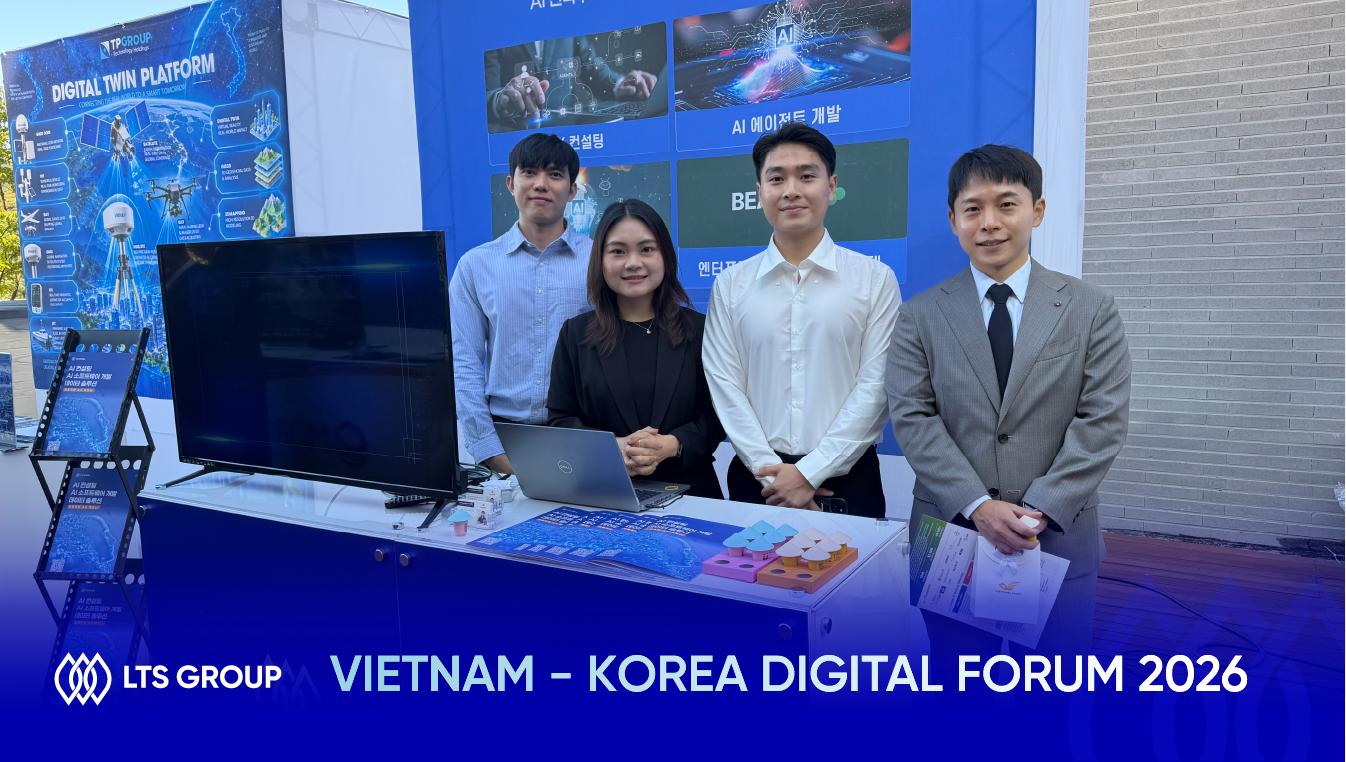
On the morning of October 1, 2026, LTS Group attended the Vietnam – Korea Digital Forum 2026 at the Embassy of Vietnam in Seoul. We introduced Beacon, a platform that helps enterprises build, run, and govern AI agents in a single system. A National-level Forum Connecting Vietnam’s and Korea’s Digital Sectors The forum brought together government agencies, industry associations, and digital technology companies from both countries. Vietnam: The Minister of Science and Technology; Mr. Nguyen Khac Lich, Director of the Department of Digital Technology and AI; the Chairman of the Vietnam Software and IT Services Association (VINASA); and digital technology companies including FPT Korea, SotaTek, and LTS Group South Korea: Leaders from the Ministry of Science and ICT (MSIT), the National IT Industry Promotion Agency (NIPA), KT, and other Korean technology companies From “Outsourcing” to “Co-creation” The forum’s message was a shift in Vietnam – Korea cooperation from outsourcing to co-creation, with AI and semiconductors as the two pillars. The keynote session covered five topics: Department of Digital Technology and AI: Co-creating a Vietnam – Korea digital ecosystem, from AI and semiconductors to the global market NIPA: Mechanisms to promote co-development and commercialization of AI and semiconductors, from R&D to market FPT Korea: Creating global value with Vietnamese tech companies, moving from “Outsourcing” to “Co-creation” KT: Next-generation AI infrastructure, with computing and cloud foundations for co-creation SotaTek: Physical AI and AI Factory for smart manufacturing A B2B matching session ran in parallel, focused on AI, semiconductors, cloud, data, software, 5G/6G, information security, and smart factory. Participants discussed finding partners, advancing R&D and PoC projects, and co-developing products. The panel discussion, “Vietnam – Korea Digital Technology Alliance,” centered on three issues: Joint R&D and technology transfer models between research institutes, universities, and businesses in both countries Training high-quality AI engineers and semiconductor design engineers PoC testing mechanisms and bringing co-developed products to the global market The forum closed with a “Make in Viet Nam” solutions showcase, where Vietnamese companies presented their technology capabilities to Korean partners. LTS Group Introduces Beacon – An Enterprise AI Platform As enterprises adopt AI faster, the question is no longer just how to use AI, but how to keep it safe and compliant. Beacon was designed to answer that question. Beacon helps enterprises build, run, and govern AI agents in one system, with compliance built in from the start. Its main capabilities: Full AI stack connectivity: Connects AWS Bedrock, Azure OpenAI, Anthropic, Google Vertex, and more with business tools such as Salesforce, Slack, GitHub, and SharePoint Real-time logging: Records every AI activity across the enterprise as it happens Shadow AI detection: Automatically detects unauthorized AI use On-demand compliance reports: Generates compliance reports whenever needed With Beacon, enterprises can roll out AI quickly while keeping strict access control and infrastructure-level risk management. At our booth, the LTS Group team demonstrated Beacon in person and talked with visitors about enterprise needs in AI governance. Key Takeaways At the forum, we connected with government agencies, associations, and tech companies from both countries and shared insights. Presenting Beacon in person also gave us a firsthand look at what Korean enterprises need in AI governance. It was a valuable opportunity to explore new collaborations and strengthen the Vietnam – Korea digital partnership. With 10 years of experience delivering IT services to global customers, LTS Group will keep developing services and solutions for the Korean market through LTS Korea. In line with the forum’s Co-creation direction, we are committed to being a trusted partner to Korean enterprises, helping them adopt AI effectively, safely, and sustainably.

Meet LTS Group at Autonomous Driving Mobility Expo (AME) 2026
Sep 28, 2026
-2 mins read
LTS Group will participate in Autonomous Driving Mobility Expo 2026 (AME 2026), Korea’s largest exhibition dedicated to autonomous driving and future mobility. The event will take place from August 25 to 27, 2026, at Hall B, COEX, Seoul. About AME 2026 AME 2026 will bring together more than 60 exhibitors across 150 booths to showcase the latest technologies and business trends in autonomous driving and future mobility. Held alongside EV Trend Korea 2026, the event will focus on the transition to software-centric vehicle architectures built around software-defined vehicles (SDVs), along with advances in ADAS and autonomous driving technologies. What LTS Group Will Showcase The automotive industry is rapidly evolving as sustainability, intelligent technologies, and service-based models reshape the market. As vehicles become increasingly software-driven, automotive software development, validation, and data labeling for ADAS and autonomous driving are becoming essential to future competitiveness. At AME 2026, LTS Group will showcase: Automotive software development and validation for SDVs; Data labeling solutions for ADAS and autonomous driving; LTS AutoTCGen, an AI-powered tool that generates ASPICE-compliant automotive software test cases (live demo). LTS Group’s CEO, Head of Automotive, Sales Director, and Delivery Manager will be on-site to introduce our solutions and discuss your automotive technology needs. Event Details Date: August 25–27, 2026 Venue: Hall B, COEX, Seoul Visit the LTS Group booth to explore our automotive software development and validation services, ADAS data labeling solutions, and LTS AutoTCGen. To arrange a meeting in advance, don’t hesitate to get in touch with us using the details below!



Email:contact@ltsgroup.tech
Phone:(+84) 96-238-7474
Headquarters:17th Fl, MD Complex Office Building, 68 Nguyen Co Thach Street, Hanoi, Vietnam
Japan:5F, Iwamoto Building, 3-20-10 Shibaura, Minato-ku, Tokyo 108-0023, Japan
US:25787 Rawley Springs Dr, Chantilly, VA 20152
South Korea:Room 1214, 12th Floor, Daerung Seocho Tower, 327 Gangnam-daero, Seocho-gu, Seoul, South Korea
Australia:1/63 Cobden Street, Kew VIC 3101, Australia