IT Outsourcing Trends By Industry In 2025
Feb 6, 2024
-37 mins read

According to statistics on outsourcing conducted by Grand View Research, the global IT outsourcing market size hit USD 245.91 billion in 2021 and is projected to reach USD 261.9 billion in 2022.
The IT outsourcing trends have gained significant recognition across various industries and attracted all types of businesses. Notable tech giants such as Google, Facebook, and IBM, or renowned manufacturers like Nike and Coca-Cola, have opted to outsource certain IT aspects to dedicated offshore teams.
This phenomenon raises numerous noteworthy issues to discuss, which we will address in this blog post. It offers a comprehensive overview of IT outsourcing trends, covering everything you need to know.
What Is IT Outsourcing?
Qualified IT outsourced services encompass a range of contracted IT services that cover the planning, installation, maintenance, and equipment replacement within a company’s IT infrastructure.
In addition, contracted IT services outsourcing providers can offer on-site assistance and help desk support. Businesses can use the combination of these services on an as-needed basis to aid their existing IT team or even substitute for an entire IT department.
These global outsourcing companies offer a multitude of benefits, including cost control, specialized expertise, accelerated processes, heightened focus, and enhanced security.
However, there are potential drawbacks businesses should consider.
Each company must carefully evaluate whether the advantages outweigh the disadvantages. Nonetheless, regardless of the decision made, every business should at least consider how this valuable service can contribute to their business goals’ achievement.
Top 10 outsourcing IT functions

Here are some information technology outsourcing functions that are commonly sought after:
- Application development: a service provider who is in charge of developing new applications or enhancing existing ones, including web or different types of mobile apps.
- Application maintenance & support: an IT outsourcing provider takes charge of the ongoing maintenance and support of existing applications.
- Datacenter operations: a service provider assists the data center operation, either independently or in collaboration with an in-house team.
- Database administration: a service provider monitors and fine-tunes databases at either the physical or logical level.
- Desktop support: a service provider handles tasks such as installation, maintenance, and PC support.
- Disaster recovery: a service provider is responsible for off-site data backup, and recovery of data centers, or redundant systems and networks in case any disaster happens.
- Help desk outsourcing: a service provider manages various types of phone or electronic responses to end-user incidents. By partnering with a dedicated BPO provider, you can guarantee the availability of agents to assist customers at any hour you require, even round-the-clock, 24/7 service.
- IT security: a service provider performs security-related functions such as security assessments, penetration testing, and managed security services.
- Network operations: a service provider takes care of data network operations and monitoring.
- Web hosting and operations: a service provider hosts, operates, and maintains corporate websites, applications, or eCommerce platforms.
IT Outsourcing Trends By Industry In 2024
Now, let’s delve into the key IT outsourcing trends that are poised to have a profound impact on businesses in 2024.

IT outsourcing trends in healthcare
Explore the emerging IT outsourcing trends that will change the delivery of digital healthcare services.
Adoption of remote patient monitoring (RPM)
RPM enables healthcare providers to remotely monitor patients’ vital signs and health data using wearable devices and other advanced technologies.
This transformative trend is projected to persist in 2024, driven by the growing demand for convenience and flexibility of remote care from patients. The global market for RPM systems was valued at $965 million in 2021, and is expected to exceed $5,101 million by 2030.
During remote patient monitoring, businesses employ wireless sensors and communication technology to capture and transmit data to healthcare facilities, presenting valuable opportunities for IT outsourcing service providers to deliver the necessary technology solutions, facilitating the seamless deployment of RPM.
Artificial intelligence (AI) and machine learning (ML)
AI and ML have made significant strides in enhancing healthcare delivery, with the development of innovative diagnostic tools and the automation of administrative tasks.
As AI and ML technologies continue to evolve and mature, we hope their impact on healthcare outsourcing will grow even further in 2024. We can use AI and ML to assist drug discovery, disease prevention, clinical research, clinical decision support, medical imaging, diagnostics, and much more.
By outsourcing AI projects, businesses can effectively harness the advanced capabilities of artificial intelligence and machine learning. This strategic approach enables organizations to leverage external expertise, and fully capitalize on these cutting-edge technologies, driving transformative outcomes in the healthcare industry.
Cybersecurity
The global healthcare cybersecurity market is witnessing strong growth thanks to the increasing digitization of healthcare services. This digital transformation has led to a significant rise in cyber threats, including phishing scams, ransomware attacks, and data breaches.
As the pressing need to counter these threats, the demand for outsourced healthcare cybersecurity solutions has surged.
Compliance authorities play a crucial role in safeguarding the healthcare industry against fraud. The Office of Inspector General (OIG), operating under the U.S. Department of Health and Human Services, has an essential role in auditing fraudulent claims.
Through its diligent oversight, the OIG ensures compliance within the healthcare sector, acting as a critical deterrent against fraudulent activities.
Moreover, the proliferation of Internet of Things (IoT) devices in healthcare has expanded the attack surface for cyber threats. With an increasing number of connected devices integrating into healthcare operations, unscrupulous hackers exploit vulnerabilities, further driving the growth of healthcare cybersecurity systems.
To thrive in this dynamic environment, healthcare companies should develop a strategic outsourcing plan that is specifically tailored to their individual needs. They should conduct thorough assessments of potential outsourcing vendors and establish a robust risk management strategy.

By staying up-to-date with IT outsourcing trends and proactively adapting to new opportunities and challenges, healthcare organizations can effectively navigate the constantly evolving landscape of healthcare outsourcing.
Given the unique requirements of the healthcare industry and the diverse range of businesses operating within it, partnering with an outsourcing company that specializes in this niche like LTS Group can provide the benefits of more customized solutions that bring efficiency and effectiveness.
IT outsourcing trends in eCommerce
Below are some eCommerce IT outsourcing trends in 2024 that you should consider incorporating into your business plans.
AI
AI is already making a momentous impact on the digital marketing realm. Throughout the online shopping journey, we can effectively use AI across various touchpoints.
One key application of AI is automating eCommerce marketing tasks, such as campaign creation and management, and personalizing customer experiences.
By analyzing extensive datasets encompassing customer demographics, purchase history, and website behavior, AI algorithms can identify patterns and make intelligent decisions.
Moreover, predictive analytics and machine learning algorithms can anticipate consumer needs and optimize product listings and pricing.
Automation and AI-powered chatbots are emerging as prominent trends in the eCommerce landscape in 2024 and beyond. These chatbots provide round-the-clock customer service, understand customer inquiries, and provide relevant responses.
They seamlessly integrate with customer service databases to access order information and resolve issues. For instance, a chatbot can help a customer track an order, check product availability, or initiate a return process.
This not only ensures efficient customer support, but also reduces response times and enhances the overall shopping experience.
The adoption of AI has far-reaching implications and is driving shifts in the workforce. And here is where AI makes a big impact in the IT outsourcing trends.
AR & VR
AR and VR are still in their nascent stages, but they hold immense potential to revolutionize the landscape of eCommerce.
AR overlays computer-generated images onto a user’s real-world view, while VR immerses users in simulated environments typically through headsets or other devices.
For instance, AR can enable customers to try on products virtually, providing an interactive and engaging shopping experience. On the other hand, VR can transport customers into 3D environments that replicate the sensation of walking around physical stores, offering a unique and immersive exploration.
However, developing in-house capabilities in VR and AR technology can be financially burdensome. Outsourcing provides an avenue for companies to access these cutting-edge capabilities without the heavy financial investment, allowing them to tap into the potential of AR and VR without incurring substantial costs.
Voice & image search
Voice search and image search optimization are vital aspects of eCommerce trends that we should anticipate.
Voice search involves using voice commands along with text to speech technology to search the internet, providing a more natural and convenient way to search for information. Additionally, solutions like text to voice online are being adopted by businesses to enhance user experiences, improve accessibility, and streamline communication processes.

According to Statista, the global value of voice-assistant eCommerce transactions is projected to reach approximately 20 billion U.S. dollars by 2023, which is four times the amount from just two years ago. Additionally, it’s expected to hit 8 billion by 2024.
To optimize your website for voice search, you’d better incorporate natural language keywords and structured data markup. Businesses should also consider creating voice-activated product demos and customer support chatbots to enhance the user experience.
Furthermore, image search is becoming more and more prevalent, enabling users to search for products or other items by uploading an image, or using a visual description.
For example, users can use image search to find a similar product to one they saw in a magazine. Similarly, they can use voice assistants to search for recipes or product reviews without typing.
With the growing prominence of voice and image search, outsourcing to an agency that specializes in this area is a wise choice. By choosing the right partner, you can benefit from their expertise and ensure that their competent team receives specialized training for specific tasks.
IT outsourcing trends in education
Some IT outsourcing trends in education you need to consider.
VR & AR
Artificial intelligence, virtual reality, and augmented reality are among the most thrilling emerging trends in education technology, and they are shaping the IT outsourcing industry.
VR and AR are changing the traditional classroom experience by providing immersive learning opportunities. With VR and AR, students can embark on virtual field trips to historical landmarks, explore distant planets, or engage with interactive simulations that bring learning to life.
These technologies also offer hands-on training in various fields, such as medicine and engineering, allowing students to practice real-world skills in a safe and controlled environment. Additionally, collaborative learning environments in VR and AR enable students to work together on projects and share experiences, no matter where they are.
This creates a significant demand for outsourcing services in VR and AR, as it lets the development of new technologies offer unique and riveting experiences that traditional classrooms cannot provide.
AI
The market size of AI is transforming the education sector by changing the way students experience learning. Through AI-driven content implementation, students can now access customized learning materials tailored to their individual needs and abilities.

Additionally, virtual teaching assistants powered by AI are gaining popularity in educational settings, offering students good support, guidance, and feedback.
The automated grading systems have also streamlined the grading process for teachers, allowing them to save time and allocate it to more interaction with their students.
With the assistance of AI, smart content has become adaptive and interactive, enabling students to learn at their own pace and in a way that aligns with their unique learning styles.
Moreover, users are utilizing predictive analytics to identify students who may be at risk of falling behind, enabling targeted interventions and additional support.
As the demand for AI services keeps growing, outsourcing providers will offer these services alongside traditional IT solutions, ensuring that educational institutions can keep up with the advancements.
Gamification
Gamification is rapidly gaining momentum in education to raise student engagement and motivation. By integrating game elements like challenges, rewards, and competition into the learning process, educators can create a more enjoyable and interactive learning environment.
Gamified platforms with adaptive learning paths empower students to progress through their educational journey at their own pace, allowing for personalized and tailored learning experiences.
Additionally, learning analytics in gamified environments provide educators with valuable insights into student performance and engagement. These insights enable educators to make informed, data-driven decisions regarding their teaching methods and curriculum.
Game-based assessments offer a more engaging and comprehensive approach to evaluating student learning and progress. By employing experienced software developers and having a detailed software development plan, you can ensure that your education project leverages their in-depth knowledge of what makes gamified platforms effective.
Their expertise will contribute to the development of a successful gamified educational solution.
Personalized learning through adaptive technology
IT outsourcing providers specializing in adaptive technology are instrumental in achieving personalized learning experiences. Adaptive learning systems, powered by data analytics and machine learning algorithms, play a crucial role in tailoring educational content and delivery to meet individual learners’ needs.
Through the collection and analysis of data on learner preferences, performance, and progress, adaptive technology can create customized learning paths. This ensures that learners receive relevant and appropriately challenging content that caters to their unique learning styles.
Moreover, adaptive technology empowers educators to monitor and track learner progress in real-time, enabling timely interventions and support. This personalized approach not only enhances learner engagement and satisfaction but also yields improved learning outcomes.
Mobile learning and microlearning
The rise of smartphones and mobile devices has led to a significant surge in mobile learning, making it a prominent trend in online education. IT outsourcing providers, with their skilled and dedicated development teams, are well-equipped to create exceptional digital learning platforms that integrate mobile learning and microlearning methodologies.
Mobile learning enables learners to access educational content at any time and location, thereby improving flexibility and convenience in the learning process.
On the other hand, microlearning involves the delivery of focused and bite-sized learning modules. These concise units of information are designed to be consumed quickly and effortlessly, catering to modern learners’ preferences with shorter attention spans and active learning.
Mobile learning and microlearning are closely intertwined, as mobile devices provide an ideal platform for delivering microlearning content. Learners can engage with short and interactive modules that are easy to comprehend, resulting in improved retention and effective knowledge transfer.
IT outsourcing trends in automotive
The upcoming years are expected to witness significant advancements in automotive technology, with several noteworthy IT outsourcing trends. These trends will shape the industry and drive innovation in the automotive sector.
Automotive IoT
The modern automobile has evolved beyond a mere means of transportation. It transforms into a comprehensive connected system that offers a multitude of advantages for both daily consumers and businesses.
In 2024, the integration of Automotive IoT is expected to bring about several benefits, including sustainability, effective traffic management, and an enhanced end-user experience for drivers.
We propel the advancement of Automotive IoT into two key factors: the widespread adoption of 5G connectivity and rapid progress in edge computing.
Edge computing enables data collection and processing closely, empowering vehicles to gather and analyze real-time data. As a result, in 2024 and beyond, cars will resemble mobile computers, equipped with advanced capabilities.
A notable development in Automotive IoT is the Internet of Vehicles (IoV). This term refers to a network that enables cars to communicate with road infrastructure and other vehicles, creating a more intelligent and interconnected transportation system.
IoV aims to reduce environmental impact, enhance road safety, and optimize traffic management by optimizing routes and minimizing idle times. This drives the need for exceptional IT outsourcing providers who possess the expertise to seamlessly manage the complexities of IoT infrastructure management.
AR and immersive technologies
In 2024, the automotive industry will see the flourishing of various immersive technologies, especially automobiles. One prominent technology is AR tools, which enable drivers to access essential information, visual data, and navigational directions right on their windshields and other dashboard panes.
This eliminates the need to divert drivers’ attention from the road, reducing the risk of accidents.
Head-up Guidance Systems (HGS) will further assist drivers by providing essential information in a non-distracting way. In the past, drivers had to take their eyes off the road to access such information, leading to potential hazards.
AR and other immersive technologies can help drivers maintain efficiency while prioritizing safety. These AR automotive technologies will have a wide range of applications, including military vehicles and industrial machinery.
Anticipated future developments in AR and immersive technologies extend beyond the driver’s experience. They will integrate with passenger entertainment systems, offering interactive and customizable in-car experiences.
This could include virtual tours, educational content, or entertainment options, transforming vehicles into mobile entertainment hubs.

To benefit from these advancements, users should engage in proficient software development services that specialize in AR/VR technologies. Leveraging these technologies as IT outsourcing trends will enable businesses to drive innovation and create immersive customer experiences.
5G connectivity
Each advancement in network speeds throughout periods has brought about transformative shifts in the world’s most prominent industries. The advent of 5G connectivity delivers substantial benefits to the automotive industry, with the upcoming year poised to be a significant milestone in this journey.
Currently, the automotive and smart transportation segment in the global 5G market holds a value of over $2 billion. However, with a projected compound annual growth rate of more than 35% over the next decade, this segment is anticipated to soar to an impressive value of nearly $42 billion.
The increased connectivity and widespread adoption of 5G will yield a range of positive outcomes, including enhanced safety measures, optimized route planning, and improved traffic organization.
The expansion of 5G networks will catalyze more than just improved vehicle communication. It will also pave the way for the development of smart cities, where vehicles continuously interact with urban infrastructure.
Some examples of this integration include Intelligent traffic lights that communicate with cars to optimize traffic flow, parking systems that guide drivers to available spots to reduce congestion and emissions.
Automotive cybersecurity
As mentioned earlier, modern vehicles have emerged as computer-like entities rather than traditional carriages. While this transformation brings significant benefits, it also exposes some threats, particularly cyber-attacks.
Neglecting cybersecurity as an absolute priority in 2024 can undermine all the promises of automotive technology.
As threats to automotive cybersecurity grow increasingly sophisticated, a collaborative approach to cybersecurity becomes imperative. This entails forging partnerships between automotive companies, cybersecurity experts, government agencies, and other stakeholders.
Through such collaboration, businesses can build shared standards and best practices, conduct joint research and development efforts, share knowledge and resources. This collective effort aims to embellish the ability to predict, prevent, and respond to cyber threats in the automotive sector more effectively.
Consequently, the demand for cybersecurity specialists will continue to surge. Therefore, outsourcing providers capable of delivering top-notch cybersecurity services will be highly needed.
IT outsourcing trends in construction industry
Explore some key trends that shape the decision-making process for construction IT outsourcing in 2024.
VR & AR
VR and AR have become pervasive technologies across various sectors, and the construction industry is no exception. These technologies offer boundless potential for construction, including data visualization, software testing, and more.
AR has the remarkable ability to superimpose virtual images onto the real-world environment in real-time. This lets construction workers and clients walk through and experience the final product even before construction begins.
It aids in ensuring accurate installation of building components, thereby reducing costly mistakes and saving time on repetitive structural adjustments. Additionally, businesses can use AR to train workers on safety procedures, enhancing overall workplace safety.
VR, on the other hand, enables interactive 3D design reviews, providing a comprehensive understanding of a project’s scope and identifying potential issues before construction.
Architects, engineers, and project managers can create immersive 3D models of buildings and infrastructure, offering a realistic project’s visual representation.
Moreover, users can leverage VR for on-site construction inspections and quality control, allowing for real-time assessment and adjustments during the construction process.
It also facilitates better communication between constructors and customers, as it enables customers to gain a visual understanding of the final building, fostering a unified perspective.
The integration of VR and AR experiences necessitates technical expertise that may not be readily available in-house. Consequently, many construction firms are seeking external experts to provide these cutting-edge technologies and deliver exceptional VR and AR experiences to their users.
Drones
Drones now is an indispensable tool in the construction industry, enabling the capture of high-quality images and conducting site surveys. They have remodeled site inspections and progress monitoring, providing enhanced accuracy and efficiency.
Notably, some businesses now are using drones for real-time measurement of building material stockpiles, bringing about a 61% improvement in measurement accuracy.
Furthermore, robotics and automation are playing a rising role in construction processes. Machines equipped with advanced capabilities are capable of performing repetitive and difficult tasks, thereby enhancing worker safety and productivity.
As organizations recognize the immense value of robotics and automation, the demand for outsourcing these embedded software testing services has experienced remarkable growth. This trend reflects the growing comprehension that external expertise in robotics and automation can provide substantial benefits to construction projects.

IoTs and data analytics
The IoTs boasts a wide array of applications. Acting as a network that connects various objects and the Internet, it enables vast amounts of data daily.
This data can then be meticulously analyzed to gain valuable insights into project progress and equipment maintenance. IoT sensors, when installed on equipment, facilitate monitoring of its usage and performance, enabling predictive maintenance practices.
These sensors can also monitor specific metrics such as temperature or humidity, promptly alerting operators to take timely actions. Moreover, IoT devices collect data and monitor workers’ safety, detecting potential hazards on the job site and providing real-time alerts to managers.
The combination of real-time data collection and data analytics equips project managers with valuable insights into quality issues and the root causes of defects, while also identifying room for improvement.
By harnessing construction analytics, businesses can analyze a multitude of quality control metrics, including project compliance, inspection results, and defect reports. This comprehensive analysis provides a deeper understanding of quality issues, identifies đefect causes, and highlights improvement opportunities.
Data analytics also enables real-time equipment data monitoring, supporting comparisons to industry standards.
This serves as a powerful tool for project management, as data analysis facilitates the identification of scheduling overlaps, the redistribution of tasks, and the optimization of personnel assignments.
As a result, we can minimize delays and interruptions, ensuring smoother project execution.
Ultimately, IoT and data analytics empower construction teams to effectively manage tedious and time-consuming tasks, reducing bottlenecks and streamlining processes.
Today, IT outsourcing companies offer comprehensive expertise in managing and implementing edge computing and IoT devices, ensuring minimal latency and efficient processing of real-time data.
IT outsourcing trends in banking finance services & insurance
Let us list the prominent IT outsourcing trends for the upcoming year and beyond. Using these advancements, skillfully, you can hold the promise of delivering enhanced efficiency, innovation, and cost-effectiveness in the realms of banking, investment, and insurance.
Generative AI in fintech
Fintech, in essence, pertains to technology that empowers consumers with greater control over their money management, spending, and investing. One of the most outstanding applications of generative AI is chatbots, as customers tend to engage with banking apps and online financial services using natural language.
Major players in the financial services sector, including Bank of America, Wells Fargo, BlackRock, and Citigroup, have already initiated or announced ventures centered around generative AI – one of the top 13 technology trends in 2023 and 2024.

These endeavors are set to bring forth exciting innovations such as personalized financial planning, customized investment strategies tailored to individual customer profiles and behavioral data.
We can make such advancements possible by implementing generative models, similar to the ones powering ChatGPT.
As AI continues to advance, its role in the realm of outsourcing is expanding, offering businesses innovative solutions to tackle complex challenges.
>> Read more: Mobile Banking App Development Comprehensive Guide 2023
Digital and crypto currencies
In 2024, digital currencies and cryptocurrencies have firmly regained the attention of the financial services industry. More than 130 countries are actively exploring the use or adoption of central bank digital currencies (CBDCs), while Bitcoin’s recovery from its crash in 2021 has sparked renewed interest among innovators and investors.
While CBDCs are gaining traction, the broader crypto-space still remains largely unregulated, resembling something of a “wild west.” Consequently, we can anticipate a growing push towards the establishment of governance and regulations for entities operating in this domain.
That’s why many businesses opt to collaborate with specialized IT outsourcing providers that possess extensive IT expertise in the fintech field. This allows them to remain well-informed about the latest technologies employed in financial services, including blockchain, artificial intelligence, cloud computing, and cybersecurity.
By partnering with such providers, businesses can ensure they stay up-to-date and leverage the most cutting-edge technological advancements.
AI-powered insurance
With the remarkable capabilities of AI to identify patterns in data, we can expect an increase in the availability of personalized insurance products from insurers. By conducting individual risk assessments, insurers aim to offer fairer insurance coverage and potentially lower costs based on more precise risk evaluation.
However, the insurance industry will encounter privacy and data protection challenges, as well as the potential risks associated with AI bias. Addressing these challenges is essential to ensure the ethical and unbiased implementation of AI in insurance.
To navigate these challenges and leverage the benefits of AI-powered insurance projects, many businesses opt to outsource such initiatives. By doing so, they can tap into the latest technological advancements without the need for extensive investments in infrastructure and talent acquisition.
Outsourcing enables businesses to access specialized expertise and resources while effectively managing costs and risks associated with AI implementation in the insurance sector.
Cyber-security and fraud detection
As the frequency and sophistication of cyber threats are escalating, and a relentless AI arms race unfolds between cyber criminals and organizations, cybersecurity remains a prominent and enduring trend.
Effectively countering these threats necessitates a strategic approach and ongoing investments in tools, infrastructure, and skills. Consequently, Gartner predicts that global spending on security and risk management will reach a staggering $215 billion in 2024, representing a substantial 14.3 percent increase from 2023.
In light of the ongoing prevalence of data breaches and cyber threats making headlines, cybersecurity, and data privacy have become paramount considerations when it comes to outsourcing.
Organizations now place a premium on partnering with outsourcing providers that possess robust cybersecurity measures, and demonstrate strict adherence to data protection regulations.
This emphasis on selecting reliable and secure outsourcing partners ensures that sensitive information remains safeguarded and protected from potential breaches and unauthorized access.
Automation
In 2024, the automation of manual and repetitive tasks of back-office processes will fuel the pursuit of efficiency and transformation. This ongoing automation drive will encompass various activities such as customer onboarding, routine transaction processing, document verification, KYC checks, and compliance procedures, all of which will be under the control of AI-powered systems.
Furthermore, the demand for outsourcing-specific technologies will remain high, as organizations seek to regularly implement automation. Outsourcing allows businesses to leverage external expertise and resources, enabling smooth and effective automation technology to integrate into their operations.
This approach ensures optimal utilization of automation tools, while minimizing disruptions and maximizing efficiency gains.
Blockchain
While the spotlight has been on generative AI in the past year, blockchain technology has quietly been gaining traction in the financial services sector. Beyond cryptocurrencies and digital currencies, we can expect to witness an increase in the performance of blockchain for various purposes such as smart contract creation, establishing trust, optimizing payment processes, and verifying transactions.
Blockchain is emerging as a disruptive force in outsourcing. It offers attributes like transparency, security, and trust in transactions, making it an enticing tool for managing supply chains, executing contracts, and conducting financial transactions with outsourcing partnerships.
Furthermore, blockchain has the potential to streamline processes, mitigate fraud risks, and enhance the traceability of transactions. As the employment of blockchain in outsourcing keeps evolving, organizations are exploring its capacity to change outsourcing contracts and agreements management.
Regtech
Regtech refers to the incorporation of technology into tools that assist banks and insurers in navigating compliance and regulatory obligations. This involves leveraging advanced technologies such as AI, blockchain, and cloud computing to streamline compliance processes.
In 2024, Regtech is set to gain even greater prominence due to the growing intricacy and magnitude of regulatory requirements in the financial services industry. This is particularly evident in regulations that pertain to personal data and privacy, which have become more stringent and demanding.
The adoption of Regtech solutions becomes vital for financial institutions to effectively manage and adhere to regulatory frameworks.
By harnessing the power of technology, banks and insurers can enhance their compliance capabilities, alleviate the burden of regulatory complexities, and ensure the protection of sensitive information based on evolving data privacy regulations.
Future Forecast
The future of IT outsourcing will likely place increased emphasis on security, encounter challenges in attracting and retaining top talent, witness a surge in demand for cloud-based technology, experience substantial growth in artificial intelligence and automation, and embrace further globalization.
For companies seeking to use the immense value and indispensability of outsourced IT resources, you should commence the search for a reliable partner.
By doing so, organizations can establish a trusted collaboration that will facilitate IT infrastructure development to support ongoing projects and future endeavors as they keep expanding and evolving.
Acting proactively ensures that businesses can tackle the full potential of outsourced IT solutions, enabling them to remain agile, competitive, and well-equipped in an ever-evolving technological landscape.
Benefits Of IT Outsourcing
Let’s see some benefits of IT outsourcing service providers.

Cost control
Certain outsourced IT services offer companies fixed monthly payments, so they can manage and predict costs.
Moreover, this approach often enables companies to reduce labor expenses by eliminating or minimizing the need for extensive hiring processes.
Outsourced IT providers typically establish procedures for sourcing and managing IT professionals, handling key aspects such as career development, salaries, vacations, education, and other human resources-related matters.
Talent pool
Outsourced IT companies benefit from deploying their professionals across diverse industries and organizations. Consequently, these experts rapidly gain extensive experience in addressing common challenges and issues that arise in various contexts.
They actively share best practices and remain up-to-date with the latest technological advancements and tools. With this wealth of expertise, outsourced IT providers are adept at swiftly and effectively resolving your IT problems, ensuring efficient solutions that minimize disruptions and maximize productivity.
Speed
If you solely rely on your internal capacity to recruit and train IT professionals, there is a risk of delaying urgent projects, as these processes can be time-consuming.
However, by entrusting these tasks to a dedicated outsourced IT team, you can initiate your projects promptly. Furthermore, these outsourced teams possess extensive experience across diverse deployments, allowing them to swiftly expedite your project without any unnecessary delays.
Focus
While your in-house IT team can handle most of IT requirements, in some cases, bringing in additional professionals can be more beneficial.
It’s particularly true when you want your team to concentrate on high-level aspects, such as devising solutions for complex and specific business problems.
Alternatively, your IT team may lack the necessary expertise to effectively execute certain projects.
In such cases, outsourcing IT services provides an excellent opportunity to augment your existing staff and bridge any skill gaps.
By leveraging outsourced IT resources, you can enhance your team’s capabilities and ensure a comprehensive approach to meeting your organization’s IT needs.
Security
Not all members of your internal IT team have specific training in security standards. By engaging an outsourced IT team, you can avail the expertise of compliance standards from qualified IT experts.
Maintaining robust security measures is imperative for every company, so attempting to navigate them on your own is not advisable. By outsourcing IT service providers, you can tap into the knowledge and experience of professionals who are well-versed in security protocols, ensuring that your organization remains up-to-date and well-protected.
How To Choose The Right IT Outsourcing Service Provider
You need time to find a reputable outsourcing firm, so it’s best to start as soon as you’ve determined it’s a path you want to pursue. Begin by considering your specific needs in an outsourced IT provider.
This involves asking yourself and other leaders questions like: What problems are we looking to solve? What attributes of an outsourcing provider are important to us; such as location, time zone, and language? And what is our budget?
Consult recommendations from colleagues for outsourcing providers they trust. Create a list of potential candidates, including their names, contact information, areas of expertise, and any other relevant details you may have.
Next, conduct an online search for vendors that meet your criteria, including those located near your area (if it’s your priority), pricing options, and areas of expertise. Add any promising prospects to your list.
Another effective way to find potential vendors is to search online for the specific areas where you need assistance. For instance, you can search for resources on building a custom CMS solution.
Many IT outsourcing providers and software development firms maintain blogs or similar platforms that are likely to show up in such searches. If the blog posts or resources seem promising, it’s a good indication that the company is knowledgeable in that particular field.
Online marketplaces like Clutch can also help find potential vendors. These platforms allow you to compare providers based on various factors such as location, reviews, and specialization. Add any potential providers you find to your list.
To narrow down your choices, carefully review the websites of each provider on your list. Take note of anything that seems promising or may be a deal breaker.
For example, if you require a specific service that is available on a provider’s website, it may be worth contacting them for clarification, but it could also be a deal breaker.
Consider factors beyond technical expertise, such as the level of service you can expect, their process for selecting engineers, and the terms of their contracts.
Once you have narrowed your list to three or five potential vendors, arrange meetings with representatives from those companies. Use this opportunity to have them explain their services and showcase any demonstrations they have prepared.
Don’t hesitate to ask any questions you may have. From there, you can make your final decision and proceed with establishing a new business relationship.
LTS Group is a viable option for businesses to consider. With experienced IT experts in eCommerce, Automotive, Education, Construction, Healthcare, Banking Finance Services & Insurance, we are dedicated to providing our customers with the best service in the shortest time, while maintaining excellent quality.
FAQ
What industries outsource IT the most?
In 2023-2024, the areas that saw the highest rates of IT outsourcing trends were technology and innovation, marketing, customer service, human resources, finance, and design.
What are the IT outsourcing trends in 2024?
Some best IT outsourcing trends in 2024 include:
- ML and AI;
- VR/AR;
- Robotic Process Automation (RPA);
- Data Protection and Cybersecurity;
- IoT.
What are the three 3 most common outsourcing types practiced by companies?
There are three outsourcing forms, they are onshore (in the same country), nearshore (in a neighboring country with lower labor costs), or offshore (to a distant country, possibly on another continent).
What is the future of the IT outsourcing industry?
The emergence of cloud computing, managed services, AI, and automation has provided businesses with unprecedented access to a diverse array of specialized services and resources. This IT outsourcing development enables outsourcing companies to remain competitive and foster growth in today’s dynamic market landscape.
Will the IT outsourcing trends in industrial jobs continue?
There is an ongoing megatrend of businesses investing in outsourcing. In fact, a recent survey conducted by Clutch.io in 2021 unveiled that 80% of small businesses had plans to outsource. Their primary objectives for doing so include achieving company growth, saving valuable time, and leveraging the expertise of professionals from diverse corners of the globe.
Final Thoughts
Based on the overview of IT outsourcing industry, it is ready for further evolution in the years ahead, with the rise of new trends that align with the industry’s continuous progress.
Outsourcing IT services has consistently demonstrated its value as a cost-effective and dependable solution for companies seeking to establish and maintain their infrastructure without the burdensome task of internal management.
Irrespective of your industry, it remains crucial to stay abreast of the latest technology outsourcing trends to stay competitive in the market.
By aligning your business strategy with these cutting-edge trends, you can seize new opportunities while effectively managing potential risks.
Furthermore, by implementing the tips we’ve discussed earlier, you can engage the expertise of seasoned professionals to secure the most advanced and top-notch global outsourcing services available.
If you have any questions about IT outsourcing trends, feel free to contact us at:
- Website: https://ltsgroup.tech/
- Tel: (+84) 24-6660-7474
- Mail: contact@ltsgroup.tech
- Fanpage: https://www.linkedin.com/company/lts-group-vietnam/
Share

Christine Ha
An introvert writer who loves tech and loves to share her tech knowledge in every blog post.

More must-reads to keep leaders updated
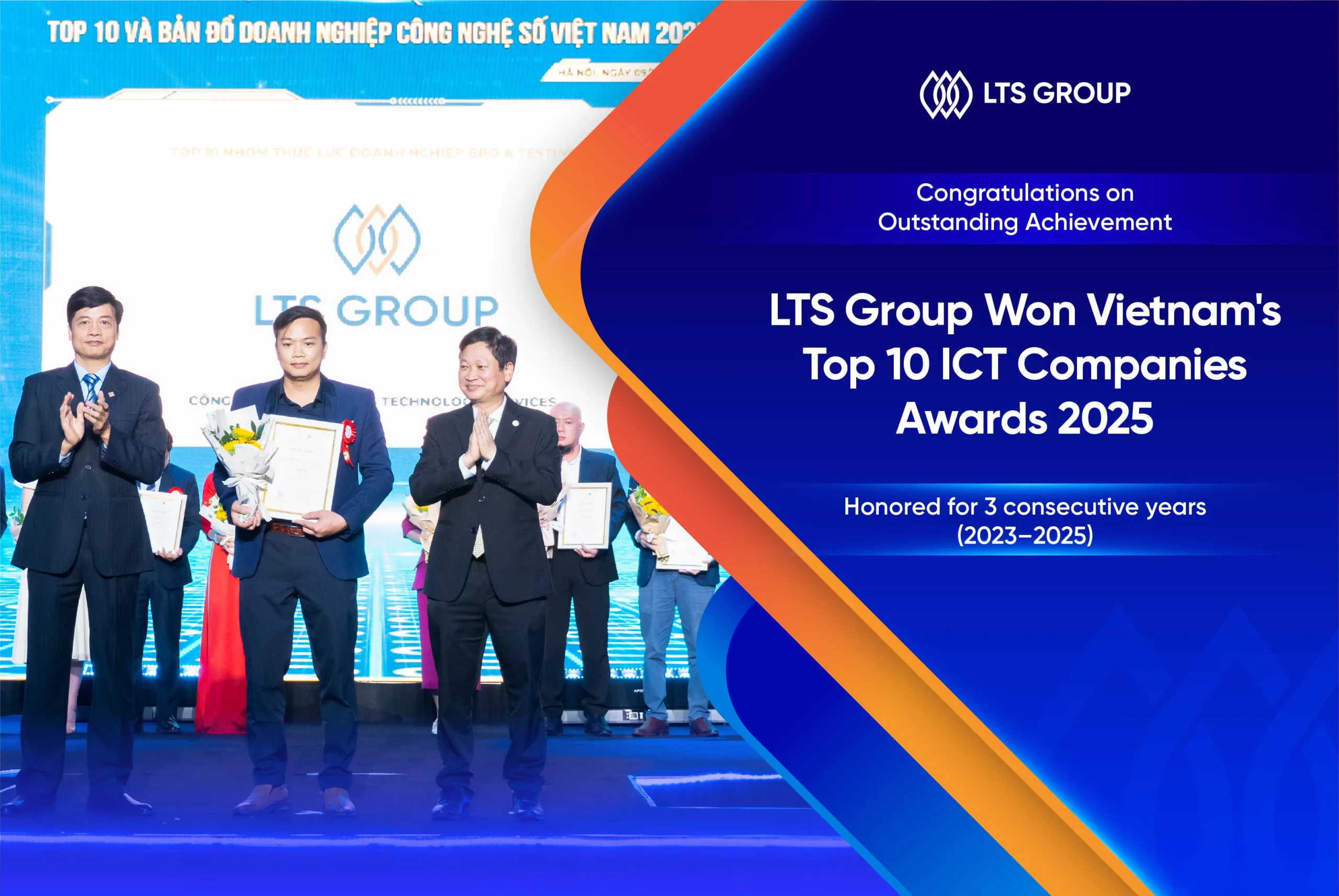
LTS Group Won Vietnam’s Top 10 ICT Companies Awards for 3 Consecutive Years 2023, 2024 & 2025
Apr 1, 2026
-4 mins read
It is with great pride and deep gratitude that we announce that LTS Group has once again been recognized as one of Vietnam’s Top 10 ICT Companies at the prestigious annual program run by the Vietnam Software & IT Services Association (VINASA). This honor marks our third year in a row, after wins in 2023 and 2024, reaffirming our steadfast commitment to quality, innovation, and global digital services. Table of Contents Toggle About the Award Celebrating Vietnam’s Leading Tech InnovatorsA Three-year Streak That Reflects Our Core ValuesEmbarking on the Next Chapter of Innovation About the Award Celebrating Vietnam’s Leading Tech Innovators The VINASA Top 10 ICT Companies program has long been one of the most prestigious awards in Vietnam’s technology industry, spotlighting enterprises that drive digital transformation and deliver impactful tech solutions. The ceremony held on October 9 in Hanoi honored a total of 169 enterprises that had been verified and reviewed across 23 technology sub-sectors and 5 main categories of digital service. Uniquely this year, the event also debuted the “Vietnam Digital Technology Enterprise Map 2025”, a comprehensive mapping of 257 enterprises occupying 389 positions across the digital-tech ecosystem in Vietnam. The program stands as one of the country’s most prestigious recognitions in the tech sector, spotlighting companies that deliver transformational digital solutions, command scale and revenue, and help shape Vietnam’s drive toward an innovation-led economy. A Three-year Streak That Reflects Our Core Values Starting as LQA, Vietnam’s first independent quality assurance firm, LTS Group has grown into a comprehensive provider of end-to-end technology solutions, offering software development, software testing, data annotation, LLM data training, and HR solutions. With a strong presence in Japan, the USA, and South Korea and a client network spanning more than 11 countries, we take pride in delivering tailored solutions that help businesses worldwide achieve sustainable growth. Our 97% client satisfaction rate stands as proof of the trust and long-term partnerships we’ve built with global enterprises. Being recognized for the third consecutive year in the Vietnam Top 10 ICT Companies Awards is more than an honor; it’s a reflection of our people’s dedication and commitment to setting new benchmarks for global IT services excellence. Embarking on the Next Chapter of Innovation This recognition reminds us how far we’ve come and how much potential still lies ahead. As we grow, LTS Group will continue to do what we do best: deliver reliable technology solutions, strengthen our presence across key markets, and expand partnerships with clients who trust us to bring their ideas to life. We would like to thank our clients, partners, and colleagues for being part of this journey. Your trust keeps us moving forward, one project and one breakthrough at a time.
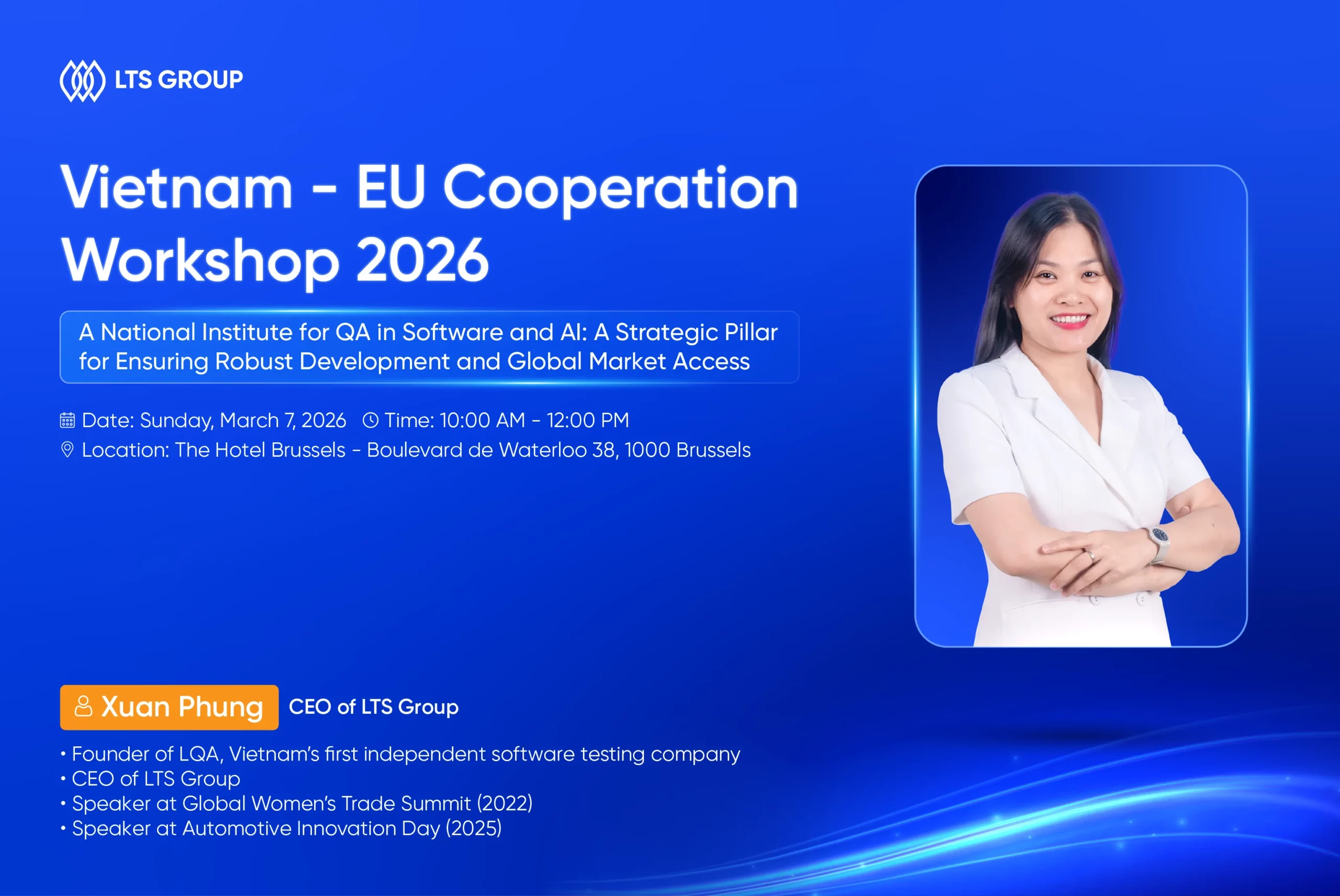
LTS Group CEO to Deliver Keynote at Vietnam – EU Cooperation Workshop 2026
Mar 4, 2026
-4 mins read
LTS Group is pleased to share that Mrs. Xuan Phung, CEO of LTS Group, will deliver a keynote address at the Vietnam – EU Science, Technology & Trade Workshop 2026, taking place on March 7, 2026 at The Hotel Brussels, Belgium. The workshop is organized by the Vietnamese Intellectual Association in Belgium and Luxembourg (ViLaB) and the Vietnamese Business Association in Belgium (VBAB), under the patronage of the Embassy of Vietnam in Belgium and Luxembourg. It brings together policymakers, researchers, and business leaders from Vietnam and across Europe to strengthen cooperation in science, technology, and trade. Table of Contents Toggle Event OverviewSpeaker IntroductionKeynote Session Event Overview Theme: Promoting Vietnam – EU Cooperation in Science, Technology and Trade Centered on strengthening Vietnam–EU cooperation, the workshop covers a range of strategic topics, including: Artificial Intelligence and Digital Transformation Biotechnology Nuclear Energy and Nuclear Medicine Trade and Business Collaboration More than a technical forum, the event aims to connect Vietnamese experts worldwide and foster practical partnerships between Vietnam and the European Union. With the shared vision of Connect – Innovate – Create, the workshop encourages cross-border collaboration to support sustainable growth and long-term innovation. Speaker Introduction Mrs. Xuan Phung is the Founder and Chairwoman of Lotus Quality Assurance (LQA), the first independent software testing firm established in Vietnam, which now has grown into an end-to-end IT services provider LTS Group. She founded the company in 2016 with a clear vision to build dedicated software quality engineering capabilities and elevate the role of quality in the global digital ecosystem. Starting from a small founding team, she has grown LTS Group into an organization of more than 500 professionals, with offices in Vietnam, Japan, South Korea, and the United States. Under her leadership, LTS Group has evolved from a specialized testing company into an international technology services provider, supporting clients across major global markets. Software quality engineering has remained at the core of the company’s identity, reflecting her long-standing commitment to building reliable, scalable, and trustworthy digital systems. As the Chairwoman, she continues to guide the company’s long-term vision, advocating for the strategic importance of quality. Keynote Session Mrs. Xuan Phung will co-present with Dr. Mai Xuan Phu, Quality Assurance Manager at Jemmic (Luxembourg) on the topic: “A National Institute for QA in Software and AI: A Strategic Pillar for Ensuring Robust Development and Global Market Access.” In this keynote, Mrs. Xuan will share perspectives drawn from industry practice on how Vietnam can strengthen its software quality ecosystem as it expands in global markets. The session will cover: Vietnam’s ICT growth and the shift toward quality-driven competitiveness Existing coordination gaps within the QA landscape The proposed role of a National QA Institute in aligning standards and capabilities How enterprises can contribute to a more unified and internationally recognized quality framework Through this contribution, LTS Group continues to advocate for elevating software quality engineering as a strategic driver of sustainable digital development. We look forward to engaging with partners, experts, and industry leaders at the workshop and contributing to meaningful dialogue on advancing Vietnam–EU collaboration in technology and innovation. Date: Sunday, March 7, 2026 Time: 10:00 AM – 12:00 PM Location: The Hotel Brussels, Boulevard de Waterloo 38, 1000 Brussels, Belgium

TÜV Rheinland and LTS Group Sign Strategic Partnership to Deliver Cybersecurity and Functional Safety Testing Services
Mar 3, 2026
-4 mins read
On March 2, TÜV Rheinland, a global leader in testing, inspection, and certification, officially signed a Memorandum of Understanding (MOU) with LTS Group to collaborate in delivering cybersecurity and functional safety testing services. During the signing ceremony, both parties discussed key areas of cooperation, including testing talent development and the operational collaboration model. Through this strategic partnership, LTS Group and TÜV Rheinland aim to combine global certification expertise with strong technical testing capabilities to provide high-quality software testing services that meet international standards. Founded in 1872, TÜV Rheinland is a leading global provider of testing, inspection, and certification services. The organization operates a worldwide network of accredited laboratories, training centers, and inspection bodies, supported by approximately 27,000 employees across offices in more than 50 countries. TÜV Rheinland tests and certifies technical equipment, products, and services while also supervising projects, processes, and information security for enterprises across industries. Its experienced experts provide professional training and workforce development programs for a wide range of sectors. Since 2006, TÜV Rheinland has been a member of the United Nations Global Compact, demonstrating its commitment to sustainability and ethical business practices. The company’s services are centered around four core areas: industrial services and cybersecurity, mobility, product quality and safety, and people and business assurance. Founded in 2016, LTS Group is a global full-cycle IT services and high-quality IT staffing provider. The company operates five member companies and maintains international branches in the United States, South Korea, and Japan. Its subsidiary, Lotus Quality Assurance (LQA), is recognized as Vietnam’s first independent software testing company, delivering reliable testing services backed by experienced professionals. Over nearly a decade, LTS Group has served more than 60 clients across 11 countries, successfully completed 275 projects, and achieved a 97% customer satisfaction rate. This MOU marks an important milestone in LTS Group’s continued commitment to enhancing service quality and expanding its global partnership ecosystem. Mr. Jin Pyo Noh, representative of TUV Rheinland, shared, “At TÜV Rheinland, we emphasize precision in both assessment and implementation. Through our collaboration with LTS Group, we combine that precision with strong local engineering capabilities to support customers in addressing safety and cybersecurity challenges in a structured and sustainable way. In today’s increasingly complex automotive systems, achieving Functional Safety and Cybersecurity requires integrating safety and security into system design from the outset. Beyond technical alignment, we believe successful partnerships are built on shared values and mutual trust. That is what makes this collaboration in Vietnam particularly meaningful for us as we strengthen safety capabilities across the Asia Pacific region.” Mrs. Xuan Phung, CEO of LTS Group, stated, “We are proud to partner with TÜV Rheinland APAC to further strengthen our commitment to quality in the automotive sector. By combining TÜV Rheinland’s training and certification expertise with LTS Group’s experience in automotive software development and validation, we aim to deliver a comprehensive solution covering process consulting, engineer training, technical assessment, and certification. It is also a wonderful opportunity for Vietnamese automotive talents to dive deep into world-class standards for Functional Safety and Cybersecurity.”



Email:contact@ltsgroup.tech
Phone:(+84) 96-238-7474
Headquarters:17th Fl, MD Complex Office Building, 68 Nguyen Co Thach Street, Hanoi, Vietnam
Japan office:5F, Iwamoto Building, 3-20-10 Shibaura, Minato-ku, Tokyo 108-0023, Japan
US office:25787 Rawley Springs Dr, Chantilly, VA 20152
Korea Office:Seoul, Seocho-gu, Gangnam-daero 327, 12Fl, Room 1214