What Is Haptic Feedback: Why It’s Essential & How Users Benefit
Oct 20, 2023
-20 mins read

In the ever-evolving landscape of technology, innovation is the key to staying ahead of the curve. One such innovation that has revolutionized the way we interact with digital devices is haptic feedback.
Haptic feedback, often referred to as simply “haptics,” is a technology that enables users to feel tactile sensations through their devices.
This article will delve deep into haptic feedback, exploring its definition, significance in the IT industry, and myriad applications, from the science behind it to real-world examples and implementation strategies.
What is Haptic Feedback
First and foremost, it’s important to grasp the meaning of haptic feedback. Basically, this is the technology that replicates the sense of touch through vibrations, forces, or motion feedback in a digital environment.
It aims to provide users with a tactile response, enhancing the overall user experience. When you use a smartphone and feel a slight vibration in response to a touch or a button press, you’re experiencing haptic feedback in action.

How Does Haptic Feedback Work?
Haptic feedback is rooted in the field of haptics, which is the science of touch. Our skin contains receptors that respond to pressure, temperature, and vibration. Haptic technology replicates these sensations to provide a tactile experience. This involves simulating various touch sensations, such as pressure, texture, and vibration, to create a convincing illusion of touch.
The mechanisms and technology involved:
- Vibration motors: The most common method of providing haptic feedback in devices like smartphones is through vibration motors. These small, precision-engineered motors generate vibrations of varying intensity and duration to mimic different sensations.
- Piezoelectric actuators: These devices generate mechanical motion by applying an electric field to a piezoelectric material. Piezoelectric actuators are known for their precision and quick response time, making them suitable for fine-tuned haptic feedback.
- Linear resonant actuators (LRAs): LRAs create vibrations by moving a mass along a single axis. They are commonly used in wearables and game controllers to provide subtle, nuanced feedback.
- Ultrasonic haptics: Ultrasonic haptic technology relies on the emission of ultrasonic waves that interact with the user’s skin, creating a sensation of touch without physical contact. This innovative technology is finding applications in various industries, from medical simulation to automotive interfaces.

The Different Types Of Haptic Feedback
Haptic feedback can take various forms, each with its own unique applications and advantages. Understanding these types is essential for tailoring haptic experiences to specific needs.

Vibrotactile haptics
Vibrotactile haptics involves the use of vibrations to create tactile sensations. This is the most common form and is widely used in smartphones and game controllers.
Force control
Force control haptics mimic the sensation of force or resistance. It’s often used in applications like simulating the tension in a virtual bowstring or the pushback in a flight simulator joystick.
Ultrasonic haptics
Ultrasonic haptics, as mentioned earlier, rely on high-frequency sound waves to create the illusion of touch without physical contact. This type is highly precise and has applications in surgical training, remote control interfaces, and more.
Surface haptics
Surface haptics technology utilizes arrays of actuators or microfluidics to create dynamic tactile sensations on a surface. This type is gaining popularity in automotive interfaces, where it can replicate the feel of physical buttons on touchscreens.
Microfluidics
Microfluidics-based haptics is an emerging technology that uses tiny channels of fluid to create customizable tactile feedback. This approach has the potential to offer highly realistic and varied sensations, making it suitable for virtual reality and medical simulation.
Surface haptics (revisited)
Surface haptics, as used in automotive interfaces, also have applications in gaming and augmented reality (AR) environments. They allow users to “feel” objects that exist only in the digital realm, further blurring the lines between the physical and virtual worlds.

Haptics Feedback Examples
Let’s delve into the real-world applications where haptic feedback is transforming the way we interact with digital technology.
Real-world applications
- Smartphones and tablets: Haptic feedback in touchscreens makes typing, gaming, and navigating your device more intuitive. It provides subtle feedback for button presses and touch gestures.
- Virtual reality: VR headsets use haptic technology to create immersive experiences. Users can “feel” the virtual world through their interactions with the environment.
- Medical training: Surgeons and medical students use haptic simulators to practice surgical procedures with a high degree of realism, preparing them for real-life surgeries.
- Automotive interfaces: Haptic feedback is increasingly integrated into car touchscreens and interfaces. It allows drivers to operate controls without taking their eyes off the road, thanks to tactile sensations.

Success stories in different industries
- Apple’s taptic engine: Apple’s Taptic Engine, available in haptic feedback iPhone, is an exemplary implementation. It provides subtle and precise vibrations for various interactions, such as receiving a text message, pressing the home button (in older models), and simulating a click while scrolling. These vibrations are calibrated to be informative and engaging, enhancing the overall user experience.
- Gaming: Many successful mobile and console games use haptic feedback to create immersive experiences. In games like “Call of Duty Mobile,” haptic is used to simulate recoil when firing a weapon, enhancing the feeling of realism. This has contributed to the game’s popularity among mobile gamers.
- Navigation apps: Navigation apps like Google Maps and Waze use haptic feedback to guide users. When users approach a turn, the phone can vibrate to indicate the direction, reducing the need for users to constantly check the screen, which can be crucial while driving.
- Virtual reality (VR) and augmented reality (AR): VR and AR applications, such as the Oculus VR headset and Microsoft HoloLens, leverage haptic feedback to create a more immersive experience. Users can feel the sensation of touching virtual objects or navigating through digital environments, enhancing the sense of presence and realism.
- Accessibility apps: Apps designed for individuals with disabilities use haptic feedback to provide essential cues and make digital content more accessible. Screen readers for the visually impaired use haptic to confirm gestures and aid navigation, ensuring an inclusive user experience.

Benefits of Haptic Feedback
The adoption of haptic feedback offers a plethora of benefits, making it a must-have in the IT industry:

- Enhanced user experience: Provides a tangible, tactile dimension to digital interactions, making them more engaging and intuitive. It enables users to “feel” their actions, improving the overall user experience and increasing user satisfaction. For example, when a user feels a subtle vibration confirming a button press on a touchscreen, it creates a more satisfying and interactive experience.
- Improved accessibility: Enhances accessibility for individuals with disabilities. It enables tactile feedback for touchscreens and digital interfaces, making them usable for those with visual impairments or other disabilities. Screen readers and touch gestures with haptic cues empower these users, increasing their digital inclusivity.
- Competitive advantage: Implementing haptic feedback in your products and applications can set you apart from competitors. It allows you to offer unique and innovative features that capture the attention of users. Companies that embrace haptic technology gain a competitive edge by delivering a more immersive and engaging experience.
- Precision and realism: Offers a high level of precision and realism, particularly in applications like healthcare, gaming, and virtual reality. In the medical field, surgeons can practice complex procedures on haptic simulators with a degree of realism that was previously impossible, improving their skills and patient outcomes. Gamers can feel the recoil of virtual weapons and the texture of virtual objects, creating a more immersive gaming experience.
- Reduced cognitive load: Helps reduce cognitive load on users. It provides immediate, tactile confirmation of actions, which can be especially valuable in situations where users need to make quick decisions or complete complex tasks. For example, in a car, haptic feedback on the touchscreen can make it easier for drivers to adjust settings without diverting their attention from the road.
- Enhanced learning and training: Accelerates the learning process in educational and training contexts. From medical students honing their surgical skills to operators of heavy machinery practicing in a virtual environment, the tactile sensations provided by haptic feedback offer a more effective and realistic training experience.
- Multi-modal feedback: Creates multi-modal experiences by combining with other sensory feedback mechanisms like visual and auditory cues. This enables the design of applications that engage users through multiple senses, providing a more holistic and immersive interaction.
- User retention: An enhanced user experience through haptic feedback often translates into higher user retention. Users are more likely to stick with applications and devices that offer a satisfying and enjoyable interaction, leading to improved customer loyalty and long-term success.
- Innovative design: Encourages innovative design approaches. It empowers designers and developers to think beyond traditional interfaces, creating novel ways for users to interact with digital content. This opens up new possibilities for product differentiation and user engagement.
- Expanded market opportunities: Explores new market opportunities by incorporating haptic feedback into your products and services. Haptic technology has found applications in various industries, including automotive, healthcare, entertainment, and more. By tapping into these markets, you can expand your reach and diversify your revenue streams.

Using Haptic Feedback in Your App: Step-by-Step Guide
Incorporating haptic technology into your app can elevate the user experience to new heights. Let’s explore the step-by-step process to seamlessly integrate this innovative technology.

1. Considering the appropriate use of haptic feedback:
Haptic feedback can be a powerful tool, but it’s crucial to use it judiciously. Not every tap, scroll, or interaction needs haptic feedback. Overusing it can lead to annoyance and detract from the user experience. It’s essential to understand when haptic technology can add value and when it’s better to refrain from using it. For instance, haptic feedback is particularly useful for confirming actions (e.g., button presses), providing navigation cues, and adding realism to gaming and virtual reality applications.
2. Transient and continuous haptic feedback:
Today, you can leverage two distinct types of haptic feedback in your app: transient and continuous:
- Transient haptic feedback: This type of feedback is momentary and is used to provide brief, discrete sensations. It’s suitable for actions like button presses, alert notifications, or confirming user inputs. Transient feedback offers a clear and immediate response to user interactions, enhancing the perceived responsiveness of your app.
- Continuous haptic feedback: Continuous haptic technology is used when you want to convey an ongoing or dynamic sensation. For example, in gaming, it can mimic the continuous vibrations of a vehicle’s engine or the pulsating heartbeat of a character. Continuous feedback adds depth and immersion to the user experience, especially in applications that demand a high level of realism.
3. Choosing the right haptic technology:
The first step in integrating haptic technology into your app is selecting the appropriate haptic technology. Consider your target platform, device compatibility, and the type of feedback you want to provide. Options include vibration motors, piezoelectric actuators, linear resonant actuators (LRAs), or more advanced technologies like ultrasonic haptics. Ensure that the chosen technology aligns with your app’s user experience goals.
4. Programming haptic feedback:
Once you’ve chosen the haptic technology, the next step is programming the feedback. This typically involves writing code to trigger haptic responses at specific events or user interactions. You’ll need to work with the device’s haptic API or SDK, which is usually provided by the device manufacturer or platform (e.g., iOS Haptic Feedback API for Apple devices).
Enhance the User Experience with Haptic Feedback
There’s no doubt that incorporating haptic technology into your app can be a game-changer, significantly elevating the user experience. But, before you embark on this journey, a critical question arises: do you have the expertise and resources to turn this vision into a reality?
This is where LTS Group steps in. We not only have a team of experienced developers but go a step further by providing them with rigorous training, ensuring they are well-versed in the latest technologies and implementation strategies.
Our developers are not just skilled; they are experts at translating your ideas into haptic experiences that captivate your users. We understand that each business has unique objectives and requirements, and we’re here to meet and exceed those expectations.
Haptic feedback is a nuanced technology, and getting it right requires not only technical expertise but also a deep understanding of user behavior and preferences. We take pride in our ability to blend cutting-edge technology with user-centric design to create haptic experiences that truly resonate with your target audience.
We are more than just a technology provider; we are your partners in enhancing user engagement, improving accessibility, and gaining that competitive advantage. When you collaborate with LTS Group, you’re not just implementing haptic feedback; you’re embarking on a journey to transform the way your users interact with your web & mobile applications and devices.

Frequently Asked Questions about Haptic Feedback
1. What is haptic feedback meaning?
Haptic feedback is a technology that replicates the sense of touch through vibrations, forces, or motion feedback in a digital environment. It aims to provide users with a tactile response, enhancing the overall user experience.
2. Why is haptic feedback important?
Haptic feedback is important because it enhances user engagement, accessibility, and the overall user experience. It also provides a competitive advantage and promotes inclusivity in the digital world.
3. What are haptic keyboards?
Haptic keyboards are virtual or physical keyboards that provide tactile feedback when a key is pressed. This feedback simulates the sensation of pressing a physical key, making typing on touchscreen devices more intuitive.
4. What is touch feedback technology?
Touch feedback technology or haptic technology, refers to the use of tactile sensations to provide feedback to users interacting with digital devices. It can include vibrations, forces, or motion feedback to replicate the sense of touch.
Final Thoughts About Haptic Feedback
In conclusion, haptic feedback is more than a buzz, a vibration, or a subtle touch sensation; it’s a paradigm shift in the way we relate to technology. It’s a testament to how innovation can enhance the human experience and enable technology to become a more integral part of our lives.
As an IT leader, understanding the importance of haptic technology is not just a professional obligation; it’s a visionary outlook. It’s about recognizing that technology is not just a tool but a bridge, connecting users to experiences that are both enriching and meaningful. It’s about acknowledging the incredible possibilities that haptic feedback opens up and being a part of the transformative journey that’s shaping the future of the IT industry.
For any questions, or inquiries, or if you’re ready to embark on a project related to app development or haptic feedback, feel free to reach out to LTS Group’s experts. We’re here to help you turn your vision into a reality.

Share

Ashley Nguyen
Meet Ashley Nguyen, our dedicated Content Marketing specialist with a passion for digital transformation, AI, and software development. Ashley's words bridge the gap between complex tech concepts and everyday understanding. Her insightful pieces not only educate but also inspire readers to embrace the ever-evolving landscape of innovation. Join her in exploring the evolving landscape of technology and innovation. Contact her at ashley@ltsgroup.tech

More must-reads to keep leaders updated
LTS Group Becomes Official Member of the French Chamber of Commerce and Industry in Vietnam (CCIFV)
Oct 5, 2026
-4 mins read
LTS Group has officially joined the French Chamber of Commerce and Industry in Vietnam (CCIFV), marking a new step in its efforts to strengthen connections with the Vietnam – Europe business community and contribute to technology cooperation between the two markets. Through its CCIFV membership, LTS Group will have opportunities to engage with French and European businesses in Vietnam, as well as industry peers, experts, and decision-makers across sectors. The company plans to take part in networking and knowledge-sharing activities while bringing practical perspectives from its work in AI, software, data, and automotive engineering. As its first engagement, LTS Group will co-host a CCIFV Breakfast Talk in Hanoi on 13 October 2026, focusing on how AI is changing the way we work. A Bridge for Vietnam – Europe Business Cooperation CCIFV supports French and European businesses in Vietnam and promotes economic cooperation between the two markets. As part of the CCI France International network, it connects businesses and chambers of commerce across markets worldwide. Its activities include business networking, Breakfast Talks, sector committees, business support services, and an online member directory that helps members build new connections. Members can also access the wider Vietnam – Europe business network, including connections with EuroCham members, and share company news and expertise through CCIFV’s media channels. From Membership to Practical Contribution Through its CCIFV membership, LTS Group aims to contribute to the community by: Sharing expertise: Bringing practical experience in AI, software, data, and automotive engineering to the CCIFV network; Hosting and speaking at events: Participating in CCIFV activities, starting with the Breakfast Talk “How AI Will Change the Way We Work” on 13th October; Connecting business needs with technology capabilities: Helping European businesses explore technology delivery opportunities in Vietnam. First Engagement: Breakfast Talk on How AI Will Change the Way We Work LTS Group’s first joint activity with CCIFV will be a Breakfast Talk exploring how AI is transforming the workplace. The discussion will cover the foundations organizations need for successful AI adoption, from data and organizational mindset to management strategies. The session will focus on three key areas: Building a strong data foundation: Establishing the groundwork needed for reliable AI initiatives; Developing an AI-native mindset: Helping teams and leaders adapt to working in an increasingly AI-driven environment; Making AI adoption work in practice: Exploring management strategies, including AI sovereignty in Europe and its implications for businesses operating in the global AI landscape. Event Details Date and time: 13 October 2026, 9:00 AM – 11:00 AM Venue: LTS Group Office, 17th Floor, MD Complex Office Building, 68 Nguyen Co Thach Street, Hanoi With hands-on experience in building and validating real-world systems, LTS Group’s specialists will also bring a practical perspective to discussions around AI-driven products, particularly the growing importance of testing, trust, and governance. Our Commitment as a Member of CCIFV For LTS Group, becoming a CCIFV member represents both an opportunity and a commitment: an opportunity to connect with a broader network of European and international organizations, and a commitment to contribute practical experience to the business community. Looking ahead, LTS Group plans to participate actively in CCIFV activities, contribute to sector committee discussions, and explore partnership opportunities with fellow members. By strengthening connections between technology companies and businesses across Vietnam and Europe, LTS Group aims to contribute to a stronger presence for Vietnamese technology companies within the European business ecosystem.
LTS Group Attends Vietnam – Korea Digital Forum 2026: Introduces Beacon for AI Agent Governance
Oct 2, 2026
-5 mins read
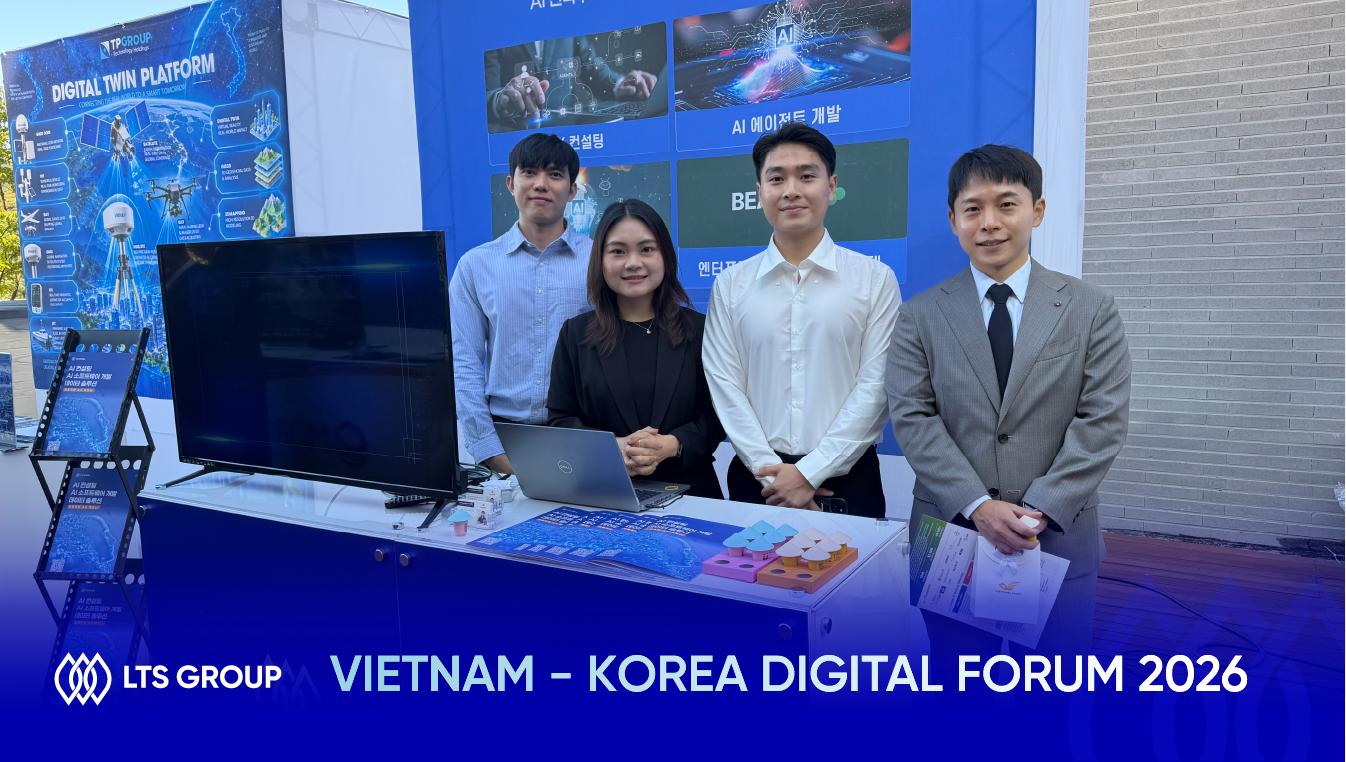
On the morning of October 1, 2026, LTS Group attended the Vietnam – Korea Digital Forum 2026 at the Embassy of Vietnam in Seoul. We introduced Beacon, a platform that helps enterprises build, run, and govern AI agents in a single system. A National-level Forum Connecting Vietnam’s and Korea’s Digital Sectors The forum brought together government agencies, industry associations, and digital technology companies from both countries. Vietnam: The Minister of Science and Technology; Mr. Nguyen Khac Lich, Director of the Department of Digital Technology and AI; the Chairman of the Vietnam Software and IT Services Association (VINASA); and digital technology companies including FPT Korea, SotaTek, and LTS Group South Korea: Leaders from the Ministry of Science and ICT (MSIT), the National IT Industry Promotion Agency (NIPA), KT, and other Korean technology companies From “Outsourcing” to “Co-creation” The forum’s message was a shift in Vietnam – Korea cooperation from outsourcing to co-creation, with AI and semiconductors as the two pillars. The keynote session covered five topics: Department of Digital Technology and AI: Co-creating a Vietnam – Korea digital ecosystem, from AI and semiconductors to the global market NIPA: Mechanisms to promote co-development and commercialization of AI and semiconductors, from R&D to market FPT Korea: Creating global value with Vietnamese tech companies, moving from “Outsourcing” to “Co-creation” KT: Next-generation AI infrastructure, with computing and cloud foundations for co-creation SotaTek: Physical AI and AI Factory for smart manufacturing A B2B matching session ran in parallel, focused on AI, semiconductors, cloud, data, software, 5G/6G, information security, and smart factory. Participants discussed finding partners, advancing R&D and PoC projects, and co-developing products. The panel discussion, “Vietnam – Korea Digital Technology Alliance,” centered on three issues: Joint R&D and technology transfer models between research institutes, universities, and businesses in both countries Training high-quality AI engineers and semiconductor design engineers PoC testing mechanisms and bringing co-developed products to the global market The forum closed with a “Make in Viet Nam” solutions showcase, where Vietnamese companies presented their technology capabilities to Korean partners. LTS Group Introduces Beacon – An Enterprise AI Platform As enterprises adopt AI faster, the question is no longer just how to use AI, but how to keep it safe and compliant. Beacon was designed to answer that question. Beacon helps enterprises build, run, and govern AI agents in one system, with compliance built in from the start. Its main capabilities: Full AI stack connectivity: Connects AWS Bedrock, Azure OpenAI, Anthropic, Google Vertex, and more with business tools such as Salesforce, Slack, GitHub, and SharePoint Real-time logging: Records every AI activity across the enterprise as it happens Shadow AI detection: Automatically detects unauthorized AI use On-demand compliance reports: Generates compliance reports whenever needed With Beacon, enterprises can roll out AI quickly while keeping strict access control and infrastructure-level risk management. At our booth, the LTS Group team demonstrated Beacon in person and talked with visitors about enterprise needs in AI governance. Key Takeaways At the forum, we connected with government agencies, associations, and tech companies from both countries and shared insights. Presenting Beacon in person also gave us a firsthand look at what Korean enterprises need in AI governance. It was a valuable opportunity to explore new collaborations and strengthen the Vietnam – Korea digital partnership. With 10 years of experience delivering IT services to global customers, LTS Group will keep developing services and solutions for the Korean market through LTS Korea. In line with the forum’s Co-creation direction, we are committed to being a trusted partner to Korean enterprises, helping them adopt AI effectively, safely, and sustainably.

Meet LTS Group at Autonomous Driving Mobility Expo (AME) 2026
Sep 28, 2026
-2 mins read
LTS Group will participate in Autonomous Driving Mobility Expo 2026 (AME 2026), Korea’s largest exhibition dedicated to autonomous driving and future mobility. The event will take place from August 25 to 27, 2026, at Hall B, COEX, Seoul. About AME 2026 AME 2026 will bring together more than 60 exhibitors across 150 booths to showcase the latest technologies and business trends in autonomous driving and future mobility. Held alongside EV Trend Korea 2026, the event will focus on the transition to software-centric vehicle architectures built around software-defined vehicles (SDVs), along with advances in ADAS and autonomous driving technologies. What LTS Group Will Showcase The automotive industry is rapidly evolving as sustainability, intelligent technologies, and service-based models reshape the market. As vehicles become increasingly software-driven, automotive software development, validation, and data labeling for ADAS and autonomous driving are becoming essential to future competitiveness. At AME 2026, LTS Group will showcase: Automotive software development and validation for SDVs; Data labeling solutions for ADAS and autonomous driving; LTS AutoTCGen, an AI-powered tool that generates ASPICE-compliant automotive software test cases (live demo). LTS Group’s CEO, Head of Automotive, Sales Director, and Delivery Manager will be on-site to introduce our solutions and discuss your automotive technology needs. Event Details Date: August 25–27, 2026 Venue: Hall B, COEX, Seoul Visit the LTS Group booth to explore our automotive software development and validation services, ADAS data labeling solutions, and LTS AutoTCGen. To arrange a meeting in advance, don’t hesitate to get in touch with us using the details below!



Email:contact@ltsgroup.tech
Phone:(+84) 96-238-7474
Headquarters:17th Fl, MD Complex Office Building, 68 Nguyen Co Thach Street, Hanoi, Vietnam
Japan:5F, Iwamoto Building, 3-20-10 Shibaura, Minato-ku, Tokyo 108-0023, Japan
US:25787 Rawley Springs Dr, Chantilly, VA 20152
South Korea:Room 1214, 12th Floor, Daerung Seocho Tower, 327 Gangnam-daero, Seocho-gu, Seoul, South Korea
Australia:1/63 Cobden Street, Kew VIC 3101, Australia