Automotive ECU Explained: A Complete Guide (2025 Updated)
Oct 29, 2025
-29 mins read
When you sit behind the wheel of a modern car, it’s easy to think about horsepower, fuel efficiency, or perhaps the latest infotainment system. Yet, beneath the surface lies an intricate network of small computers, Electronic Control Units (ECUs), that silently govern nearly every aspect of driving. From the moment you press the ignition button to the instant the airbags deploy in an emergency, ECUs are working in the background to make decisions in milliseconds.
For decades, the automotive world was shaped primarily by mechanical engineering. But as vehicles grew more intelligent and software-driven, ECUs became the invisible backbone that holds everything together. Understanding what ECUs are, how they function, and why they are evolving into new digital forms like Virtual ECUs (vECUs) is central to how cars are designed, tested, and maintained in the era of Software-Defined Vehicles (SDVs).
This article takes a closer look at ECUs, their roles, types, what symptoms they exhibit when they fail, and their future direction. We will also examine how IT outsourcing providers, such as LTS Group, are playing an essential role in helping global automotive companies innovate faster in this space.
What Is An ECU?
An Electronic Control Unit (ECU), also known as an Electronic Control Module (ECM), is a specialized embedded system within a vehicle tasked with managing and controlling various subsystems electronically. Unlike a single computer, modern vehicles incorporate numerous ECUs, often 100 or more, each dedicated to controlling specific functions such as engine management, transmission, braking, safety systems, and even comfort features like climate control or power windows.
ECUs receive continuous input from an array of sensors distributed throughout the vehicle. These sensors provide real-time data such as engine speed, temperature, wheel velocity, and even crash impact information. Based on this stream of information, the ECU processes data using onboard software algorithms specifically tailored to its function, then sends commands to actuators that perform necessary adjustments in the vehicle’s mechanical or electrical components.
How does an ECU work?
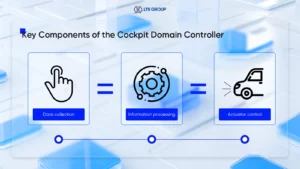
Electronic Control Units (ECUs) follow a systematic process to keep vehicle systems under control, working in a continuous cycle of data collection, information processing, and actuator control.
1. Data collection
An ECU receives signals from a wide range of sensors, such as:
- Engine speed sensor – measures RPM.
- Throttle position sensor – tracks how far the accelerator is pressed.
- Coolant temperature sensor – monitors engine operating temperature.
- Oxygen sensor – checks exhaust gases for air-fuel ratio.
These signals form the basis for diagnosing the vehicle’s condition and determining the right control strategy.
2. Information processing
Once collected, the sensor data is analyzed through embedded control algorithms. These algorithms calculate optimal commands in real time, ensuring that the vehicle maintains fuel efficiency, reduces emissions, and preserves driving stability.
For instance, if the oxygen sensor indicates a lean mixture, the ECU adjusts fuel injection parameters immediately to rebalance combustion.
3. Actuator control
The ECU then issues precise control signals to actuators, such as:
- Fuel injectors – to determine the exact quantity of fuel delivered.
- Ignition system – to regulate spark timing.
- Throttle valve – to manage airflow into the engine.
This ensures smooth engine operation, better combustion efficiency, and reduced fuel consumption.
Real-world examples:
- Fuel injection: The ECU adapts the amount of fuel injected based on engine speed, throttle position, and temperature. This keeps combustion efficient under varying driving conditions.
- Ignition timing: The ECU advances or delays ignition depending on load, RPM, and heat levels to optimize performance and minimize emissions.
- Automatic transmission: In vehicles with automatic gearboxes, the ECU coordinates gear shifts by analyzing speed, throttle position, and engine load, resulting in seamless transitions and enhanced drivability.
By performing these steps thousands of times per second, ECUs enable vehicles to respond intelligently and instantly to changing road and driving conditions.
Types of ECU
As vehicles evolve into sophisticated electronic systems on wheels, ECUs have multiplied in both number and complexity. Each ECU plays a specific role, from controlling engine combustion to managing cabin temperature or interpreting sensor data for autonomous functions.
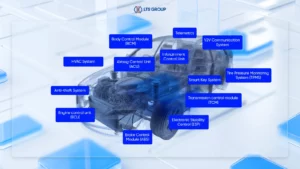
Below are the most representative types of ECUs found in today’s automotive architectures.
1. Engine control unit (ECU)
Often referred to as the heart and brain of the vehicle, the Engine Control Unit governs essential parameters that define performance, efficiency, and emissions.
- It continuously processes sensor inputs such as throttle position, engine temperature, oxygen concentration, and crankshaft rotation speed.
Based on these inputs, it adjusts fuel injection timing, air–fuel ratio, and ignition timing in real time. - In advanced configurations, the ECU also collaborates with braking and suspension systems to stabilize the vehicle under varying driving conditions.
The result is an engine that runs cleaner, smoother, and more efficiently, all managed through microsecond-level computations.
2. Transmission control module (TCM)
The TCM is responsible for managing gear shifting and power transfer in automatic and dual-clutch transmissions.
- It collects data from sensors, including vehicle speed, throttle input, and gear selector position.
- Using this information optimizes shift timing, hydraulic pressure, and torque converter lock-up, ensuring seamless and fuel-efficient gear changes.
- The TCM also communicates closely with the engine ECU, ABS, and traction control systems to synchronize torque and prevent driveline shock.
Together, the ECU and TCM define how a car feels to drive, from smooth acceleration to energy-efficient cruising.
3. Powertrain control module (PCM)
In many vehicles, the PCM acts as a centralized controller that integrates the functions of both the ECU and TCM.
- It coordinates all powertrain-related operations, ensuring smooth interaction between the engine, transmission, and other drivetrain components.
- Acting like a vehicle’s “CPU,” the PCM balances performance and efficiency by continuously analyzing sensor data and issuing commands across subsystems.
This integration improves system communication, simplifies diagnostics, and enhances overall drivability.
4. Brake control module (ABS/ESC)
The ABS/ESC ECU plays a critical role in vehicle safety.
- It prevents wheel lockup during hard braking by adjusting brake pressure in milliseconds.
- It also manages Electronic Stability Control (ESC) and Traction Control, maintaining grip and directional stability during sudden maneuvers.
- Sensor inputs, including wheel speed, yaw rate, and steering angle, enable this ECU to instantly correct skidding or slipping.
Without this ECU, advanced safety systems like hill-start assist and adaptive braking would not function effectively.
5. Airbag control module (ACM)
The ACM is the first responder in the event of a collision.
- It gathers data from crash sensors, seatbelt pretensioners, and occupant detection systems.
- Upon detecting impact forces beyond a defined threshold, it decides which airbags to deploy and at what intensity, all within milliseconds.
- It also controls related systems like seatbelt warnings and post-crash safety protocols.
The ACM’s reliability can make the difference between a minor injury and a life-threatening accident, underscoring the importance of precision software design and testing.
6. Body control module (BCM)
The BCM acts as the electrical nerve center of the vehicle’s body systems.
- It governs a range of functions, including power windows, door locks, interior lighting, and security systems.
- It receives input from multiple switches and sensors, ensuring every user command is executed reliably and safely.
Because of its broad control scope, BCM software must be highly fault-tolerant and compatible with multiple communication protocols such as CAN and LIN.
7. Infotainment control unit (InfoCPU)
The Infotainment ECU delivers the digital experience inside the cabin.
- It integrates navigation, entertainment, connectivity, and driver information systems into one interface.
- This ECU processes voice commands, touchscreen inputs, and streaming data, interacting with displays and audio systems in real time.
- In high-end architectures, it is also linked to the Head-Up Display (HUD) and Digital Cockpit Domain Controller, forming the hub of the vehicle’s user experience.
With the rise of software-defined vehicles, this ECU now represents a key frontier for personalization and over-the-air updates.
8. ADAS sensor fusion ECU
The ADAS (Advanced Driver Assistance Systems) ECU integrates data from multiple environmental sensors – radar, lidar, cameras, and GPS – to perceive and interpret the driving environment.
- Using sensor fusion algorithms and machine learning, it supports safety features like adaptive cruise control, emergency braking, lane-keeping assist, and blind spot detection.
- This ECU must process high-bandwidth data in real time, making it one of the most computationally demanding systems in the vehicle.
It also serves as a stepping stone toward autonomous driving, as future vehicles increasingly rely on this ECU for perception and decision-making.
9. Climate control module (CCM)
The CCM manages the heating, ventilation, and air conditioning (HVAC) systems.
- It reads inputs from temperature and humidity sensors and automatically adjusts airflow, temperature, and fan speed.
- Advanced systems use predictive logic to maintain cabin comfort while minimizing energy use.
Though often overlooked, the CCM contributes significantly to occupant comfort and energy efficiency, especially in EVs where thermal management directly impacts range.
10. Battery management system (BMS)
In hybrid and electric vehicles, the BMS ensures the health and safety of the battery pack.
- It monitors parameters such as voltage, current, temperature, and state of charge (SOC).
- It balances cell voltages to prevent overcharging, overheating, or deep discharge — key to extending battery lifespan.
- Additionally, the BMS communicates with charging stations and central ECUs to optimize charging cycles and provide real-time range estimates.
As the automotive industry moves toward full electrification, the BMS has become a mission-critical ECU, central to EV performance and safety.
Key Functions of ECU
The ECU is often described as the “brain” of the vehicle, but its role is far more sophisticated than simple command-and-control. Modern ECUs orchestrate a wide range of functions that span performance, efficiency, safety, comfort, and compliance. Below are the core functions that demonstrate why ECUs are indispensable in automotive engineering.
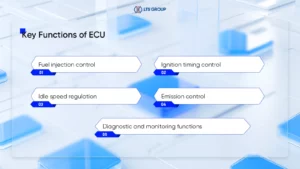
1. Fuel injection control
The ECU precisely controls the amount and timing of fuel injected into the engine cylinders. This control is based on various factors, including engine load, rotational speed (RPM), engine temperature, intake pressure, and throttle position. It analyzes input signals from oxygen sensors, airflow sensors, and coolant temperature sensors to calculate the optimal fuel injection timing and amount. This maximizes combustion efficiency, reduces fuel consumption, and minimizes emissions.
One of the ECU’s most critical responsibilities is managing precise fuel delivery.
- It calculates the amount and timing of fuel injected into each cylinder, using data from sensors such as:
- Engine speed (RPM)
- Throttle position
- Coolant temperature
- Oxygen and mass airflow sensors
- By continuously balancing these inputs, the ECU ensures the optimal air–fuel ratio for various conditions, including acceleration, cruising, and idling.
- The result: higher combustion efficiency, reduced fuel consumption, and lower emissions.
2. Ignition timing control
The exact moment a spark ignites the air-fuel mixture is vital to both power and efficiency.
- The ECU dynamically adjusts ignition timing, taking into account vehicle speed, engine load, intake temperature, and altitude.
- Proper timing allows combustion to occur at the ideal point in the piston’s cycle, which:
- Enhances torque and acceleration response
- Prevents knocking (pre-detonation)
- Reduces unburned fuel and toxic exhaust gases
This fine-tuned control directly translates into smoother driving performance and compliance with fuel efficiency standards.
3. Idle speed regulation
When the accelerator is not pressed, such as at a traffic light, the ECU must keep the engine running smoothly without stalling.
- It uses an idle air control valve or electronically controlled throttle motor to regulate airflow.
- Typical idle speeds range from 600-1,000 RPM, depending on the vehicle and conditions.
- Benefits include:
- Eliminating vibrations during idling
- Preventing stalls in traffic
- Improving overall fuel economy in stop-and-go city driving
4. Emission control
Stricter environmental standards, such as Euro 6 or US EPA Tier regulations, have pushed manufacturers to rely heavily on ECU-driven emission strategies.
- The ECU manages systems like the EGR (exhaust gas recirculation), catalytic converters, and oxygen sensors.
- It continuously adjusts the air-fuel mixture to reduce harmful gases such as NOx, CO, and unburned hydrocarbons.
- By doing so, vehicles not only pass regulatory inspections but also contribute to sustainability goals.
For OEMs and Tier-1 suppliers, this makes ECU programming central to meeting compliance without compromising performance.
5. Diagnostic and monitoring functions
Beyond controlling systems, the ECU also acts as the vehicle’s diagnostic hub.
- Through the OBD-II (On-Board Diagnostics) interface, it constantly monitors sensor and actuator health.
- If a fault is detected, the ECU:
- Stores a unique error code (DTC – Diagnostic Trouble Code)
- Triggers the appropriate dashboard warning light
- This capability enables technicians to quickly identify and resolve issues, cutting down on repair time and cost.
In the context of fleet management or connected vehicles, these diagnostics can be extended to remote monitoring, ensuring predictive maintenance and reduced downtime.
Common ECU Failure Symptoms
Even though modern ECUs are designed for durability, they can still malfunction due to age, heat, vibration, moisture, or electrical faults. When this happens, the vehicle’s behavior often changes noticeably. Below are the most common signs of ECU failure that technicians and drivers should be aware of.
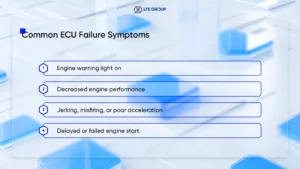
1. Engine warning light on
The most immediate indicator of a potential ECU issue is the illumination of the engine warning light on the dashboard. This occurs when the ECU detects irregularities in the sensors, ignition system, fuel injectors, or exhaust components.
- Steady light: Indicates a moderate issue, such as a faulty sensor, that requires attention but doesn’t prevent the car from running.
- Flashing light: Signals a severe fault that could lead to serious engine damage if ignored.
In either case, connecting an OBD-II diagnostic scanner helps identify the specific error code stored in the ECU memory, allowing for accurate troubleshooting and repair.
2. Decreased engine performance
When the ECU malfunctions or receives incorrect data from critical sensors such as the mass airflow (MAF), oxygen (O2), or throttle position (TPS) sensors, it may miscalculate the air-fuel ratio or ignition timing. As a result, the engine may lose power, accelerate sluggishly, or perform inconsistently.
Drivers may also notice increased fuel consumption and poor throttle response, as the ECU can no longer fine-tune combustion effectively. This symptom often appears gradually, making early detection and proper diagnostics crucial.
3. Jerking, misfiring, or poor acceleration
A failing ECU can also cause jerky engine behavior or intermittent misfiring, particularly during acceleration. This occurs when the ECU sends unstable or delayed signals to injectors or ignition coils, disrupting smooth combustion.
Common underlying causes include corrupted ECU software, damaged wiring between the ECU and actuators, or faulty sensors like the camshaft position or oxygen sensor. If left unchecked, these irregular signals can accelerate engine wear, reduce fuel economy, and compromise overall drivability.
4. Delayed or failed engine start
Since the ECU orchestrates the entire startup sequence, from reading the key signal to activating injectors and ignition, the engine may crank slowly, take multiple attempts to start, or fail to start entirely if the ECU malfunctions.
Potential causes include:
- Corrupted or outdated ECU programming.
- Poor electrical connections to key sensors (crankshaft or camshaft).
- Physical or environmental damage, such as water ingress, short circuits, or voltage surges.
Because the startup process depends on precise ECU coordination, even small internal faults can interrupt ignition timing and fuel delivery.
LTS Group’s Real-World Case Study on Automotive ECUs
In automotive software development, especially within ECU systems, hands-on engineering experience and the ability to flexibly respond to customer requirements are decisive factors in ensuring reliability and performance. Over the years, LTS Group has solidified our reputation by successfully delivering large-scale ECU projects for global Tier 1 suppliers and OEMs. These projects span from safety-critical systems such as airbags and braking systems to centralized domain controllers like Zone ECUs and intelligent comfort features such as ambient lighting.
Below are three representative projects that highlight the technical excellence, problem-solving mindset, and process maturity of LTS Group’s engineering team, each demonstrating deep expertise in AUTOSAR, ASPICE, and ISO 26262 standards.
1. Development of airbags, steering locks, Braking Systems, Radars, Cameras, ESP/ESC BSW, and MCAL
Assignment:
The team was tasked with developing multiple ECU modules, many of which had never been implemented before, under strict time and hardware constraints. Limited access to debugging boards and testing devices further increased project complexity.
Scope of work:
Development and unit testing of the following modules:
- Steering Lock
- Braking ECU
- 77GHz Radar
- ESP/ESC
- Airbag Controller
LTS Group’s solutions:
- Conducted development fully compliant with AUTOSAR standards, following the client’s specific architecture and coding guidelines.
- Divided modules into dedicated sub-teams to accelerate ramp-up time and enhance focus.
Built an internal Q&A knowledge base to unify understanding of customer specifications and reduce onboarding time. - Developed a Python-based automation tool that generated source code directly from customer-provided DIDs and DTCs, significantly improving efficiency.
- Configured and customized BSW using Vector DaVinci Configurator/Developer and set up MCAL with EB Tresos, fine-tuning source code as needed.
- Performed rigorous unit and qualification testing using Helix QAC, vCast, and vTestStudio to ensure code quality and compliance with safety standards.
2. Development of BSW and MCAL layers for zone ECU
Assignment:
This project involved configuring and operating four ECUs simultaneously within one deployment environment, a setup that increased system complexity and risk of ECU communication interference. The client also required high output within a compressed timeline.
Scope of work:
Development, unit testing, and quality evaluation for multiple AUTOSAR modules, including:
Adc (version V3.5.1, AUTOSAR 4.0.3)
- Dio (V3.3.2, AS4.0.3)
- EcuC (V5.0.23, AS4.0.3)
- EcuM (V5.15.11, AS4.6.0)
- Fee (V2.7.1, AS4.0.3)
- NvM (V6.17.28, AS4.0.3)
- Port (V3.2.0, AS4.0.3)
- Pwm (V5.3.2, AS4.0.3)
- Spi (V4.9.5, AS4.0.3)
Other modules and tools
- Lin, LinIf, LinSM, LinTp, LinTrc_SBC
- McalLib, Mcu
- Nm, NvM, PduR, Port, Rte, Wdg, WdgIf, WdgM, Xcp
LTS Group’s solutions:
- Organized dedicated development and testing sub-teams for each ECU, with one technical leader and one test leader overseeing the full workflow to prevent cross-system errors.
- Implemented parallel development–testing cycles, allowing validation to occur simultaneously with implementation for faster iteration.
- Maintained continuous alignment with client engineers to clarify requirements early and avoid costly rework.
- Delivered all modules fully validated and documented under ASPICE-aligned processes, ensuring audit readiness and traceability.
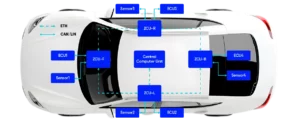
3. Ambient light ECU development
Assignment:
The client required a new ambient lighting ECU to be developed within three months, while also switching to a lower-performance hardware platform to cut costs. The new ECU had less memory, a slower processing speed, and fewer GPIO pins. Complicating matters further, temperature sensitivity affected color consistency, and ASPICE Level 2 compliance was required throughout development.
Scope of work:
Design, development, unit testing, integration testing, and quality assessment of:
- Adc
- Dio
- Port
- Pwm
- Lin
LTS Group’s Solutions:
- Implemented a temperature-compensation algorithm using derivative-based correction formulas to reduce color deviation across temperature ranges.
- Optimized memory allocation by dynamically sharing space between EEPROM and FLASH, allowing stable operation within hardware limitations.
- Conducted intensive calibration testing using temperature chambers to fine-tune LED color output under real-world thermal conditions.
- Ensured full ASPICE Level 2 process compliance, with comprehensive documentation and traceable test coverage across all modules.
Frequently Asked Questions about ECUs
What is an ECU, and why is it important in modern cars?
An Electronic Control Unit (ECU) is the core electronic component that governs a wide range of vehicle functions, such as the engine, braking system, airbags, steering, and lighting, acting as the vehicle’s central “brain.”
Modern vehicles are equipped with dozens or even hundreds of ECUs, each responsible for a specific subsystem but designed to work seamlessly together. This network of ECUs ensures safe, efficient, and intelligent operation, enabling the advanced functionality that drivers now expect.
Beyond traditional functions, ECUs also form the foundation of future mobility technologies, including autonomous driving, IoT-based vehicle connectivity, and Advanced Driver Assistance Systems (ADAS), making them indispensable for the evolution of smart vehicles.
What is the most important factor in ECU testing?
The accuracy and reliability of early error detection are the most critical factors in ECU testing.
Because ECUs control safety-critical vehicle systems, any undetected malfunction can directly compromise user safety. Therefore, ECU testing must simulate real-world driving conditions and validate system responses with precision and consistency.
High-quality ECU testing ensures that control algorithms behave correctly under all possible scenarios, from rapid acceleration to emergency braking, helping manufacturers comply with functional safety standards such as ISO 26262 and maintain long-term reliability.
Why outsource ECU development and testing to an automotive specialist?
Developing and testing ECUs requires in-depth technical knowledge, domain experience, and strict adherence to international standards such as AUTOSAR, ASPICE, and ISO 26262.
Outsourcing ECU development to a specialized automotive engineering partner offers multiple benefits:
- Accelerated development cycles through expert teams familiar with automotive-grade processes.
- Enhanced quality and compliance, minimizing risks of costly redesigns.
Scalable team structures, enabling flexible resource allocation across projects.
With extensive hands-on experience across ECU domains, including airbag systems, braking ECUs, radar sensors, and zone controllers, LTS Group helps OEMs and Tier 1 suppliers reduce costs, maintain compliance, and accelerate time to market through a globally distributed team of automotive software engineers.
Conclusion
ECUs serve as the intelligent control centers of modern vehicles, managing everything from engine performance and emissions to vehicle safety, comfort, and connectivity. Their role extends far beyond traditional mechanical systems, representing the core of digital transformation in the automotive industry.
A clear understanding of ECU functions, architectures, and common failure patterns is vital for automakers and software developers aiming to enhance product reliability and innovation.
With years of experience in automotive software development, LTS Group has partnered with global OEMs and Tier 1 suppliers to deliver high-quality ECU solutions across a wide range of vehicle domains.
Operating a service network across nine countries, including branches in Japan, Korea, and the United States, LTS Group achieves a customer satisfaction rate of 96%. Our company also holds key international certifications that ensure both technical excellence and operational integrity:
- ISO 9001 – Quality Management
- ISO/IEC 27001 – Information Security
- ISO 26262 – Automotive Functional Safety
- ISO/SAE 21434 – Automotive Cybersecurity
These certifications underscore LTS Group’s commitment to delivering ECU development and testing solutions that meet the highest standards of quality, safety, and security, empowering automakers to build the vehicles of tomorrow.
Ready to optimize your ECU project?
Contact LTS Group today to learn how our expert automotive software team can help bring your next-generation ECU system to life.

Share


LTS Group
LTS Group is an IT outsourcing services provider who will go the extra mile to help businesses worldwide break barriers to achieve growth. With a vast pool of talented developers and testers owning experience in a range of domains, we aim to enhance your competitiveness with superior IT outsourcing projects.

More must-reads to keep leaders updated

LTS Group Becomes Official Member of the French Chamber of Commerce and Industry in Vietnam (CCIFV)
Oct 5, 2026
-4 mins read
LTS Group has officially joined the French Chamber of Commerce and Industry in Vietnam (CCIFV), marking a new step in its efforts to strengthen connections with the Vietnam – Europe business community and contribute to technology cooperation between the two markets. Through its CCIFV membership, LTS Group will have opportunities to engage with French and European businesses in Vietnam, as well as industry peers, experts, and decision-makers across sectors. The company plans to take part in networking and knowledge-sharing activities while bringing practical perspectives from its work in AI, software, data, and automotive engineering. As its first engagement, LTS Group will co-host a CCIFV Breakfast Talk in Hanoi on 13 October 2026, focusing on how AI is changing the way we work. A Bridge for Vietnam – Europe Business Cooperation CCIFV supports French and European businesses in Vietnam and promotes economic cooperation between the two markets. As part of the CCI France International network, it connects businesses and chambers of commerce across markets worldwide. Its activities include business networking, Breakfast Talks, sector committees, business support services, and an online member directory that helps members build new connections. Members can also access the wider Vietnam – Europe business network, including connections with EuroCham members, and share company news and expertise through CCIFV’s media channels. From Membership to Practical Contribution Through its CCIFV membership, LTS Group aims to contribute to the community by: Sharing expertise: Bringing practical experience in AI, software, data, and automotive engineering to the CCIFV network; Hosting and speaking at events: Participating in CCIFV activities, starting with the Breakfast Talk “How AI Will Change the Way We Work” on 13th October; Connecting business needs with technology capabilities: Helping European businesses explore technology delivery opportunities in Vietnam. First Engagement: Breakfast Talk on How AI Will Change the Way We Work LTS Group’s first joint activity with CCIFV will be a Breakfast Talk exploring how AI is transforming the workplace. The discussion will cover the foundations organizations need for successful AI adoption, from data and organizational mindset to management strategies. The session will focus on three key areas: Building a strong data foundation: Establishing the groundwork needed for reliable AI initiatives; Developing an AI-native mindset: Helping teams and leaders adapt to working in an increasingly AI-driven environment; Making AI adoption work in practice: Exploring management strategies, including AI sovereignty in Europe and its implications for businesses operating in the global AI landscape. Event Details Date and time: 13 October 2026, 9:00 AM – 11:00 AM Venue: LTS Group Office, 17th Floor, MD Complex Office Building, 68 Nguyen Co Thach Street, Hanoi With hands-on experience in building and validating real-world systems, LTS Group’s specialists will also bring a practical perspective to discussions around AI-driven products, particularly the growing importance of testing, trust, and governance. Our Commitment as a Member of CCIFV For LTS Group, becoming a CCIFV member represents both an opportunity and a commitment: an opportunity to connect with a broader network of European and international organizations, and a commitment to contribute practical experience to the business community. Looking ahead, LTS Group plans to participate actively in CCIFV activities, contribute to sector committee discussions, and explore partnership opportunities with fellow members. By strengthening connections between technology companies and businesses across Vietnam and Europe, LTS Group aims to contribute to a stronger presence for Vietnamese technology companies within the European business ecosystem.
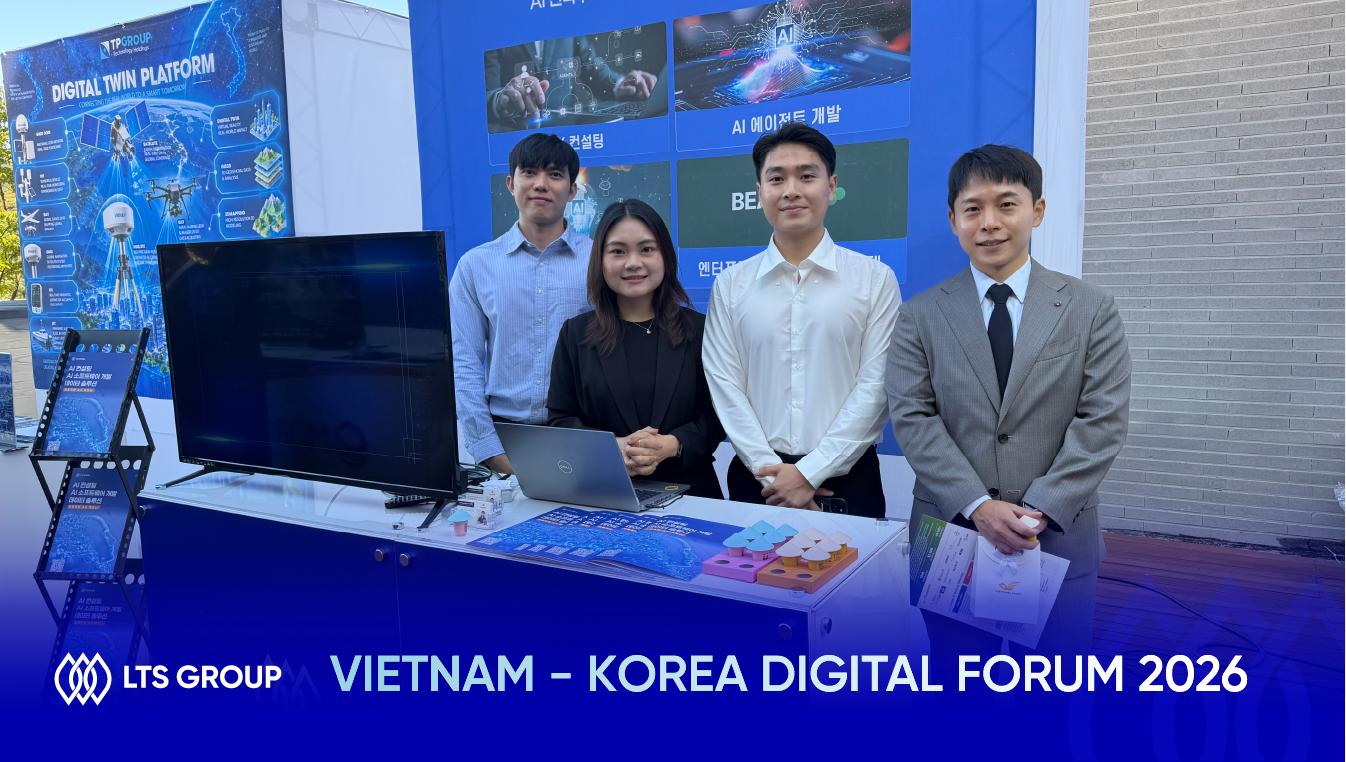
LTS Group Attends Vietnam – Korea Digital Forum 2026: Introduces Beacon for AI Agent Governance
Oct 2, 2026
-5 mins read
On the morning of October 1, 2026, LTS Group attended the Vietnam – Korea Digital Forum 2026 at the Embassy of Vietnam in Seoul. We introduced Beacon, a platform that helps enterprises build, run, and govern AI agents in a single system. A National-level Forum Connecting Vietnam’s and Korea’s Digital Sectors The forum brought together government agencies, industry associations, and digital technology companies from both countries. Vietnam: The Minister of Science and Technology; Mr. Nguyen Khac Lich, Director of the Department of Digital Technology and AI; the Chairman of the Vietnam Software and IT Services Association (VINASA); and digital technology companies including FPT Korea, SotaTek, and LTS Group South Korea: Leaders from the Ministry of Science and ICT (MSIT), the National IT Industry Promotion Agency (NIPA), KT, and other Korean technology companies From “Outsourcing” to “Co-creation” The forum’s message was a shift in Vietnam – Korea cooperation from outsourcing to co-creation, with AI and semiconductors as the two pillars. The keynote session covered five topics: Department of Digital Technology and AI: Co-creating a Vietnam – Korea digital ecosystem, from AI and semiconductors to the global market NIPA: Mechanisms to promote co-development and commercialization of AI and semiconductors, from R&D to market FPT Korea: Creating global value with Vietnamese tech companies, moving from “Outsourcing” to “Co-creation” KT: Next-generation AI infrastructure, with computing and cloud foundations for co-creation SotaTek: Physical AI and AI Factory for smart manufacturing A B2B matching session ran in parallel, focused on AI, semiconductors, cloud, data, software, 5G/6G, information security, and smart factory. Participants discussed finding partners, advancing R&D and PoC projects, and co-developing products. The panel discussion, “Vietnam – Korea Digital Technology Alliance,” centered on three issues: Joint R&D and technology transfer models between research institutes, universities, and businesses in both countries Training high-quality AI engineers and semiconductor design engineers PoC testing mechanisms and bringing co-developed products to the global market The forum closed with a “Make in Viet Nam” solutions showcase, where Vietnamese companies presented their technology capabilities to Korean partners. LTS Group Introduces Beacon – An Enterprise AI Platform As enterprises adopt AI faster, the question is no longer just how to use AI, but how to keep it safe and compliant. Beacon was designed to answer that question. Beacon helps enterprises build, run, and govern AI agents in one system, with compliance built in from the start. Its main capabilities: Full AI stack connectivity: Connects AWS Bedrock, Azure OpenAI, Anthropic, Google Vertex, and more with business tools such as Salesforce, Slack, GitHub, and SharePoint Real-time logging: Records every AI activity across the enterprise as it happens Shadow AI detection: Automatically detects unauthorized AI use On-demand compliance reports: Generates compliance reports whenever needed With Beacon, enterprises can roll out AI quickly while keeping strict access control and infrastructure-level risk management. At our booth, the LTS Group team demonstrated Beacon in person and talked with visitors about enterprise needs in AI governance. Key Takeaways At the forum, we connected with government agencies, associations, and tech companies from both countries and shared insights. Presenting Beacon in person also gave us a firsthand look at what Korean enterprises need in AI governance. It was a valuable opportunity to explore new collaborations and strengthen the Vietnam – Korea digital partnership. With 10 years of experience delivering IT services to global customers, LTS Group will keep developing services and solutions for the Korean market through LTS Korea. In line with the forum’s Co-creation direction, we are committed to being a trusted partner to Korean enterprises, helping them adopt AI effectively, safely, and sustainably.

Meet LTS Group at Autonomous Driving Mobility Expo (AME) 2026
Sep 28, 2026
-2 mins read
LTS Group will participate in Autonomous Driving Mobility Expo 2026 (AME 2026), Korea’s largest exhibition dedicated to autonomous driving and future mobility. The event will take place from August 25 to 27, 2026, at Hall B, COEX, Seoul. About AME 2026 AME 2026 will bring together more than 60 exhibitors across 150 booths to showcase the latest technologies and business trends in autonomous driving and future mobility. Held alongside EV Trend Korea 2026, the event will focus on the transition to software-centric vehicle architectures built around software-defined vehicles (SDVs), along with advances in ADAS and autonomous driving technologies. What LTS Group Will Showcase The automotive industry is rapidly evolving as sustainability, intelligent technologies, and service-based models reshape the market. As vehicles become increasingly software-driven, automotive software development, validation, and data labeling for ADAS and autonomous driving are becoming essential to future competitiveness. At AME 2026, LTS Group will showcase: Automotive software development and validation for SDVs; Data labeling solutions for ADAS and autonomous driving; LTS AutoTCGen, an AI-powered tool that generates ASPICE-compliant automotive software test cases (live demo). LTS Group’s CEO, Head of Automotive, Sales Director, and Delivery Manager will be on-site to introduce our solutions and discuss your automotive technology needs. Event Details Date: August 25–27, 2026 Venue: Hall B, COEX, Seoul Visit the LTS Group booth to explore our automotive software development and validation services, ADAS data labeling solutions, and LTS AutoTCGen. To arrange a meeting in advance, don’t hesitate to get in touch with us using the details below!



Email:contact@ltsgroup.tech
Phone:(+84) 96-238-7474
Headquarters:17th Fl, MD Complex Office Building, 68 Nguyen Co Thach Street, Hanoi, Vietnam
Japan:5F, Iwamoto Building, 3-20-10 Shibaura, Minato-ku, Tokyo 108-0023, Japan
US:25787 Rawley Springs Dr, Chantilly, VA 20152
South Korea:Room 1214, 12th Floor, Daerung Seocho Tower, 327 Gangnam-daero, Seocho-gu, Seoul, South Korea
Australia:1/63 Cobden Street, Kew VIC 3101, Australia