AUTOSAR: Complete Guide to Automotive Software Architecture
Oct 29, 2025
-25 mins read
With the rapid evolution of automotive technology, software is at the heart of the most groundbreaking innovations, fundamentally redefining what vehicles can do. Complex electronic control units (ECUs), advanced driver assistance systems, and connected car technologies rely heavily on robust, scalable, and interoperable software architectures. However, managing this increasing software complexity poses significant challenges for manufacturers and suppliers alike.
This is where AUTOSAR (Automotive Open System Architecture) emerges as a transformative solution. More than just a technical standard, AUTOSAR is a comprehensive framework that lays down a unified foundation for automotive software development. It empowers software teams to build modular, reusable, and hardware-independent applications, dramatically improving efficiency and collaboration across the automotive supply chain.
As the industry accelerates towards software-defined vehicles and continuous innovation cycles, embracing AUTOSAR is vital for organizations committed to delivering reliable, cutting-edge automotive software. In this article, we explore the core concepts, architecture, and tangible benefits of AUTOSAR, offering insights to help automotive software professionals unlock new possibilities in this rapidly evolving field.
What is AUTOSAR: Understanding the Basics
At its core, AUTOSAR (AUTomotive Open System ARchitecture) is not a single product or tool but a standardized methodology and framework for designing automotive software systems. It was established in 2003 as a global development partnership among leading Original Equipment Manufacturers (OEMs), Tier-1 suppliers, semiconductor vendors, and software companies. Key founding members included BMW, Bosch, Daimler, Volkswagen, Continental, and technology providers such as Elektrobit and Vector.
The central idea behind AUTOSAR is the standardization of software architecture across the automotive industry. Before AUTOSAR, every OEM or supplier typically developed proprietary architectures for their electronic control units (ECUs). This siloed approach created significant inefficiencies:
- Limited software reuse: Software written for one ECU or vehicle platform often had to be rewritten for another.
- High integration complexity: OEMs had to integrate heterogeneous solutions from multiple suppliers, leading to compatibility issues and delays.
- Escalating development costs: Proprietary designs increased redundancy and made large-scale innovation difficult.
AUTOSAR was introduced to solve these problems by defining a common reference architecture and standard interfaces. This ensures that software components can be designed once and reused across multiple ECUs, hardware platforms, and vehicle generations. In other words, AUTOSAR acts as a universal language for automotive software.
Another fundamental principle of AUTOSAR is its modular, layered design. By abstracting hardware and separating application logic from infrastructure services, AUTOSAR makes it possible for OEMs and suppliers to focus on their core competencies. For example, an OEM can source a braking algorithm from one supplier, integrate communication software from another, and still ensure seamless interoperability thanks to AUTOSAR’s standardized runtime environment.
Today, AUTOSAR has evolved into a global standard with two complementary platforms – Classic and Adaptive – that address both traditional automotive domains (for example, powertrain or chassis) and emerging domains (such as autonomous driving and connected mobility). Its adoption has become nearly universal among global carmakers and Tier-1 suppliers, making it a prerequisite for modern automotive software development.
Why AUTOSAR Matters in the Automotive Industry
AUTOSAR serves as a strategic catalyst for the automotive sector’s evolution. As vehicles become increasingly software-driven, the need for a flexible, scalable, and reliable framework grows. AUTOSAR delivers on all these fronts, enabling the industry to meet current challenges and future demands effectively.
Scalability across vehicle platforms
Modern vehicles range from compact cars with limited electronic functions to high-end electric vehicles equipped with advanced driver assistance systems (ADAS) and a wide range of infotainment features. AUTOSAR allows software components to be scaled up or down across these platforms without significant re-engineering. For instance, a body control module developed for an entry-level sedan can be adapted for a luxury SUV with minimal changes.
Interoperability across suppliers
Automotive OEMs collaborate with multiple Tier-1 and Tier-2 suppliers for various subsystems, including engine control, braking, and infotainment. Without a common standard, integrating these subsystems would be a monumental task. AUTOSAR’s standardized interfaces act as a bridge, enabling plug-and-play collaboration among diverse suppliers. This reduces integration risks and accelerates time-to-market.
Enabler of advanced technologies
The automotive industry is rapidly moving toward autonomous driving, electrification, and connected mobility. AUTOSAR provides the foundation to support these trends. The Adaptive Platform, for example, promotes service-oriented architecture and high-performance computing, both of which are essential for features like lane-keeping assistance, over-the-air (OTA) updates, and V2X (vehicle-to-everything) communication.
Cost efficiency and time-to-market
Standardization reduces redundant work and shortens development cycles. Instead of reinventing the wheel for every project, companies can reuse validated components, saving both time and resources. This efficiency directly contributes to reduced costs and faster launches – critical factors in a competitive industry.
Compliance and safety
AUTOSAR is designed with ISO 26262 functional safety and emerging cybersecurity requirements in mind. With increasing regulatory pressure on vehicle safety and data protection, AUTOSAR helps OEMs and suppliers stay compliant while maintaining innovation.
Foundation for software-defined vehicles
Perhaps the most transformative aspect is how AUTOSAR sets the stage for Software-Defined Vehicles (SDVs). By separating software from hardware, it allows vehicle functions to be updated dynamically, even post-production. This flexibility enables continuous improvement and aligns with consumer expectations for vehicles that evolve like smartphones. More insights on this transformation can be found in our article on Software-Defined Vehicles.
Understanding AUTOSAR’s Core Architecture
AUTOSAR (Automotive Open System Architecture) is an industry-standard software architecture specifically designed to streamline automotive software development, enhance reusability, and dramatically reduce complexity.
One of AUTOSAR’s most powerful ideas is layering: separating concerns so teams can develop, test, and evolve different parts of the system independently. Its hierarchical structure divides the automotive software stack into four primary layers, each with distinct responsibilities and interfaces.
Below is a deep dive into each layer, how they interact, and what development teams need to know when building AUTOSAR-compliant systems.
Application Layer
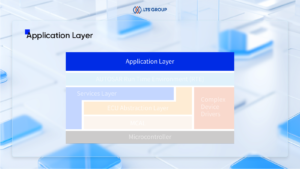
At the highest level, the Application Layer consists of modular Software Components (SWCs), each responsible for a specific vehicle function. Examples include control of air conditioning, braking systems, collision warning, or user infotainment interfaces. These SWCs communicate through clearly defined ports, allowing independent development and testing by different teams or suppliers. This modularity enables seamless reuse of software components across different vehicle models and hardware platforms.
Example: A software component managing air conditioning might gather data from temperature sensors and send commands to ventilation units. Another component could monitor exhaust emissions by analyzing NOx sensor data and adjusting the fuel-air mixture optimally, ensuring compliance with environmental standards.
Runtime Environment (RTE)
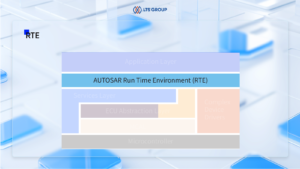
The RTE acts as middleware that orchestrates communication between Application Layer components and the underlying Basic Software Layer. It abstracts the hardware specifics so that software components can interact without being tied to particular ECU configurations.
Crucially, the RTE isolates the software application from the hardware platform. When deploying the application on different ECU platforms, only the RTE requires adaptation—allowing SWCs to remain unchanged. This separation significantly lowers development cost and time while providing flexibility to automotive software projects.
Think of the RTE as a coordinator that maps software components to system resources, ensuring smooth execution of function calls, resource allocation, and data handling in a consistent, transparent manner.
Basic Software (BSW)
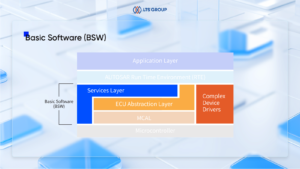
Sitting closest to the hardware, the BSW is fundamental software providing critical services necessary to operate the ECU. It is subdivided into various modules, each delivering specialized functions:
- Communication services: Manage in-vehicle networking via CAN, LIN, FlexRay, and Ethernet.
- Diagnostic services: Handle fault detection and diagnostic trouble codes (DTCs).
- Memory and time management: Oversee task scheduling and optimize memory usage.
- Security services: Implement mechanisms for data security and access control.
One critical subset is the ECU Abstraction Layer (EAL), which standardizes access to hardware resources like timers and serial interfaces through uniform APIs, hiding the complexities of underlying hardware. This abstraction enables developers to reuse source code across diverse ECUs without modification.
The closest layer to physical hardware is the Microcontroller Abstraction Layer (MCAL), translating requests from above into hardware-specific control signals. For example, MCAL might activate a GPIO pin to switch a light on when requested by a higher-level service.
Microcontroller Unit (MCU)
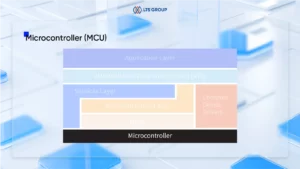
In the AUTOSAR architecture, the Microcontroller Unit (MCU) sits at the very bottom of the system, forming the software layer that interacts directly with the hardware. This layer connects to other software modules via the Microcontroller Abstraction Layer (MCAL) and performs the following functions:
- Reset basic system settings such as power, clock, memory, etc.
- Controlling the MCU’s operating mode transitions, such as RUN, SLEEP, and RESET.
- Provides hardware reset and root cause tracking capabilities
- Abstraction so that upper-level software can control the MCU without knowing the hardware details.
The MCU layer plays a critical role in determining system reliability and performance, and is an essential component for stable interoperability with other layers of AUTOSAR.
Comparing AUTOSAR’s Core Architectures: Classic and Adaptive
| Criterion | Classic AUTOSAR | Adaptive AUTOSAR |
| Primary use case | Traditional vehicle control functions | Complex application processing and high-performance computing |
| Target hardware | Resource-constrained microcontrollers (MCU) | High-performance multi-core SoCs, complex OS environments |
| Software architecture | Modular, statically configured structure | Service-oriented architecture (SOA) with dynamic configuration and updates |
| Main programming language | C | C++ |
| Operating system | Real-Time Operating System (RTOS) or bare-metal | POSIX-compliant OS (e.g., Linux, QNX) |
| OTA (Over-The-Air) update support | Not supported | Supported, real-time network-based updates |
| Real-time capability | Hard real-time (deterministic, microsecond level) | Soft real-time (milliseconds level) |
| Software deployment | Static, monolithic codebase loaded from ROM | Dynamic, applications loaded into RAM and executed |
| Task scheduling | Static scheduling | Dynamic scheduling |
| Computing power | Lower (~1000 DMIPs) | Higher (>20,000 DMIPs) |
| Safety level compliance | Up to ASIL D (highest automotive safety standard) | Minimum ASIL B compliance |
| Functionality | Fixed, control-oriented | Flexible, adaptive, supporting incremental changes |
Classic AUTOSAR: The optimal solution for real-time control systems
Classic AUTOSAR was created to support time-critical automotive functions on embedded ECUs with limited resources. Its strength lies in deterministic real-time performance, making it indispensable for safety-critical vehicle domains.
Key characteristics
- Target hardware: Runs on resource-constrained MCUs with limited memory and CPU capacity.
Architecture: Modular, with static configuration defined at the development stage. Software rarely changes during the vehicle lifecycle. - Operating system: Uses RTOS or bare-metal environments for microsecond-level determinism.
- Programming language: Primarily C, lightweight and reliable for embedded systems.
- Updates: No support for OTA; updates are handled manually during maintenance.
- Safety: Compliant with ISO 26262 up to ASIL D, the highest safety level.
When to use classic AUTOSAR
- For embedded ECUs requiring hard real-time performance.
- When stability on limited hardware resources is critical.
- In systems with minimal post-production updates.
- Where strict safety certification is mandatory.
- For leveraging standardized, reusable ECU modules.
Representative application examples
- Fuel pump control
- Drive system control
- Emergency Braking System (EBS)
- Tire Pressure Monitoring System (TPMS)
Adaptive AUTOSAR: A flexible infrastructure for next-generation smart cars
Adaptive AUTOSAR was introduced to meet the needs of connected, autonomous, and software-defined vehicles. It is designed for high-performance computing and flexible software architectures.
Key characteristics
- Target hardware: Runs on multi-core SoCs with large memory and strong processing capabilities.
Architecture: Based on Service-Oriented Architecture (SOA), supporting dynamic communication and updates. - Operating system: Uses POSIX-compliant OS (e.g., Linux, QNX) with multitasking and multithreading support.
- Programming language: Primarily C++, enabling parallel processing and modern application development.
- Updates: Fully supports OTA updates, even during vehicle operation.
Scalability: Facilitates integration with cloud services and backend systems for seamless digital connectivity.
When to use adaptive AUTOSAR
- For autonomous driving, ADAS, infotainment, and connected car features.
- When dynamic updates and continuous reconfiguration are needed.
- In environments requiring multi-core processing and HPC platforms.
- Where SOA-based flexible software and cloud integration are priorities.
- For soft real-time systems (milliseconds-level response acceptable).
Representative application examples
- Lane and obstacle detection using cameras
- AI-based parking assistance
- Real-time navigation with cloud integration
- Voice assistants powered by AI
- Continuous sensor fusion for autonomous driving
Key takeaway
- Classic AUTOSAR is best for deterministic, safety-critical, control-oriented functions.
- Adaptive AUTOSAR is best for flexible, scalable, high-performance computing applications.
Most modern OEMs and Tier-1 suppliers adopt a hybrid approach – combining both classic and adaptive AUTOSAR to ensure vehicles meet both real-time safety requirements and next-gen mobility demands.
LTS Group’s AUTOSAR Compliance Strategy
A team of experienced, advanced automotive software engineers
LTS Group proudly boasts a team of automotive software engineers with advanced expertise and extensive field experience. We excel in both development and testing services, combining solid technical knowledge and flexible problem-solving skills with direct collaboration experience with leading automotive companies in Korea, Japan, and Europe.
Our engineers are not only proficient in C/C++, Python, and embedded languages, but also have a deep understanding of AUTOSAR (Classic and Adaptive) software architectures, adhere to ISO 26262 (Automotive Software Safety Standard) development procedures, and work in accordance with ASPICE (Automotive Software Process Audit Standard).
Additionally, we are proficient in utilizing the following specialized development tools widely used in the automotive industry :
- Vector DaVinci Developer & Configurator: Design and configure BSW and RTE according to AUTOSAR standards.
- ETAS INCA: ECU data acquisition and precise calibration in real-world environments
- dSPACE: HIL Simulation and Control System Testing
- MATLAB/Simulink: System-Level Embedded Software Modeling and Development
LTS Group engineers are fluent in English and Korean, and they utilize project management tools such as Jira, Confluence, and Redmine to achieve high efficiency in remote collaboration with global partners.
AUTOSAR architecture and standards implementation process at LTS Group
LTS Group develops automotive software based on the AUTOSAR (Classic and Adaptive) architecture, following a clear and systematic development process. This effectively ensures system quality, scalability, and compatibility.
The entire process is designed to seamlessly integrate various advanced technology requirements, including Cybersecurity, Functional Safety, Over-the-Air Software Updates (OTA), Flash Bootloader (FBL), and Diagnostics, within a single system.
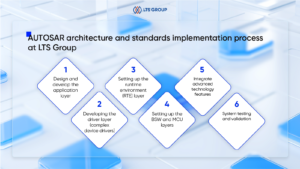
Step 1: Design and develop the application layer
- We design Software Components (SWCs) corresponding to core functions such as brake control, lighting systems, sensors, and gateways.
- Develop modeling and application-layer control logic using tools such as Vector DaVinci Developer and MATLAB/Simulink.
- Define interfaces between SWCs and configure R-Ports and P-Ports.
Step 2: Developing the driver layer (complex device drivers)
- We develop custom drivers for high-performance hardware such as high-speed sensors, radars, and cameras.
- Adds real-time control capabilities and high-efficiency drivers for hardware not supported by the basic AUTOSAR BSW.
Step 3: Setting up the runtime environment (RTE) layer
- Automatically generate RTE code and configure connections between SWCs and BSW via Vector DaVinci Configurator.
- RTE allows SWCs to be managed as independent blocks, increasing reusability and maintainability.
- It also supports scenarios such as diagnostics, network communication, and FBL triggers.
Step 4: Setting up the BSW and MCU layers
- Integrates various BSW modules such as OS, communication stack (CAN, LIN, Ethernet), memory, diagnostic services, EcuM, NvM, etc.
- The MCAL layer is configured to map each signal to the hardware of the MCU.
- Flash, simulate, and configure your system using ETAS INCA, dSPACE, CANoe, DaVinci Configurator, and more.
Step 5: Integrate advanced technology features
- Security (Cybersecurity): Applies the ISO/SAE 21434 standard and implements authentication, encryption, key management, Secure Boot, and Secure Diagnostics functions.
- Functional Safety (ISO 26262): Implement HARA analysis, ASIL determination, system anomaly detection, and response mechanisms.
- OTA (Over-the-Air): Design a mechanism to safely update ECU software remotely.
- FBL (Flash Bootloader): Develops a bootloader for ECU software upgrades, performs memory partitioning, and performs integrity verification.
- NFC Integration: Implement NFC features such as user authentication, keyless systems, and settings configuration.
- Network communication: Set up CAN, LIN, FlexRay, Ethernet buses, and synchronize with relevant modules.
- UDS Diagnostics (ISO 14229): Set up DCM, DEM, DoIP, and develop ECU diagnostic services (e.g., DTC retrieval, deletion, routine control, reprogramming, etc.).
Step 6: System testing and validation
- We perform various stages of testing, including Unit Test, Integration Test, and System Test.
- Building a test environment using HIL/SIL simulation (tools: dSPACE, CANoe, Jenkins, Robot Framework).
- Automate testing processes and reports according to ISTQB standards.
- The entire development process adheres faithfully to the following international standards:
- ISO 26262 – Functional Safety
- ASPICE – Quality Process
- ISO/SAE 21434 – Automotive Security
Real-World Examples of LTS Group’s AUTOSAR Expertise
Case study 1: Developing a driving safety and energy management system for a Chinese customer
The Chinese client, a company specializing in automotive safety and energy management systems, was looking for a partner in Vietnam that could support software development under a Build-Operate-Transfer (BOT) model.
Key contents
- Development of BSW and MCAL for various systems such as airbags, brakes, radar, and steering locks.
- Design and Testing of a Horn Control System Using MATLAB/SIL Models
- Secure Boot Loader integration and deployment to Zone ECUs
- Compliant with AUTOSAR Classic, ISO 26262 Part 4-6, and ASPICE Level 2 standards
Achievement: Build a highly secure, reusable, and cost-effective software system, laying the foundation for long-term operation in Vietnam.
Case study 2: Building an ADAS LiDAR test environment for a European customer.
A European ADAS solutions company needed an advanced test environment to verify the accuracy of LiDAR sensor-based object recognition and tracking capabilities. LTS Group completed a project to build an AUTOSAR Adaptive-based test system to meet this requirement.
Key highlights
- Design of an automated test environment that supports real-time data processing of LiDAR systems.
- Implementation of a flexible test structure based on SOA (Service-Oriented Architecture)
- Support for testing over-the-air (OTA) updates and runtime change scenarios
- Applying multi-platform test tools suitable for POSIX-based operating systems (e.g., Linux)
Results: The testing period was significantly reduced from weeks to just days, enabling precise verification of the system’s accuracy and stability. This provides the customer with a reliable foundation for the commercialization of their LiDAR solution.
Frequently Asked Questions (FAQ)
What is AUTOSAR?
AUTOSAR is a global development partnership that defines a standardized architecture for automotive software. While not a legally mandated standard, AUTOSAR is considered a de facto framework for the automotive industry, which must meet functional safety standards like ISO 26262 and quality processes like ASPICE. Many automakers and component suppliers are actively adopting AUTOSAR to ensure development efficiency, modularity, and compatibility in the increasingly complex automotive software environment.
When should I choose Classic, and when should I choose Adaptive?
The choice between Classic AUTOSAR and Adaptive AUTOSAR depends on the system’s purpose, hardware environment, real-time processing requirements, and the need for over-the-air (OTA) updates. For example, Classic AUTOSAR is suitable for safety-critical functions that require hard real-time performance, such as braking control and engine control. Conversely, Adaptive AUTOSAR is better suited for applications that require high-performance computing and flexible updates, such as autonomous driving, infotainment, and V2X communications.
What is the most important thing to consider when starting an AUTOSAR project?
When starting an AUTOSAR project, the most important thing is to clearly analyze the requirements and establish an appropriate architecture design strategy. An inaccurate initial design can significantly increase costs during subsequent development and testing stages. LTS Group works with customers to develop strategies from the early stages of a project and provides comprehensive support for successful project execution.
Conclusion
In the era of digital transformation in the automotive industry, software is no longer a secondary element but the heart of the vehicle. AUTOSAR is positioned as a core platform for realizing the smart, safe, and scalable vehicles of the future.
LTS Group, with our practical expertise, extensive project experience, and flexible approach, supports the entire AUTOSAR journey, from strategy development to development, testing, and deployment. If your company is looking for a consulting, development, and validation partner for AUTOSAR (Classic or Adaptive) solutions, start with LTS Group today.

Share

LTS Group
LTS Group is an IT outsourcing services provider who will go the extra mile to help businesses worldwide break barriers to achieve growth. With a vast pool of talented developers and testers owning experience in a range of domains, we aim to enhance your competitiveness with superior IT outsourcing projects.

More must-reads to keep leaders updated
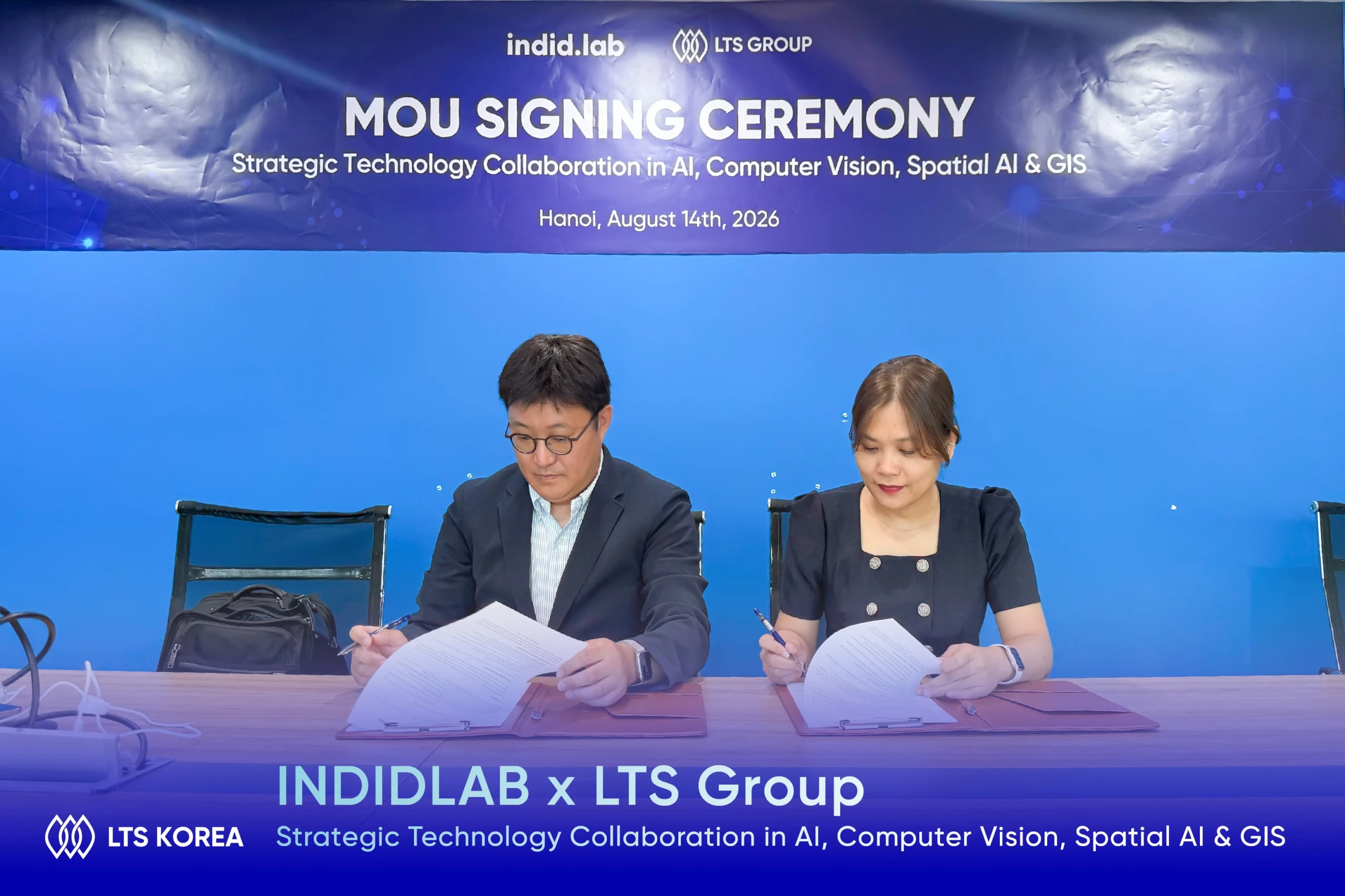
LTS Group & IndidLab Sign MOU for Strategic Collaboration in AI, Computer Vision, Spatial AI, and GIS
Sep 14, 2026
-3 mins read
Vietnam-based IT solutions company LTS Group, led by CEO Xuan Phung, and South Korean Spatial AI and PropTech company IndidLab, led by CEO Yohan Jung, signed a Memorandum of Understanding (MOU) on August 14 at LTS Group’s headquarters in Hanoi. The agreement marks the beginning of strategic technology collaboration in AI, computer vision, Spatial AI, and Geographic Information Systems (GIS). Before the signing, both companies introduced their businesses and shared key project experience. LTS Group presented its AI and software development and AI training data capabilities and relevant case studies, while IndidLab outlined its work in converting data from formats such as maps and CAD files into GIS and geospatial data. As much of this conversion process is still performed manually and requires significant time, IndidLab is exploring an AI-powered automation solution and seeking a technology partner to support its development. During the meeting, the two companies discussed potential technical approaches for IndidLab’s ongoing projects. The discussion covered LTS Group’s capabilities in AI, computer vision, OCR, Document AI, and data labeling, as well as opportunities for a Proof of Concept (PoC) and long-term collaboration. LTS Group’s Head of AI also joined the meeting, contributing technical expertise and supporting in-depth discussions on potential implementation approaches. Although IndidLab has made several visits to Vietnam, the company noted that this marks its first substantive collaboration with a Vietnamese business. Since 2024, IndidLab has been expanding into Vietnam and Hong Kong and sees strong alignment between its technology direction and LTS Group’s capabilities. About IndidLab IndidLab is a South Korean PropTech company developing proprietary Spatial AI technology based on architectural and geospatial data. Its technologies are applied across real estate, urban redevelopment, and spatial intelligence services. The company won the Grand Prize in the 2024 Google Play ChangGoo Program and provides proprietary multi-family housing analysis data to the Korea Real Estate Board (KREB). Since 2024, it has also expanded its business into Vietnam and Hong Kong. About LTS Group Established in 2016, LTS Group is a fast-growing Vietnamese IT service provider. Formerly a leading Quality Assurance company in Vietnam (LQA), LTS Group has now grown into a diverse ecosystem of 8 entities, delivering end-to-end technology services including Software Development, Software Testing, Digital BPO, Global IT HR Services and IT Training Solutions. With 3 subsidiaries in the USA, Japan, and South Korea, we serve 60+ clients across more than 11 countries with a satisfaction rate of 97%. These milestones strengthen our service quality and drive us toward our 2027 goal of becoming a world-class IT service company.
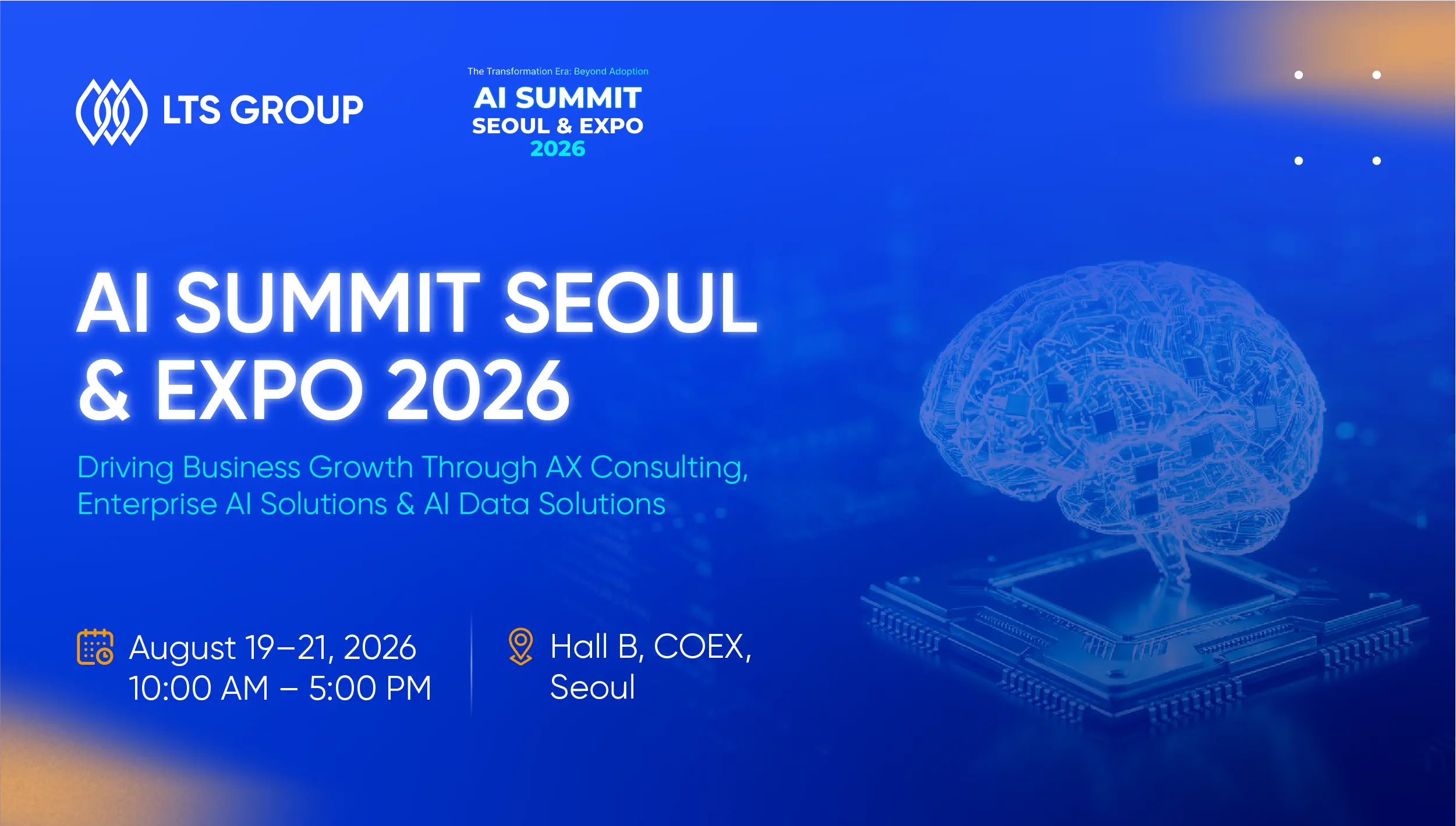
Meet LTS Group at AI Summit Seoul & Expo 2026
Aug 10, 2026
-2 mins read
LTS Group will participate in AI Summit Seoul & Expo 2026, Asia’s largest AI event, taking place at COEX in Seoul from August 19 to 21, 2026. About AI Summit Seoul & Expo 2026 Held annually in Seoul since 2018, AI Summit Seoul & Expo brings together experts from global enterprises, research institutions, and academia to explore the intersection of AI and industry. Now in its ninth year, the event will focus on AI agents, agentic AI, physical AI, and the latest strategies for AI adoption across industries. What LTS Group Will Showcase AI is evolving into a vertically integrated ecosystem connecting data, models, infrastructure, and applications. As agentic and enterprise AI gain momentum, businesses need strong software engineering and data capabilities to integrate AI into real-world operations and run it reliably at scale. At AI Summit Seoul & Expo 2026, LTS Group will introduce a comprehensive range of solutions supporting enterprise AI adoption and advancement: AX Consulting AI Software Development AI Data Solutions BEACON – Enterprise AI Solution, featuring a live on-site demo Our team will also be available to exchange market insights, introduce our technologies, and discuss how AI can support your business. Event Details Date: August 19–21, 2026 | 10:00 AM – 5:00 PM Venue: Hall B, COEX, Seoul | Booth I100 Visit the LTS Group booth to learn more about our Enterprise AI Solutions, AI Data Solutions, and BEACON platform. To arrange a meeting in advance, don’t hesitate to get in touch with us using the details below.
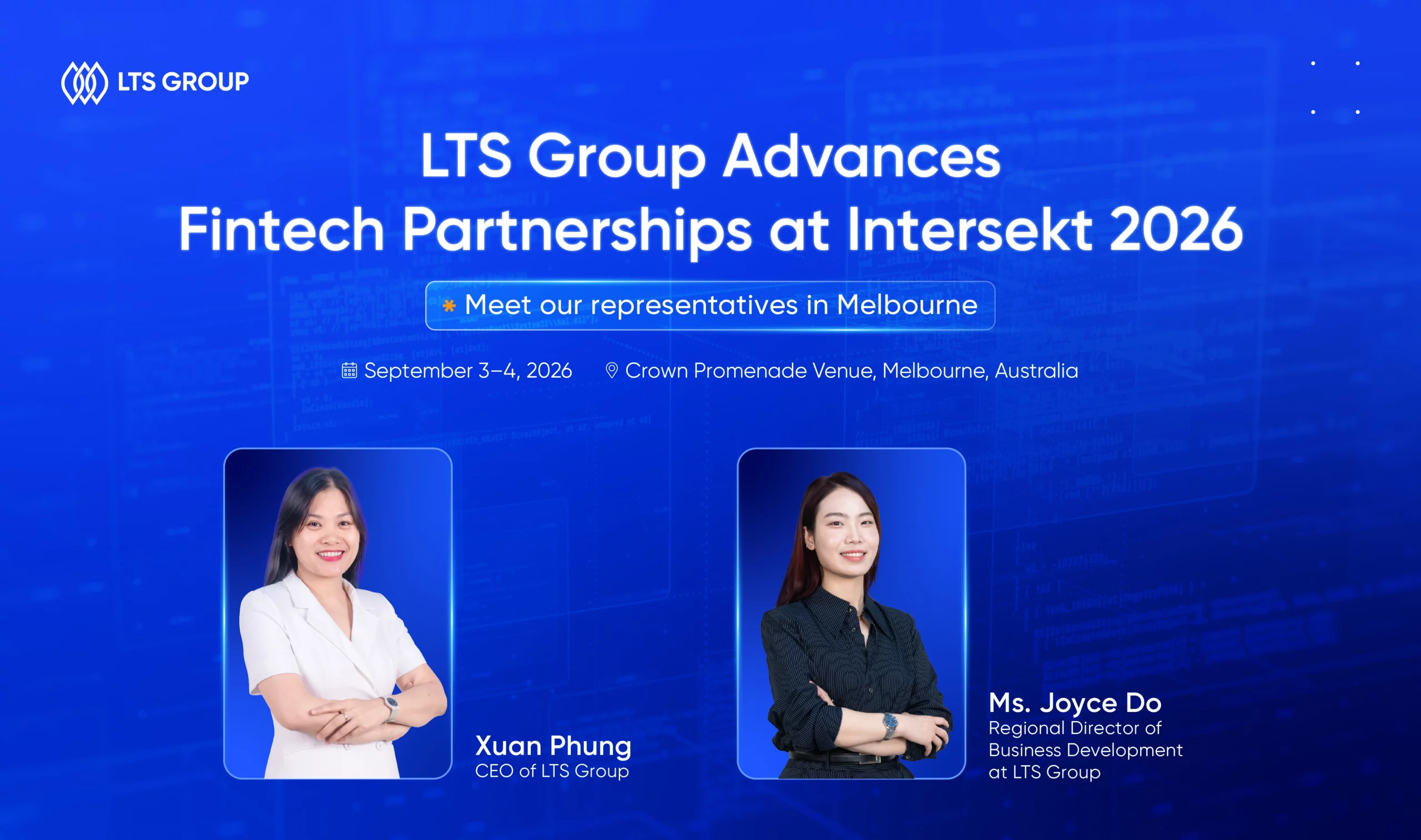
Meet LTS Group at Intersekt 2026 in Melbourne
Aug 10, 2026
-2 mins read
LTS Group is pleased to announce our participation in Intersekt 2026, taking place on September 3–4 at Crown Promenade Melbourne, Australia. Representing LTS Group at the event will be Mrs. Xuan Phung, CEO of LTS Group, and Ms. Joyce Nguyen, Regional Director of Business Development. They look forward to connecting with fintech leaders, financial institutions, technology providers, and innovators from across Australia and beyond. About Intersekt 2026 Hosted by FinTech Australia, Intersekt is one of Australia’s leading fintech gatherings. Now in its ninth edition, the event brings together more than 1,000 fintech founders, banks, investors, regulators, policymakers, and industry leaders to exchange insights and explore new opportunities across the financial services ecosystem. As the flagship event of Fintech Week Australia, Intersekt 2026 will feature industry sessions, roundtables, workshops, networking activities, and discussions focused on emerging technologies, market trends, policy developments, and the future of financial services. Connect with LTS Group at Intersekt 2026 At the event, our two representatives will introduce LTS Group’s AI-powered fintech software development capabilities and engage with businesses seeking to build, modernize, or scale their financial technology platforms. Our fintech experience covers digital banking, payments, lending, trading and investment, and financial analytics. We provide advanced data analytics, AX solutions, and legacy system modernization for lucrative AI adoption, combining domain knowledge with engineering and quality assurance capabilities to support each client’s business requirements and user needs. Mrs. Xuan Phung and Ms. Joyce Nguyen look forward to meeting industry professionals, exchanging perspectives on the evolving fintech landscape, and exploring potential technology partnerships at the event. Event details Date: September 3–4, 2026 Venue: Crown Promenade Melbourne Address: 8 Whiteman Street, Southbank, Victoria 3006, Australia If you are attending Intersekt 2026 and would like to discuss your next fintech initiative, connect with the LTS Group team to arrange a meeting in Melbourne.



Email:contact@ltsgroup.tech
Phone:(+84) 96-238-7474
Headquarters:17th Fl, MD Complex Office Building, 68 Nguyen Co Thach Street, Hanoi, Vietnam
Japan office:5F, Iwamoto Building, 3-20-10 Shibaura, Minato-ku, Tokyo 108-0023, Japan
US office:25787 Rawley Springs Dr, Chantilly, VA 20152
Korea Office:Seoul, Seocho-gu, Gangnam-daero 327, 12Fl, Room 1214