Comprehensive Guide to SaaS Development in 2025: Process, Challenges, Cost Estimation, and More
May 15, 2024
-31 mins read

SaaS development is becoming more and more popular thanks to the rise of cloud technology. By 2030, the SaaS (Software-as-a-Service) market is projected to reach $908 billion, showcasing an annual growth rate rise from 18% to 18.7%.
Increasingly, businesses are embracing the SaaS model for its cost-saving advantages, scalability enhancements, and heightened security measures.
It’s time for businesses to join the fray, develop a successful SaaS application and make a bundle. In this comprehensive guide, we’ll cover the ins and outs of SaaS development, from understanding its key components, and steps to building SaaS applications, to overcoming common challenges, estimating SaaS costs, and building the right SaaS development team. Let’s delve deeper!
What Is SaaS Development?
SaaS (standing for Software-as-a-Service) is a model where software applications are hosted on the internet rather than on an organization’s in-house servers.
SaaS offers a comprehensive software solution that you buy on a pay-as-you-go model from a cloud provider. Some examples of SaaS companies include Zoom, Slack, Canva, Microsoft, and HubSpot.
Software as a Service (SaaS) development is the process of creating and delivering software applications over the Internet on a subscription basis.
SaaS development streamlines the deployment, maintenance, and updating of software, offering a cost-effective and adaptable solution for businesses of any size. Unlike traditional software development, where software is created and installed on individual devices, SaaS products are designed to be accessed and used remotely.

Let’s take a look at the comparison table below to learn the key differences between SaaS apps and traditional web apps:
| Aspect | SaaS Application | Traditional Web Application |
| Deployment | Hosted on cloud servers by the provider | Installed on local servers or third-party hosting |
| Accessibility | Accessible from any device with internet | Requires specific software/hardware compatibility |
| Cost Model | Subscription-based pricing model | One-time development and hosting costs |
| Upfront Costs | Typically lower, based on subscription plans | Higher upfront costs for development and setup |
| Maintenance | Managed by the SaaS provider | Requires in-house or third-party maintenance |
| Updates | Automatically updated by the provider | Manual updates and maintenance required |
| Scalability | Easily scalable, usually based on subscription tiers | Scalability depends on infrastructure and upgrades |
Benefits of SaaS Application Development
Compared to traditional on-premise software, the SaaS approach offers several advantages. Here are some key benefits that SaaS product offers to businesses:

Predictable revenue streams and higher profit margins
In the early days of technology, software was sold as a one-time purchase, much like any other product. This approach changed with the invention of cloud computing, which made software easily accessible to anyone with an internet connection.
Adopting a subscription business model offers SaaS companies flexibility to adapt to customer expectations and swiftly modify pricing and packaging, leading to higher profit margins. This is because once the software is developed and deployed, the cost of serving additional customers becomes relatively low. The reason behind this is that infrastructure and software maintenance costs are spread across many users, meaning each new subscription primarily contributes to profit. Furthermore, continuous revenue generation from existing customers reduces the need for constant new sales to maintain revenue levels, resulting in sustained higher profit margins compared to traditional one-time software sales.
Additionally, this model provides detailed insights into financial health by tracking recurring revenue. It enables businesses to predict growth, forecast revenue, monitor cash flow, and optimize internal processes to increase Monthly Recurring Revenue (MRR). This steady stream of recurring revenue is more predictable and stable than traditional one-time software licensing, making it easier for businesses to plan for sustainable growth.
Faster time-to-market
SaaS applications can be developed and deployed more quickly than traditional on-premises software. Updates and new features can be rolled out seamlessly to all customers without the need for complex installation processes on their end.
This agility allows businesses to respond to market demands more swiftly, gain a competitive edge, and capitalize on new opportunities faster than ever before.
Continuous improvement and innovation
SaaS providers can continuously improve their products by gathering user feedback and usage data, enabling them to respond quickly to customer needs and market trends. This ongoing innovation can help businesses stay competitive and meet evolving customer demands.
With real-time analytics and monitoring, SaaS companies can identify areas for enhancement and implement changes without disrupting the user experience. This continuous improvement cycle ensures that the software evolves alongside customer expectations, fostering long-term customer loyalty and satisfaction.
Furthermore, the ability to swiftly incorporate the latest technologies and industry trends keeps the software cutting-edge and highly functional.

How To Build a SaaS Product: A Step-by-Step Guide
How to make a SaaS product? You can develop SaaS application effectively by following our comprehensive guide below! These are essential steps when using Waterfall development method.

Plan and research
Thorough market research and competitor analysis are crucial for identifying opportunities and defining the scope of a SaaS application.
Market research involves gathering data about target demographics, industry trends, and competitive landscape. Competitor analysis examines strengths, weaknesses, and strategies of existing SaaS solutions in the market.
The main purposes of this phase are:
- Set a strong foundation based on data-driven insights.
- Identify market gaps and opportunities.
- Define target audience and user personas.
- Develop a clear vision for your SaaS product.
- Define the SaaS product’s must-have and optional functions.
- Create a roadmap that guides you through the development process.
- Uncover potential challenges or barriers to entry.
- Devise strategies for overcoming these obstacles.
Expert tips: During the planning and research phase, work closely with your development team to establish clear goals, objectives, and milestones for the project. This collaboration helps ensure alignment and provides context for effective development.
We have curated a list of articles for businesses to kick off SaaS development effectively:
- 10 questions help organization sketch an ace software development strategy
- Project specification: Template and how to write one
Define the technical aspects
After identifying your target users, expected traffic, and necessary features, the next step involves defining the technical aspects of the SaaS product.
Choosing a cloud infrastructure type
Selecting a suitable type of SaaS cloud infrastructure is essential for creating and running your SaaS application. This includes:
1. Selecting between on-premise vs. cloud hosting: This is the first and most fundamental decision to make, as it determines whether to host the SaaS application internally or use an external cloud provider. This choice has significant implications for infrastructure costs, scalability, and maintenance responsibilities.
If cloud hosting is chosen, the next steps involve:
2. Determining cloud infrastructure type: There are different types of cloud models available, including private, public, and hybrid cloud. This decision depends on factors such as security requirements, cost considerations, and the need for customization.
- Private cloud offers dedicated resources exclusively for your organization, ensuring higher security and customization, suitable for businesses with strict compliance and security requirements.
- Public cloud shares resources among multiple users, provided by third-party providers like AWS, Azure, or Google Cloud, making it cost-effective and scalable, ideal for startups and small to medium-sized businesses.
- Hybrid cloud combines private and public cloud environments, allowing data and applications to be shared between them. This approach provides flexibility, enabling businesses to leverage the scalability of public clouds while keeping sensitive data secure in private clouds.
3. Choosing a cloud provider: After deciding on the cloud infrastructure type, the next step is evaluating and selecting the specific cloud service provider that offers the features, pricing, and support that align with your SaaS product requirements. This step involves comparing offerings from providers like AWS, Azure, and GCP. While researching popular cloud providers, stakeholders should consider factors such as scalability, security, uptime, pricing models, data residency, compliance, and disaster recovery.
The main purposes of this phase are:
- Select a suitable cloud infrastructure type that aligns with your business needs for security, cost, and scalability.
- Host and manage your SaaS application in a secure and scalable environment.
- Leverage cloud services for infrastructure, storage, and computing resources.
- Ensure flexibility to scale your SaaS product according to demand.
- Optimize costs based on usage and demand.
Expert tips: Choose a cloud provider that offers comprehensive services and meets your specific requirements for data security, compliance, and scalability.
Choosing SaaS development technology stack
Selecting the right technology stack ensures efficient development, scalability, and performance of your SaaS application. The technology stack includes programming languages, frameworks, databases, and infrastructure.
In this step, assess project requirements and technical constraints. Choose technologies that support scalability, security, and developer productivity. Here are our experienced SaaS software developers’ picks:
1. SaaS front-end development: Often revolves around JavaScript/TypeScript frameworks and libraries such as Angular, React, and Vue.js.
2. Native mobile front-end development:
- Native languages: Swift, Objective-C, Kotlin, and Java Mobile.
- Cross-platform JavaScript frameworks: React Native, Xamarin, and Flutter.
3. Back-end SaaS development:
- JavaScript-based: Node.js
- PHP-based: Symfony, Laravel
- C# .NET
- Java
- Python-based: Django
4. Database management: Popular choices are MySQL, PostgreSQL, and MongoDB.
Cooperating with an experienced SaaS development team like LTS Group can guide you in selecting the most suitable tools for your project, a crucial step in shaping your app’s success.
Design
Designing the user interface (UI) and user experience (UX) of your SaaS application to ensure usability, aesthetics, and functionality. This step includes collaborating closely with UX/UI designers to create wireframes, prototypes, and design mockups.
The main purposes of this phase are:
- Develop visually appealing and user-friendly interfaces.
- Align design elements with branding and user expectations.
- Conduct usability testing to refine design iterations.
Expert tips:
- Prioritize mobile responsiveness for multi-device accessibility.
- Focus on intuitive navigation and clear calls-to-action for user interactions.
Kick-off development and testing
Building the development team
This phase includes assembling a skilled and collaborative team of developers, designers, and other specialists to work on your SaaS project.
Common roles required in a SaaS development team are:
- Project managers
- Business analysts
- Back-end & front-end developers
- UI/UX designers
- QA engineers
Companies can consider building an in-house team or hiring an outsourced SaaS development team to best align with your resources and project requirements.
Creating the minimum viable product (MVP)
Developing an MVP with essential features helps validate your SaaS product concept and gather user feedback.
Through this step, you can validate assumptions and market demand early in the development process. This also allows you to iterate based on user feedback and prioritize features for the full product release.
To create the SaaS MVP, the first action is to identify key features and functionalities for the MVP based on user needs and business goals. Afterward, it is essential to gather feedback from beta testers, early adopters, and target users for future upgrades.
SaaS product quality assurance testing
No software development process is complete without software QA & testing, and the SaaS lifecycle is no exception.
In this SaaS product development lifecycle stage, quality assurance engineers play a key role. These professionals run various types of testing, including regression, load, functional, and security testing, to evaluate the SaaS product’s performance under numerous conditions.
The testing phase is crucial to creating a winning product development strategy in any industry. A comprehensive test plan ensures that the developed application is secure, reliable, and free from critical vulnerabilities. Moreover, testing enhances the user experience and fosters trust among the application users.
Other software QA and testing that businesses may implement during the SaaS development process:
Define the subscription model
Selecting the right subscription model influences revenue generation and customer retention.
Here are the most common subscription models:
- Freemium pricing model (free usage for a limited time, followed by payment)
- Fixed fee model (consistent fee regardless of users or usage)
- Usage-based model (payment for services utilized)
- Tiered model (increased payment for additional features)
- Feature-based model (pricing based on features, akin to the tiered model)
- Per-user model (payment based on targeted user numbers)
A Freemium model is highly effective for attracting new users by offering a free version of the product with basic features, enticing users to upgrade to access full functionality. For example, a cloud storage service might provide a limited amount of free storage, while charging for additional capacity and advanced features.
A Subscription-based model charges customers a recurring fee, typically on a monthly or annual basis, for continuous access to the product. This approach ensures a steady revenue stream, allowing businesses to focus on enhancing value and maintaining customer loyalty. Subscription plans often come in tiers with different features and access levels. For instance, a project management tool might offer a basic plan for individuals, a team plan for small businesses, and an enterprise plan for larger organizations, with tiers based on the number of users, feature availability, or data storage.
The Usage-based pricing model charges customers according to their usage, such as the number of transactions, API requests, or data volume consumed. This pay-as-you-go model appeals to users who prefer paying for what they use and aligns pricing with the value received. For example, an email marketing service might charge based on the number of emails sent or subscribers.
Combining different pricing models can also be advantageous. For example, a freemium plan can be offered alongside subscription tiers that incorporate usage-based or per-user pricing, catering to various customer preferences and providing flexible payment options.
The main purposes of this phase are:
- Define pricing strategies that align with customer value and market expectations.
- Encourage customer adoption and retention through flexible pricing plans.
- Generate recurring revenue streams for your SaaS product.
Expert tips:
- Analyze competitor pricing strategies.
- Conduct pricing experiments and gather feedback from beta users.
- Offer a free trial or limited-feature version to showcase value and encourage users to upgrade to premium plans.
Deploy and maintain
Teams can proceed to deployment after collecting ample feedback from early adopters and thoroughly testing the product. This step is usually the last stage of the SaaS development life cycle, wherein stakeholders make final changes to the product and launch it.
This includes adding more features, enhancing the UX, and delivering a well-polished final version based on early feedback. Companies can also integrate APIs into the SaaS product to further optimize it before deployment.
By providing continuous support and maintenance for the SaaS application, businesses can ensure that their users always have access to the latest features and improvements, resulting in a more engaging and valuable experience overall.
SaaS Application Development Challenges
Developing a successful SaaS application comes with its own set of challenges that require careful consideration and strategic software development planning. Let’s delve into some of the key challenges faced during SaaS application development:

Data protection
Data protection is a paramount concern in SaaS application development due to the sensitive nature of user data.
Ensuring data confidentiality, integrity, and availability requires robust security measures. This includes implementing strong encryption standards for data at rest and in transit, securing APIs with authentication and authorization mechanisms, and regularly auditing security protocols to detect and mitigate potential vulnerabilities.
Simultaneously, compliance with data protection regulations such as GDPR, HIPAA, or CCPA adds an additional layer of complexity that the SaaS development team must navigate effectively.
Integration with third-party services
SaaS applications often rely on integration with third-party services such as payment gateways, CRM systems, or marketing platforms to enhance functionality and provide a seamless user experience.
However, integrating these disparate systems can be challenging due to differences in data formats, protocols, and API versions.
The SaaS team needs to design flexible and scalable integration solutions, conduct thorough testing to ensure compatibility and data consistency and establish monitoring mechanisms to detect and address integration failures promptly.
Ensuring no-downtime deployment
Achieving zero-downtime deployment is a significant challenge in SaaS application development, especially when rolling out updates, bug fixes, or new features.
Downtime can lead to user dissatisfaction, and loss of productivity, and impact the reputation of the SaaS provider.
To ensure smooth and uninterrupted service, the SaaS team needs to implement strategies such as blue-green deployments, canary releases, and rolling updates.
- Blue-green deployment:
- Canary release:
- Rolling update:
Besides, automation tools, continuous integration/continuous deployment (CI/CD) pipelines and robust testing plans play a crucial role in minimizing downtime risks and maintaining service reliability during deployment cycles.
Cost management
Cost management is a fundamental challenge in SaaS application development, as it involves optimizing resource utilization and controlling expenses throughout the development and operational phases.
Cloud infrastructure costs, software licensing fees, maintenance expenses, and personnel costs contribute to the overall expenditure.
The SaaS team must monitor resource usage, leverage cost-effective cloud services, implement efficient scaling strategies, and periodically assess the return on investment (ROI) to ensure cost-effectiveness without compromising on quality or performance.
Adopting serverless architectures, optimizing database queries, and utilizing auto-scaling capabilities can help in managing costs while maintaining scalability and performance levels.
How Much Does It Cost To Develop a SaaS Application?
There is no strict answer to these questions. The SaaS application development costs for a minimum viable product vary from $60,000 to $200,000.
The exact amount depends on a host of factors, primarily determined by the developers’ location, the complexity of the application, and the type of team helping with the development.
By comparing development team types, you can evaluate factors such as cost-efficiency, expertise, scalability, and risk mitigation.
| Aspect | In-house team | Local agency | Freelance developers | Outsource agency |
| How it works | Internal team hired and managed by you. | Professional agency within your region. | Individual contractors for specific tasks. | Offshore agencies with lower rates. |
| Pros | Full control, immediate communication. | Expertise, easier communication. | Cost efficiency for short-term projects. | Cost efficiency, diverse skill sets. |
| Cons | High hiring and operational costs. | Potentially high hourly rates. | Limited availability and expertise. | Time zone and communication challenges. |
So, how to build a SaaS application most cost-effectively?
To minimize costs, consider outsourced SaaS development services, paying only for the hours worked plus any vendor fees. Outsourcing can offer significant savings depending on the location while still providing access to expert SaaS development skills.
The monthly salary to hire a SaaS developer in different countries (2024 edition):
| Country | Average Monthly Rate (USD) |
| United States | $9,158 (source ZipRecruiter) |
| United Kingdom | $8,800 (source reed.co.uk) |
| India | $3,000 (source payscale.com) |
| Vietnam | $1,546 (source TopDev) |
Team Up with A Reliable SaaS Development Company
Embarking on SaaS application development on your own is a challenging endeavor. An experienced custom SaaS development team can take the weight off your shoulders. They can provide an initial consultation, and project discovery, and take over the technical side of development.
Selecting the appropriate software development vendors is a critical determinant of a successful IT outsourcing management strategy. In-depth research and assessment are essential components of this process, ensuring that the chosen vendor aligns with the specific requirements and goals of the outsourcing initiative.
It goes beyond the surface-level evaluation and involves a comprehensive understanding of the vendor’s track record, expertise, and client feedback.
At LTS Group, we’ve been working closely with over 60 businesses globally for over 8 years, providing a wide range of services including bespoke software development, software QA & testing, and digital BPO. Thereby, we deeply understand how our clients dignify these key criteria when choosing SaaS development outsourcing companies.
With over 214 successful outsourcing IT projects, including distinctive SaaS development projects completed globally, LTS Group brings extensive expertise in overcoming challenges of SaaS development like communication barriers, data protection, and cost management.
We offer 24/7 support and foster effective collaboration for offshore SaaS development projects through a range of innovative communication tools.
Besides that, to ensure data protection, we strictly comply with data protection regulations and confidentiality assurance, such as GDPR (General Data Protection Regulation) and NDAs (Non-disclosure Agreements).
Moreover, by collaborating with LTS Group, our clients can benefit from a 2-week free pilot. This allows both parties to evaluate the suitability, establish a foundation of collaboration method, address potential barriers, and make early adjustments and optimizations before diving into the bigger project.
Frequently Asked Questions About SaaS App Development
What SaaS stands for?
SaaS stands for Software as a Service. It’s a software delivery model where software is hosted centrally and accessed by users over the Internet.
What is SaaS development?
SaaS development refers to the process of creating, designing, and deploying software applications that follow the Software as a Service model. This involves developing software that can be accessed remotely by users as a subscription service, typically through a web browser.
What is SaaS with an example?
SaaS is a software licensing model that allows users to access software on a subscription basis using external servers. This means users can access programs via the Internet instead of installing the software on their computers. A common example of SaaS is email services like Gmail or productivity suites like Microsoft Office 365. These services provide users with email, calendaring, document creation, and collaboration tools without needing to install software locally.
How much does it cost to develop a SaaS application?
The cost of developing a SaaS application can vary widely depending on factors such as the complexity of the application, the number of features, the technology stack used, the development team’s location, and the level of customization required. Generally, SaaS development costs can range from $60,000 to $200,000 or even more. It’s essential to carefully plan and budget for development, including ongoing maintenance and updates.
How to choose a SaaS development vendor?
When choosing a SaaS development vendor, consider factors such as their experience in developing SaaS applications, their portfolio of previous projects, client testimonials and references, expertise in relevant technologies, adherence to security and compliance standards, scalability of their solutions, pricing and payment models, communication and collaboration processes, and their ability to understand and meet your specific business needs and timelines. Conducting thorough research, asking detailed questions, and reviewing proposals can help you make an informed decision.
What is the difference between SaaS and traditional software?
The main difference between Software as a Service) and traditional software lies in how they are accessed and delivered. SaaS applications are hosted centrally on external servers and accessed over the Internet, typically on a subscription basis. Users do not need to install or maintain the software locally. In contrast, traditional software is installed and run on individual computers or servers, requiring users to manage updates, backups, and maintenance themselves. SaaS offers greater accessibility, scalability, and flexibility compared to traditional software.
What size team is needed to develop a SaaS?
The size of the development team needed to build a SaaS application depends on various factors such as the complexity of the project, the desired timeline, the scope of features, and the skills required. Generally, a SaaS development team may include roles such as project managers, software architects, UI/UX designers, frontend developers, backend developers, quality assurance engineers, and DevOps engineers. For small to medium-sized projects, a team of 5-10 members might suffice, while larger and more complex projects may require teams with 10+ members or even multiple teams working in parallel. Efficient collaboration, communication, and coordination are crucial for the success of the development process regardless of team size.
Final Thoughts About SaaS Software Development
SaaS development presents a range of advantages over traditional software, such as recurring revenue, minimal initial expenses, scalability, global accessibility, automatic updates, and strong security features.
We trust our guide has addressed your questions regarding the most efficient and cost-effective approach to building a SaaS product.
If you need a seasoned SaaS software development team to transform your concepts into a successful SaaS product, LTS Group is ready to assist. Our portfolio includes the creation of numerous cloud solutions across diverse sectors, indicating our proficiency in meeting the most demanding business requirements.
If you have any further questions about SaaS development or customized software engineering, feel free to reach out to our team of experts today!
Website: https://ltsgroup.tech/
Tel: (+84) 96-238-7474
Linkedin: https://www.linkedin.com/company/lts-group-vietnam/
Share

Ashley Nguyen
Meet Ashley Nguyen, our dedicated Content Marketing specialist with a passion for digital transformation, AI, and software development. Ashley's words bridge the gap between complex tech concepts and everyday understanding. Her insightful pieces not only educate but also inspire readers to embrace the ever-evolving landscape of innovation. Join her in exploring the evolving landscape of technology and innovation. Contact her at ashley@ltsgroup.tech

More must-reads to keep leaders updated
LTS Group Becomes Official Member of the French Chamber of Commerce and Industry in Vietnam (CCIFV)
Oct 5, 2026
-4 mins read
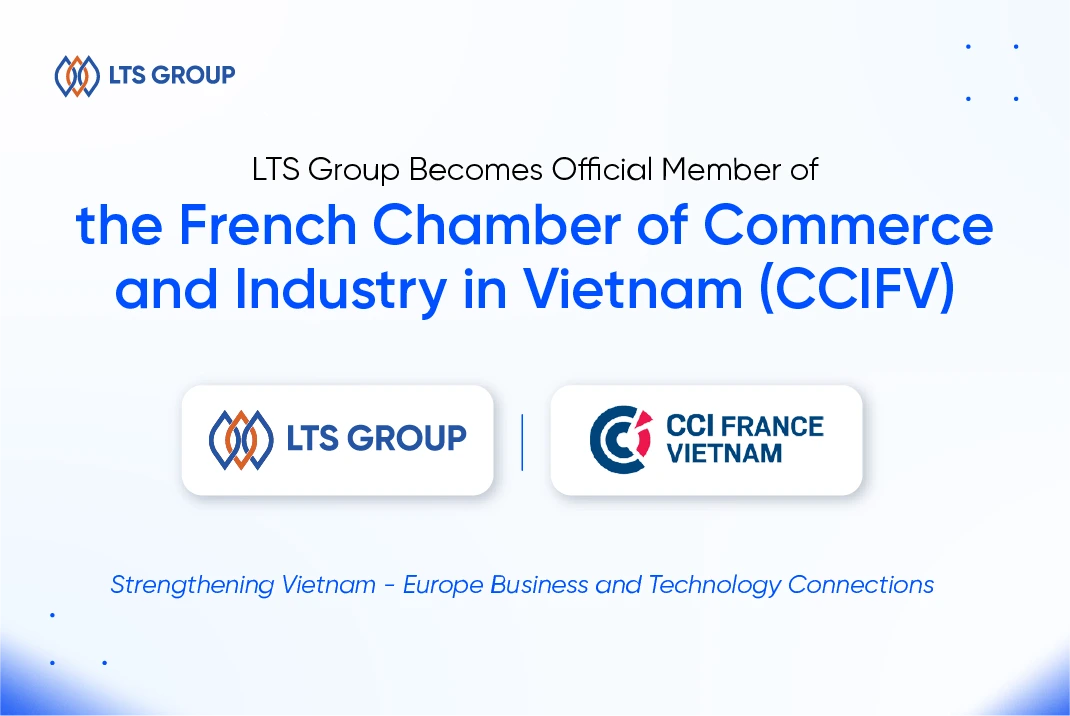
LTS Group has officially joined the French Chamber of Commerce and Industry in Vietnam (CCIFV), marking a new step in its efforts to strengthen connections with the Vietnam – Europe business community and contribute to technology cooperation between the two markets. Through its CCIFV membership, LTS Group will have opportunities to engage with French and European businesses in Vietnam, as well as industry peers, experts, and decision-makers across sectors. The company plans to take part in networking and knowledge-sharing activities while bringing practical perspectives from its work in AI, software, data, and automotive engineering. As its first engagement, LTS Group will co-host a CCIFV Breakfast Talk in Hanoi on 13 October 2026, focusing on how AI is changing the way we work. A Bridge for Vietnam – Europe Business Cooperation CCIFV supports French and European businesses in Vietnam and promotes economic cooperation between the two markets. As part of the CCI France International network, it connects businesses and chambers of commerce across markets worldwide. Its activities include business networking, Breakfast Talks, sector committees, business support services, and an online member directory that helps members build new connections. Members can also access the wider Vietnam – Europe business network, including connections with EuroCham members, and share company news and expertise through CCIFV’s media channels. From Membership to Practical Contribution Through its CCIFV membership, LTS Group aims to contribute to the community by: Sharing expertise: Bringing practical experience in AI, software, data, and automotive engineering to the CCIFV network; Hosting and speaking at events: Participating in CCIFV activities, starting with the Breakfast Talk “How AI Will Change the Way We Work” on 13th October; Connecting business needs with technology capabilities: Helping European businesses explore technology delivery opportunities in Vietnam. First Engagement: Breakfast Talk on How AI Will Change the Way We Work LTS Group’s first joint activity with CCIFV will be a Breakfast Talk exploring how AI is transforming the workplace. The discussion will cover the foundations organizations need for successful AI adoption, from data and organizational mindset to management strategies. The session will focus on three key areas: Building a strong data foundation: Establishing the groundwork needed for reliable AI initiatives; Developing an AI-native mindset: Helping teams and leaders adapt to working in an increasingly AI-driven environment; Making AI adoption work in practice: Exploring management strategies, including AI sovereignty in Europe and its implications for businesses operating in the global AI landscape. Event Details Date and time: 13 October 2026, 9:00 AM – 11:00 AM Venue: LTS Group Office, 17th Floor, MD Complex Office Building, 68 Nguyen Co Thach Street, Hanoi With hands-on experience in building and validating real-world systems, LTS Group’s specialists will also bring a practical perspective to discussions around AI-driven products, particularly the growing importance of testing, trust, and governance. Our Commitment as a Member of CCIFV For LTS Group, becoming a CCIFV member represents both an opportunity and a commitment: an opportunity to connect with a broader network of European and international organizations, and a commitment to contribute practical experience to the business community. Looking ahead, LTS Group plans to participate actively in CCIFV activities, contribute to sector committee discussions, and explore partnership opportunities with fellow members. By strengthening connections between technology companies and businesses across Vietnam and Europe, LTS Group aims to contribute to a stronger presence for Vietnamese technology companies within the European business ecosystem.
LTS Group Attends Vietnam – Korea Digital Forum 2026: Introduces Beacon for AI Agent Governance
Oct 2, 2026
-5 mins read
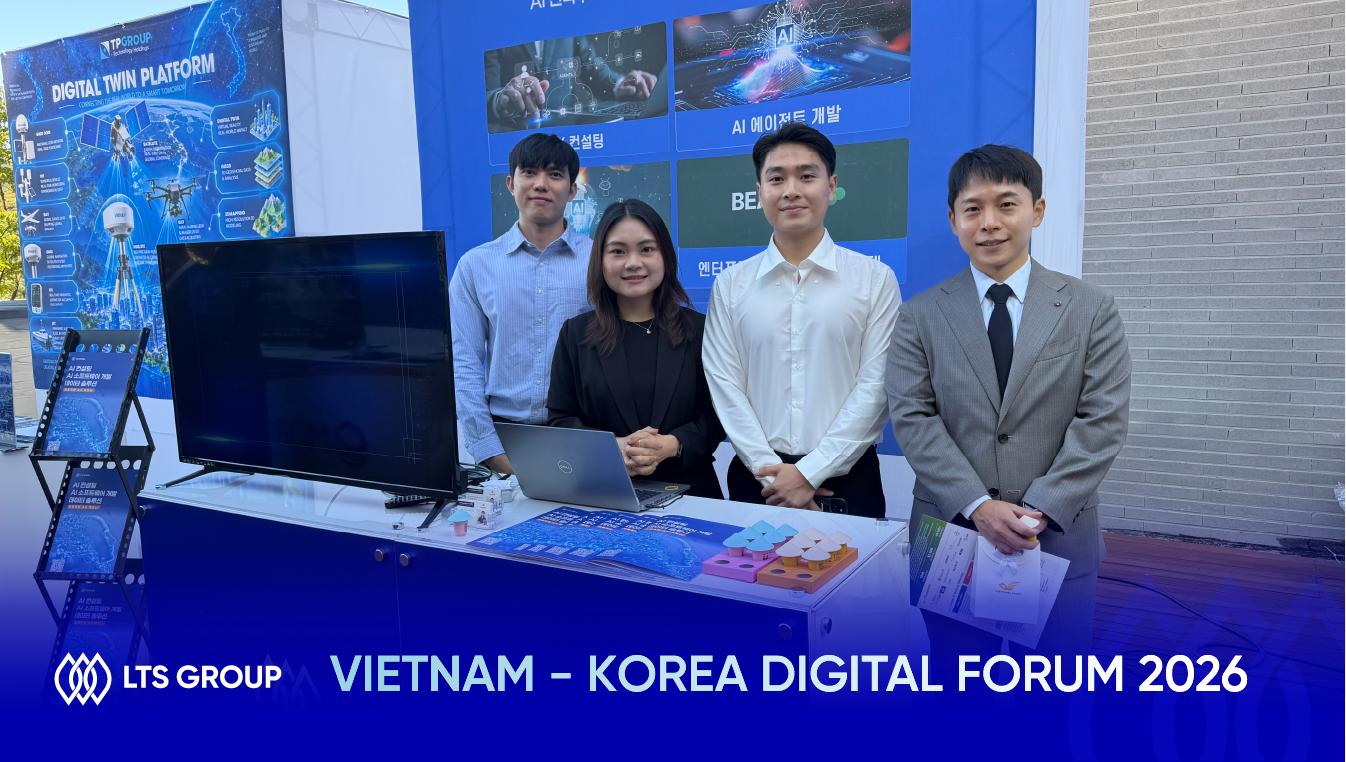
On the morning of October 1, 2026, LTS Group attended the Vietnam – Korea Digital Forum 2026 at the Embassy of Vietnam in Seoul. We introduced Beacon, a platform that helps enterprises build, run, and govern AI agents in a single system. A National-level Forum Connecting Vietnam’s and Korea’s Digital Sectors The forum brought together government agencies, industry associations, and digital technology companies from both countries. Vietnam: The Minister of Science and Technology; Mr. Nguyen Khac Lich, Director of the Department of Digital Technology and AI; the Chairman of the Vietnam Software and IT Services Association (VINASA); and digital technology companies including FPT Korea, SotaTek, and LTS Group South Korea: Leaders from the Ministry of Science and ICT (MSIT), the National IT Industry Promotion Agency (NIPA), KT, and other Korean technology companies From “Outsourcing” to “Co-creation” The forum’s message was a shift in Vietnam – Korea cooperation from outsourcing to co-creation, with AI and semiconductors as the two pillars. The keynote session covered five topics: Department of Digital Technology and AI: Co-creating a Vietnam – Korea digital ecosystem, from AI and semiconductors to the global market NIPA: Mechanisms to promote co-development and commercialization of AI and semiconductors, from R&D to market FPT Korea: Creating global value with Vietnamese tech companies, moving from “Outsourcing” to “Co-creation” KT: Next-generation AI infrastructure, with computing and cloud foundations for co-creation SotaTek: Physical AI and AI Factory for smart manufacturing A B2B matching session ran in parallel, focused on AI, semiconductors, cloud, data, software, 5G/6G, information security, and smart factory. Participants discussed finding partners, advancing R&D and PoC projects, and co-developing products. The panel discussion, “Vietnam – Korea Digital Technology Alliance,” centered on three issues: Joint R&D and technology transfer models between research institutes, universities, and businesses in both countries Training high-quality AI engineers and semiconductor design engineers PoC testing mechanisms and bringing co-developed products to the global market The forum closed with a “Make in Viet Nam” solutions showcase, where Vietnamese companies presented their technology capabilities to Korean partners. LTS Group Introduces Beacon – An Enterprise AI Platform As enterprises adopt AI faster, the question is no longer just how to use AI, but how to keep it safe and compliant. Beacon was designed to answer that question. Beacon helps enterprises build, run, and govern AI agents in one system, with compliance built in from the start. Its main capabilities: Full AI stack connectivity: Connects AWS Bedrock, Azure OpenAI, Anthropic, Google Vertex, and more with business tools such as Salesforce, Slack, GitHub, and SharePoint Real-time logging: Records every AI activity across the enterprise as it happens Shadow AI detection: Automatically detects unauthorized AI use On-demand compliance reports: Generates compliance reports whenever needed With Beacon, enterprises can roll out AI quickly while keeping strict access control and infrastructure-level risk management. At our booth, the LTS Group team demonstrated Beacon in person and talked with visitors about enterprise needs in AI governance. Key Takeaways At the forum, we connected with government agencies, associations, and tech companies from both countries and shared insights. Presenting Beacon in person also gave us a firsthand look at what Korean enterprises need in AI governance. It was a valuable opportunity to explore new collaborations and strengthen the Vietnam – Korea digital partnership. With 10 years of experience delivering IT services to global customers, LTS Group will keep developing services and solutions for the Korean market through LTS Korea. In line with the forum’s Co-creation direction, we are committed to being a trusted partner to Korean enterprises, helping them adopt AI effectively, safely, and sustainably.

Meet LTS Group at Autonomous Driving Mobility Expo (AME) 2026
Sep 28, 2026
-2 mins read
LTS Group will participate in Autonomous Driving Mobility Expo 2026 (AME 2026), Korea’s largest exhibition dedicated to autonomous driving and future mobility. The event will take place from August 25 to 27, 2026, at Hall B, COEX, Seoul. About AME 2026 AME 2026 will bring together more than 60 exhibitors across 150 booths to showcase the latest technologies and business trends in autonomous driving and future mobility. Held alongside EV Trend Korea 2026, the event will focus on the transition to software-centric vehicle architectures built around software-defined vehicles (SDVs), along with advances in ADAS and autonomous driving technologies. What LTS Group Will Showcase The automotive industry is rapidly evolving as sustainability, intelligent technologies, and service-based models reshape the market. As vehicles become increasingly software-driven, automotive software development, validation, and data labeling for ADAS and autonomous driving are becoming essential to future competitiveness. At AME 2026, LTS Group will showcase: Automotive software development and validation for SDVs; Data labeling solutions for ADAS and autonomous driving; LTS AutoTCGen, an AI-powered tool that generates ASPICE-compliant automotive software test cases (live demo). LTS Group’s CEO, Head of Automotive, Sales Director, and Delivery Manager will be on-site to introduce our solutions and discuss your automotive technology needs. Event Details Date: August 25–27, 2026 Venue: Hall B, COEX, Seoul Visit the LTS Group booth to explore our automotive software development and validation services, ADAS data labeling solutions, and LTS AutoTCGen. To arrange a meeting in advance, don’t hesitate to get in touch with us using the details below!

Email:contact@ltsgroup.tech
Phone:(+84) 96-238-7474
Headquarters:17th Fl, MD Complex Office Building, 68 Nguyen Co Thach Street, Hanoi, Vietnam
Japan:5F, Iwamoto Building, 3-20-10 Shibaura, Minato-ku, Tokyo 108-0023, Japan
US:25787 Rawley Springs Dr, Chantilly, VA 20152
South Korea:Room 1214, 12th Floor, Daerung Seocho Tower, 327 Gangnam-daero, Seocho-gu, Seoul, South Korea
Australia:1/63 Cobden Street, Kew VIC 3101, Australia