What Is Proof of Concept (PoC)? Comprehensive Writing Guide With Free Templates
Jan 24, 2024
-20 mins read

Before executing a new idea or project, large companies have a tendency to create a proof of concept (PoC) outlining the conditions required to succeed. However, developing a proof of concept template can be a challenging process with numerous steps and success standards to consider.
You can make the process easier and make sure your proof of concept template offers the best possible business value by leveraging our free download proof of concept template and comprehensive guide to creating a pixel-perfect PoC in this article. So continue reading if you’re prepared to begin working on your PoC!
What Is PoC (Proof of Concept)?
A proof of concept (PoC), also known as proof of principle, is evidence that demonstrates the viability and feasibility of a specific software project, potential product, or business idea.

A proof of concept template is a crucial step that organizations take to evaluate practicability before proceeding with the full production. It helps reduce project risk and prevent investment in a project idea or software product that doesn’t align with business goals and meets the technical requirements.
How To Write a Proof of Concept?
A well-established proof of concept template should meet the following fundamental requirements: clear objectives, defined measurements, realistic assumptions, and appropriate scope. By following the 5 essential steps outlined below, you will be able to get started and ensure a successful proof of concept template!

Step 1: Identify problems and target user
Every software product and project starts with the purpose of delivering a solution that satisfies the users’ needs. By identifying the right problems they face, businesses can iterate toward the right solution and tailor the product to address their most urgent demands.
To understand what is on their A list, true data collection, user interviews, surveys, and market research are important. By matching the solution to what the consumer wants, organizations can increase the chances of creating a product that resonates and adds value.
Step 2: Determine objectives and scope
After stating the problem the PoC aims to address, the next step is clearly defining the goals and scope of the proof of concept template. This phase will set the foundation for the entire PoC process.
This step involves the participation and agreement of the project team and related stakeholders on the outcomes and expectations of the project.
In addition, it is essential to establish a concise and achievable scope for the PoC. Create a project scope to ensure that the outcome is relevant to the problem defined in step 1.
By thoroughly defining the objective and scope, you can ensure everyone involved has a common understanding, avoiding misunderstandings, creating alignment and a clear view of the destination, and providing a road map for the next steps in the PoC development process.
Step 3: Identify necessary resources
This step involves creating a comprehensive list of both tangible and intangible resources required to complete the proof of concept template.
Tangible resources may include materials, equipment, and physical infrastructure. Meanwhile, intangible resources comprise factors like time, expertise, experience, and external outsourcing.
Through a systematic resource identification and allocation process, the project team can guarantee that they have the essential elements in place to execute the proof of concept template properly, improving the overall project planning and implementation.
Step 4: Specify success criteria
In this step, the project team works with stakeholders to identify measurable criteria vital for evaluating the proof of the concept’s success before making any conclusion about it.
These key performance indicators (KPIs) should be consistent with the project objectives specified in step two, giving a quantitative foundation for evaluation.
The integral metrics include functionality, performance, scalability, and cost-effectiveness, ensuring a thorough evaluation of the proof of concept template’s efficiency.
By defining specific and relevant criteria, the team lays the foundation for an objective and significant evaluation that will direct the project’s later stages.
Step 5: Create a PoC project timeline
After defining key metrics, the next step is establishing a clear and realistic timeline for the proof of concept.
This involves breaking down the entire PoC procedure into smaller, and more manageable tasks, to evaluate the time required for each, and create dependencies among them.
A well-established project timeline facilitates activity organization, setting realistic milestones, and guaranteeing that the project progresses in a structured manner. In addition, it enables the project team to allocate resources effectively and offer a visual representation of the project’s expected duration.
Frequent timeline reviews and updates are required to ensure that the project stays on the right track and adjusts swiftly to any unexpected challenges or required changes.

Free Proof-of-concept Templates
Whether for software development, project management, or other business uses, support your PoC process with our free sample proof of concept template available in a range of formats below.
One-page proof-of-concept template
Our proof-of-concept word template functions as a proposal, providing an overview of the project‘s who, what, why, and how. This template is suitable for documentation related to software proof-of-concept, other IT initiatives, or any idea that involves technical elements. This straightforward, one-page design enables you to modify it to suit the specifics of your work.

Download the One-page proof of concept word template
Proof-of-concept report template
The below proof of concept template for IT projects example is used to report data, including test results metrics, feedback gathered, and analysis-based recommendations. The person in charge is supposed to list the achieved results, lessons learned, and outcomes of each goal. Also, team members along with their project responsibilities are required at the top of the template.
The template includes tables to help you arrange your data and highlight important results for stakeholders. Bear in mind that whichever template you pick, you should create a proof-of-concept report that clearly outlines the next actions to be taken.

Download the proof-of-concept report template here
Proof-of-concept checklist template
This checklist proof of concept template includes sample stages to take while writing a proof of concept. Stakeholders can modify the provided steps to generate a PoC checklist that is specific to the company and project.
The template offers broad instructions for constructing a proof of concept, including problem identification, idea generation, success criterion definition, and timeline creation.
The proof of concept example can be extended to include the steps that need to be taken after a successful proof of concept like building and testing a prototype.

Download the proof-of-concept report checklist here
Why Use a Proof of Concept Template?
Proof of concept template for IT projects is a useful tool for software development projects that need to assure management support, verify feasibility, or reduce investment risk. It allows the project team and stakeholders to explore a concept’s potential and identify gaps between the vision and the deliverables.
By using a PoC template, you can systematically identify and manage important risks related to your new product or service, such as:
- Value risk: In 42% of situations, misestimating market demand is the main reason tech startups fail.
- Feasibility risk: 45% of software initiatives exceed budget while producing 56% less value.
Particularly in software app development, a proof of concept template verifies a prototype of the application before it is delivered to the end-user. Here are 6 major proof of concept template benefits:

- Viability evaluation: doing a proof of concept helps determine whether a business idea is worth pursuing. By analyzing the initial data, you can confirm that you have defined the right problem to solve and that there is demand in the market for what you have to offer. This data will be the evidence to help you make an informed decision whether to proceed with full development or not.
- Technical feasibility validation: a proof of concept template guarantees that your idea is implemented. Early problem detection allows you to make improvements before launching into full development.
- Tech-related risk elimination: Using a proof of concept allows you to fix issues before they become serious and start to go against your initial plans. It assists in locating possible bottlenecks in critical aspects of product development, such as technology usage, the solution’s scalability, performance, integrations, and more.
- Financial risk reduction: Developing a proof of concept template requires a lot less money and resources than creating a complete or full-fledged product. This allows you to evaluate the benefits and drawbacks of investing, determine reasonable spending, and project possible returns. In addition, a PoC can still save you money by preventing you from investing in a failed project.
- Business strategy refinement: You may make your business plan better if you have a firm grasp of the previously discussed points. A smoother product or MVP launch can be achieved by selecting the appropriate model, refining your product’s scope, and developing sensible requirements.
What to Avoid When Creating a PoC?
Developing a proof of concept is an essential stage in the creation of a new product, service, or concept. However, there are certain common pitfalls to avoid if you want your PoC to be successful and effective:

- Lack of clear objectives: Failing to identify clear objectives for the PoC can result in confusion and uncertainty. Laying out the specific results and expectations beforehand allows the team to stay on track and the stakeholders to assess the performance more accurately. Additionally, this clarity also lays a strong foundation for the project’s subsequent phases.
- Overambitious scope: Overpromising in a proof-of-concept can result in more work, longer development times, and greater failure rates. Rather than attempting to demonstrate the full product or solution, concentrate on proving some essential concepts or features. By avoiding an overambitious scope, the PoC remains manageable, allowing for a more realistic assessment of feasibility and effectiveness.
- Ignoring technical feasibility: Failure to analyze the technical viability of a suggested solution can lead to unreasonable expectations and project failure. Conduct a detailed technical feasibility analysis to determine that the proposed solution is feasible given the existing technology and resources.
- Neglecting stakeholder involvement: Key stakeholders’ lack of participation may cause a gap between user expectations and corporate aims. Key stakeholders should be involved in the PoC process to ensure alignment with company goals and to obtain feedback and insights. This approach encourages shared responsibility and dedication, increasing the success rate.
- Skipping user feedback: Neglecting to obtain feedback from users during the proof-of-concept stage could result in overlooking important user needs and preferences. To iteratively improve the solution based on real-world user views, actively incorporate user feedback during the proof of concept phase through prototypes and usability testing.
- Inadequate scalability considerations: When moving from a proof of concept to a full-scale implementation, failing to take scalability into account could cause difficulties. The PoC should be designed with future scalability in mind, and scalability requirements should be assessed early.
Frequently Asked Questions About Proof of Concept
1, What does PoC mean?
PoC stands for Proof of Concept, which is an experiment or demonstration intended to confirm the viability and practicality of a product, service, or idea prior to full-scale development.
2, How do you write a proof of concept document?
Use a methodical approach when creating a proof of concept document.
- Begin by identifying the issues to be addressed and specifying the target user. Establish the precise goals and scope of your concept.
- Determine the people, equipment, and technology that are required.
- Establish success criteria to assess the efficacy and results of the concept.
- Draft a project timeline that includes important checkpoints and due dates to ensure a well-organized and effective proof of concept implementation.
This methodical approach guarantees a thorough and well-structured document that clearly conveys the viability and feasibility of your suggested idea.
3, What should be included in a PoC?
A proof-of-concept (PoC) should have clear objectives, a brief problem statement, proposed solutions with essential features, a defined testing methodology, predicted outcomes, and a conclusion with recommendations for future development or improvement.
4, What is the difference between proof of concept vs. prototype vs. minimum viable product (MVP)?
The primary distinction between proof of concept, prototype, and minimum viable product is in their goal and level of development. A proof of concept tests an idea’s feasibility, a prototype illustrates the design and functionality, and a minimum viable product is a workable version with the necessary features to meet initial user needs.
Final Thoughts About Proof of Concept
In conclusion, the proof of concept template enables your team to negotiate the complex landscape of innovation. A well-structured proof of concept template serves as the foundation for successful project launch by assisting in the acquisition of top management support, proving technical feasibility, and limiting risks associated with additional investment.
We hope that our comprehensive guidelines and free proof of concept template can be a useful and effective tool for your team to approach a systematic PoC, adding significant value to your project.
If you need help getting your project off the ground or are looking for a professional software development partner to help you bring your proof of concept to life, feel free to contact LTS Group.
Website: https://ltsgroup.tech/
Tel: (+84) 96-238-7474
Linkedin: https://www.linkedin.com/company/lts-group-vietnam/
Share


Ashley Nguyen
Meet Ashley Nguyen, our dedicated Content Marketing specialist with a passion for digital transformation, AI, and software development. Ashley's words bridge the gap between complex tech concepts and everyday understanding. Her insightful pieces not only educate but also inspire readers to embrace the ever-evolving landscape of innovation. Join her in exploring the evolving landscape of technology and innovation. Contact her at ashley@ltsgroup.tech

More must-reads to keep leaders updated
LTS Group Becomes Official Member of the French Chamber of Commerce and Industry in Vietnam (CCIFV)
Oct 5, 2026
-4 mins read
LTS Group has officially joined the French Chamber of Commerce and Industry in Vietnam (CCIFV), marking a new step in its efforts to strengthen connections with the Vietnam – Europe business community and contribute to technology cooperation between the two markets. Through its CCIFV membership, LTS Group will have opportunities to engage with French and European businesses in Vietnam, as well as industry peers, experts, and decision-makers across sectors. The company plans to take part in networking and knowledge-sharing activities while bringing practical perspectives from its work in AI, software, data, and automotive engineering. As its first engagement, LTS Group will co-host a CCIFV Breakfast Talk in Hanoi on 13 October 2026, focusing on how AI is changing the way we work. A Bridge for Vietnam – Europe Business Cooperation CCIFV supports French and European businesses in Vietnam and promotes economic cooperation between the two markets. As part of the CCI France International network, it connects businesses and chambers of commerce across markets worldwide. Its activities include business networking, Breakfast Talks, sector committees, business support services, and an online member directory that helps members build new connections. Members can also access the wider Vietnam – Europe business network, including connections with EuroCham members, and share company news and expertise through CCIFV’s media channels. From Membership to Practical Contribution Through its CCIFV membership, LTS Group aims to contribute to the community by: Sharing expertise: Bringing practical experience in AI, software, data, and automotive engineering to the CCIFV network; Hosting and speaking at events: Participating in CCIFV activities, starting with the Breakfast Talk “How AI Will Change the Way We Work” on 13th October; Connecting business needs with technology capabilities: Helping European businesses explore technology delivery opportunities in Vietnam. First Engagement: Breakfast Talk on How AI Will Change the Way We Work LTS Group’s first joint activity with CCIFV will be a Breakfast Talk exploring how AI is transforming the workplace. The discussion will cover the foundations organizations need for successful AI adoption, from data and organizational mindset to management strategies. The session will focus on three key areas: Building a strong data foundation: Establishing the groundwork needed for reliable AI initiatives; Developing an AI-native mindset: Helping teams and leaders adapt to working in an increasingly AI-driven environment; Making AI adoption work in practice: Exploring management strategies, including AI sovereignty in Europe and its implications for businesses operating in the global AI landscape. Event Details Date and time: 13 October 2026, 9:00 AM – 11:00 AM Venue: LTS Group Office, 17th Floor, MD Complex Office Building, 68 Nguyen Co Thach Street, Hanoi With hands-on experience in building and validating real-world systems, LTS Group’s specialists will also bring a practical perspective to discussions around AI-driven products, particularly the growing importance of testing, trust, and governance. Our Commitment as a Member of CCIFV For LTS Group, becoming a CCIFV member represents both an opportunity and a commitment: an opportunity to connect with a broader network of European and international organizations, and a commitment to contribute practical experience to the business community. Looking ahead, LTS Group plans to participate actively in CCIFV activities, contribute to sector committee discussions, and explore partnership opportunities with fellow members. By strengthening connections between technology companies and businesses across Vietnam and Europe, LTS Group aims to contribute to a stronger presence for Vietnamese technology companies within the European business ecosystem.
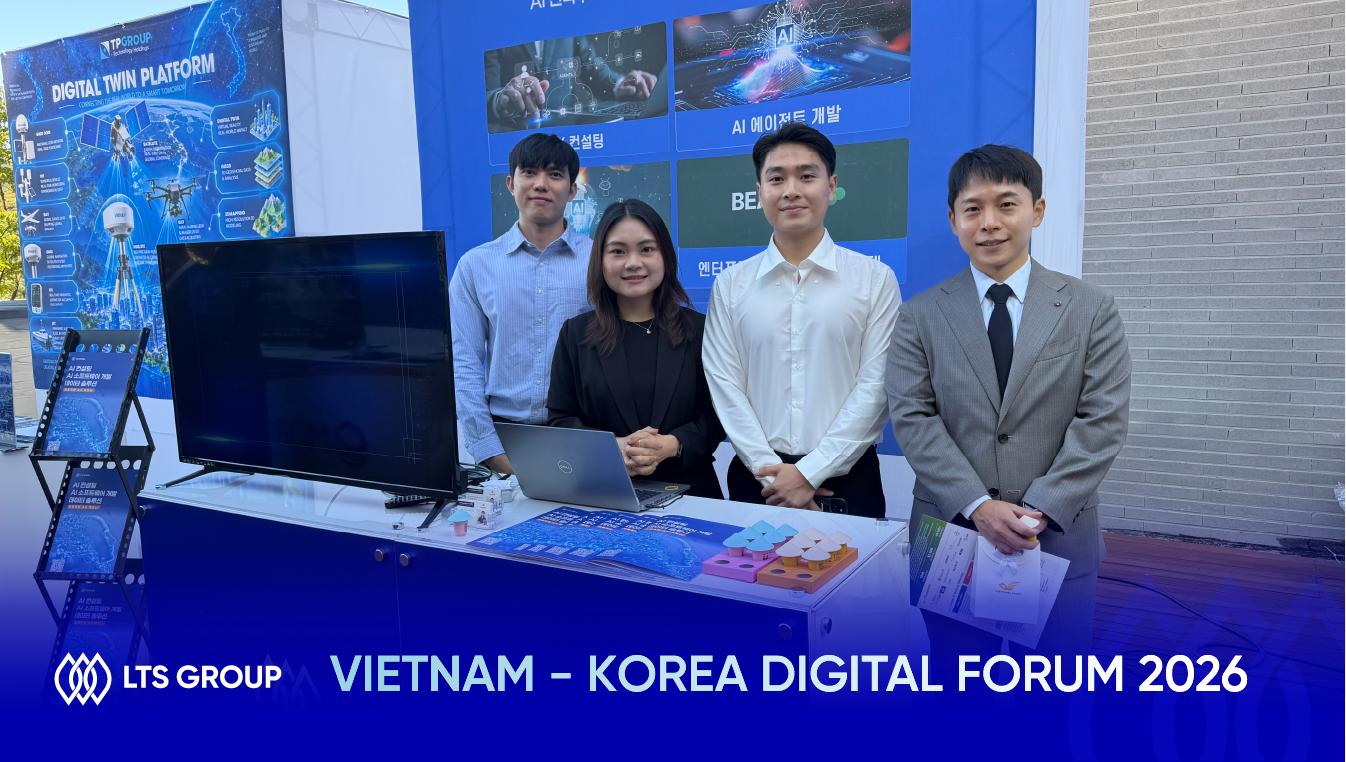
LTS Group Attends Vietnam – Korea Digital Forum 2026: Introduces Beacon for AI Agent Governance
Oct 2, 2026
-5 mins read
On the morning of October 1, 2026, LTS Group attended the Vietnam – Korea Digital Forum 2026 at the Embassy of Vietnam in Seoul. We introduced Beacon, a platform that helps enterprises build, run, and govern AI agents in a single system. A National-level Forum Connecting Vietnam’s and Korea’s Digital Sectors The forum brought together government agencies, industry associations, and digital technology companies from both countries. Vietnam: The Minister of Science and Technology; Mr. Nguyen Khac Lich, Director of the Department of Digital Technology and AI; the Chairman of the Vietnam Software and IT Services Association (VINASA); and digital technology companies including FPT Korea, SotaTek, and LTS Group South Korea: Leaders from the Ministry of Science and ICT (MSIT), the National IT Industry Promotion Agency (NIPA), KT, and other Korean technology companies From “Outsourcing” to “Co-creation” The forum’s message was a shift in Vietnam – Korea cooperation from outsourcing to co-creation, with AI and semiconductors as the two pillars. The keynote session covered five topics: Department of Digital Technology and AI: Co-creating a Vietnam – Korea digital ecosystem, from AI and semiconductors to the global market NIPA: Mechanisms to promote co-development and commercialization of AI and semiconductors, from R&D to market FPT Korea: Creating global value with Vietnamese tech companies, moving from “Outsourcing” to “Co-creation” KT: Next-generation AI infrastructure, with computing and cloud foundations for co-creation SotaTek: Physical AI and AI Factory for smart manufacturing A B2B matching session ran in parallel, focused on AI, semiconductors, cloud, data, software, 5G/6G, information security, and smart factory. Participants discussed finding partners, advancing R&D and PoC projects, and co-developing products. The panel discussion, “Vietnam – Korea Digital Technology Alliance,” centered on three issues: Joint R&D and technology transfer models between research institutes, universities, and businesses in both countries Training high-quality AI engineers and semiconductor design engineers PoC testing mechanisms and bringing co-developed products to the global market The forum closed with a “Make in Viet Nam” solutions showcase, where Vietnamese companies presented their technology capabilities to Korean partners. LTS Group Introduces Beacon – An Enterprise AI Platform As enterprises adopt AI faster, the question is no longer just how to use AI, but how to keep it safe and compliant. Beacon was designed to answer that question. Beacon helps enterprises build, run, and govern AI agents in one system, with compliance built in from the start. Its main capabilities: Full AI stack connectivity: Connects AWS Bedrock, Azure OpenAI, Anthropic, Google Vertex, and more with business tools such as Salesforce, Slack, GitHub, and SharePoint Real-time logging: Records every AI activity across the enterprise as it happens Shadow AI detection: Automatically detects unauthorized AI use On-demand compliance reports: Generates compliance reports whenever needed With Beacon, enterprises can roll out AI quickly while keeping strict access control and infrastructure-level risk management. At our booth, the LTS Group team demonstrated Beacon in person and talked with visitors about enterprise needs in AI governance. Key Takeaways At the forum, we connected with government agencies, associations, and tech companies from both countries and shared insights. Presenting Beacon in person also gave us a firsthand look at what Korean enterprises need in AI governance. It was a valuable opportunity to explore new collaborations and strengthen the Vietnam – Korea digital partnership. With 10 years of experience delivering IT services to global customers, LTS Group will keep developing services and solutions for the Korean market through LTS Korea. In line with the forum’s Co-creation direction, we are committed to being a trusted partner to Korean enterprises, helping them adopt AI effectively, safely, and sustainably.

Meet LTS Group at Autonomous Driving Mobility Expo (AME) 2026
Sep 28, 2026
-2 mins read
LTS Group will participate in Autonomous Driving Mobility Expo 2026 (AME 2026), Korea’s largest exhibition dedicated to autonomous driving and future mobility. The event will take place from August 25 to 27, 2026, at Hall B, COEX, Seoul. About AME 2026 AME 2026 will bring together more than 60 exhibitors across 150 booths to showcase the latest technologies and business trends in autonomous driving and future mobility. Held alongside EV Trend Korea 2026, the event will focus on the transition to software-centric vehicle architectures built around software-defined vehicles (SDVs), along with advances in ADAS and autonomous driving technologies. What LTS Group Will Showcase The automotive industry is rapidly evolving as sustainability, intelligent technologies, and service-based models reshape the market. As vehicles become increasingly software-driven, automotive software development, validation, and data labeling for ADAS and autonomous driving are becoming essential to future competitiveness. At AME 2026, LTS Group will showcase: Automotive software development and validation for SDVs; Data labeling solutions for ADAS and autonomous driving; LTS AutoTCGen, an AI-powered tool that generates ASPICE-compliant automotive software test cases (live demo). LTS Group’s CEO, Head of Automotive, Sales Director, and Delivery Manager will be on-site to introduce our solutions and discuss your automotive technology needs. Event Details Date: August 25–27, 2026 Venue: Hall B, COEX, Seoul Visit the LTS Group booth to explore our automotive software development and validation services, ADAS data labeling solutions, and LTS AutoTCGen. To arrange a meeting in advance, don’t hesitate to get in touch with us using the details below!



Email:contact@ltsgroup.tech
Phone:(+84) 96-238-7474
Headquarters:17th Fl, MD Complex Office Building, 68 Nguyen Co Thach Street, Hanoi, Vietnam
Japan:5F, Iwamoto Building, 3-20-10 Shibaura, Minato-ku, Tokyo 108-0023, Japan
US:25787 Rawley Springs Dr, Chantilly, VA 20152
South Korea:Room 1214, 12th Floor, Daerung Seocho Tower, 327 Gangnam-daero, Seocho-gu, Seoul, South Korea
Australia:1/63 Cobden Street, Kew VIC 3101, Australia