How Much Does a Website Redesign Cost in 2023?
Nov 6, 2023
-26 mins read

Outdated interfaces, declining search visibility, and technological stagnation – all these challenges led you to a pivotal decision: redesigning your website. Yet, the question remains—how much does it cost to redesign a website?
We genuinely recognize these challenges and acknowledge the uphill task of optimizing the cost to redesign a website. In this article, we aim to provide a roadmap through the complexities by shedding light on essential factors that impact “website redesign cost.”
From delving into various options, and analyzing their comparative costs to offering strategies on how to calculate the expenses of your website redesign, our goal is to equip you with the necessary guidance to navigate these challenges.
Let’s get cracking and explore how to ensure you make informed, cost-effective decisions that yield a competitive, high-performing website.
What Is Website Redesign?
Website redesign is the process of overhauling and updating a website’s look, feel, and functionality. Revamp website involves modifying various elements such as layout, design, content, and features to enhance user experience and achieve specific business goals. Redesigns can range from simple aesthetic improvements to comprehensive overhauls that address technical, design, and content aspects.

Components included in website redesign
- Visual design: This entails the aesthetic aspects of the website, such as color schemes, typography, imagery, and layout. It aims to create an appealing and user-friendly interface that aligns with the brand identity while enhancing user experience.
- User experience (UX) and User interface (UI) enhancement: This component focuses on improving the interaction between the user and the website, including aspects like intuitive navigation, easy accessibility, and seamless functionality, all crucial for retaining and attracting visitors.
- Functionality enhancement: Upgrading functionalities involve improving features like contact forms, search bars, social media integrations, and more, aiming to streamline user interactions and overall site performance.
- Mobile responsiveness and optimization: With an increasing number of users accessing websites via mobile devices, redesigning to ensure a responsive and mobile-friendly experience has become essential. This involves adapting the design and functionality to fit various screen sizes and platforms.
- Technical updates: Addressing technical aspects includes optimizing site speed, ensuring security, and updating the underlying technology, such as the Content Management System (CMS) or plugins, to enhance the website’s performance and stability.
- SEO and marketing alignment: Redesigning with SEO in mind involves improving the website’s visibility on search engines by implementing keywords, meta tags, and other SEO strategies. It also includes aligning the redesign with marketing goals to better promote products, services, or content.
Essential Factors that Impact the Website Redesign Cost
Understanding the critical elements that directly influence website redesign costs is crucial for assessing and planning the financial implications of revamping an online platform. And here are the essential factors that impact the website redesign cost:

Website size
The size of a website, determined by the number of pages and the volume of content, significantly influences the website redesign cost. Larger websites necessitate more extensive work, including the review and potential restructuring of numerous pages, content, and navigational elements. Moreover, a larger site often requires more time for analysis, planning, and execution, thus affecting the overall website redesign cost.
Complexity of the website
The complexity of a website is a multifaceted factor that includes the structure, architecture, and interactivity. Websites with intricate navigational paths, layered content, or elaborate back-end systems may demand more resources, time, and expertise for redesign. Understanding the existing intricacies and planning for their enhancement or simplification directly impacts the website redesign cost.
Several factors contribute to the complexity of a website redesign price, such as:
- Quantity of features and integrations.
- Diversity and quality of content.
- Responsiveness of the design.
- Marketing expenditures.
- Utilization of databases.
- Incorporation of a content management system (CMS).
Complexity of the design
Highly intricate or customized designs, requiring detailed attention to visual elements, user interface components, unique branding, and website type (whether it is a static or a dynamic website) significantly impact the website redesign cost. Custom design elements, intricate animations, and specific branding requirements may call for more specialized skills from designers and developers, thus elevating the overall website redesign cost.
Functionality
Enhancing or introducing new functionalities during a redesign directly affects the website redesign cost. Incorporating new features, such as e-commerce platforms, member logins, or complex search mechanisms, demands additional development time and resources. Moreover, optimizing and ensuring the seamless functioning of these new features contribute to the overall website redevelopment cost.
Integrations
The integration of third-party tools, APIs, or external systems into a website amplifies the complexity and, consequently, the website redesign cost. Ensuring smooth communication and compatibility between various platforms and services involves detailed planning, development, and sometimes additional licensing or subscription costs, contributing to the total website redesign cost.

How Much Does a Website Redesign Cost?
The cost of working with a web design and development company
Opting for a professional web design and development company guarantees a high level of expertise and comprehensive services. These firms typically provide a custom web design pricing package, including design, development, project management, and often ongoing support.
The website redesign cost associated with this option is generally the highest, ranging from a few thousand dollars for simpler projects to potentially tens or hundreds of thousands for more complex, custom-built websites.
The advantage lies in the quality of work, a structured approach to the project, and the assurance of a professional outcome. You’ll benefit from the experience and skill of a team, ensuring that your website aligns with industry standards and user expectations.
This option is suitable for businesses and individuals seeking a high-quality, tailored web presence and are willing to invest accordingly.

Average cost of website redesign when hiring freelancers
Hiring freelancers for a website redesign often offers a more cost-effective alternative compared to working with a company. Freelancers can provide specialized skills in areas like design, development, content creation, and more.
The website redesign pricing in this option will vary widely based on the expertise, location, and specific services offered by the freelancers. Rates might range from $25 to $200+ per hour, and you may need to hire multiple freelancers to cover various aspects of the redesign.
While this approach can potentially be more budget-friendly, it might require more project management on your end. Coordination among freelancers could be necessary to ensure a cohesive and integrated website. However, it’s important to thoroughly vet freelancers to ensure their reliability, skills, and ability to deliver on time and to the required standard.

The cost of a Do-it-yourself (DIY) website redesign
Undertaking a website redesign on your own is the most affordable website redesign option in terms of monetary expenses. However, it involves a substantial investment of your time and effort. DIY options often include using website builders, content management systems, or coding from scratch.
Recommended website builders for a DIY website redesign include Wix, Squarespace, Weebly, WordPress, GoDaddy Website Builder, Shopify (for e-commerce), and Duda.
The average website redesign cost of this option typically ranges from $500 to $2,000, considering expenses such as domain, hosting, website builder or CMS, templates, plugins, software tools, SSL certificate, and ongoing maintenance.
The DIY approach provides full control over the design and content but might not achieve the same level of professional quality as experienced designers and developers.
The trade-off is between website redesign cost savings and the potential compromise in the overall quality of the website, user experience, and functionality. It’s suitable for individuals or small businesses with limited budgets and basic website requirements but might not be ideal for more complex or high-traffic websites.

| Criteria | Web design Company | Freelancers | DIY redesign |
| How it works | Professional agency with a team of experts working on all aspects of the redesign. Typically involves a structured process, from planning to execution. | Independent contractors or small teams working remotely. They offer more flexibility and a personalized approach. | Individuals or small businesses redesign their own websites using website builders, templates, and online resources. |
| Web design price | Generally higher costs due to overheads, specialized teams, and comprehensive services. Prices can range from $5,000 to $50,000+ depending on the scope. | Moderately priced, ranging from $1,000 to $20,000 depending on the freelancer’s experience and the project’s complexity. | Lower cost, starting from as little as $0 to a few hundred dollars for domain and hosting. |
| Advantages | High-quality work, professional expertise, comprehensive services (design, development, SEO, etc.), ongoing support, and maintenance. | More personalized approach, potentially lower costs, flexibility in communication and project management. | Low cost, control over the design process, and easy access to DIY website builders, and templates. |
| Disadvantages | Higher cost, potentially longer turnaround time, less flexibility, and may require more structured communication. | Quality and reliability can vary based on the freelancer’s expertise. Limited resources and expertise compared to a full agency. | Steeper learning curve, time-consuming, may lack professional polish, and limited features, and functionalities. |
| Best situation | Best suited for larger businesses, complex projects, and those needing ongoing support and maintenance. | Ideal for small to medium-sized projects, startups, or those needing more personalized attention. | Suitable for individuals, small businesses, or those with basic website needs and a tight budget. |
In choosing the right option for a website revamp, it’s crucial to consider not only the initial website revamp cost but also the long-term implications, the quality of the end product, and its alignment with your goals and user expectations. Each approach has its trade-offs in terms of cost, quality, and time investment. Assessing these factors will help you determine the most suitable option for your specific needs and budget.
When to Redesign Your Website?
Redesigning a website is a significant decision that can have a profound impact on your online presence, user experience, website performance, conversion rates, and business goals.
If you’re questioning the value of a website revamp, here is a list of the top reasons for visitors to exit a website, based on a survey by GoodFirms:

However, the decision to redesign should be well-planned and strategic. Conduct thorough research, gather user feedback, and consider the goals you aim to achieve through the redesign. Timing is crucial; ensure that the redesign aligns with your business cycles and goals.
Several factors can indicate when it might be the right time to consider a redesign:
- Outdated design: If your website looks old-fashioned or uses outdated design trends, it might be time for a refresh. A modern, visually appealing design can enhance user engagement.
- Poor user experience: If users find it challenging to navigate your website, or if it’s not mobile-friendly, it’s crucial to redesign it for improved usability.
- Changing brand identity or goals: A shift in your brand’s identity, products, or services might necessitate a redesign to reflect these changes and maintain consistency.
- Slow loading times: Websites that load slowly can deter users. Redesigning to optimize loading times can significantly improve user experience.
- SEO optimization: If your website is not ranking well in search engines, a redesign can incorporate better SEO practices, like mobile responsiveness and content optimization.
- Compatibility issues: Older websites might not be compatible with new browsers or devices. Redesigning ensures cross-compatibility.
- Analytics and user feedback: Analyzing user behavior through data and collecting feedback can highlight areas of improvement, guiding the need for a redesign.
- Security concerns: Outdated websites are more susceptible to security breaches. A redesign can include the implementation of updated security measures.
- Technology advancements: Advancements in web technologies or design trends might make your current website seem outdated. Redesigning can leverage new features and functionalities.
- Conversion rates: If your website isn’t effectively converting visitors into customers, a redesign focused on enhancing the conversion paths might be necessary.
- Content relevance: If your content is outdated, irrelevant, or doesn’t meet your audience’s needs, a redesign that focuses on refreshing and organizing content might be beneficial.

How to Calculate the Cost of Your Website Redesign?
What is the average cost to redesign a website? Calculating the cost for website redesign involves several factors, including the scope of the project, the resources needed, and the strategies employed. Here’s a step-by-step guide on how to get cost estimates for website redesign and optimize strategies:

Define the scope of the redesign
Defining the redesign scope involves articulating the specific goals, objectives, and improvements expected from the website overhaul. This step is crucial in understanding what aspects of the site need modification or enhancement. By outlining the redesign’s scope, you set the foundation for cost estimation and resource allocation, ensuring a clear direction for the project.
Assess your current website
A comprehensive evaluation of the current website is imperative. This step includes analyzing its performance metrics, user engagement data, and functionality. It helps identify areas that are underperforming or need improvement. Understanding the existing site’s strengths and weaknesses is fundamental for determining where the focus and investment should be directed in the redesign process.
Create a budget plan
Developing a budget plan involves allocating resources for different aspects of the redesign, such as design, development, content creation, marketing, and maintenance. It’s the groundwork for cost estimation and ensures that the financial resources required for the redesign are accounted for and appropriately allocated.
Research and gather quotes
Seeking quotes from various web development agencies or freelancers is essential. This step involves researching multiple service providers, assessing their expertise, evaluating their suitability for the project, and aligning their quotes with the predetermined budget. It helps in choosing the right professionals or agencies within the budget constraints.
Optimize strategies to control costs
Website design cost optimization strategies in a website redesign involve a range of specific tactics and strategies to effectively manage expenses. These strategies are critical for maintaining the project within the established budget. Here’s a more detailed and specific breakdown of cost optimization strategies:
- Prioritize essential features: Identify and prioritize the most critical functionalities and design elements needed for the website. By focusing on these key features, you can allocate resources where they’re most impactful and avoid unnecessary expenses on less crucial aspects.
- Reuse existing content: Repurposing and updating current content where applicable helps in cost reduction. By leveraging content already available, it can save on content creation expenses and time.
- Utilize in-house resources: Utilize the skills and expertise available within the organization. Leveraging internal capabilities can significantly reduce costs, especially for tasks like content creation, graphic design, or basic development tasks.
- Explore open-source solutions: Consider using open-source platforms, tools, or software for certain aspects of the redesign. Open-source solutions can be cost-effective alternatives to proprietary software or services, reducing licensing or development expenses.
- Streamline development processes: Optimize workflows and streamline development processes to minimize time and resource wastage. This can involve efficient task management, regular progress checks, and avoiding unnecessary revisions.
- Minimize unforeseen expenses: Anticipate and plan for unforeseen costs by building a contingency within the budget. This safety net can help cover unexpected expenses that might arise during the redesign process.
Plan for future scalability
While focusing on immediate redesign costs, it’s crucial to design the website with future growth in mind. This involves ensuring that the redesign can accommodate potential future changes without incurring significant additional expenses, making it a more sustainable and cost-effective investment in the long run.
Review and negotiate the contract
Reviewing and negotiating contracts with chosen professionals or agencies is essential to avoid unexpected expenses. This step involves careful scrutiny of agreements to ensure they align with the predetermined budget and project scope, thus preventing scope creep or additional costs.

Frequently Asked Questions about Website Redesign Cost
What factors influence website redesign costs?
The website redesign cost is influenced by several factors including the complexity of design, the number of pages, desired features, integrations such as e-commerce or CRM systems, content creation or migration, SEO considerations, and improvements in mobile responsiveness and user experience (UX/UI).
How much does it cost to make a website?
The website redesign cost can vary significantly. For a basic redesign, it might range from a few thousand dollars, while more complex projects could cost between $10,000 to $50,000 or even higher. Large-scale or intricate projects for big businesses might exceed $100,000.
Has the cost of website redesign increased?
Certainly. The increase in website redesign costs is primarily attributed to the recognition by businesses of their website’s crucial role within their overall inbound marketing strategy. This growing acknowledgment is positive; however, it also signifies an upsurge in the demand for website redesign services. Consequently, the fundamental economic principle of supply and demand comes into play: As the demand for these services rises, the price naturally follows suit.
How long does a website redesign take?
The duration of a website redesign process can vary significantly depending on several factors. A simple redesign might take a few weeks, whereas a more complex project with multiple pages, advanced features, or extensive content migration could extend the timeline to several months. The specific requirements, the responsiveness of all involved parties (client and design team), the scope of the project, and any unexpected challenges during the process can all influence the overall time taken for a website redesign. Understanding these variables is essential in estimating the timeframe for a particular project.
Final Thoughts About Website Redesign Cost
Understanding the intricacies of website redesign cost involves more than just numbers; it demands a holistic approach that considers various elements, including design, development, user experience, and the ever-evolving technological landscape.
As technology continues to advance, a website must adapt to remain relevant and competitive in the digital space. Thus, the website redesign cost shouldn’t be perceived as a mere expense but as a strategic investment to stay ahead in a dynamic market.
In this article, we’ve explored the intricacies of website redesign, shedding light on the essential factors that impact expenses, ranging from design and development to the intricacies of timing and cost calculation. As you navigate the complexities of website redesign, consider this guide as your compass, providing insights and strategies to empower you in this transformative journey.
As a prominent web design and development company, LTS Group can assist you with your website redesign needs. Our skilled team of designers and developers collaborates closely with you to grasp your objectives, crafting a website tailored precisely to your needs.
Our pricing packages for website redesigns are designed to be cost-effective, with rates contingent on the project’s complexity, from simple refreshes to complete transformations with custom designs.
Furthermore, drawing from our background as a software testing company, we house a team of quality assurance (QA) experts dedicated to safeguarding your website’s quality. Our team is adept at averting all issues, errors, and cybersecurity threats through our wide-ranging web testing solutions.
Contact us today to discuss your website redesign needs and witness the power of our expertise firsthand. Your digital success story begins with LTS Group – get in touch now!
Share


Ashley Nguyen
Meet Ashley Nguyen, our dedicated Content Marketing specialist with a passion for digital transformation, AI, and software development. Ashley's words bridge the gap between complex tech concepts and everyday understanding. Her insightful pieces not only educate but also inspire readers to embrace the ever-evolving landscape of innovation. Join her in exploring the evolving landscape of technology and innovation. Contact her at ashley@ltsgroup.tech

More must-reads to keep leaders updated

LTS Group Becomes Official Member of the French Chamber of Commerce and Industry in Vietnam (CCIFV)
Oct 5, 2026
-4 mins read
LTS Group has officially joined the French Chamber of Commerce and Industry in Vietnam (CCIFV), marking a new step in its efforts to strengthen connections with the Vietnam – Europe business community and contribute to technology cooperation between the two markets. Through its CCIFV membership, LTS Group will have opportunities to engage with French and European businesses in Vietnam, as well as industry peers, experts, and decision-makers across sectors. The company plans to take part in networking and knowledge-sharing activities while bringing practical perspectives from its work in AI, software, data, and automotive engineering. As its first engagement, LTS Group will co-host a CCIFV Breakfast Talk in Hanoi on 13 October 2026, focusing on how AI is changing the way we work. A Bridge for Vietnam – Europe Business Cooperation CCIFV supports French and European businesses in Vietnam and promotes economic cooperation between the two markets. As part of the CCI France International network, it connects businesses and chambers of commerce across markets worldwide. Its activities include business networking, Breakfast Talks, sector committees, business support services, and an online member directory that helps members build new connections. Members can also access the wider Vietnam – Europe business network, including connections with EuroCham members, and share company news and expertise through CCIFV’s media channels. From Membership to Practical Contribution Through its CCIFV membership, LTS Group aims to contribute to the community by: Sharing expertise: Bringing practical experience in AI, software, data, and automotive engineering to the CCIFV network; Hosting and speaking at events: Participating in CCIFV activities, starting with the Breakfast Talk “How AI Will Change the Way We Work” on 13th October; Connecting business needs with technology capabilities: Helping European businesses explore technology delivery opportunities in Vietnam. First Engagement: Breakfast Talk on How AI Will Change the Way We Work LTS Group’s first joint activity with CCIFV will be a Breakfast Talk exploring how AI is transforming the workplace. The discussion will cover the foundations organizations need for successful AI adoption, from data and organizational mindset to management strategies. The session will focus on three key areas: Building a strong data foundation: Establishing the groundwork needed for reliable AI initiatives; Developing an AI-native mindset: Helping teams and leaders adapt to working in an increasingly AI-driven environment; Making AI adoption work in practice: Exploring management strategies, including AI sovereignty in Europe and its implications for businesses operating in the global AI landscape. Event Details Date and time: 13 October 2026, 9:00 AM – 11:00 AM Venue: LTS Group Office, 17th Floor, MD Complex Office Building, 68 Nguyen Co Thach Street, Hanoi With hands-on experience in building and validating real-world systems, LTS Group’s specialists will also bring a practical perspective to discussions around AI-driven products, particularly the growing importance of testing, trust, and governance. Our Commitment as a Member of CCIFV For LTS Group, becoming a CCIFV member represents both an opportunity and a commitment: an opportunity to connect with a broader network of European and international organizations, and a commitment to contribute practical experience to the business community. Looking ahead, LTS Group plans to participate actively in CCIFV activities, contribute to sector committee discussions, and explore partnership opportunities with fellow members. By strengthening connections between technology companies and businesses across Vietnam and Europe, LTS Group aims to contribute to a stronger presence for Vietnamese technology companies within the European business ecosystem.
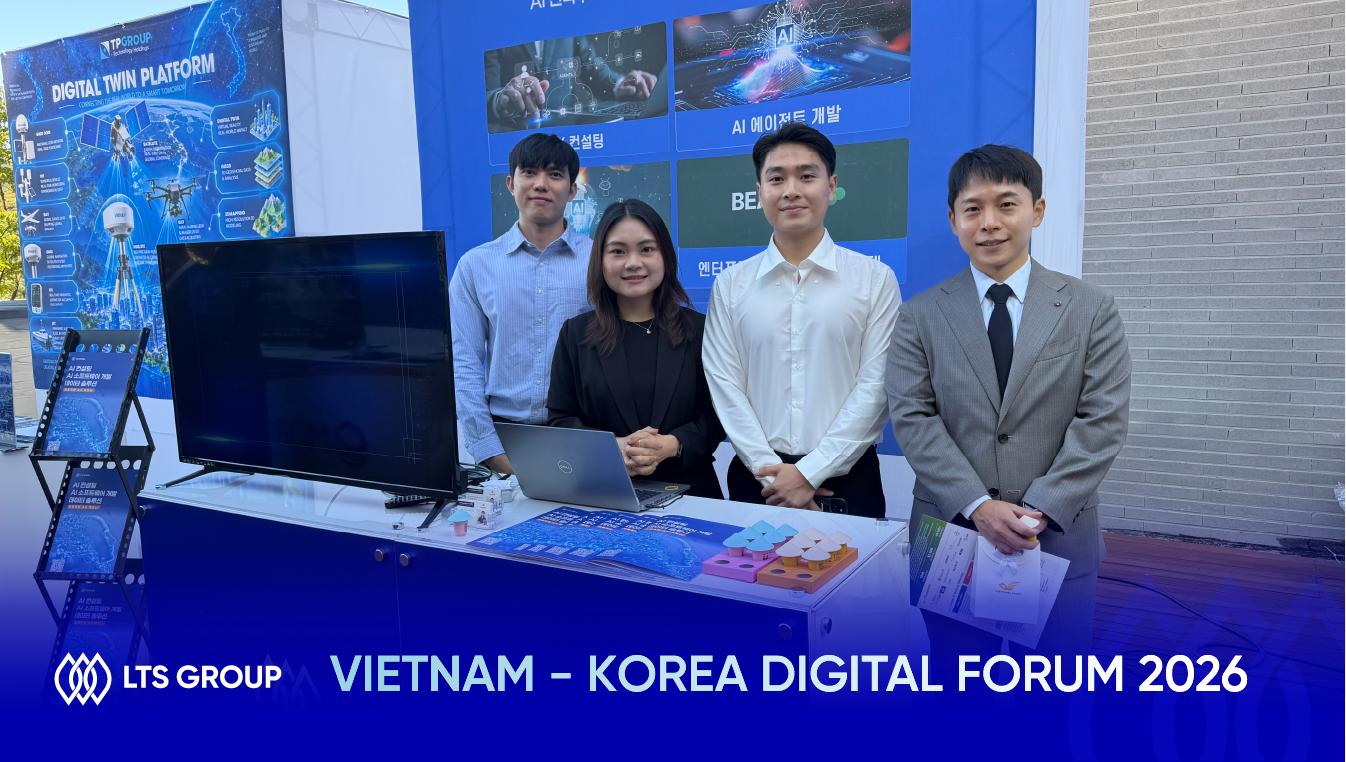
LTS Group Attends Vietnam – Korea Digital Forum 2026: Introduces Beacon for AI Agent Governance
Oct 2, 2026
-5 mins read
On the morning of October 1, 2026, LTS Group attended the Vietnam – Korea Digital Forum 2026 at the Embassy of Vietnam in Seoul. We introduced Beacon, a platform that helps enterprises build, run, and govern AI agents in a single system. A National-level Forum Connecting Vietnam’s and Korea’s Digital Sectors The forum brought together government agencies, industry associations, and digital technology companies from both countries. Vietnam: The Minister of Science and Technology; Mr. Nguyen Khac Lich, Director of the Department of Digital Technology and AI; the Chairman of the Vietnam Software and IT Services Association (VINASA); and digital technology companies including FPT Korea, SotaTek, and LTS Group South Korea: Leaders from the Ministry of Science and ICT (MSIT), the National IT Industry Promotion Agency (NIPA), KT, and other Korean technology companies From “Outsourcing” to “Co-creation” The forum’s message was a shift in Vietnam – Korea cooperation from outsourcing to co-creation, with AI and semiconductors as the two pillars. The keynote session covered five topics: Department of Digital Technology and AI: Co-creating a Vietnam – Korea digital ecosystem, from AI and semiconductors to the global market NIPA: Mechanisms to promote co-development and commercialization of AI and semiconductors, from R&D to market FPT Korea: Creating global value with Vietnamese tech companies, moving from “Outsourcing” to “Co-creation” KT: Next-generation AI infrastructure, with computing and cloud foundations for co-creation SotaTek: Physical AI and AI Factory for smart manufacturing A B2B matching session ran in parallel, focused on AI, semiconductors, cloud, data, software, 5G/6G, information security, and smart factory. Participants discussed finding partners, advancing R&D and PoC projects, and co-developing products. The panel discussion, “Vietnam – Korea Digital Technology Alliance,” centered on three issues: Joint R&D and technology transfer models between research institutes, universities, and businesses in both countries Training high-quality AI engineers and semiconductor design engineers PoC testing mechanisms and bringing co-developed products to the global market The forum closed with a “Make in Viet Nam” solutions showcase, where Vietnamese companies presented their technology capabilities to Korean partners. LTS Group Introduces Beacon – An Enterprise AI Platform As enterprises adopt AI faster, the question is no longer just how to use AI, but how to keep it safe and compliant. Beacon was designed to answer that question. Beacon helps enterprises build, run, and govern AI agents in one system, with compliance built in from the start. Its main capabilities: Full AI stack connectivity: Connects AWS Bedrock, Azure OpenAI, Anthropic, Google Vertex, and more with business tools such as Salesforce, Slack, GitHub, and SharePoint Real-time logging: Records every AI activity across the enterprise as it happens Shadow AI detection: Automatically detects unauthorized AI use On-demand compliance reports: Generates compliance reports whenever needed With Beacon, enterprises can roll out AI quickly while keeping strict access control and infrastructure-level risk management. At our booth, the LTS Group team demonstrated Beacon in person and talked with visitors about enterprise needs in AI governance. Key Takeaways At the forum, we connected with government agencies, associations, and tech companies from both countries and shared insights. Presenting Beacon in person also gave us a firsthand look at what Korean enterprises need in AI governance. It was a valuable opportunity to explore new collaborations and strengthen the Vietnam – Korea digital partnership. With 10 years of experience delivering IT services to global customers, LTS Group will keep developing services and solutions for the Korean market through LTS Korea. In line with the forum’s Co-creation direction, we are committed to being a trusted partner to Korean enterprises, helping them adopt AI effectively, safely, and sustainably.

Meet LTS Group at Autonomous Driving Mobility Expo (AME) 2026
Sep 28, 2026
-2 mins read
LTS Group will participate in Autonomous Driving Mobility Expo 2026 (AME 2026), Korea’s largest exhibition dedicated to autonomous driving and future mobility. The event will take place from August 25 to 27, 2026, at Hall B, COEX, Seoul. About AME 2026 AME 2026 will bring together more than 60 exhibitors across 150 booths to showcase the latest technologies and business trends in autonomous driving and future mobility. Held alongside EV Trend Korea 2026, the event will focus on the transition to software-centric vehicle architectures built around software-defined vehicles (SDVs), along with advances in ADAS and autonomous driving technologies. What LTS Group Will Showcase The automotive industry is rapidly evolving as sustainability, intelligent technologies, and service-based models reshape the market. As vehicles become increasingly software-driven, automotive software development, validation, and data labeling for ADAS and autonomous driving are becoming essential to future competitiveness. At AME 2026, LTS Group will showcase: Automotive software development and validation for SDVs; Data labeling solutions for ADAS and autonomous driving; LTS AutoTCGen, an AI-powered tool that generates ASPICE-compliant automotive software test cases (live demo). LTS Group’s CEO, Head of Automotive, Sales Director, and Delivery Manager will be on-site to introduce our solutions and discuss your automotive technology needs. Event Details Date: August 25–27, 2026 Venue: Hall B, COEX, Seoul Visit the LTS Group booth to explore our automotive software development and validation services, ADAS data labeling solutions, and LTS AutoTCGen. To arrange a meeting in advance, don’t hesitate to get in touch with us using the details below!



Email:contact@ltsgroup.tech
Phone:(+84) 96-238-7474
Headquarters:17th Fl, MD Complex Office Building, 68 Nguyen Co Thach Street, Hanoi, Vietnam
Japan:5F, Iwamoto Building, 3-20-10 Shibaura, Minato-ku, Tokyo 108-0023, Japan
US:25787 Rawley Springs Dr, Chantilly, VA 20152
South Korea:Room 1214, 12th Floor, Daerung Seocho Tower, 327 Gangnam-daero, Seocho-gu, Seoul, South Korea
Australia:1/63 Cobden Street, Kew VIC 3101, Australia