Static vs Dynamic Website: The Key Differences and Which To Use
Oct 17, 2023
-24 mins read

When it comes to creating a new website, one of the first decisions for web designers is choosing between static vs dynamic website.
To make an informed decision, it’s essential to grasp the basic difference between these two approaches. In web design, static vs dynamic websites are distinguished by how they present content. A static website delivers the same content to all visitors, whereas a dynamic website can customize content for each individual user.
To help you understand the difference between static website and dynamic website, we will delve into static vs dynamic website meaning, explore the advantages and disadvantages of each, and lastly, provide some well-known static vs dynamic website examples to illustrate their capabilities.
Static vs Dynamic Website: Definition, Pros and Cons, When To Use?
|
Aspect |
Static websites |
Dynamic websites |
|
Definition | A fundamental web architecture where the web pages are delivered to the user exactly as they are stored, with no content changes in real-time. This results in a simpler, more straightforward setup. | Dynamic websites are characterized by their ability to generate content in real-time. They rely on back-end technologies, databases, and scripting languages to create a dynamic and interactive user experience. |
|
Advantages |
|
|
|
Disadvantages |
|
|
|
Examples | Personal blogs, business websites, landing pages | E-commerce sites, social media platforms, news portals, eLearning |

What is a Static Website?
Static websites are a fundamental web architecture where the web pages are delivered to the user exactly as they are stored, with no content changes in real time. This results in a simpler, more straightforward setup.
Advantages of static websites
Speed and performance
Static websites are like a speedy train. Since the content is already prepared and doesn’t change on the fly, they load quickly. It’s as if the train’s path is clear and there are no stops, so passengers can reach their destination faster. This speed provides a smooth experience for your website’s visitors, keeping them happy and engaged.
Security
Security is a top priority for any website, and static websites have a solid advantage here. They are like a fortress with a single entrance. Because there’s no dynamic content or databases to manage, there are fewer entry points for cyber attackers. This means that the website is less vulnerable to security breaches, making it an excellent choice for those concerned about online safety.
Cost-effectiveness
Static websites are like a budget-friendly option. They don’t require complex databases or content management systems (CMS), which means fewer maintenance costs and less time spent on development. Smaller businesses or projects with limited budgets can benefit from the simplicity and cost-effectiveness of static websites.
Disadvantages of static websites
Limited interactivity
Static websites are like a one-way street. They are not designed for real-time interactions or user engagement. This means they can’t respond to user input or display personalized content based on a user’s actions. If your project involves features like user comments or dynamic content, a static website may not be the right tool for the job.
Maintenance challenges
Maintaining a static website is like caring for a classic car. When you need to update content, you must manually edit the HTML files. It’s like having to tinker with the engine to make changes. This can be time-consuming and might require technical expertise. For large websites with frequent content updates, the manual editing process can become cumbersome.
So, in a nutshell, static websites offer great speed and security, making them a cost-effective choice for projects with limited interactivity needs and a focus on performance. However, they might not be the best fit for projects that require real-time interactivity and frequent content updates. It’s essential to consider your project’s specific requirements when deciding between a static or dynamic website.
Examples of static websites
Here are some significant examples of static websites:
- Personal blogs: Many personal blogs and websites, such as John’s Travel Blog or Jane’s Photography Portfolio, use static website architecture. These websites offer information, photos, and articles but don’t have dynamic features like user comments or real-time updates.
- Business websites: Small businesses, like a local bakery or a boutique clothing store, often choose static websites for their online presence. These websites provide essential information about the business, such as location, hours of operation, and contact details, but do not require dynamic features.
- Landing pages: Landing pages used in marketing campaigns are often static. They serve as focused entry points for specific offers or promotions and provide a clear call to action, such as signing up for a newsletter or downloading a resource.
What is a Dynamic Website?
Dynamic websites, on the other hand, are characterized by their ability to generate content in real time. They rely on back-end technologies, databases, and scripting languages to create a dynamic and interactive user experience.
Advantages of dynamic websites
Interactivity and user engagement
Dynamic websites are like a bustling city square. They offer real-time interactions, enabling features such as user comments, dynamic forms, and personalized content. It’s like a two-way conversation with your audience, fostering user engagement and creating a more immersive online experience.
Content management systems (CMS)
Managing content is easy with dynamic websites. They are like a user-friendly toolbox. CMS platforms such as WordPress and Drupal allow you to update, add, or remove content without the need for coding skills. This simplifies content management and makes it accessible to a broader range of users.
Scalability
Dynamic websites are like expandable buildings. They can grow with your project. If your business or project expands and needs more features or content, dynamic architecture can adapt to these changes seamlessly. It’s like adding new floors to a building when you need more space.
Disadvantages of dynamic websites
Slower load times
Dynamic websites can be like a bustling city with traffic jams. Because they generate content on the server side, it can take longer to load compared to static websites. This can impact user experience, as slow-loading pages can frustrate visitors and affect SEO rankings.
Security concerns
Dynamic websites, like multi-story buildings, have more entry points. They can be more complex and, as a result, have potential security vulnerabilities. For instance, issues like SQL injection or cross-site scripting can be like unlocked doors for cyber attackers. Therefore, dynamic websites require more robust security measures to protect against these vulnerabilities.
In summary, dynamic websites excel in user engagement, content management, and scalability, making them an excellent choice for projects that require real-time interactions, frequent content updates, and complex functionalities. However, they may experience slower load times and require extra attention to security due to their complexity. It’s crucial to weigh these advantages and disadvantages against your project’s specific requirements when deciding between a static vs dynamic website.
Examples of dynamic websites
Here are some significant examples of dynamic websites:
- E-commerce platforms: Online stores like Amazon and eBay are excellent examples of dynamic websites. They provide real-time product listings, shopping carts, and user accounts for a personalized shopping experience.
- Social media networks: Platforms like Facebook, Twitter, and Instagram are dynamic websites. They offer real-time content updates, user interactions, and personalized feeds.
- News portals: Websites like CNN, and The New York Times are dynamic. They constantly update their content with news articles, comments, and user-generated content.
- eLearning: Platforms like Khan Academy and Coursera epitomize the advantages of dynamic web content. By adapting the learning experience to individual user progress and preferences, they provide an interactive and personalized educational journey.

Main Difference Between Static vs Dynamic Website
Here’s a table highlighting some key differences between static vs dynamic website:
|
Aspect | Static Website |
Dynamic Website |
|
Content Generation | Pre-generated content that doesn’t change | Content is generated on the fly, often from a database or other data source |
|
Technology Stack | Usually HTML, CSS, JavaScript | Can include server-side technologies like PHP, Ruby, Python, Node.js, and databases |
|
Page Loading Speed | Generally faster, as content is pre-rendered | Can be slower due to database queries and server processing |
|
Customization | Limited customization and interactivity | High degree of customization and interactivity |
|
Maintenance | Easier to maintain, as there are fewer moving parts | More complex and potentially more maintenance required |
|
Database Integration | Typically no database integration | Often relies on databases to store and retrieve data |
|
Scalability | Less flexible in handling large-scale websites | More suitable for handling large and complex websites |
|
Security | Generally considered more secure | Requires robust security measures due to potential vulnerabilities |
|
Cost | Lower initial development and hosting costs | Potentially higher initial and ongoing costs due to server resources |
Technical architecture: Server-Side Rendering vs. Client-Side Rendering
Static websites are primarily rendered on the client side, which means that the web browser loads the pre-built HTML, CSS, and JavaScript. Dynamic websites, in contrast, render on the server side, generating HTML dynamically before sending it to the client.
Content Management
1. Content Updates
Static websites require manual updates to HTML files, while dynamic websites use content management systems (CMS) for easy content updates.
2. Database Integration
Dynamic websites are database-driven, allowing for real-time retrieval and updating of information. Static websites do not have this capability.
User Experience
Static websites load faster and are less interactive, while dynamic websites provide real-time interactivity, enhancing the user experience.
Personalization
Dynamic websites can offer personalized content based on user preferences and behaviors, creating a more tailored experience.
Security Considerations: Vulnerabilities and Mitigations
Static websites are inherently more secure due to their simplicity, while dynamic websites require robust security measures to protect against potential vulnerabilities.

Static vs. Dynamic Websites: How to Choose?
Choosing between dynamic vs static websites is a pivotal decision in your web development journey, and it requires a thorough understanding of your project’s specific needs and objectives. To assist you in making this crucial choice for your digital success, here are the essential steps that will guide you.

Consideration factors
The first step is to consider your project goals, content frequency, and scalability needs.
Project goals
Your first consideration should be your project’s objectives. What is the primary purpose of your website? If you’re looking to create a simple, informative online presence, a static website may suffice. In contrast, if your project involves complex interactivity, user engagement, and personalized experiences, a dynamic website is likely the better choice. Be sure to align your architecture with your project’s ultimate goals.
Content frequency
Assess how often you’ll need to update your website’s content. Static websites are well-suited for projects with infrequent content changes. For instance, a static site is ideal for a small business’s online brochure that doesn’t require regular updates. Dynamic websites, on the other hand, are designed for continuous content management. If your project involves daily or even hourly content updates, such as a news portal, dynamic architecture is the way to go.
Scalability needs
Consider your scalability requirements. If you expect to expand your website’s features or content over time, dynamic architecture can adapt seamlessly to these changes. This makes dynamic websites the right choice for businesses with aspirations of growth. On the other hand, if your project is unlikely to undergo significant expansion, a static website could be the more efficient choice.
Decision-making process: static vs dynamic website
Evaluating your requirements
Take a close look at your project’s specific requirements. This step is where you dig into the details. Assess the need for real-time interactivity, content personalization, and data processing. If these factors are integral to your project, the dynamic architecture is the logical choice. In cases where simplicity, speed, and security are paramount, a static website might better align with your needs.
Static vs dynamic website’s pros and cons assessment
Evaluate the advantages and disadvantages of static vs dynamic website against your project’s requirements. Static websites offer superior speed and security but may lack the real-time capabilities and interactivity of dynamic websites. Dynamic websites excel in content management and user engagement but may require more robust security measures and have slower load times. Weigh these factors carefully in the context of your project to consider between static vs dynamic website.
Static vs dynamic website’s case studies
Learn from real-world examples within your industry. Case studies of similar projects can provide invaluable insights into which architecture, static vs dynamic website, yielded better results. By examining the experiences of others, you can gain a deeper understanding of how static vs dynamic website have performed in practical scenarios.
Expert recommendations for different scenarios
When to opt for static websites
In some scenarios, a static website is the superior choice. Consider a static architecture when you have a project with limited interactivity needs, minimal content updates, and budget constraints. Static websites offer speed and simplicity, making them an excellent option for smaller businesses or projects with straightforward requirements.
When to choose dynamic websites
On the other hand, dynamic websites are the go-to solution for projects requiring interactivity, real-time content updates, complex functionalities, and long-term scalability. They are especially suitable for e-commerce platforms, interactive web applications, and content-heavy websites. Dynamic websites offer the flexibility and power needed for such projects.
Tools and technologies
Selecting the right tools and technologies is essential in implementing your chosen architecture effectively. For dynamic websites, popular choices include content management systems (CMS) like WordPress, Drupal, and Magento. For static websites, consider static site generators such as Jekyll and Hugo. These tools align with the architecture’s nature and help you make the most of your chosen approach.
In summary, the decision between static vs dynamic website isn’t arbitrary; it’s a strategic choice that should align with your project’s unique goals, requirements, and scalability needs. By following these steps, carefully evaluating your project, and considering real-world examples, you can confidently determine the best website architecture to ensure your digital success.

Effective Static vs Dynamic Website Development With LTS Group
Crafting an effective website, be it static or dynamic, demands meticulous planning and skillful execution.
At LTS Group, our team of seasoned experts is dedicated to guiding you through the intricacies of web architecture and helping you select the optimal approach for your project. Our tailored solutions are thoughtfully tailored to your unique objectives and project requisites, guaranteeing that your website not only fulfills your immediate needs but is also well-prepared for future expansion.
When it comes to web application development, LTS Group excels in fashioning bespoke solutions that cater to your specific demands, whether it’s for a static or dynamic website. Our team of proficient engineers, armed with extensive knowledge across diverse domains, assures our capability to tackle any project. Whether you’re in pursuit of a swift, responsive, and scalable website or a dynamic platform with real-time interactivity, our proficiency and hands-on experience make us the ideal choice.
We harness a robust technology stack to engineer fast, responsive, and scalable web applications that offer a seamless user experience across various platforms and operating systems.

With unwavering dedication to both front-end and back-end development, we craft web applications that not only meet industry standards but also surpass your expectations. Our UI/UX design experts guarantee that your website is not just visually appealing but also provides a gratifying user experience.
Quality is the cornerstone of our development process. Every website we construct undergoes rigorous testing to ensure flawless performance and security, regardless of its complexity. Your web project is in capable hands with LTS Group, where personalized solutions merge with the expertise of our seasoned engineers, transforming your digital vision into reality. Your success is our primary mission, and we’re committed to partnering with you to achieve your digital objectives, be it for a static or dynamic website.
With over seven years of experience, LTS Group has hands-on expertise in developing both static and dynamic websites for a multitude of industries, including E-commerce, ERP, Automotive, Insurance, Healthcare, Education, F&B, Banking, Games, and more. Our diverse portfolio showcases our expertise, and you can explore our successful projects.

Frequently Asked Questions about Static vs Dynamic Website
What is static website and dynamic website?
Before exploring the static and dynamic website difference, you have to understand the static vs dynamic website definition first. A static website is one where web pages are delivered exactly as they are stored, with no real-time content changes. In contrast, a dynamic website generates content in real time, typically using databases and scripting languages to provide interactivity and personalized experiences.
What is the difference between static and dynamic website?
The main static vs dynamic website difference lies in how content is delivered. Static websites pre-generate content and serve it as-is, whereas dynamic websites generate content on the fly, allowing for real-time interactivity, content updates, and personalization. Static sites are faster and more secure, but lack real-time features, while dynamic sites are more versatile but may be slower and require more security measures.
How do I decide whether to use a static vs dynamic website for my project?
Choosing between static and dynamic web architecture depends on your project’s specifics. For simple projects with limited updates, static sites suffice. Dynamic sites are better for complex, interactive, and scalable endeavors. Stay updated with technology to ensure exceptional online experiences in the IT industry.
Final Thoughts About Static vs Dynamic Website
In the fast-paced world of the IT industry, making informed decisions about your website architecture is essential. As CTOs and technical leaders, you are tasked with delivering a seamless online experience for your users, and choosing between static vs dynamic website is a critical step in achieving this goal.
Static websites offer simplicity, speed, and security, making them suitable for projects with limited interactivity needs and a focus on performance. Dynamic websites, on the other hand, excel in user engagement, content management, and scalability, making them ideal for complex applications and content-heavy websites.
Your choice between static and dynamic architecture should align with your project goals, content frequency, and scalability needs. Carefully evaluate the pros and cons of each approach and draw insights from case studies within your industry. Expert recommendations and the selection of appropriate tools and technologies are vital in making the right decision.
Remember, the IT landscape is ever-evolving, and what works best today may not be ideal tomorrow. Stay adaptable and open to change, and keep a finger on the pulse of emerging web technologies. Your website architecture is not just a digital presence; it’s the foundation of your online success.
If you have an innovative concept for website design and development or have any questions regarding your website development, feel free to contact LTS Group’s experts. We are here to guide you through the complexities of web architecture and help you build a successful digital presence. Contact us today to take the next step in your web development journey.
Share


Ashley Nguyen
Meet Ashley Nguyen, our dedicated Content Marketing specialist with a passion for digital transformation, AI, and software development. Ashley's words bridge the gap between complex tech concepts and everyday understanding. Her insightful pieces not only educate but also inspire readers to embrace the ever-evolving landscape of innovation. Join her in exploring the evolving landscape of technology and innovation. Contact her at ashley@ltsgroup.tech

More must-reads to keep leaders updated
LTS Group Becomes Official Member of the French Chamber of Commerce and Industry in Vietnam (CCIFV)
Oct 5, 2026
-4 mins read
LTS Group has officially joined the French Chamber of Commerce and Industry in Vietnam (CCIFV), marking a new step in its efforts to strengthen connections with the Vietnam – Europe business community and contribute to technology cooperation between the two markets. Through its CCIFV membership, LTS Group will have opportunities to engage with French and European businesses in Vietnam, as well as industry peers, experts, and decision-makers across sectors. The company plans to take part in networking and knowledge-sharing activities while bringing practical perspectives from its work in AI, software, data, and automotive engineering. As its first engagement, LTS Group will co-host a CCIFV Breakfast Talk in Hanoi on 13 October 2026, focusing on how AI is changing the way we work. A Bridge for Vietnam – Europe Business Cooperation CCIFV supports French and European businesses in Vietnam and promotes economic cooperation between the two markets. As part of the CCI France International network, it connects businesses and chambers of commerce across markets worldwide. Its activities include business networking, Breakfast Talks, sector committees, business support services, and an online member directory that helps members build new connections. Members can also access the wider Vietnam – Europe business network, including connections with EuroCham members, and share company news and expertise through CCIFV’s media channels. From Membership to Practical Contribution Through its CCIFV membership, LTS Group aims to contribute to the community by: Sharing expertise: Bringing practical experience in AI, software, data, and automotive engineering to the CCIFV network; Hosting and speaking at events: Participating in CCIFV activities, starting with the Breakfast Talk “How AI Will Change the Way We Work” on 13th October; Connecting business needs with technology capabilities: Helping European businesses explore technology delivery opportunities in Vietnam. First Engagement: Breakfast Talk on How AI Will Change the Way We Work LTS Group’s first joint activity with CCIFV will be a Breakfast Talk exploring how AI is transforming the workplace. The discussion will cover the foundations organizations need for successful AI adoption, from data and organizational mindset to management strategies. The session will focus on three key areas: Building a strong data foundation: Establishing the groundwork needed for reliable AI initiatives; Developing an AI-native mindset: Helping teams and leaders adapt to working in an increasingly AI-driven environment; Making AI adoption work in practice: Exploring management strategies, including AI sovereignty in Europe and its implications for businesses operating in the global AI landscape. Event Details Date and time: 13 October 2026, 9:00 AM – 11:00 AM Venue: LTS Group Office, 17th Floor, MD Complex Office Building, 68 Nguyen Co Thach Street, Hanoi With hands-on experience in building and validating real-world systems, LTS Group’s specialists will also bring a practical perspective to discussions around AI-driven products, particularly the growing importance of testing, trust, and governance. Our Commitment as a Member of CCIFV For LTS Group, becoming a CCIFV member represents both an opportunity and a commitment: an opportunity to connect with a broader network of European and international organizations, and a commitment to contribute practical experience to the business community. Looking ahead, LTS Group plans to participate actively in CCIFV activities, contribute to sector committee discussions, and explore partnership opportunities with fellow members. By strengthening connections between technology companies and businesses across Vietnam and Europe, LTS Group aims to contribute to a stronger presence for Vietnamese technology companies within the European business ecosystem.
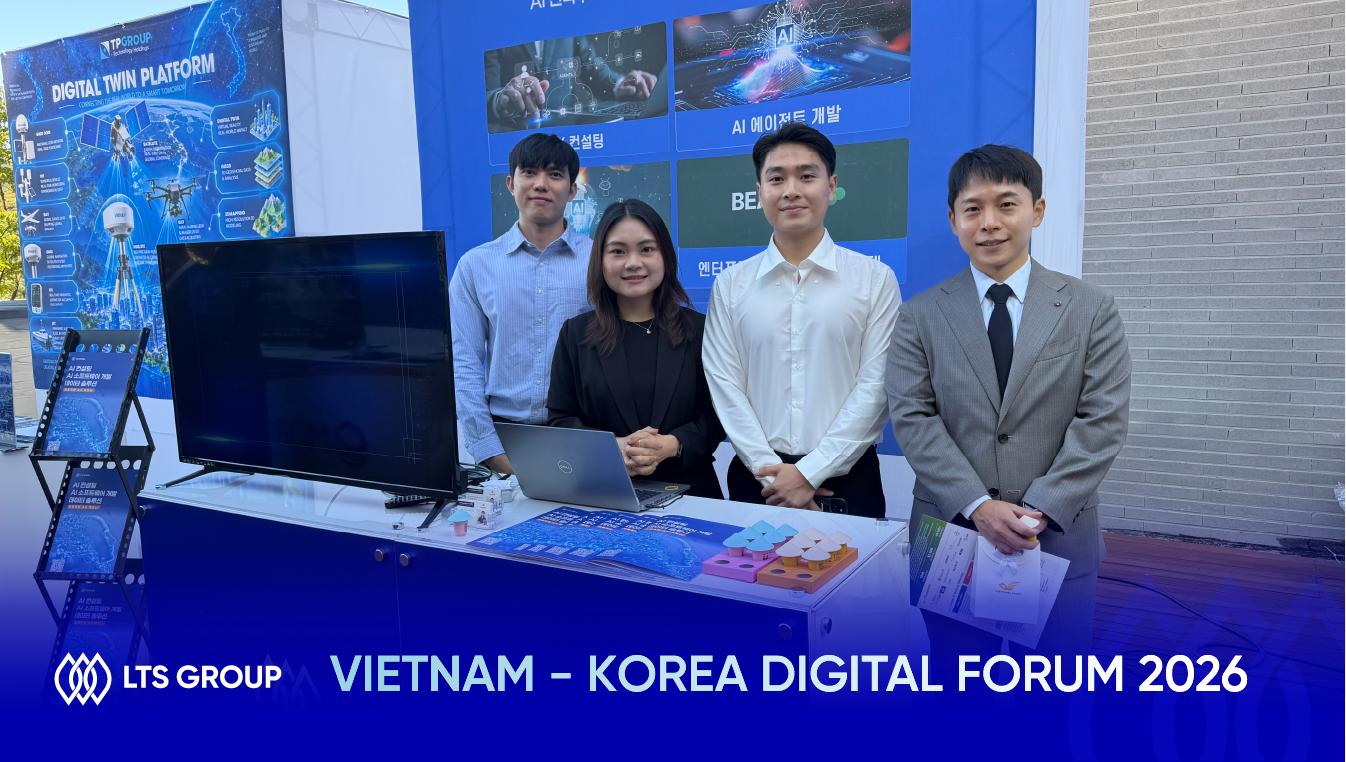
LTS Group Attends Vietnam – Korea Digital Forum 2026: Introduces Beacon for AI Agent Governance
Oct 2, 2026
-5 mins read
On the morning of October 1, 2026, LTS Group attended the Vietnam – Korea Digital Forum 2026 at the Embassy of Vietnam in Seoul. We introduced Beacon, a platform that helps enterprises build, run, and govern AI agents in a single system. A National-level Forum Connecting Vietnam’s and Korea’s Digital Sectors The forum brought together government agencies, industry associations, and digital technology companies from both countries. Vietnam: The Minister of Science and Technology; Mr. Nguyen Khac Lich, Director of the Department of Digital Technology and AI; the Chairman of the Vietnam Software and IT Services Association (VINASA); and digital technology companies including FPT Korea, SotaTek, and LTS Group South Korea: Leaders from the Ministry of Science and ICT (MSIT), the National IT Industry Promotion Agency (NIPA), KT, and other Korean technology companies From “Outsourcing” to “Co-creation” The forum’s message was a shift in Vietnam – Korea cooperation from outsourcing to co-creation, with AI and semiconductors as the two pillars. The keynote session covered five topics: Department of Digital Technology and AI: Co-creating a Vietnam – Korea digital ecosystem, from AI and semiconductors to the global market NIPA: Mechanisms to promote co-development and commercialization of AI and semiconductors, from R&D to market FPT Korea: Creating global value with Vietnamese tech companies, moving from “Outsourcing” to “Co-creation” KT: Next-generation AI infrastructure, with computing and cloud foundations for co-creation SotaTek: Physical AI and AI Factory for smart manufacturing A B2B matching session ran in parallel, focused on AI, semiconductors, cloud, data, software, 5G/6G, information security, and smart factory. Participants discussed finding partners, advancing R&D and PoC projects, and co-developing products. The panel discussion, “Vietnam – Korea Digital Technology Alliance,” centered on three issues: Joint R&D and technology transfer models between research institutes, universities, and businesses in both countries Training high-quality AI engineers and semiconductor design engineers PoC testing mechanisms and bringing co-developed products to the global market The forum closed with a “Make in Viet Nam” solutions showcase, where Vietnamese companies presented their technology capabilities to Korean partners. LTS Group Introduces Beacon – An Enterprise AI Platform As enterprises adopt AI faster, the question is no longer just how to use AI, but how to keep it safe and compliant. Beacon was designed to answer that question. Beacon helps enterprises build, run, and govern AI agents in one system, with compliance built in from the start. Its main capabilities: Full AI stack connectivity: Connects AWS Bedrock, Azure OpenAI, Anthropic, Google Vertex, and more with business tools such as Salesforce, Slack, GitHub, and SharePoint Real-time logging: Records every AI activity across the enterprise as it happens Shadow AI detection: Automatically detects unauthorized AI use On-demand compliance reports: Generates compliance reports whenever needed With Beacon, enterprises can roll out AI quickly while keeping strict access control and infrastructure-level risk management. At our booth, the LTS Group team demonstrated Beacon in person and talked with visitors about enterprise needs in AI governance. Key Takeaways At the forum, we connected with government agencies, associations, and tech companies from both countries and shared insights. Presenting Beacon in person also gave us a firsthand look at what Korean enterprises need in AI governance. It was a valuable opportunity to explore new collaborations and strengthen the Vietnam – Korea digital partnership. With 10 years of experience delivering IT services to global customers, LTS Group will keep developing services and solutions for the Korean market through LTS Korea. In line with the forum’s Co-creation direction, we are committed to being a trusted partner to Korean enterprises, helping them adopt AI effectively, safely, and sustainably.

Meet LTS Group at Autonomous Driving Mobility Expo (AME) 2026
Sep 28, 2026
-2 mins read
LTS Group will participate in Autonomous Driving Mobility Expo 2026 (AME 2026), Korea’s largest exhibition dedicated to autonomous driving and future mobility. The event will take place from August 25 to 27, 2026, at Hall B, COEX, Seoul. About AME 2026 AME 2026 will bring together more than 60 exhibitors across 150 booths to showcase the latest technologies and business trends in autonomous driving and future mobility. Held alongside EV Trend Korea 2026, the event will focus on the transition to software-centric vehicle architectures built around software-defined vehicles (SDVs), along with advances in ADAS and autonomous driving technologies. What LTS Group Will Showcase The automotive industry is rapidly evolving as sustainability, intelligent technologies, and service-based models reshape the market. As vehicles become increasingly software-driven, automotive software development, validation, and data labeling for ADAS and autonomous driving are becoming essential to future competitiveness. At AME 2026, LTS Group will showcase: Automotive software development and validation for SDVs; Data labeling solutions for ADAS and autonomous driving; LTS AutoTCGen, an AI-powered tool that generates ASPICE-compliant automotive software test cases (live demo). LTS Group’s CEO, Head of Automotive, Sales Director, and Delivery Manager will be on-site to introduce our solutions and discuss your automotive technology needs. Event Details Date: August 25–27, 2026 Venue: Hall B, COEX, Seoul Visit the LTS Group booth to explore our automotive software development and validation services, ADAS data labeling solutions, and LTS AutoTCGen. To arrange a meeting in advance, don’t hesitate to get in touch with us using the details below!



Email:contact@ltsgroup.tech
Phone:(+84) 96-238-7474
Headquarters:17th Fl, MD Complex Office Building, 68 Nguyen Co Thach Street, Hanoi, Vietnam
Japan:5F, Iwamoto Building, 3-20-10 Shibaura, Minato-ku, Tokyo 108-0023, Japan
US:25787 Rawley Springs Dr, Chantilly, VA 20152
South Korea:Room 1214, 12th Floor, Daerung Seocho Tower, 327 Gangnam-daero, Seocho-gu, Seoul, South Korea
Australia:1/63 Cobden Street, Kew VIC 3101, Australia